
What Is INR Currency? A Complete Guide to the Indian Rupee & Its Exchange Rate
Author:XTransfer2025.08.20INR
The inr currency is called the indian rupee. It uses the symbol ₹ and the short form INR. It is the official money of india. The Reserve Bank of India controls it. The value of the indian rupee changes how people trade, travel, and invest. In September 2018, RBI said there were about 19.25 trillion INR in use. Many countries now use the indian rupee for trade deals. Here are some of those countries:
|
Countries Using INR for Trade Settlements |
|
Botswana, Fiji, Germany, Guyana, Israel, Kenya, Malaysia, Mauritius, Myanmar, New Zealand, Oman, Russia, Seychelles, Singapore, Sri Lanka, Tanzania, Uganda, United Kingdom |
Travelers often look up “INR meaning in currency”, “1 INR to USD”, or “best INR exchange rate today” to check rates and know the value.
Highlights
-
The Indian Rupee (INR) is the money used in India. Its symbol is ₹. The Reserve Bank of India (RBI) controls it. The value of INR changes every day. This happens because of things like inflation, interest rates, world events, and trade balances. RBI keeps INR steady by managing how much money is in use. It also controls exchange rates and interest rates. Travelers and investors should look at trusted sites for INR exchange rates. Good examples are Wise, Xe, or the RBI website. They should do this before making any money exchanges. Using approved banks and safe platforms is important. This helps keep your money safe and avoids legal or money problems.
INR Currency Overview
What Is INR?
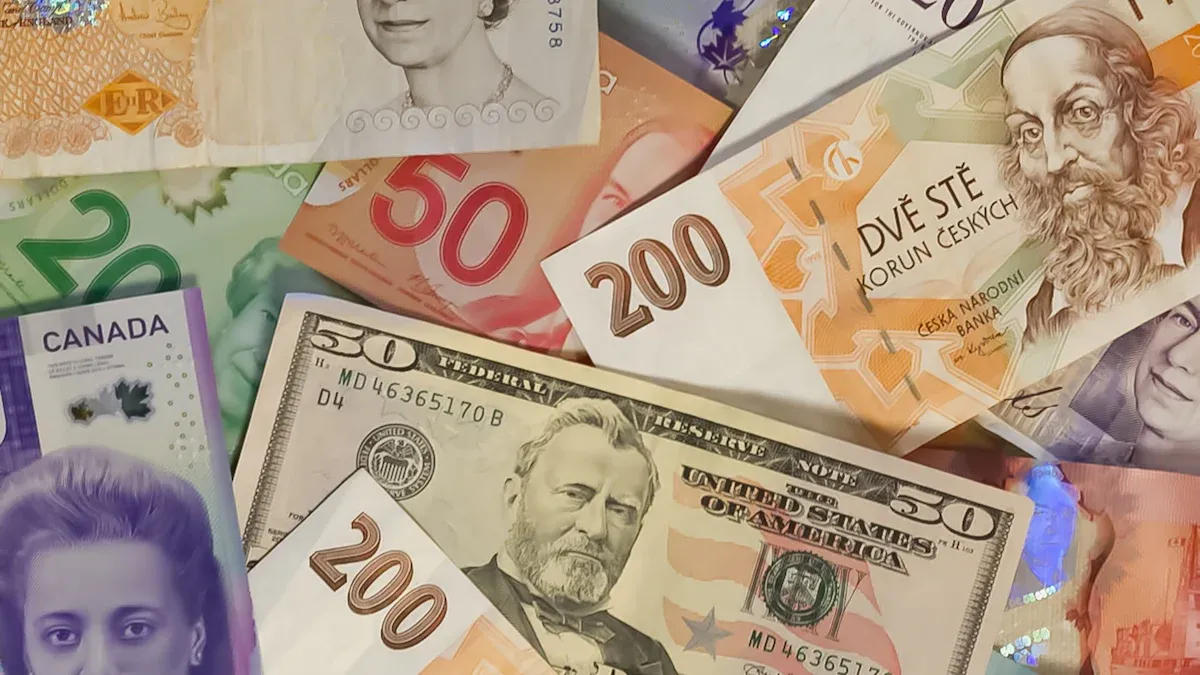
The inr currency means the indian rupee. It is the official money in India. People search “INR meaning in currency” to learn what it is. The short form INR comes from "Indian Rupee." Banks and businesses use INR in trade and finance. The inr lets people buy things and pay for services. It also helps settle debts in India. Travelers and investors check “1 INR to USD” or “best INR exchange rate today.” They do this to compare the value with other money.
The indian rupee is important in daily life and business. It links India to other countries through trade and money sent home. The value of inr changes with supply and demand. People use inr for shopping, saving, and investing. The inr currency is also traded in foreign exchange markets. Traders buy and sell it with other currencies.
Quick Reference Table: INR Details
|
Aspect |
Details |
|
Full Form |
Indian Rupee |
|
Symbol |
₹ (introduced on 15 July 2010, derived from Devanagari letter 'र' and English letter 'R') |
|
Abbreviation |
INR (approved and monitored by the Reserve Bank of India) |
Symbol and Subdivision
The indian rupee uses the symbol ₹. The government made this symbol official in July 2010. D. Udaya Kumar designed it. He mixed the Devanagari letter 'र' and the English letter 'R'. The two lines in the symbol show the Indian flag and equality. Before 2010, people used "Rs" or "Re" for the indian rupee.
The inr currency breaks into smaller parts called paise. One indian rupee is 100 paise. Coins and notes come in many values. People use coins for small buys and notes for bigger amounts. The Reserve Bank of India prints notes with the ₹ symbol. This helps people spot real money.
-
The symbol '₹' became official in 2010.
-
The short form 'INR' took the place of 'Rs' and 'Re'.
-
All new notes and coins now show the ₹ symbol.
Regulatory Authority
The Reserve Bank of India (RBI) is the main boss for the indian rupee. The RBI controls how much money is made and how it looks. It also sets rules for banks and people using the inr currency in India and other places.
The RBI does many things to help the indian rupee:
-
The RBI changed FEMA rules to help the inr currency grow in trade.
-
Banks outside India can open inr accounts for people who do not live in India. These accounts help with legal deals with people in India.
-
People who do not live in India can use special inr accounts for deals with others like them.
-
People outside India can use inr to invest in other countries.
-
Indian sellers can open accounts in other money to get paid for exports and use it for imports.
-
The RBI allows Rupee Vostro Accounts. These let foreign banks keep inr in Indian banks. This makes paying and trading with other countries easier.
The RBI also watches exchange rates and tries to keep the inr steady. It uses interest rates and foreign reserves to control the value of the indian rupee. What the RBI does changes how much inr you get for other money. That is why travelers and investors check rates often.
INR Exchange Rate Table (Sample)
|
Currency Pair |
1 INR Equals |
Last Updated |
|
INR/USD |
0.012 |
June 2024 |
|
INR/EUR |
0.011 |
June 2024 |
|
INR/GBP |
0.0095 |
June 2024 |
|
INR/JPY |
1.70 |
June 2024 |
Frequently Asked Questions (FAQ)
Q: What does INR mean in currency?
A: INR stands for Indian Rupee, the official money of India.
Q: Who controls the Indian Rupee?
A: The Reserve Bank of India (RBI) manages the indian rupee.
Q: What is the symbol for the Indian Rupee?
A: The symbol is ₹. It was made official in 2010.
Q: How many paise make one Indian Rupee?
A: One indian rupee is 100 paise.
Q: Where can I check the latest INR exchange rates?
A: You can check rates on bank websites, currency exchange sites, or news sites.
Indian Rupee History
Early Origins
The indian rupee has a long history. The word "rupee" comes from Sanskrit. It means "wrought silver" or a stamped coin. Old Indian books like the Arthashastra talk about silver coins called "rūpyarūpa." These coins were used with gold, copper, and lead coins. Early Indian empires did not use one money system.
-
In the 1500s, Sher Shah Suri made a silver coin called the "Rupiya." This coin weighed 178 grains. It became a standard for money.
-
The silver Rupiya was used in the Mughal period, Maratha era, and British India.
-
When the British ruled, the indian rupee became the main money. It was split into annas and pice before the decimal system.
In the 1900s, the indian rupee was used in some British lands outside India.
Post-Independence Changes
After 1947, the indian rupee showed India's new identity. The modern indian rupee took the place of the British Indian Rupee. The first notes had the Ashoka Pillar. This showed Indian culture and pride. At first, the indian rupee was equal to the US dollar. Over time, the value changed because of inflation and world events.
-
In 1957, India started the decimal system. One indian rupee became 100 paise.
-
Wars and money problems in the 1960s made the indian rupee lose value.
-
In 1971, the Bretton Woods system ended. India then linked the indian rupee to a group of currencies.
-
In 1991, a big money crisis made India use a market-driven exchange rate for the indian rupee.
Modern Developments
The indian rupee has changed a lot in recent years. In 2016, the government removed high-value notes. New 500 and 2000 rupee notes came out. The design of the notes changed. Mahatma Gandhi's picture moved to the center. The new notes have security features and new colors.
-
Demonetization tried to stop black money and help digital payments.
-
The indian rupee now has modern designs. Some people do not like the new look and say it is hard to read.
|
Year |
Major Event in Indian Rupee History |
|
1947 |
Indian rupee introduced after independence |
|
1957 |
Decimalization: 1 rupee = 100 paise |
|
1991 |
Shift to market-driven exchange rate |
|
2016 |
Demonetization and new note designs |
INR Value and Denominations
Current Denominations
The current indian rupee comes in many forms. People use both coins and banknotes in daily life. The inr coins include ₹1, ₹2, ₹5, ₹10, and sometimes ₹20. These coins help with small purchases. The indian rupee banknotes are available in ₹10, ₹20, ₹50, ₹100, ₹200, ₹500, and ₹2,000. The ₹2,000 note is being phased out, but it still counts as legal money. Each note has a different size and color. This helps people, including those with vision problems, tell them apart. Security features on the notes protect against fake money.
|
Currency Type |
Denominations in Circulation |
Additional Notes |
|
Banknotes |
₹10, ₹20, ₹50, ₹100, ₹200, ₹500, ₹2,000 |
₹2,000 note is being phased out but still legal tender; notes vary in size and color; security features included |
|
Coins |
₹1, ₹2, ₹5, ₹10, ₹20 |
Used for small transactions; designed for accessibility |
Value Determination
The value of the inr changes every day. Many factors affect the value of the indian rupee. Inflation, interest rates, and foreign investment play big roles. Oil prices and global events also cause the inr to rise or fall. The Reserve Bank of India watches the real effective exchange rate (REER) to judge if the value is fair. When inflation goes up, the value of the indian rupee can drop. If foreign investors bring money into India, the inr may get stronger. People often search “INR meaning in currency” or “1 INR to USD” to check the value. The best INR exchange rate today can change quickly, so checking often helps.
-
Market speculation by traders moves the inr value.
-
Global events like the COVID-19 pandemic or financial crises can weaken the indian rupee.
-
Political stability and trade balances also shape the value.
RBI’s Role
The Reserve Bank of India works hard to keep the value of the inr steady. The RBI steps in when the indian rupee falls too much or rises too fast. It buys or sells US dollars to control the inr value. Sometimes, the RBI uses billions of dollars to stop the indian rupee from dropping. The RBI also changes interest rates to help the value. Lower rates can make the inr weaker, while higher rates can attract foreign money and make the indian rupee stronger. The RBI’s actions help keep the inr stable for trade and daily use.
|
Currency Pair |
1 INR Equals |
Last Updated |
|
INR/USD |
0.012 |
June 2024 |
|
INR/EUR |
0.011 |
June 2024 |
|
INR/GBP |
0.0095 |
June 2024 |
FAQ
Q: What does “INR meaning in currency” stand for?
A: It means Indian Rupee, the official money of India.
Q: How can someone check “1 INR to USD” or find the “best INR exchange rate today”?
A: Use bank websites or trusted currency exchange sites for the latest rates.
Q: Who decides the value of the indian rupee?
A: The Reserve Bank of India manages the value using many tools and market checks.
Exchange Rate and Market Factors
INR Exchange Rate System
India uses a managed floating exchange rate for the inr currency. The Reserve Bank of India, or RBI, helps control the foreign exchange market. The RBI steps in if the inr changes too much. It does not set a fixed rate for the inr currency. The International Monetary Fund, or IMF, called India's system a "stabilized arrangement." This is because the RBI kept the inr in a small range from December 2022 to October 2023. The RBI does not agree with this label. The RBI says it only wants to stop big changes, not fix the exchange rate.
The usd to inr exchange rate shows how many rupees you get for one US dollar. In the last five years, this rate has changed slowly. The inr has become weaker against the US dollar. But the rate has stayed mostly steady for short periods. The table below shows recent usd to inr exchange rates:
|
Metric |
Value (as of July 24, 2025) |
Recent Change (Past Week) |
|
INR to USD Rate |
~0.01158 |
-0.36% |
|
USD to INR Rate |
~86.35 |
+0.36% |
|
High (last 7 days) |
86.443 |
N/A |
|
Low (last 7 days) |
85.811 |
N/A |
|
Average (last 7 days) |
86.1925 |
N/A |
|
Change since yesterday |
+0.05% |
N/A |
This table lets people compare the usd/inr market and see trends. The inr to usd and usd to inr rates change a little each day. But the inr currency has stayed steady in the last few weeks.
Influencing Factors
Many things affect the exchange rate and value of the inr currency. These include events in India and around the world. Here are some main things that matter:
-
Trade balance and tariffs: If India buys more than it sells, or if new tariffs are added, the inr can get weaker.
-
Inflation: Low inflation helps the inr stay strong. High inflation can make it weaker.
-
Interest rate differences: If the RBI sets higher rates than the US, more people may want to buy inr.
-
Monetary policy: If the RBI lowers rates, people may spend more, but the inr can get weaker.
-
Oil prices: India buys a lot of oil. If oil costs more, India needs more US dollars, which can lower the inr value.
-
Investor feelings: If India is stable and has good trade deals, the inr can stay strong.
-
Global trade problems: Fights over trade or supply chain issues can make the exchange rate move fast.
Events in the world also change the usd to inr exchange rate:
-
Fights with other countries can make investors worried. They may move money out of India, which lowers the inr.
-
If the US dollar gets stronger or US rates go up, the inr often loses value.
-
If oil prices rise, India spends more dollars, and the inr can get weaker.
-
If India buys more than it sells, or if the economy slows, the inr may drop.
-
If foreign investors take money out of India, the need for US dollars goes up, and the inr falls.
-
India needs to buy energy from other countries and sometimes does not sell enough goods, which can hurt the inr.
-
The RBI sells US dollars to keep the inr steady, but big changes can still happen.
The inr currency value depends on things in India and in the world. Changes in growth, inflation, and interest rates in India matter. So do world trends, prices of goods, and how investors feel. The usd/inr market reacts to all these things.
How to Check and Exchange
People can check live exchange rates for the inr currency using trusted online tools. Wise Currency Converter and Xe Currency Converter show live rates, old rate data, and alerts. These sites use data from banks and other money services. This means people get the latest and correct information. Wise also gives a multi-currency account and a card for travel. This helps people avoid extra fees.
To exchange inr currency for other money in India, people must follow some steps:
-
Get RBI approval if the deal is big or special.
-
Show papers like bills or contracts to explain the exchange.
-
Use only banks or dealers approved by the RBI.
-
Fill out forms to follow anti-money laundering rules.
-
Stay under the yearly limit set by the Liberalized Remittance Scheme.
-
Make sure the person getting the money is real and not doing anything illegal.
-
Tell the RBI or other groups about the deal if needed.
-
Think about taxes and ask an expert if you are not sure.
-
Watch exchange rates and choose a good time to exchange.
-
Follow all rules about which countries or deals are allowed.
Quick Reference Table: INR Exchange Rate Resources
|
Platform |
Features |
Best For |
|
Wise |
Real-time rates, multi-currency account, alerts |
Travelers, online users |
|
Xe |
Live rates, historical exchange rate data, tools |
Investors, businesses |
|
RBI Website |
Official rates, policy updates |
Researchers, analysts |
FAQ: INR Exchange Rate
Q: What does "INR meaning in currency" mean?
A: It means Indian Rupee, the official currency of India.
Q: How can I check the latest usd to inr exchange rate?
A: Use Wise, Xe, or the RBI website for real-time exchange rates.
Q: What affects the value of the inr?
A: Inflation, interest rates, trade balance, oil prices, and global events all play a role.
Q: Where can I find historical exchange rate data for the inr?
A: Wise and Xe both provide historical exchange rate data and charts.
Q: What is the best way to exchange inr for foreign currency?
A: Use authorized banks or dealers, provide the right documents, and check the best INR exchange rate today.
Q: Why does the usd to inr exchange rate change so often?
A: The rate changes because of market supply and demand, economic news, and global events.
Q: What is the usd/inr currency market?
A: It is the market where people and businesses buy and sell US dollars and Indian rupees.
Q: How can I get the best value when exchanging inr?
A: Compare rates from different sources, watch for trends, and use platforms with low fees.
Investment and Exchange Insights
Investing in INR
People who want to invest in India have many choices for their inr. Each choice has its own risks and goals. The table below lists some popular ways to invest and trade:
|
Investment Option |
Description |
Key Points / Considerations |
|
Savings Account |
Earns nominal interest, funds accessible anytime |
High liquidity, minimal risk, good for emergencies |
|
Fixed Deposit (FD) |
Lump sum deposit for fixed tenure, fixed interest |
Guaranteed returns, low risk, flexible terms |
|
Public Provident Fund (PPF) |
Long-term, government-backed, fixed interest |
Very safe, tax-saving, 15-year lock-in |
|
Mutual Funds |
Invests in stocks or bonds, managed by professionals |
Varying risk, potential for higher returns |
|
Gold Bonds/ETFs |
Digital gold or government bonds |
Safe, liquid, alternative to physical gold |
People can also invest in real estate, smallcase portfolios, and pension plans. NRIs may use NRE/NRO or PIS accounts to invest. They should check tax rules and limits before making deals. Over time, the inr has lost value against big currencies like the US dollar. Even if Indian stocks go up, currency loss can lower real gains for foreign investors. People should always check “1 INR to USD” and search for the best INR exchange rate today before investing.
Forex Trading
Trading forex with inr has strict rules. The Reserve Bank of India and SEBI watch all trades. Only some currency pairs are allowed, like usd to inr, eur to inr, gbp to inr, and jpy to inr. Spot forex trading is not allowed in India. People can trade futures and options on NSE and BSE. Trading hours are 9:00 AM to 5:00 PM IST, Monday to Friday. Traders must finish KYC and link their accounts to Indian banks. Popular platforms are Zerodha Kite, Upstox, and ICICI Direct. International tools like MetaTrader 4 and TradingView have more features, but users must follow Indian laws. All trades must follow FEMA and SEBI rules to avoid trouble.
Tips for Travelers
Travelers who exchange inr in other countries should follow these steps for safe and smart deals:
-
Use only approved dealers or banks for exchanging money.
-
Prepaid forex cards give better rates and are safer.
-
Carry some cash in foreign money for emergencies.
-
Do not use airport exchange counters because fees are high.
-
Use apps to watch rates and find the best INR exchange rate today.
-
Always pay in local money to avoid extra costs.
-
Tell customs if you carry over USD 5,000 in cash or USD 10,000 total.
-
Indian residents can take up to 25,000 inr out of India, except to Nepal and Bhutan.
-
Use digital payments and remittances for safety and ease.
Quick Reference Table: Exchange Platforms
|
Platform |
Features |
Best For |
|
Wise |
Real-time rates, multi-currency account, alerts |
Travelers, online users |
|
Xe |
Live rates, historical data, tools |
Investors, businesses |
|
RBI Website |
Official rates, policy updates |
Researchers, analysts |
FAQ
Q: What does “INR meaning in currency” stand for?
A: It means Indian Rupee, the official currency of India.
Q: How can someone check “1 INR to USD” or find the best INR exchange rate today?
A: Use trusted sites like Wise, Xe, or the RBI website.
Q: What are the limits for carrying inr abroad?
A: Indian residents can take up to 25,000 inr out of India, except to Nepal and Bhutan.
Q: Are digital payments and remittances safe for travelers?
A: Yes, they are safe and easy for sending money internationally.
The indian rupee plays a key role in daily life, travel, and investing. Its value and exchange rates change with RBI actions, global events, and trade trends. Investors and travelers should watch rates, use tools to compare the best INR exchange rate today, and check “1 INR to USD” for updates.
|
Quick INR Exchange Rate Table |
|
1 INR to USD |
|
1 INR to EUR |
|
1 INR to GBP |
FAQ
-
What is “INR meaning in currency”?
It means Indian Rupee, India’s official money. -
Where can someone find the best INR exchange rate today?
Use trusted sites or apps for live rates.
FAQ
What does “INR meaning in currency” stand for?
INR stands for Indian Rupee. It is India’s official money. People use INR to buy things and pay bills. Businesses use INR for deals and trade. The Reserve Bank of India controls how much INR is in use.
How can someone check “1 INR to USD” quickly?
People can look up “1 INR to USD” online. Bank websites and apps show the latest rates. Wise and Xe give real-time updates for travelers and investors.
Where can users find the best INR exchange rate today?
Users should check trusted sites like Wise, Xe, or the RBI website. These sites update the best INR exchange rate today. A quick table shows rates for different currencies.
|
Currency Pair |
1 INR Equals |
Last Updated |
|
INR/USD |
0.012 |
June 2024 |
|
INR/EUR |
0.011 |
June 2024 |
|
INR/GBP |
0.0095 |
June 2024 |
How did demonetization affect digital transactions and remittances?
Demonetization in 2016 made more people use digital payments. Many started paying online instead of using cash. This helped India move toward a cashless system. It also made tracking money easier.
Why do foreign exchange markets matter for INR?
Foreign exchange markets decide how much INR is worth. These markets change with the economy and trade. What investors do can also change the value. Changes in the usd/inr market affect travel, business, and investing.
Related content