
What Drives the Stability of the Bolivian Boliviano in International Finance
Author:XTransfer2025.08.20BOB
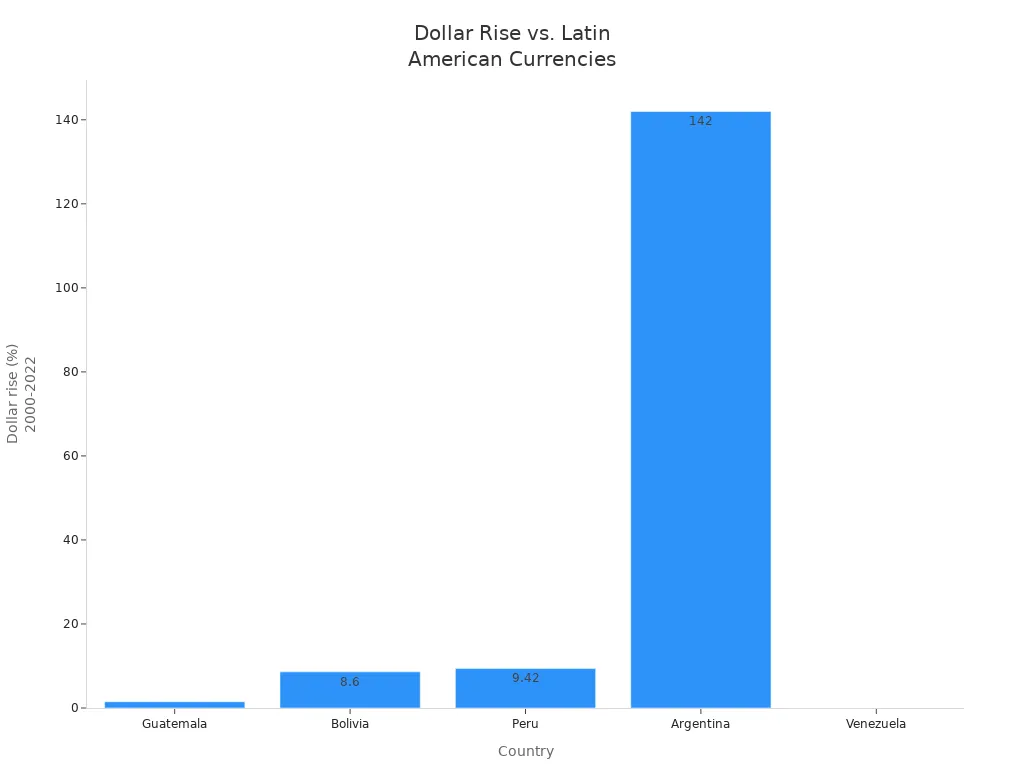
The BOB (Bolivian Boliviano) remains stable in international finance for several reasons. Strong exchange rate policies play a significant role in supporting the BOB (Bolivian Boliviano). The central bank frequently manages the BOB (Bolivian Boliviano) to maintain its value. Solid economic fundamentals are also crucial, and political stability further strengthens the BOB (Bolivian Boliviano). However, external pressures can still impact the currency. The BOB (Bolivian Boliviano) is considered one of the most stable currencies in Latin America. Between 2000 and 2022, the U.S. dollar’s value increased by only 8.6% against the BOB (Bolivian Boliviano). The region’s inflation rate remains very low, around 1.4%. Bolivia’s central bank uses foreign reserves and interest rates to protect the BOB (Bolivian Boliviano). Economic growth also helps keep the BOB (Bolivian Boliviano) steady, and low inflation is beneficial as well. Strong trade relationships, especially with regional blocs, support the BOB (Bolivian Boliviano). Political stability and government decisions are key factors, but fluctuations in commodity prices can affect the BOB (Bolivian Boliviano). Global economic changes and regional trends also influence the currency. These factors can quickly alter the value and stability of the BOB (Bolivian Boliviano). The strength of the BOB (Bolivian Boliviano) depends on how all these elements interact, making Bolivia’s economy both dynamic and unpredictable.
Highlights
-
The Bolivian Boliviano stays steady because the central bank watches the exchange rate closely. They use a crawling peg system and link it to the US dollar.
-
Big international reserves and good trade, mostly from natural gas exports, help the currency. These things also keep inflation low.
-
Political stability and clear government rules make investors trust Bolivia more. This trust helps the Boliviano stay strong.
-
Outside things like prices of goods and changes in world markets can change the currency. So, Bolivia needs to grow its economy in new ways and make better trade deals.
-
To keep the Boliviano steady, Bolivia must keep strong reserves. They should follow clear money rules, be open about their actions, and make changes that help the economy grow and stay stable.
BOB (Bolivian Boliviano) Exchange Rate Policy
Crawling Peg System
Bolivia uses a crawling peg system to help control the value of the bolivian boliviano. This system lets the central bank of bolivia slowly change the exchange rate. The central bank does not let the bolivian boliviano move freely in world markets. It picks a target rate and makes small changes over time. This helps keep the currency steady and stops big surprises in its value.
The crawling peg system is not perfect. Sometimes, the central bank of bolivia steps in more when the boliviano is under pressure. This helps protect the bolivian boliviano from big changes in world markets. The system has helped keep prices low and made the bolivian economy more stable.
Peg to the US Dollar
The bolivian boliviano is closely tied to the US dollar. Since 2012, the central bank of bolivia has kept the exchange rate near 6.9 bolivianos for each US dollar. The bolivian boliviano is not officially pegged to the dollar, but the central bank works to keep it steady. This has made the bolivian boliviano one of the most stable currencies in Latin America.
Here is a summary of the exchange rate policy over time:
|
Period/Year |
Exchange Rate / Peg Details |
|
1864 |
Boliviano started, pegged to French franc at 5 francs = 1 boliviano |
|
1908 |
Peg switched to British pound at 12.5 bolivianos = 1 GBP |
|
1928-1938 |
Devaluation happened, peg reached 160 bolivianos = 1 GBP |
|
1940 |
Many exchange rates used between boliviano and USD |
|
1963 |
Peso boliviano replaced boliviano at 1,000 to 1 because of devaluation |
|
1987 |
Modern boliviano started, about equal to USD |
|
1987-2012 |
Boliviano moved freely against other currencies |
|
Since 2012 |
Managed float with Central Bank keeping rate near 6.9 bolivianos per USD |
The peg has had mixed results. For many years, it helped keep prices low and supported the boliviano’s value. The bolivian boliviano became a sign of stability in the area. But new problems have made this system harder to keep. Lower exports and less foreign money have made it tough for the central bank of bolivia to keep the boliviano strong.
-
The fixed exchange rate peg is hard to keep because there are not enough dollars.
-
Other currency markets have started, and some importers pay much more for dollars.
-
The government’s slow actions and use of reserves have made prices rise and the currency less steady.
-
Some experts say switching to a floating exchange rate could help fix the market.
The peg has both good and bad sides for the bolivian economy. It brought steady prices and low inflation, but it also made it harder for the central bank to react to problems. When reserves drop, the boliviano is at more risk, and the currency can become less stable.
Central Bank Actions
The central bank of bolivia is very important for keeping the bolivian boliviano steady. It uses different tools to manage the exchange rate and help the boliviano in world markets. When there are not enough dollars, the central bank sells dollars to people and businesses. It also works with state banks to give out more dollars.
On March 6, the central bank of bolivia began selling dollars at its offices and through Banco Unión. This was to help with the dollar shortage in the business world. The central bank wanted to protect the exchange rate peg and keep the boliviano steady. But if reserves keep falling, it will be harder for the central bank to keep this up.
The central bank also uses tools like changing interest rates and managing how much money is in the system. These steps help control prices and support the boliviano’s value. The central bank of bolivia must try to keep things steady while also watching out for losing reserves and more ups and downs in the market.
Bolivia’s Economic Fundamentals
International Reserves
International reserves are very important for the bolivian boliviano. Since 2006, Bolivia saved a lot of international reserves. At one point, reserves were more than 48 percent of GDP. This gave the central bank more choices for money and exchange plans. Because of these reserves, Bolivia did not need to borrow from the IMF. This made people trust the currency and the economy more.
But things have changed in the last few years. International reserves dropped a lot. They fell by over 40% from $3.6 billion in January 2023 to $2.15 billion in August 2023. With fewer reserves, the central bank cannot help the boliviano as much. When reserves are low, it is harder to keep the boliviano strong. People lose trust in the currency and the government’s ability to handle problems from outside. This makes the boliviano more likely to lose value and change quickly. Some experts say the government is not doing enough about the reserves problem. This makes their plans less helpful and puts the bolivian boliviano at more risk.
International reserves protect the bolivian economy. When reserves are high, the central bank can help the currency and keep things steady. When reserves are low, the boliviano faces more danger.
Trade and Exports
Trade is very important for Bolivia’s economy and the boliviano. Natural gas exports have helped Bolivia’s trade and kept the economy steady. For many years, selling gas brought in foreign money. This helped the central bank keep the exchange rate and support the boliviano.
But now, trade is not as strong. Natural gas output is down and export money is lower. This has made the balance of payments worse. In 2024, natural gas exports fell by 21.2%. Monthly gas export money was half of what it was last year. Bolivia now buys most of its fuel from other countries. About 56% of gasoline and 86% of diesel are imported. Fuel subsidies cost over Bs 2.3 billion ($331.2 million) in 2024. This puts more stress on the country’s budget.
|
Indicator |
Data / Impact |
|
Decline in natural gas exports (2024) |
21.2% decrease |
|
Gas export revenues (2023 vs 2024) |
Bs 2,049.7 million ($295.2 million) down to Bs 1,614.7 million ($232.5 million) |
|
Monthly gas export revenues (Jan 2025 vs previous year) |
Halved |
|
Dependence on imported fuels |
56% gasoline, 86% diesel imported |
|
Fuel subsidies cost (2024) |
Over Bs 2.3 billion ($331.2 million) |
|
Foreign reserves (late 2024) |
Bs 1.976 billion ($284.5 million), with only Bs 46.8 million ($6.7 million) liquid currency |
|
Inflation rate (2024) |
9.97%, highest since 2008 |
|
Parallel market exchange rate |
Boliviano trades at 12 per USD vs official 6.96 |
|
Fiscal deficit projection (2025) |
9.52% of GDP |
|
Economic growth slowdown |
From 6.11% (2021) to 1.5–2% (2024) |
Less money from trade hurts the balance of payments and the boliviano. Lower exports mean less foreign money comes in. This makes it harder for the central bank to keep the exchange rate steady. Fewer exports and less foreign investment make the economy weaker. Now, Bolivia has higher inflation, bigger budget gaps, and a weaker currency. These problems show that Bolivia needs to change its economy and make new plans to stay stable.
Fiscal Policy
Fiscal policy is very important for the boliviano and the economy. The government tries to help the currency by making it easier for exporters and investing in farming. These actions try to bring in more dollars and help the balance of payments. Careful fiscal policy, like spending less and keeping debt low, helps stop big changes in the currency and keeps the boliviano strong.
But there are still problems with budget deficits. When the government borrows too much or prints money, prices go up and the boliviano loses value. People expect more money in the system, so they spend faster and want foreign money instead. This makes the boliviano lose value even faster and hurts trust in the central bank. Bolivia’s budget depends a lot on changing commodity prices. This makes the economy and the currency easier to hurt by outside problems.
-
Big budget deficits often lead to printing money, which causes inflation and makes the boliviano weaker.
-
Inflation and a weak currency make people trust the central bank less.
-
Weak budgets and low reserves make a payments crisis more likely.
-
Rules that limit deficits and stop printing money are needed for long-term stability.
-
Careful budget plans help the boliviano and keep the economy steady.
Good fiscal rules are needed for Bolivia’s economy. Without them, the boliviano and the currency’s stability are in danger.
Political Stability and Governance
Policy Continuity
Political stability helps keep the bolivian boliviano strong. When leaders stay in power longer, they can keep rules the same. Since 2006, the MAS party has led the country. This has helped Bolivia keep a steady exchange rate. The government works to keep inflation low and supports social programs. These steps have helped the economy grow and kept the bolivian boliviano steady. Experts say political stability let Bolivia take over big industries. This gave the state more money and helped build roads and buildings. These actions have helped both the economy and the currency. But there are still problems like protests and depending on exports. The future depends on how leaders handle these issues. Having steady leaders lets Bolivia keep its economic plans the same. This is important for the bolivian boliviano’s stability.
"The IMF says that peaceful changes in government since 1985 have helped keep policies steady. This has supported the economy and the currency."
Investor Confidence
Investor confidence is important for the bolivian boliviano. When investors trust the laws and leaders, they bring money to Bolivia. This makes more people want the currency and helps its value. In Bolivia, some investors worry about the courts and politics. The government ended some investment deals and made it harder to solve problems with other countries. Because of this, less foreign money comes in, especially outside natural resources. Less investment means less demand for the bolivian boliviano. This can make the currency weaker. Even though Bolivia has lots of resources and a strong economy, unclear laws stop new investment. This shows that investor trust is very important for the bolivian boliviano’s value.
-
Investor confidence affects:
-
How much people want the bolivian boliviano
-
How much foreign money comes in
-
How steady the currency is
-
Social and Institutional Factors
Social and institutional factors have shaped the bolivian boliviano’s stability. In the past, Bolivia had problems like leaving out indigenous groups and changing leaders often. These issues made the economy and currency unstable. Big events like the 1952 Revolution changed the country. The government gave land to more people and let more people vote. These changes made stronger rules and helped the economy grow. But sometimes the military caused trouble and made things less stable. Today, Bolivia’s social groups and rules still affect the economy and the currency. Strong rules and including everyone help keep things steady. Weak rules can cause problems for the economy and the bolivian boliviano. In short, strong institutions and including all people are key for the bolivian boliviano’s long-term stability.
External and Regional Pressures
Commodity Prices
Bolivia sells a lot of natural gas and minerals to other countries. The country depends on these exports for money. This makes the boliviano face big risks. If world prices for gas or minerals go down, Bolivia gets less foreign money. Then, it is harder to keep the exchange rate steady. If there is not enough foreign money, Bolivia might have to stop tying its currency to the dollar. This would make the boliviano lose value. In 2023, the boliviano lost 10% of its value in the unofficial market. When gas prices drop or neighbors buy less, Bolivia’s economy grows slower. Foreign exchange reserves also go down, so it is harder to protect the currency. The lithium sector could help in the future, but it is not strong enough yet. Inflation and strict rules on imports make things even harder for the boliviano.
-
Bolivia’s economy is not very diverse and is easily hurt by price changes.
-
Not enough foreign money makes it hard to keep the currency steady.
-
Lower gas prices and less demand slow down growth and trade.
-
Lithium could help, but it is not enough right now.
|
Aspect |
Evidence |
Impact on Boliviano |
|
Commodity dependency |
Mining and gas: 14% of GDP, 80% of exports |
High risk from price shocks |
|
Gas price drop |
37% fall to Brazil (2014–2015) |
Slowed growth, fiscal pressure |
|
Fiscal buffer |
Reserves rose from $1.7B to $15B (since 2006) |
Short-term protection, long-term risk |
|
Diversification |
$5.4B invested in gas, less in other sectors |
Increased exposure to volatility |
|
Currency risk |
10% depreciation in 2023 unofficial market |
Direct threat to stability |
Regional Trends
Regional trends affect the boliviano in many ways. Trade deals like Mercosur and the Andean Community help Bolivia sell more goods. These deals give Bolivia better access to markets. When nearby countries are stable and growing, Bolivia’s trade and investor trust get stronger. Working with neighbors helps keep the currency steady. If other countries’ currencies lose value, Bolivia can sometimes sell more. This can help the boliviano. But if neighbors have problems or weak economies, Bolivia’s currency can also be at risk.
-
Trade deals help Bolivia sell more and find new markets.
-
Growth and peace in the region help the boliviano stay strong.
-
If nearby currencies drop, Bolivia can sometimes benefit.
-
Problems in South America can still hurt the boliviano.
Global Market Sentiment
How people feel about world markets affects the boliviano a lot. If investors like emerging markets, they buy more from Bolivia. This brings in more money and makes the currency stronger. If investors worry, they buy less, and Bolivia has trade deficits. When big countries like the U.S. change interest rates, money can leave Bolivia. This makes the boliviano weaker and the exchange rate less steady. What investors think and do also matters. If they feel good, they invest more and help the currency. If they are scared, they sell and the boliviano loses value. Bolivia needs to watch these world trends to keep its economy safe.
-
Good feelings about markets help Bolivia sell more and keep the boliviano strong.
-
Bad feelings cause less trade and a weaker currency.
-
Changes in world interest rates move money in and out of Bolivia.
-
What investors do can make the currency steady or shaky.
Bolivia’s economy depends on how it handles outside and regional problems. The country needs to sell more kinds of goods, make strong trade friends, and watch world trends. Only by doing these things can Bolivia keep the boliviano safe and stable for the future.
Risks to Boliviano Stability
Reserve Depletion
Reserve depletion is a big problem for the bolivian boliviano. Bolivia’s reserves have dropped a lot in the last few years. This makes it harder for the central bank to protect the currency. When reserves get too low, the bolivian boliviano can change value quickly. In the past, Bolivia’s mining sector had similar trouble. For example:
-
By the 1960s, only about 15% of COMIBOL’s tin ore was usable.
-
Mines could only work for about four more years.
-
Less money spent on mines meant higher costs and less profit, which hurt the economy.
Now, losing foreign reserves brings the same risks for the bolivian boliviano. If reserves keep falling, the central bank may not be able to help the currency. People could lose trust in the bolivian boliviano fast, and a crisis could happen.
Currency Crisis Risk
Bolivia could have a currency crisis soon. The country has money problems and not enough dollars. This has made the black market rate for the bolivian boliviano much higher than the official rate. Money from natural gas exports dropped from $5.5 billion in 2014 to $1.6 billion in 2024. Experts say these problems could force the bolivian boliviano to lose value, causing chaos and default. The fixed exchange rate is under a lot of stress. Unofficial markets show that things are not stable. If the government cannot fix trust, Bolivia could have a crisis like other Latin American countries.
Policy Uncertainty
Policy uncertainty makes the bolivian boliviano even less stable. Political fights between leaders, like President Arce and former President Morales, make people worry and hurt the economy. The table below shows how policy uncertainty affects the currency:
|
Aspect |
Impact on Boliviano Stability |
|
Political Conflicts |
Hurt trust and make the currency jump around |
|
Declining Reserves |
Make people guess and push up black market rates |
|
Exchange Rate Policy |
Mixed messages make the fixed system weaker |
|
Economic Consequences |
Inflation, protests, and strikes make things worse |
|
IMF Recommendations |
Calls for change make people unsure |
Not knowing what will happen next makes it hard for investors and people to trust the bolivian boliviano. Protests, strikes, and not enough dollars or fuel make things even worse. Without clear and strong plans, the chance of a currency crisis gets bigger. Bolivia needs to fix these problems to keep its currency safe and the economy steady.
In short, the bolivian boliviano needs strong reserves, clear rules, and good crisis plans to stay safe. Without these, Bolivia could face big risks that hurt the currency and the whole economy.
Sustaining Stability in Bolivia
Policy Recommendations
Bolivia has many problems keeping the bolivian boliviano steady. Groups like the IMF have given advice to help. These ideas try to protect the bolivian boliviano and make it stable for a long time:
-
Talk more with neighbors like Chile, Argentina, and Brazil to build trust.
-
Support democracy and help people work together to stop protests.
-
Change the exchange rate so it matches the market and is more flexible.
-
Spend less and use tighter money rules to stop inflation and dollar shortages.
-
Remove rules on foreign money and let interest rates change more.
-
Lower government pay and slowly end fuel subsidies.
-
Make public spending better and use money wisely.
-
Collect more taxes and stop printing money to pay debts.
-
Watch banks closely and stop money laundering.
-
Spend on roads and buildings that help everyone.
-
Be more open, have better rules, and fight corruption.
These ideas show Bolivia must work on many things at once. The IMF says reforms are needed for both quick fixes and long-term safety. If Bolivia follows these steps, it can keep the bolivian boliviano safe and avoid big problems.
Economic Diversification
Bolivia depends a lot on gas and other natural resources. This makes the economy weak when prices change. Making the economy more diverse can help keep the bolivian boliviano steady. Studies show that countries with many industries do better when export prices fall. Having more types of jobs helps businesses grow and gives people work. It also makes taxes and government work better.
|
Aspect |
Explanation |
|
Vulnerability to shocks |
Bolivia relies on gas exports, so the bolivian boliviano changes when prices swing. |
|
Diversification benefits |
More private investment, better jobs, and new ways to earn money besides gas and mining. |
|
Resilience |
A bigger economy helps Bolivia handle world problems and disasters. |
|
Stability support |
More industries take pressure off the money market and help the bolivian boliviano stay steady. |
|
Role of reforms |
Government changes and strong rules are needed for long-term safety. |
The IMF and World Bank want Bolivia to try new things. By building new businesses, teaching people new skills, and making better roads, Bolivia can make the bolivian boliviano safer from world changes. This plan will help Bolivia stay strong for years.
Transparency and Communication
Being open and clear is very important for the bolivian boliviano. Since 2011, the central bank has kept the exchange rate steady. This has helped stop inflation and made people trust the boliviano. But falling reserves and a fixed exchange rate bring new problems. The IMF says the central bank is not fully free, which can make people worry.
|
Aspect |
Summary |
|
Accounting transparency |
The central bank shows clear numbers, but much of the economy is still informal. |
|
Public consultation |
The government shares some news online, but people cannot always give feedback. |
|
Enforcement |
Some rules are not enforced by themselves, which can hurt trust in the bolivian boliviano. |
|
Legal framework |
Weak laws make people unsure and can hurt stability. |
To keep trust high, Bolivia must be more open and talk about risks and new rules. The IMF says Bolivia needs better data, stronger rules, and more public news. These steps will help the bolivian boliviano stay steady, even when times are hard.
The bolivian boliviano stays steady because of good exchange rate policy, a strong economy, and stable leaders. The currency does well when the central bank takes care of reserves and keeps trust in its rules. The IMF says it is important for the central bank to work on its own. But Bolivia has problems because reserves are going down and outside events can hurt the currency. The boliviano also needs new rules that follow what works best in other countries. In the future, Bolivia should do a better job managing reserves and be more open about its plans. If Bolivia fixes these things, the bolivian boliviano can stay strong for a long time.
FAQ
What keeps the bolivian boliviano stable in foreign exchange markets?
The central bank of bolivia works hard to keep the exchange rate steady. It uses strong tools to help the boliviano. High international reserves and smart government spending help the currency. These steps keep the economy safe and protect the boliviano from big surprises.
How does a drop in international reserves impact the bolivian economy?
When international reserves go down, the central bank cannot help as much. This can make the boliviano weaker and raise the chance of a currency crisis. The economy needs enough reserves to stay safe and steady.
Why does bolivia rely on a fixed exchange rate?
Bolivia uses a fixed exchange rate to stop prices from rising too fast. This helps the boliviano keep its value. The policy keeps the currency from changing a lot. But it needs strong reserves and careful work from the central bank.
What role does trade play in the stability of the boliviano?
Trade brings in dollars and helps the country pay its bills. Good exports help the central bank keep the exchange rate steady. If trade drops, the economy has more problems and the risk of a crisis goes up.
How can reforms improve the value of the boliviano?
Reforms that grow the economy, make rules clearer, and build strong groups help a lot. The IMF says these changes can protect the boliviano from outside problems. These steps help the currency stay strong for a long time.
Related content