
Understanding CRC Currency and Its Role in Costa Rica
Author:XTransfer2025.08.20CRC
CRC currency stands for the Costa Rican colón. It is the main money used in Costa Rica. People use the colón to buy things everywhere. You will need it at markets and restaurants. If you go to Costa Rica, it helps to know how to use the currency. This can help you save money on exchange fees. It also helps you keep track of your spending. About 1.7 million people visit Costa Rica each year. Most visitors find that knowing about the colón makes paying for things easier. The exchange rate changes often. One US dollar is about 499.74 colones.
You will notice that colón bills have bright colors. They also show native animals. This makes the money easy to spot and use.
Highlights
-
The Costa Rican colón (CRC) is the main money in Costa Rica. Its symbol is ₡ and its code is CRC for banks. Bills and coins have bright pictures of local animals. This makes them easy to spot and shows Costa Rica’s nature. Using colones instead of U.S. dollars helps you save money. It also helps you avoid bad exchange rates or extra fees. Exchange your money at banks or ATMs for better deals. Do not use airport counters because they have high fees and bad rates. Carry small bills and coins for taxis, buses, and markets. Always check prices and receipts when you pay.
What Is CRC Currency?
Costa Rican Colón Overview
If you live in Costa Rica, you use the Costa Rican colón every day. Visitors also use it for buying things. The colón is the main money in Costa Rica. The Central Bank of Costa Rica makes and controls this money. People started using the colón in 1896. It took the place of the old Costa Rican Peso. The name "colón" comes from Christopher Columbus. In Spanish, he is called Cristóbal Colón. The colón is split into 100 céntimos. But you will not see céntimos coins in stores now. Their value is very low today. The Central Bank tries to keep the colón’s value steady. They use a managed floating exchange rate. This means the value can change with the market. But the bank can help if it changes too much. When you use crc currency, you are part of Costa Rica’s history and economy.
CRC Symbol and Code
In Costa Rica, you will see the symbol ₡ before prices. This shows the price is in Costa Rican colón. If you use a bank or send money, you will see the code crc. This code tells people and banks which money you mean. The table below gives the main facts about the Costa Rican currency:
|
Aspect |
Details |
|
Official Symbol |
₡ |
|
ISO 4217 Code |
CRC |
|
Numeric Code |
188 |
|
Currency Exponent |
2 |
|
Subdivision |
100 céntimos (rarely used in everyday transactions) |
|
Issuing Authority |
Central Bank of Costa Rica |
|
Banknotes Denominations |
1,000; 2,000; 5,000; 10,000; 20,000; 50,000; 100,000 colones |
|
Coins Denominations |
5; 10; 25; 50; 100; 500 colones |
|
Usage in Transactions |
Symbol ₡ for local prices; CRC code for banks and international business |
|
Cultural Features |
Banknotes and coins show Costa Rican animals and nature |
You will see the ₡ symbol on menus, receipts, and price tags. The crc code is used for online shopping and banking. It helps you not mix up different currencies.
Denominations
Costa Rican money has coins and bills. Coins come in 5, 10, 25, 50, 100, and 500 colones. Bills come in 1,000; 2,000; 5,000; 10,000; 20,000; and 50,000 colones. Each bill is a different color and size. This makes them easy to tell apart. The bills show animals and nature from Costa Rica. For example, the 1,000 colones bill has the Yigüirro bird. This bird is a national symbol. The 2,000 colones bill shows the Hawksbill Turtle. This turtle lives in coral reefs. The 5,000 colones bill has a White-Faced Monkey. This monkey lives in mangrove forests. The 10,000 colones bill shows the Quetzal bird. This bird lives in cloud forests. The 50,000 colones bill shows the high mountain páramo.
|
Banknote (Colones) |
Depicted Ecosystem |
Native Animal |
Significance |
|
1,000 |
Tropical Dry Forest |
Yigüirro (Clay-colored Thrush) |
Shows Costa Rica's biodiversity and natural wealth. |
|
2,000 |
Coral Reef |
Hawksbill Turtle |
Reminds you of marine life and coral reef protection. |
|
5,000 |
Mangrove Ecosystem |
White-Faced Monkey |
Highlights mangrove habitats and their animals. |
|
10,000 |
Cloud Forest |
Quetzal |
Focuses on the cloud forest and its special birds. |
|
50,000 |
Páramo (High Mountain) |
N/A |
Shows the high mountain areas and the need for conservation. |
Costa Rican money shows the country’s animals and nature. The bright bills and animal pictures make the costa rican colón special. When you use the costa rican colon, you learn about the country’s culture and nature. Coins are worth less, but you use them for snacks or bus rides. The costa rican currency system helps you know the value of money each day. If you use money in Costa Rica, knowing the bills and coins makes shopping easier.
History of Costa Rican Currency
Origins of the Colón
The story of the costa rican colon starts in the late 1800s. People used the peso before the colon. In 1896, the government made the costa rican colon the new money. They wanted a currency that showed pride in their country. The name comes from Christopher Columbus, called Cristóbal Colón in Spanish. This new money helped Costa Rica have its own identity. The costa rican colon became the main money for trade and buying things.
Key Changes Over Time
Costa Rica’s money has changed a lot over time. The government made coins and bills safer and easier to use. Long ago, coins were worth more, but now bigger amounts use bills. The Central Bank of Costa Rica started to watch over the money more in the 1900s. The bank made new designs to show Costa Rica’s nature and culture. These changes made the costa rican currency special.
In the last few decades, the Central Bank changed how it controls the money. Now, exchange rates can move with the market, but the bank can help if needed. The costa rican colon’s exchange rate changes prices for things and travel. When you look at costa rican money and other money, you see why exchange rates matter. Knowing about these changes helps you make good choices with your money.
CRC in Costa Rica’s Economy
Daily Use of CRC
CRC currency is used every day in Costa Rica. People pay with it at stores and markets. They use it for bus rides and food. Small shops like to get paid in colón. Most businesses want colón for payments. The service industry uses colón for most things. This part of the economy is very big. Farmers use colón to sell coffee and fruit. When you go to a restaurant, prices are in colones. Grocery stores show prices in colones too. Using colón helps you not get confused. It makes buying things easier.
CRC and US Dollar
Some places take U.S. dollars, but not all do. Tourist spots and big stores may accept dollars. Hotels and tour companies often take dollars too. Most small shops want colones instead. If you pay with dollars, you get change in colones. The exchange rate may not be good for you. Using colón for daily things saves you money. It also helps you avoid extra fees. Always check the exchange rate before using dollars.
Central Bank Role
The Central Bank controls the currency in Costa Rica. It tries to keep prices steady. The Bank watches exchange rates all the time. It buys or sells dollars when needed. This happens more during busy tourist times. The Bank wants to keep inflation low. It does not set the currency at one value. The Bank uses inflation targeting. This means it changes interest rates to keep inflation near 3 percent. The Bank also has rules for how much banks can lend. This keeps the money system safe. Some experts say the Bank should let exchange rates move more. This could help the market and make the currency stronger.
Exchanging Currency in Costa Rica
Where to Exchange
There are many ways to exchange money in Costa Rica. Banks give good rates, but you might fill out forms. Bring your passport or a US driver’s license for $750 USD or more. If you want to exchange over $1,000 USD, banks may ask for more ID. You can also use authorized exchange offices. Airport counters are easy to find, but they cost more and give bad rates.
ATMs are a favorite for travelers. You can get colones from your home bank account. Most ATMs take foreign cards. ATMs usually give fair rates, but you might pay small fees. Both your bank and the local bank can charge fees. Here is a table with common fees:
|
Currency Exchange Method |
Fees / Commissions Charged |
|
ATM Withdrawals (Debit/Bank Cards) |
0% to 2.5% exchange commission + $0 to $3 flat fee (card issuer) + $0 to $5 flat fee (local bank) |
|
Banks |
Good exchange rates but high fees, paperwork required |
|
Airport Exchange Counters |
High commissions and poor exchange rates |
|
Traveler's Checks |
About 1% fee plus $1 to $5 flat fee per transaction |
|
Credit Cards |
Highly variable fees; can include transaction fees, convenience fees, exchange commissions; some cards offer excellent rates if no international fees apply |
Tips for Visitors
Be careful when you exchange money in Costa Rica. Some shops may try to charge your card twice. Use cash at small shops and check your receipts. Make sure you know if you are paying in dollars or colones. If you use a card, check the amount before you pay. ATMs can have skimming devices, so use ones inside banks and watch your surroundings.
-
Bring your passport or US driver’s license for exchanges over $750 USD.
-
For more than $1,000 USD, bring extra ID.
-
Always count your money before you leave the counter.
-
Keep small bills and coins for taxis, buses, and street sellers.
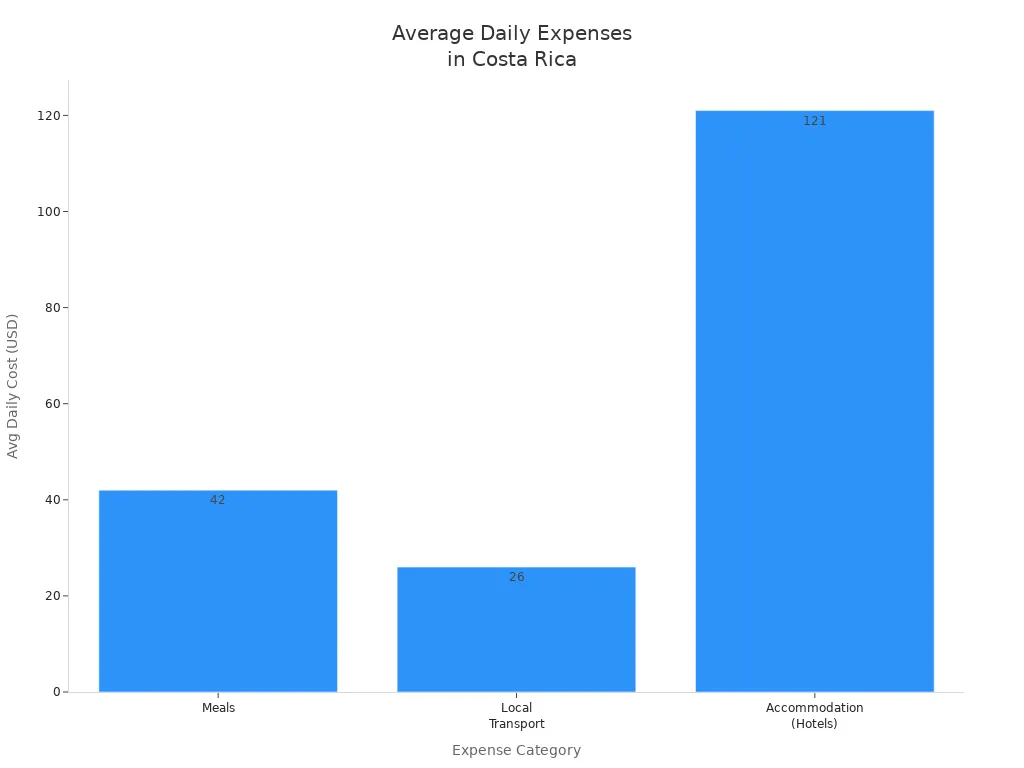
You will spend money on food, rides, and hotels every day. Most travelers spend about $136 (₡68,945) each day. Here is a table with the average costs:
|
Expense Category |
Average Daily Cost (USD) |
Average Daily Cost (CRC) |
|
Meals |
$42 |
₡21,239 |
|
Local Transportation |
$26 |
₡13,102 |
|
Accommodation (Hotels) |
$121 |
₡61,385 |
|
Total Average Daily Cost per Person |
$136 |
₡68,945 |
You can use both colones and US dollars in many places. Using colones helps you avoid mistakes and extra fees. In Costa Rica, you can pay by card at hotels and big stores. Small shops and markets like cash. Always check the exchange rate before you pay.
You now know that the Costa Rican colón (CRC) is the main currency in Costa Rica. Many places accept U.S. dollars, but you will find it easier to use colones for daily purchases.
-
Carry small bills and coins for taxis, buses, and markets.
-
Exchange money at local banks for better rates.
-
Use credit or debit cards when possible, but check for extra fees.
Digital payments are growing fast in Costa Rica, making it easier for you to pay with your phone or card. Learning how to use CRC helps you enjoy your trip and avoid confusion.
FAQ
What is the best way to get Costa Rican colón as a visitor?
ATMs let you take out colón from your bank account. Banks and exchange offices give good rates too. Airport counters cost more and have higher fees.
Can I use US dollars everywhere in Costa Rica?
US dollars work at many hotels, tourist shops, and restaurants. Small stores, markets, and buses want colón instead. Always keep some colón for daily things.
How do I send money to Costa Rica from another country?
You can send money with bank transfers, money transfer services, or online apps. Banks and services like Western Union or MoneyGram send money fast and safe.
Are credit cards widely accepted in Costa Rica?
Most hotels, big stores, and restaurants take credit cards. Small shops and street sellers like cash better. Always check for extra fees before using your card.
Related content