
RON Currency Explained: Everything You Need to Know About the Romanian Leu
Author:XTransfer2025.08.19RON
The Romanian leu, abbreviated as RON currency, is the official money used in Romania. One leu is divided into 100 bani. Visitors or business people should be familiar with the RON currency to make payments smoothly. Currently, 1 leu is approximately equal to 0.20 euro. Check out the latest exchange rates below:
|
RON |
EUR |
|
1 |
≈ 0.20 |
|
10 |
≈ 1.97 |
|
100 |
≈ 19.72 |
|
1000 |
≈ 197.17 |
Highlights
-
The Romanian leu (RON) is Romania’s money. It is split into 100 bani. Knowing this helps you pay and avoid trouble. - Use official exchange rates to get good value. Go to banks or big ATMs to change money. This helps you avoid extra fees. - In cities, use cards or digital payments because it is easy. In the countryside, bring cash because cards may not work.
RON Currency Overview
What Is RON?
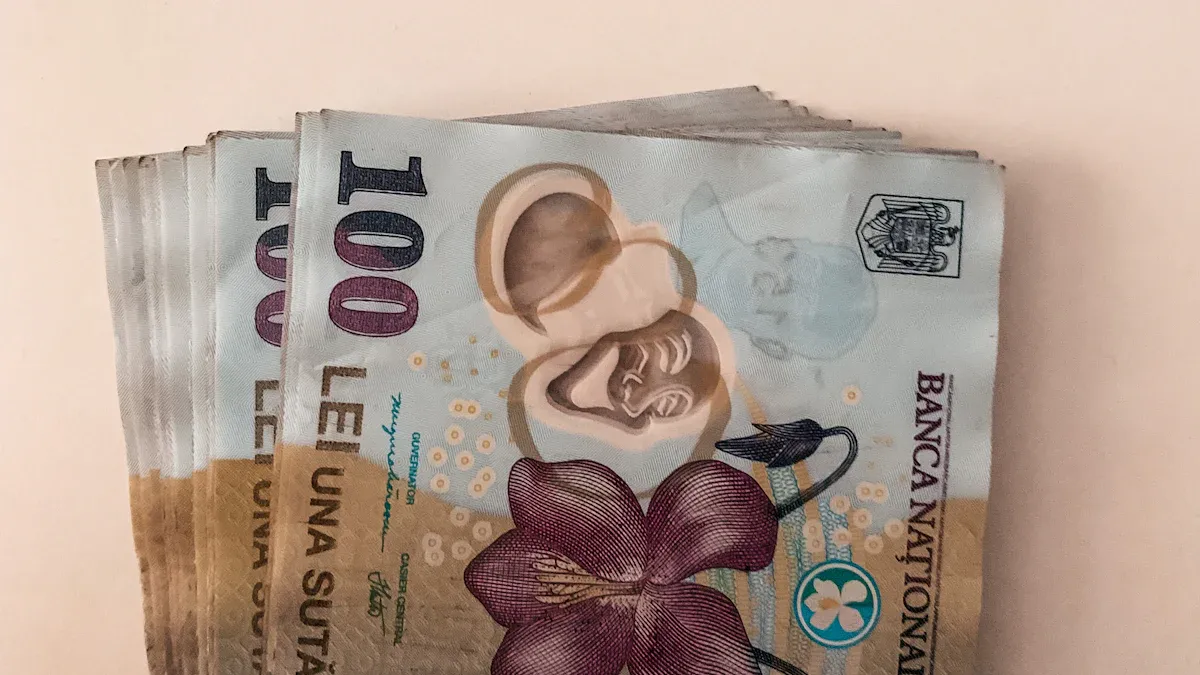
The Romanian leu is the main money in Romania. Its ISO code is RON, and its symbol is "L". One leu splits into 100 bani. The National Bank of Romania controls and gives out the leu. This helps keep the money safe and real. People in Romania use the leu every day to buy things. It is important for visitors and business people to know about the leu.
The Romanian leu (RON) is the official money in Romania. The government accepts it, and the central bank manages it.
Here is a simple table with the main facts about the Romanian leu:
|
Attribute |
Detail |
|
ISO Code |
RON |
|
Currency Symbol |
L |
|
Subdivision |
100 bani |
Travelers and business people should learn about the ron currency. Using the right romanian money helps you buy things easily. The leu is the only money you can use in Romania. Knowing about it helps you handle your money well.
History of the Romanian Leu
The romanian leu has a long history of over 150 years. The word "leu" means "lion" in Romanian. The name comes from old Dutch coins called "leeuwendaalder" or "lion thaler". These coins had a lion on them and were used in Eastern Europe. The lion became a symbol for the romanian money and gave it a special look.
The romanian leu has changed many times since it started. Here are some big events in its history:
-
The leu became Romania’s main money in 1867.
-
In 1914, Romania left the gold standard, and the leu lost value.
-
During World War II, the leu was linked to Germany’s Reichsmark.
-
After the war, a new leu replaced the old one at 20,000 to 1.
-
In 1947, the "Great Stabilization" changed the leu again with strict rules.
-
Another change happened in 1952, with different rates for each type of money.
-
From 1970 to 1989, Romania set fixed exchange rates and controlled foreign money.
-
In the 1990s, prices rose very fast, with inflation at 300% each year.
-
By 2003, one euro was worth about 40,000 lei.
-
In 2005, the new romanian leu (RON) replaced 10,000 old lei (ROL) with 1 new leu. Both types of money were used for a short time.
-
Romania wants to use the euro in the future and is working to meet the rules.
The leu has stayed more stable than other Eastern European money. During hard times, the romanian leu lost less value against the euro than the Czech koruna, Polish zloty, or Hungarian forint. This helps people in Romania because prices and loans do not change too much. The government still watches the exchange rates and plans to use the euro later.
Denominations and Symbols
The romanian leu has many coins and banknotes. People use these every day to shop, eat out, and do business. The coins and bills help with both small and big payments.
|
Currency Type |
Denominations |
|
Coins |
1 ban, 5 bani, 10 bani, 50 bani |
|
Banknotes |
1 leu, 5 lei, 10 lei, 20 lei, 50 lei, 100 lei, 200 lei, 500 lei |
Coins use the word "bani", and 100 bani make one leu. Banknotes go from 1 leu to 500 lei, so you can pay for anything you need.
Romanian banknotes have special features to stop fake money and keep users safe. These include:
-
Polymer material makes them strong and hard to tear
-
Clear windows
-
Watermarks
-
Security threads
-
Tiny printing
-
Small holes
-
Shiny tape
-
Hidden images
-
Ink that changes color
-
Printing that glows under UV light
These features make the romanian leu very safe. Polymer notes last longer and stay cleaner than paper ones.
People in Romania use the ron currency for all their money needs. The many types of coins and bills and the strong safety features make the romanian money easy and safe to use.
If you want to visit or work in Romania, learn to spot the coins and bills. This helps you avoid mistakes when changing money and makes buying things easier.
The romanian leu is very important for Romania’s economy. With its long history, modern safety, and steady value, the ron currency is a good choice for everyone in Romania.
Using Romanian Currency
Exchange Rates for RON
It is important to know about exchange rates if you want to use the Romanian leu. The exchange rate for Romanian money changes every day. Many things can change these rates:
-
Economic basics, like the difference in interest rates between Romania and other countries.
-
The National Bank of Romania uses a floating exchange rate and sometimes steps in during money problems.
-
The bank’s money rules focus on keeping prices steady, which affects the leu’s value.
-
Many bank loans in Romania use foreign money, which makes the exchange rate change more.
-
Romania wants to join the Eurozone, and this goal affects how the exchange rate is managed.
When there is a crisis, the National Bank might raise interest rates to help the leu. This happened in 2008, when the bank tried to protect the leu from people betting against it. The leu can change in value more than other money in the area. Interest rates and exchange rates often move together, especially when the bank changes its rules.
How to Exchange Money
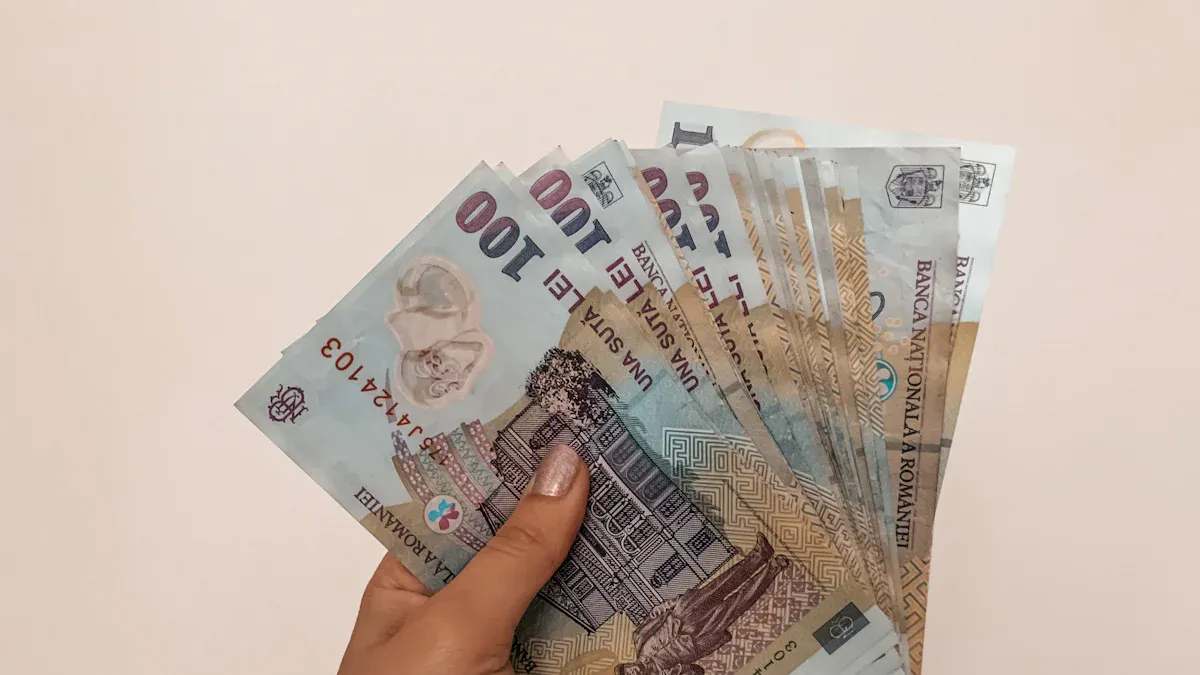
People who travel or do business in Romania need to know how to change their money for Romanian lei. In Romania, you can change money at banks, ATMs, and private exchange offices. Airports and border places also let you change money, but their rates are usually 10% to 20% worse than normal. You might lose money if you change it there.
ATMs are easy to find in cities, airports, and malls. They work with international cards like STAR and PLUS. When you take out Romanian money from ATMs, you may pay some fees:
-
International ATM fees, which can be a set amount or a part of what you take out.
-
Charges for changing money, usually between 1% and 3%.
-
Extra fees from ATM owners, mostly at small or private ATMs. These fees show up on the screen before you finish.
To save money, use ATMs from big banks or post offices. Do not use dynamic currency conversion and always pick to pay in leu. Private exchange offices might charge more, so check the rate and ask about extra costs before you change your money.
Payment Methods in Romania
Romania has many ways to pay. Cash is still used a lot, especially for small buys and in the countryside. Credit and debit cards like Visa and Mastercard are used in cities and big stores. Contactless payments are getting more popular. Digital payments, like mobile wallets and fast transfers, are growing quickly.
|
Payment Method Category |
Specific Methods / Providers |
Usage Context and Notes |
|
Cash |
Cash on Delivery (COD), Fan Courier, Sameday, DPD |
Used for e-commerce, small shops, rural areas |
|
Credit/Debit Cards |
Visa, Mastercard, American Express, JCB, UnionPay, Discover, Diners Club, Maestro |
Accepted in urban areas, large stores, online and offline |
|
Bank Transfers |
SEPA, local RON transfers, instant payments via mobile apps |
Used for large purchases, secure, fast |
|
Digital Wallets |
Apple Pay, Google Pay, Samsung Pay, eMAG Wallet, Netopia MobilPay |
Popular for e-commerce, fast and secure |
|
Buy Now, Pay Later |
Leanpay, Mokka, TBI Pay, Beez, Optimo Card |
Offers installment payments, growing in popularity |
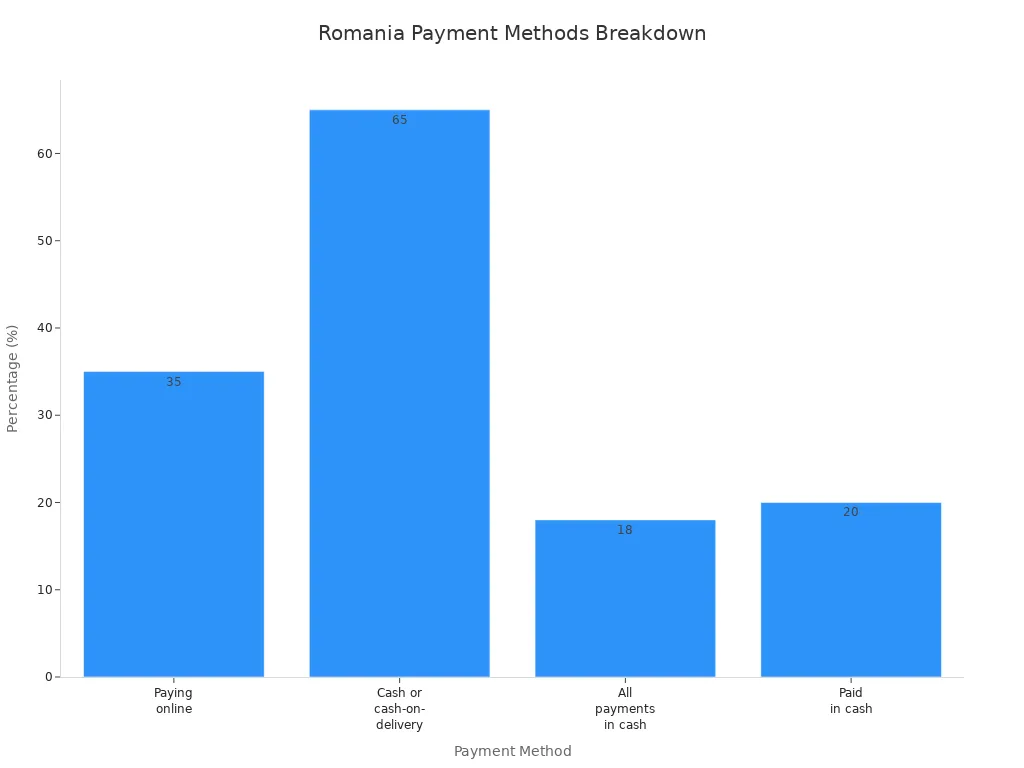
Cash is used for about 65% of all payments, while 35% of people pay online. About 18% of people use only cash, and 20% get paid in cash. Debit cards are used by 70% of people with accounts, and 25% use credit cards.
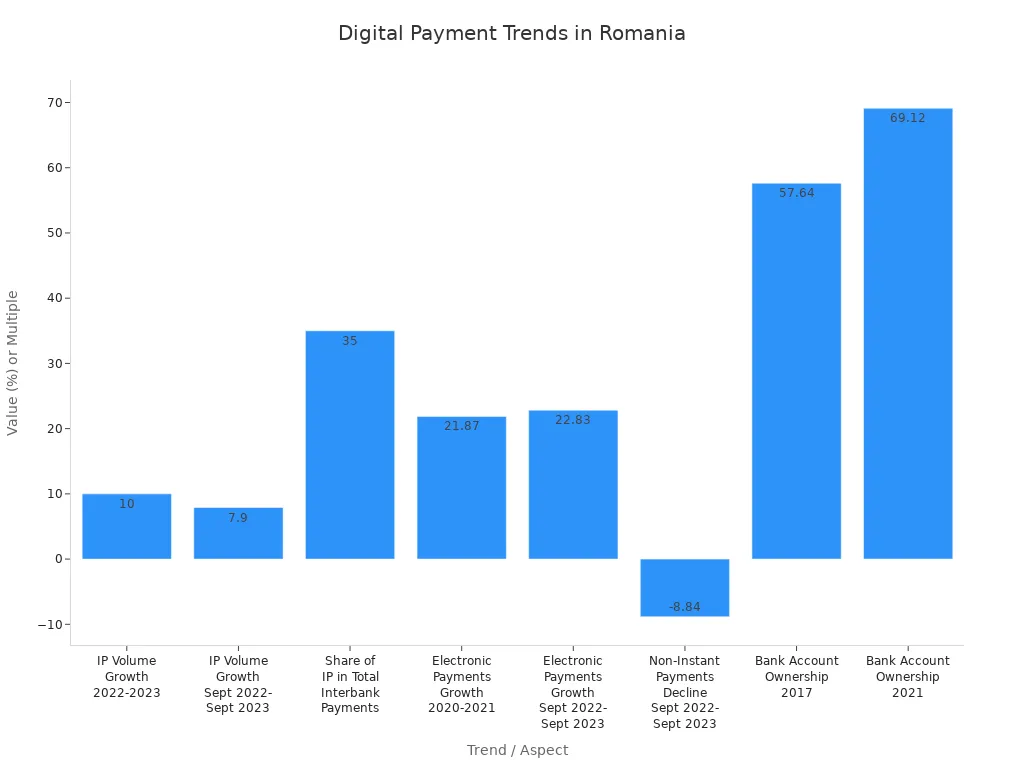
Digital payments are growing fast. Instant payments now make up over 35% of payments between banks. The RoPay system lets people pay right away for shopping, travel, and bills. Most big banks offer these services, so sending money is quick and easy. The fintech industry in Romania is also getting bigger, with new apps and things like fingerprint login and open banking.
Practical Tips for Handling RON
Being smart with Romanian money helps you avoid problems. Always tip in leu so workers do not lose money on exchange fees. Bring small bills before you arrive, especially for tips for drivers, helpers, and hotel staff. Look at your bill to see if a service fee is already added.
Agree on taxi prices before you start your ride. For tips, round up for short trips or give about 10% for longer ones. In hotels, tip between 10% and 20%, depending on the service. When eating out, plan to tip 10-15%, but it depends on the restaurant.
Planning your budget is important. Hostels cost about 50 lei each night, and mid-range hotels are around 120 lei. Street food and cooking for yourself cost about 40 lei per day, while restaurant meals are 60 to 80 lei. Public transport costs 30-50 lei per day. Budget travelers spend about 173 RON per day, mid-range travelers about 367 RON, and high-end travelers around 773 RON.
-
Use travel debit cards to save on fees and get better rates.
-
Take out small amounts from ATMs to lower risk and not carry too much cash.
-
Plan your spending by type: place to stay, food, transport, and fun.
-
Always keep some leu for emergencies, especially far from cities.
-
Remember, it is hard to change leftover Romanian leu outside Romania.
Digital payments and ways to send money are getting better every year. Romania’s payment system is modern and safe, making it easy and cheap to send money. The country is working on new ideas, so you will see even easier ways to pay with leu soon.
Smart travelers learn about local habits, use safe ways to send money, and watch exchange rates. This helps save money and makes trips to Romania easier and more fun.
-
The leu is important for life and business in Romania.
-
Travelers who watch exchange rates and payment choices can save money. They also avoid problems.
-
Using the leu helps people control how much things cost in Romania.Knowing about the romanian leu makes it easier to live, work, and travel in Romania. The leu helps people see and understand prices in Romania.
FAQ
Can travelers use euros or dollars in Romania?
Most stores and places to eat only take Romanian leu. Travelers need to change their money to leu. This helps them pay without trouble and get more for their money.
Is it safe to use ATMs in Romania?
ATMs from big banks are safe and work well. Travelers should not use ATMs that stand alone. Always hide your PIN and look for anything strange on the machine.
What should visitors do with leftover RON?
Visitors should use or change their leu before leaving Romania. Most banks in other countries do not take RON. Keeping small bills is good for buying gifts or giving tips.
Related content