
Long-Term Trends Shaping the ISK Currency and Icelandic Prices
Author:XTransfer2025.08.19ISK
A traveler in Iceland once saw a lunch bill for 3,200 ISK currency and panicked, thinking it was $3,000, but the real cost was just $22. This story highlights how the ISK currency and the usd to isk rate shape daily life. Over the past year, the usd to isk exchange rate swung from 120.47 to 142.37, with the usd weakening by 12.35% against the ISK currency.
|
Time Frame |
Exchange Rate Range (for $114 USD) |
Volatility |
Percentage Change |
|
Last 7 Days |
120.75 ISK - 122.775 ISK |
1.68% |
N/A |
|
Last 30 Days |
120.365 ISK - 122.875 ISK |
2.09% |
N/A |
|
Last 90 Days |
120.47 ISK - 131.85 ISK |
9.45% |
N/A |
|
Past Year |
120.47 ISK - 142.37 ISK |
18.18% |
-12.35% (USD weakened vs ISK currency) |
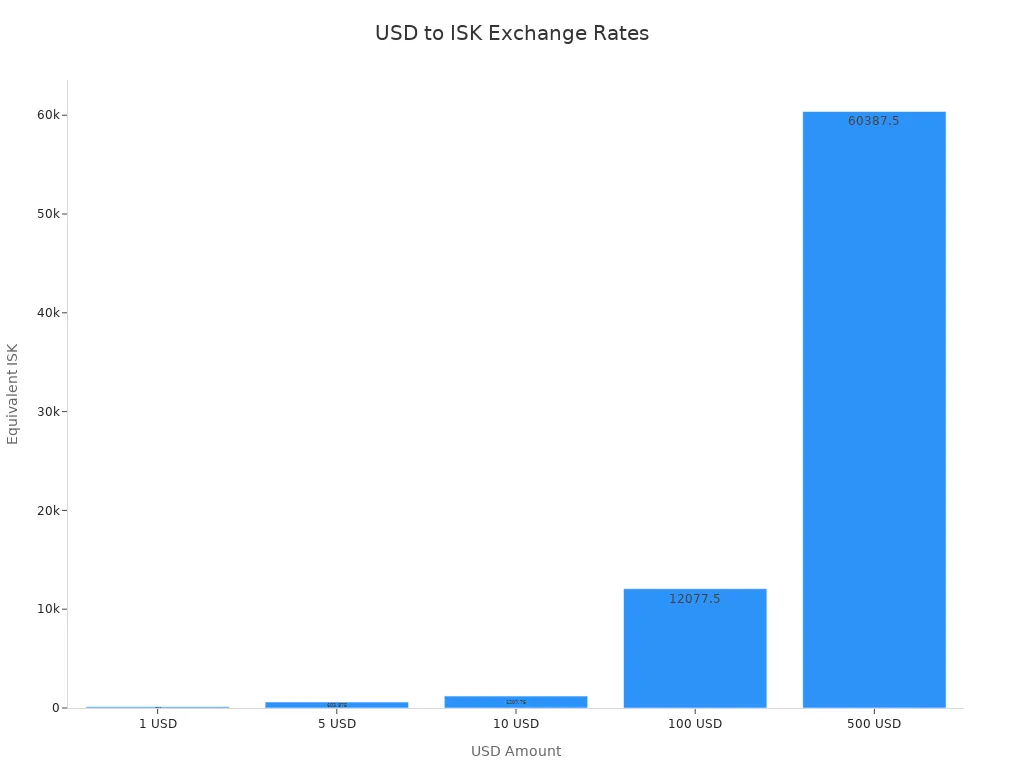
Travelers, investors, and residents in Iceland watch the current rate closely. The usd to isk trend affects everything from coffee prices to investment returns. For investors, Iceland’s strong net international investment position and diversified pension funds help stabilize the ISK currency and reduce risks. Understanding the current rate and usd to isk shifts means better decisions for cost of living and travel.
Highlights
-
The ISK changes value fast because Iceland's economy is small. Things like tourism, fishing, and world events also affect it. Travelers and investors should watch exchange rates often.
-
Iceland's Central Bank tries to keep the ISK steady with interest rates and rules. Trade balances and world economic trends also change its strength a lot.
-
Inflation in Iceland has gone up and down a lot lately. This makes prices for things like food and hotels change often. Planning ahead can help control costs.
-
Travel costs in Iceland depend on how you travel. Checking the USD to ISK rate before trips can save money. It also helps avoid surprises.
-
Experts think the ISK will stay a bit unstable but may get stronger slowly. Keeping up with forecasts and news helps people make better money choices.
ISK Currency Trends
Recent ISK Performance
The icelandic króna changed a lot this year. The usd to isk exchange rate went as high as 142.37 and as low as 120.47. The usd/isk market saw the usd drop by over 12% against the isk currency. This surprised many investors and travelers. The exchange rate between the usd and the isk currency changes fast. In the last 90 days, the usd to isk rate moved from 120.47 to 131.85. The icelandic króna also changed against the British pound. It showed similar ups and downs.
The usd to isk market reacts to news from Iceland and the world. When the Central Bank of Iceland raises interest rates, the isk currency sometimes gets stronger. But the usd to isk rate can also change if the world economy is uncertain. The icelandic króna is sensitive to tourism, fishing exports, and renewable energy needs. These areas bring in money for Iceland and help the isk.
Key Drivers of ISK Value
Many things affect the value of the isk currency over time. The Central Bank of Iceland helps by setting interest rates and controlling inflation. When the bank raises rates, the isk currency can look better to investors. This can make the isk go up in value. But the link between interest rates and the isk is not simple. Past data shows that interest rates matter, but other things are important too.
Here are the main things that affect the isk currency:
-
The Icelandic economy depends on fishing, tourism, and renewable energy. These areas create demand for the isk and affect the usd to isk rate.
-
The Central Bank’s money rules, like inflation targeting and capital controls, help keep the icelandic króna steady.
-
The isk currency reacts to world economic trends, inflation, and interest rates. These can make the usd/isk market go up and down.
-
Political stability and government choices affect how much investors trust the isk.
-
Getting better after the 2008 recession and steady growth have helped the isk get stronger in recent years.
-
Big changes, like world prices, tourism shifts, and climate risks, can change the isk currency.
Trade balances are also important for the icelandic króna’s future. The table below shows recent trade data and what it means for the isk:
|
Aspect |
Details |
|
Trade Deficit Increase |
65% rise to ISK 178 billion compared to previous year |
|
Export Change |
4% decrease excluding marine products |
|
Import Change |
8% increase mainly due to industrial supplies, ships, and transportation equipment |
|
Trade Partners with Deficits |
China, Norway, Germany, Denmark |
|
Trade Partners with Surpluses |
Netherlands, Spain, France |
|
Impact on ISK Valuation |
Higher than expected trade balance = bullish for ISK; lower than expected = bearish |
|
Long-term Outlook Implication |
Persistent deficits may weaken ISK; improved exports or reduced import growth may strengthen ISK |
|
Source |
Statistics Iceland via Myfxbook economic calendar |
When Iceland sells less or buys more, the trade deficit gets bigger. This can make the isk currency weaker and change the usd to isk exchange rate. If exports go up or imports slow down, the icelandic króna can get stronger. The usd/isk market pays close attention to these changes.
The isk currency will likely stay sensitive to changes in Iceland and the world. The usd to isk rate will keep showing changes in trade, rules, and what investors think. The isk can get stronger if exports are good, rules are steady, and the economy grows.
Long-Term ISK Outlook
Historical Patterns
The icelandic króna has faced many ups and downs. In the last twenty years, it changed a lot. In December 2008, the exchange rate hit 149.33. This big drop happened during the global financial crisis. At that time, Iceland’s main banks failed. The government used capital controls to protect the icelandic króna and its foreign money. The crisis made the ISK lose half its value in one week. Foreign investors left, and the country had political problems.
Even with these problems, the icelandic króna got stronger later. By July 2025, the exchange rate was 120.77. This showed the ISK got 12.35% stronger in one year. The ISK also went up by almost 1% last month. Sometimes, the ISK stays steady for weeks. In the last 30 days, the ISK to USD rate was between 0.0082 and 0.0083. The average was 0.0082. In 90 days, the rate moved from 0.0076 to 0.0083. The average was 0.0080. These numbers show small changes and a calm period.
The ISK’s story shows how world events can change a small currency. After the crisis, the icelandic króna helped Iceland sell more goods and bring in tourists. By 2015, fewer people were out of work, and the economy grew. Prices also became normal again. The ISK’s comeback after the crisis shows it is strong.
Gradual Depreciation Trends
Over time, the ISK has slowly lost value against big currencies. Even though the icelandic króna can recover after hard times, it usually goes down. This happens in small countries that sell goods to other places and face world market changes.
Some things cause this long-term trend:
-
Iceland’s economy depends on fishing, tourism, and renewable energy. Changes in these areas can change the ISK’s value.
-
The country often buys more than it sells, which can make the icelandic króna weaker.
-
World events, like money problems or price changes, can make the ISK drop fast.
-
The Central Bank of Iceland tries to help with interest rates and capital controls, but these tools do not always work.
Here is a table with important moments for the ISK:
|
Year |
Exchange Rate (USD/ISK) |
Event/Trend |
|
2001 |
~85 |
Stable period |
|
2008 |
149.33 |
Global financial crisis |
|
2015 |
~130 |
Recovery and export growth |
|
2024 |
142.37 |
Recent volatility |
|
July 2025 |
120.77 |
ISK strengthens after recovery |
Experts think the ISK might get a bit stronger soon. By the end of this quarter, they expect the rate to be 123.82. In one year, they think it will be 127.91. These guesses show the ISK can recover but may still go down over time.
-
The ISK changed by 1.11% in the last 30 days and 5.74% in the last 90 days.
-
Short-term calm does not change the long-term slow drop.
The icelandic króna is affected by things in Iceland and around the world. The ISK can get stronger when the economy grows or exports are good. But over time, it still tends to lose value against bigger currencies. People who invest, travel, or live in Iceland should watch these changes and use new forecasts to plan.
USD to ISK Rate
Exchange Rate Volatility
Many travelers notice that the usd to isk rate can change quickly. One day, a coffee costs 600 isk, and the next week, it might be 650 isk. The usd to isk exchange rate often moves because of news from Iceland or the United States. In the last ten years, the most dramatic change happened in November 2022. The usd to isk rate reached 148.62, the highest point in a decade. This peak surprised many people who watched the current rate for travel or business.
The table below shows how the usd to isk exchange rate changed during different periods:
|
Period |
Highest Rate (ISK/USD) |
Lowest Rate (ISK/USD) |
Average Rate (ISK/USD) |
Volatility / Change |
|
Last 10 years |
148.62 (Nov 3, 2022) |
N/A |
N/A |
N/A |
|
Last year |
142.26 (Feb 10, 2025) |
120.64 (Jun 30, 2025) |
N/A |
-12.01% |
|
Last 90 days |
132.26 |
120.64 |
125.52 |
-4.66% |
|
Last 30 days |
122.75 |
120.64 |
121.73 |
-1.16% |
Recent USD to ISK Movements
In the past year, the usd to isk rate showed strong swings. The usd started at a high of 142.26 isk in February 2025. By June 2025, the usd to isk dropped to 120.64 isk. This means the usd lost over 12% of its value against the isk. Many investors and travelers checked the current rate each week to plan their spending.
The last 90 days brought more changes. The usd to isk moved from 132.26 to 120.64. The average rate was 125.52. In the last 30 days, the usd to isk rate stayed between 122.75 and 120.64. The average was 121.73. These numbers show that the usd to isk exchange rate can change fast, even in a short time.
People in Iceland watch the current rate for daily life. A small move in the usd to isk can make groceries, hotels, or tours more expensive. Investors also track the usd to isk exchange rate to decide when to buy or sell isk. The current rate affects everyone, from tourists to business owners.
Many wonder if the isk will always be a local currency or if digital money will replace it in the future.
USD to ISK Forecast
Short-Term Projections
Many travelers and investors want a clear usd to isk forecast for the next few months. The usd to isk rate often reacts to news about interest rates, inflation, and trade. In the short term, experts expect the usd to isk exchange rate to stay between 120 and 125. This prediction comes from recent market trends and central bank statements. The usd to isk forecast suggests that the rate will not move sharply unless there is a big change in the global economy.
People who plan to visit Iceland soon should watch the usd to isk forecast each week. A small change in the usd to isk rate can affect the cost of hotels, food, and tours. Investors also use the usd to isk forecast to decide when to buy or sell currency. The prediction for the next quarter shows a stable trend, with the usd to isk rate likely to stay close to its current level.
Five-Year Outlook
Looking further ahead, the usd to isk forecast points to a gradual increase in the exchange rate. By mid-2030, the usd to isk prediction shows the rate rising from about 120.790 to 129.255. This change means the usd to isk rate could grow by around 7% over five years. The forecast does not show any signs of sudden jumps or crashes. Instead, the usd to isk prediction supports a steady upward trend.
Reliable usd to isk forecast sources include academic research that uses advanced models. For example, studies using nonlinear models and the Harrod–Balassa–Samuelson effect provide better predictions than older methods. These models look at how productivity and economic changes affect the usd to isk rate. Experts trust these usd to isk forecast methods for long-term planning.
The five-year usd to isk prediction helps travelers, investors, and residents plan for the future. A steady usd to isk forecast means fewer surprises for those watching the exchange rate.
Interest Rates and ISK
Global vs. Domestic Rates
A tourist once checked the usd to isk rate before buying a coffee in Reykjavik. He noticed the price changed from his last visit. The reason often links to interest rates. Central banks around the world set rates that affect how much people want to hold different currencies. When the Federal Reserve raises usd rates, investors may move money into the usd. This can make the usd stronger against the isk.
Iceland’s Central Bank sets its own rates. Sometimes, these rates move in a different direction from global rates. When Iceland raises its rates higher than the usd, the isk can attract more investors. They want better returns. The difference between global and domestic rates often drives the usd to isk exchange rate.
|
Rate Type |
Current Level |
Effect on ISK |
|
Icelandic Rate |
9.25% |
Supports strong isk |
|
US Federal Rate |
5.25% |
Supports strong usd |
|
Long-term Interest |
4.5% (avg) |
Affects long-term usd/isk trends |
Impact on ISK Currency
Interest rates shape the value of the isk every day. When Iceland’s rates go up, the isk can get stronger against the usd. Investors look for the best returns. If the usd offers higher long-term interest rates, money may flow out of Iceland. This can weaken the isk.
The Central Bank of Iceland watches long-term real rates closely. These rates show the true return after inflation. If Iceland keeps its long-term interest rates above the usd, the isk may stay strong. If not, the usd to isk rate could rise.
-
High domestic rates can attract foreign investment into the isk.
-
Low global rates can make the usd less attractive, helping the isk.
-
Changes in long-term interest rates often lead to big moves in the usd to isk market.
Travelers and investors should watch both global and Icelandic rates. Even a small change can shift the usd to isk rate quickly. The future of the isk depends on how these rates move together.
What do you think? Will the isk stay strong if Iceland keeps its rates high, or will the usd always have the upper hand?
Inflation and Prices in Iceland
Inflation Trends
A visitor in Reykjavik saw sandwich prices go up each month. He wondered if the isk or inflation was the main cause. In iceland, inflation changes the price of almost everything. Over five years, inflation changed a lot. In 2020, inflation was 2.8%. In 2021, it rose to 4.4%. The next year, it jumped to 8.3%. In 2023, inflation hit 8.7%. This was the highest in recent years. By 2024, inflation dropped to 5.9%. These numbers show how fast prices can change in iceland.
|
Year |
Inflation Rate (%) |
|
2020 |
2.8 |
|
2021 |
4.4 |
|
2022 |
8.3 |
|
2023 |
8.7 |
|
2024 |
5.9 |
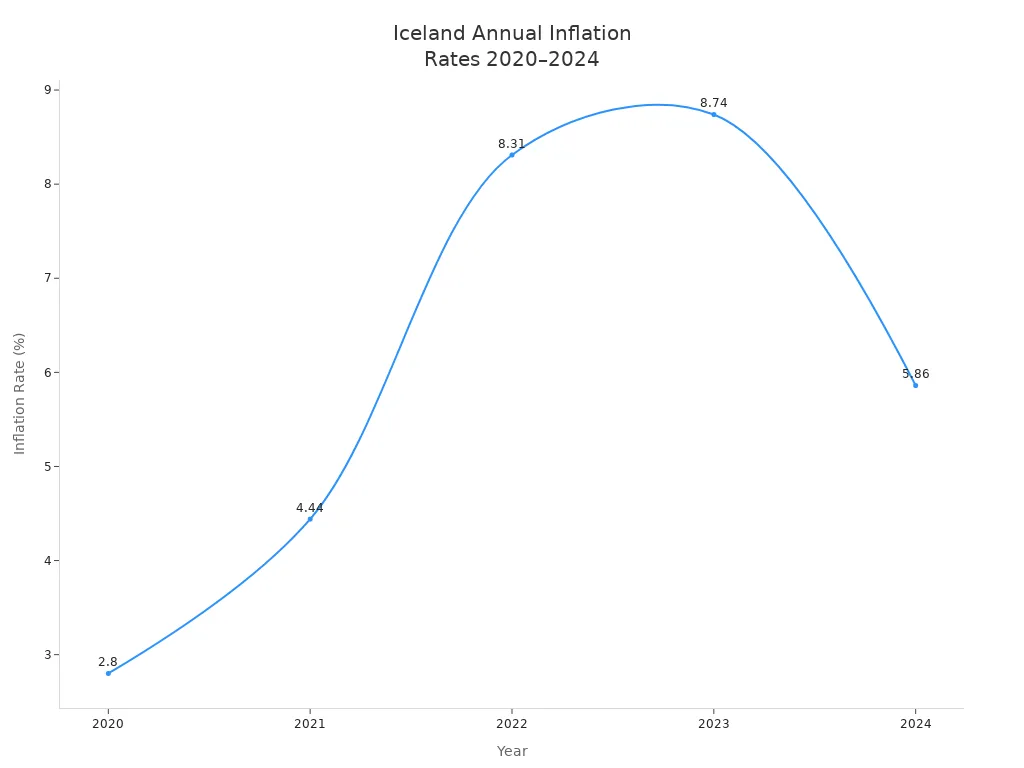
Monthly inflation in iceland also changes a lot. Early 2023 had inflation near 8.0%. By mid-2025, it was closer to 3.9%. The Central Bank uses interest rates and the isk to help control inflation. But prices for imports and local goods still change often. Many people in iceland watch inflation to guess future prices.
Price Comparisons
Living in iceland costs more than in most Nordic countries. People expect high prices in Scandinavia, but iceland is even higher. Taxes, social programs, and high wages push prices up. Still, iceland’s price index is above Denmark, Norway, Sweden, and the Eurozone.
|
Country |
Consumer Price Index (CPI) June 2025 |
Index Base Year |
Notes |
|
Iceland |
656.5 |
May 1988=100 |
NSA, Monthly |
|
Denmark |
120.7 |
2015=100 |
NSA, Monthly |
|
Finland |
123 |
N/A |
N/A |
|
Norway |
137.3 |
2015=100 |
SA, Monthly |
|
Sweden |
418.94 |
1980=100 |
NSA, Monthly |
|
Euro Area |
129 |
N/A |
N/A |
|
European Union |
134 |
N/A |
N/A |
Travelers often see that coffee or hotel rooms cost more in iceland. The isk and inflation both help cause these high prices. If you plan to visit or move, making a price prediction can help you avoid surprises. People living in iceland also use price prediction to plan their spending. The high prices in iceland come from special economic reasons, not just the isk or inflation.
Do you think the isk will always be a “local currency,” or will digital money soon replace it in iceland?
Central Bank and Investment
Policy Actions
The Central Bank of Iceland helps control the ISK currency and prices. In May 2025, it lowered its main interest rate from 8.50% to 7.50%. Before this, the bank kept rates high to fight inflation. The Central Bank also started buying foreign money often to build up reserves. These steps help keep the ISK steady and get ready for hard times.
The Central Bank now uses forecasts to set its inflation goals. This means it looks at predictions before making choices. The IMF said the bank should slowly lower rates as inflation drops to 2.5% by late 2026. There are no new rules on moving money or changing the exchange rate system. These choices affect the icelandic bond market. Investors watch interest rates and inflation very closely.
Foreign Investment Effects
Foreign investment changes the ISK and prices in Iceland. In 2022, pension funds bought 70% more foreign money, reaching ISK 92 billion in eleven months. This helped the ISK for a while. But later that year, new foreign investment dropped a lot. Money leaving Iceland, a trade deficit, and fewer bets on the ISK made it weaker in late 2022, even though the Central Bank tried to help.
It got harder to borrow money from other countries, so some investors used local money instead. This changed how much people wanted icelandic treasury bonds and other bonds. Big foreign money buys by pension funds and new foreign investments—like those from Iceland joining world indexes—could help the ISK later.
The table below shows how foreign investment can change the ISK and prices:
|
Factor |
Effect on ISK |
Effect on Prices |
|
Pension fund FX purchases |
Support ISK |
May slow inflation |
|
Investment outflows |
Weaken ISK |
Can raise prices |
|
New foreign inflows |
Support ISK |
May lower inflation |
|
Trade deficits |
Weaken ISK |
Push prices higher |
When these money flows change, the exchange rate can jump around. This often makes inflation and living costs go up. People who invest in icelandic treasury bonds and other bonds need to watch these changes closely.
ISK and Cost of Living
Travel Expenses
A traveler in Reykjavik once looked at a restaurant bill and saw 3,200 isk. He thought the price was sky-high, but after checking the exchange rate, he realized it was only $22. This moment shows how the isk and the price of daily items can surprise visitors. The cost of travel in Iceland depends on the travel style. Budget travelers spend about $114 per day, while mid-range travelers pay around $263 per day. Luxury travelers see the price rise to about $610 per day. These amounts cover accommodation, food, transportation, and activities. For a one-week trip, the average price for one person is about $1,820. A two-week trip costs about $3,640. The isk can change quickly, so the price of hotels or tours may shift from month to month.
|
Travel Style |
Daily Price (USD) |
One-Week Price (USD) |
Two-Week Price (USD) |
|
Budget |
$114 |
$798 |
$1,596 |
|
Mid-Range |
$263 |
$1,841 |
$3,682 |
|
Luxury |
$610 |
$4,270 |
$8,540 |
Daily Life Costs
Residents in Iceland feel the effects of the isk and price changes every day. During the 2008 financial crisis, the isk lost value and inflation soared to 20-25%. The Central Bank raised interest rates to 18% to fight rising prices. This made the price of imports and daily goods much higher. People saw the price of groceries, fuel, and clothing increase quickly. After the crisis, the economy stabilized, and inflation dropped. Still, the price of living in Iceland remains high compared to other countries. The isk continues to affect the price of rent, food, and services. When the isk weakens, the price of imported goods goes up. When the isk gets stronger, the price may fall, but not always. Residents must watch the isk and price trends to plan their budgets.
Do you think the isk will always be a “local currency,” or will digital money soon replace it in Iceland?
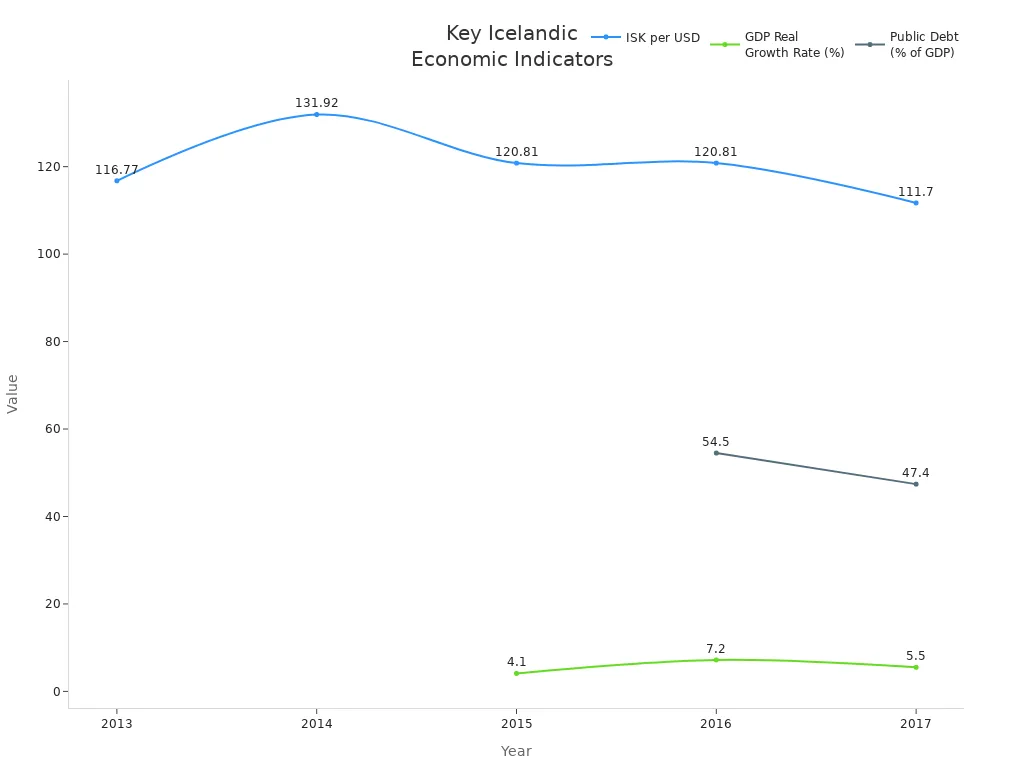
The long-term future for the isk depends on tourism, the economy, and world events. After 2008, Iceland changed from heavy industry to tourism. This helped the isk get stronger. Lately, the usd to isk forecast has been up and down. People who travel, invest, or live in Iceland should watch the usd to isk forecast, inflation, and what the government does.
Top trends to watch:
-
Tourism changes the isk and prices
-
The usd to isk forecast goes up and down
-
Building and worker costs are rising
-
The government reacts to economic changes
-
Experts use models to predict the usd to isk forecast
|
Indicator |
Latest Value |
Note |
|
Consumer Price Index |
656.5 (Jun 2025) |
Prices are high |
|
ISK per USD |
120.77 |
The isk is stronger now |
|
Unemployment |
8,000 (2024) |
Jobs are steady |
FAQ
What makes the ISK so volatile compared to other currencies?
The ISK changes fast because Iceland’s economy is small. Tourism, fishing, and world news can affect the currency. The Central Bank’s choices matter a lot too. People who visit or invest often see big changes in exchange rates.
How do Icelandic prices compare to other Nordic countries?
Prices in Iceland are higher than in Denmark, Norway, or Sweden. Coffee, hotels, and groceries usually cost more in Iceland. The table below gives a quick look:
|
Item |
Iceland |
Norway |
Denmark |
|
Coffee |
$5 |
$4 |
$3.50 |
|
Hotel |
$180 |
$150 |
$140 |
Why do travel costs in Iceland change so often?
A traveler once paid 3,200 ISK for lunch and thought it was $3,000. Exchange rates and inflation make prices go up or down. The ISK’s value can change quickly, so travel costs are different each month.
Will digital money replace the ISK in the future?
Some experts say digital money might replace the ISK someday. Right now, the ISK is still Iceland’s main currency. People use it every day, but new technology could change this later.
How can travelers save money when visiting Iceland?
Related content