
BRL Currency: Brazil’s Anchor in Economic Storms
Author:XTransfer2025.07.31BRL
The BRL currency, officially known as the Brazilian real, serves as Brazil’s national currency and is symbolized as R$. Introduce BRL currency as a globally recognized financial asset, with its currency code BRL ensuring seamless identification in international markets. You might wonder why the Brazilian real holds such significance in the country’s economy. As Brazil’s official currency, it plays a crucial role in stabilizing the financial system by preserving value and facilitating trade. The real also serves as a vital link between domestic and international markets, highlighting Brazil’s economic resilience. Whether you’re delving into Brazil’s monetary policies or its role in global trade, the BRL currency remains a fundamental pillar of its economic success.
History of the Brazilian Real
Origins of the Brazilian Real
You might be surprised to learn that Brazil’s currency history is marked by several changes before the Brazilian real came into existence. The real, introduced in 1994, replaced the cruzeiro as part of the Plano Real—a comprehensive economic reform plan. This plan aimed to combat hyperinflation, which had plagued Brazil for decades. The name "real" was chosen to evoke stability and a connection to Brazil’s colonial past, when the Portuguese real was used. By adopting this new currency, Brazil sought to restore confidence in its financial system and create a foundation for sustainable growth.
Why the BRL Was Introduced
The introduction of the Brazilian real wasn’t just a change in currency; it was a turning point for Brazil’s economy. Before 1994, inflation rates soared, eroding the value of money and destabilizing the economy. You can imagine how challenging it was for businesses and households to plan for the future under such conditions. The Plano Real aimed to break this cycle by introducing a stable currency backed by strict monetary policies. The Brazilian real became a symbol of hope, signaling Brazil’s commitment to economic reform and stability. Its introduction marked the beginning of a new era, where inflation rates dropped significantly, and the economy began to recover.
Evolution of the BRL Over Time
The Brazilian real has undergone significant changes since its introduction. You’ve likely noticed how global and domestic factors influence its value. For example, in 2024, Brazil faced challenges like interest rate differentials and fiscal policy revisions. The table below highlights key economic factors and their impact on the BRL:
|
Economic Factor |
Impact on BRL in 2024 |
|
Interest Rate Differential |
BCB cut rates while Fed maintained, leading to BRL depreciation. |
|
Fiscal Policy Credibility |
Revision of fiscal target to 0% GDP surplus caused a 4% depreciation. |
|
Monetary Policy Concerns |
Guidance on slower rate cuts and split decisions led to negative market sentiment. |
|
Global Factors |
Concerns about China's economy and US elections strengthened the dollar, further depreciating the BRL. |
|
Comparative Analysis |
BRL's movement compared to LatAm, EM, and commodity currencies shows its relative performance. |
These trends illustrate how the Brazilian real adapts to shifting economic conditions. Over time, the BRL has proven resilient, reflecting Brazil’s ability to navigate economic storms while maintaining its role as a vital anchor for the nation’s financial system.
The BRL’s Role in Brazil’s Economy
How the BRL Stabilizes Brazil’s Economy
The Brazilian real plays a critical role in maintaining economic stability in Brazil. You might wonder how a currency can achieve this. The real acts as a medium of exchange, a store of value, and a unit of account, ensuring that Brazil’s financial system operates smoothly. By providing a stable currency, the BRL helps businesses and households plan for the future without worrying about sudden changes in value.
The Central Bank of Brazil (BCB) actively manages the real to prevent extreme fluctuations. For example, it uses monetary policies like adjusting interest rates to control inflation and stabilize the currency. This proactive approach ensures that the BRL remains a reliable anchor for the economy, even during global economic uncertainties.
Moreover, the real supports Brazil’s fiscal policies by enabling the government to manage public debt effectively. A stable currency reduces borrowing costs and attracts foreign investment, which strengthens the economy further. You can see how the BRL serves as a cornerstone of Brazil’s economic resilience.
Impact on Inflation and Monetary Policy
Inflation directly affects the value of the Brazilian real and the purchasing power of consumers. The Central Bank of Brazil has implemented strict monetary policies to combat inflation and maintain the real’s stability.
-
Brazil’s inflation rate decreased slightly from 4.9% in November to 4.8% in December, showing progress in controlling inflation.
-
The Central Bank recently raised interest rates by 100 basis points, signaling its commitment to curbing inflation.
These measures demonstrate how the BCB uses monetary policy to stabilize the economy. By raising interest rates, the bank reduces consumer spending and slows inflation. You might notice that this approach also strengthens the real by increasing its demand in financial markets.
The Brazilian real’s stability depends on these policies. When inflation is under control, the real retains its value, ensuring that Brazil’s economy remains on a steady path.
The BRL’s Role in Domestic and International Trade
The Brazilian real plays a vital role in facilitating trade within Brazil and across international markets. Domestically, the real enables businesses to transact efficiently, supporting economic growth. Internationally, the BRL serves as a medium for trade, particularly in exports of basic products like sugar, tobacco, and other commodities.
|
Year |
BRL Usage in Trade |
Key Findings |
|
2007 |
Limited |
Initial observations on BRL usage in trade |
|
2011 |
Ninefold Growth |
Significant increase in BRL invoicing for exports, especially in commodities |
In 2018, basic products accounted for 51% of Brazil’s export value. This highlights the importance of the real in international trade. Despite being a relatively closed economy, Brazil has leveraged the BRL to strengthen its trade position.
The Central Bank’s 2019 report revealed that price discrimination exists between domestic and international markets. This means that Brazilian exporters adjust their prices based on the real’s exchange rate, maximizing their competitiveness abroad. You can see how the BRL not only supports domestic trade but also enhances Brazil’s presence in global markets.
The Brazilian real’s role in trade underscores its importance as a currency. By facilitating transactions and influencing pricing strategies, the BRL contributes to Brazil’s economic growth and global trade relationships.
The Brazilian Real in Global Markets

International Perception of the BRL
You might wonder how the Brazilian real is perceived globally. Brazil’s economy has gained attention for its impressive growth, driven by domestic consumption, exports, and foreign direct investment. With over 210 million people, Brazil boasts a large consumer base that contributes to increased purchasing power. This dynamic economy has positioned the real as a currency of interest in global markets.
Brazil’s banking sector plays a significant role in shaping the perception of the real. The top five banks dominate over 80% of the credit market, creating a concentrated financial landscape. However, the Central Bank of Brazil has introduced initiatives like PIX and Open Banking to enhance financial inclusion and competition. These innovations have modernized the banking system, making Brazil a leader in Open Banking and attracting foreign investment.
Global financial ratings also influence the perception of the real. Agencies like S&P Global and Fitch classify Brazil two levels below investment grade. While this reflects financial stability, it also underscores the challenges Brazil faces in maintaining investor confidence.
The BRL’s Role in Emerging Markets
The Brazilian real holds a unique position among emerging market currencies. Brazil’s expanding digital market, including e-commerce and online services, has strengthened the real’s relevance in the modern economy. You can see how this growth supports the currency’s role in facilitating transactions and attracting foreign capital.
Brazil’s export-driven economy further enhances the real’s importance. Commodities like sugar, tobacco, and soybeans dominate Brazil’s trade, making the real a key player in international markets. The currency’s stability allows exporters to adjust prices based on exchange rates, maximizing competitiveness abroad.
Emerging markets often face volatility, but the real has demonstrated resilience. Brazil’s proactive monetary policies and fiscal strategies have helped the real navigate global economic uncertainties. This adaptability makes the BRL a reliable currency in the ever-changing landscape of emerging markets.
How XTransfer Provides Real-Time BRL Exchange Rates
Accessing accurate exchange rates is crucial for businesses and individuals dealing with the Brazilian real. XTransfer offers a money exchange service that provides real-time BRL exchange rates, ensuring you stay informed about market fluctuations.
XTransfer’s platform simplifies the process of tracking exchange rates, making it easier for you to plan transactions and manage finances. Whether you’re trading commodities or investing in Brazil’s growing digital market, XTransfer ensures you have the latest data at your fingertips.
By leveraging advanced technology, XTransfer enhances transparency and efficiency in money exchange services. This innovation supports Brazil’s position in global markets and strengthens the role of the real as a reliable currency for international trade and investment.
Challenges and Future of the BRL
Current Challenges Facing the BRL
The Brazilian real faces several challenges that impact its stability and value. Brazil’s economic indicators reveal the hurdles the currency encounters. For instance, the exchange rate of the BRL against the USD has fluctuated significantly, ranging from 4.86 to 6.18 in recent years. Public debt remains high, at 76.5% of GDP, while inflation pressures persist, with rates reaching 4.8%. These factors create uncertainty for the real and complicate monetary policy decisions.
|
Indicator |
Value |
|
Exchange Rate (BRL per USD, eop) |
5.19, 5.57, 5.28, 4.86, 6.18 |
|
Public Debt (% of GDP) |
86.9, 77.3, 71.7, 73.8, 76.5 |
|
Inflation (CPI, ann. var. %, eop) |
4.5, 10.1, 5.8, 4.6, 4.8 |
The real also struggles with external pressures. Global economic trends, such as rising interest rates in developed economies, have led to capital outflows from Brazil. This weakens the BRL further. Additionally, fiscal challenges, including government deficits, raise concerns about debt sustainability. These issues highlight the need for robust policies to support the real’s stability.
Impact of Global Economic Trends on the BRL
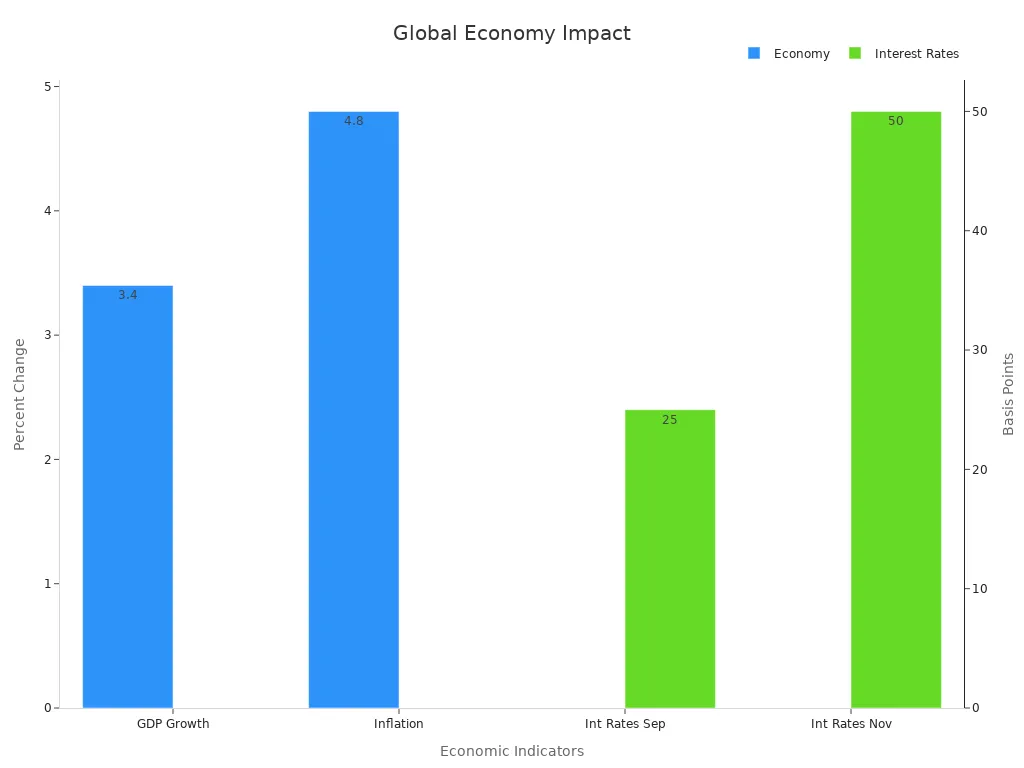
Global economic trends significantly influence the Brazilian real. Brazil’s GDP grew by 3.4% in 2024, driven by strong domestic demand. However, inflation exceeded the target, reaching 4.8%. The Central Bank of Brazil raised interest rates multiple times to combat inflation, but this policy divergence with the US Federal Reserve contributed to the real’s depreciation.
Fiscal challenges also play a role. The government’s need for additional funding to meet surplus targets adds pressure on the BRL. Despite these challenges, export growth offers some relief. Brazil’s strong commodity exports, such as soybeans and sugar, help cushion the impact of global economic uncertainties on the real.
Future Prospects for the BRL
The future of the Brazilian real depends on several factors. Economic models like Purchasing Power Parity (PPP) suggest that exchange rates will adjust over time based on inflation differences. Interest Rate Parity (IRP) indicates that interest rate gaps between Brazil and other countries will influence the BRL’s value.
Brazil’s government aims to balance growth-supporting measures with inflation control. Stimulus initiatives, such as expanded housing funding, could boost domestic demand. However, maintaining fiscal discipline remains critical. The BRL’s prospects also hinge on global trends, including commodity prices and foreign investment flows.
By addressing these challenges and leveraging its strengths, Brazil can ensure a stable future for the real. Using money in Brazil effectively requires understanding these dynamics, as they shape the currency’s role in the economy.
The Brazilian real has played a pivotal role in shaping Brazil’s economy. You’ve seen how its introduction in 1994 helped stabilize the nation during a period of hyperinflation. Over the years, the BRL has proven its resilience, adapting to domestic and global economic shifts. Its importance extends beyond borders, influencing trade and emerging market dynamics.
As Brazil navigates economic challenges, tools like XTransfer simplify your access to real-time BRL exchange rates. These platforms empower you to make informed decisions, whether you’re trading or investing. The BRL remains a cornerstone of Brazil’s financial system and a symbol of its economic strength.
FAQ
What is the symbol and code for the Brazilian real?
The Brazilian real is symbolized as R$ and has the currency code BRL. These identifiers make it easy for you to recognize and use the currency in both domestic and international transactions.
Why was the Brazilian real introduced in 1994?
Brazil introduced the real in 1994 to combat hyperinflation. The government implemented the Plano Real, which aimed to stabilize the economy. The new currency provided a foundation for economic recovery and restored confidence in Brazil’s financial system.
How does the Central Bank of Brazil manage the BRL?
The Central Bank of Brazil uses monetary policies like adjusting interest rates to stabilize the real. These measures help control inflation and prevent extreme currency fluctuations, ensuring a stable financial environment for you and the broader economy.
What role does the BRL play in international trade?
The BRL facilitates Brazil’s exports, especially commodities like soybeans and sugar. Exporters adjust prices based on the real’s exchange rate, which helps them stay competitive in global markets. This makes the BRL essential for Brazil’s trade relationships.
How can you access real-time BRL exchange rates?
You can use platforms like XTransfer to access real-time BRL exchange rates. These tools provide accurate data, helping you make informed decisions when trading, investing, or managing finances involving the Brazilian real.
Related content