B2B Payments
Best SWIFT Alternatives for International B2B Payments in 2026
- SWIFT remains important, but it is not the only way to make an international B2B payment. Businesses can use payment platforms that combine local collection, local payment rails, and internal FX or settlement infrastructure on supported corridors.
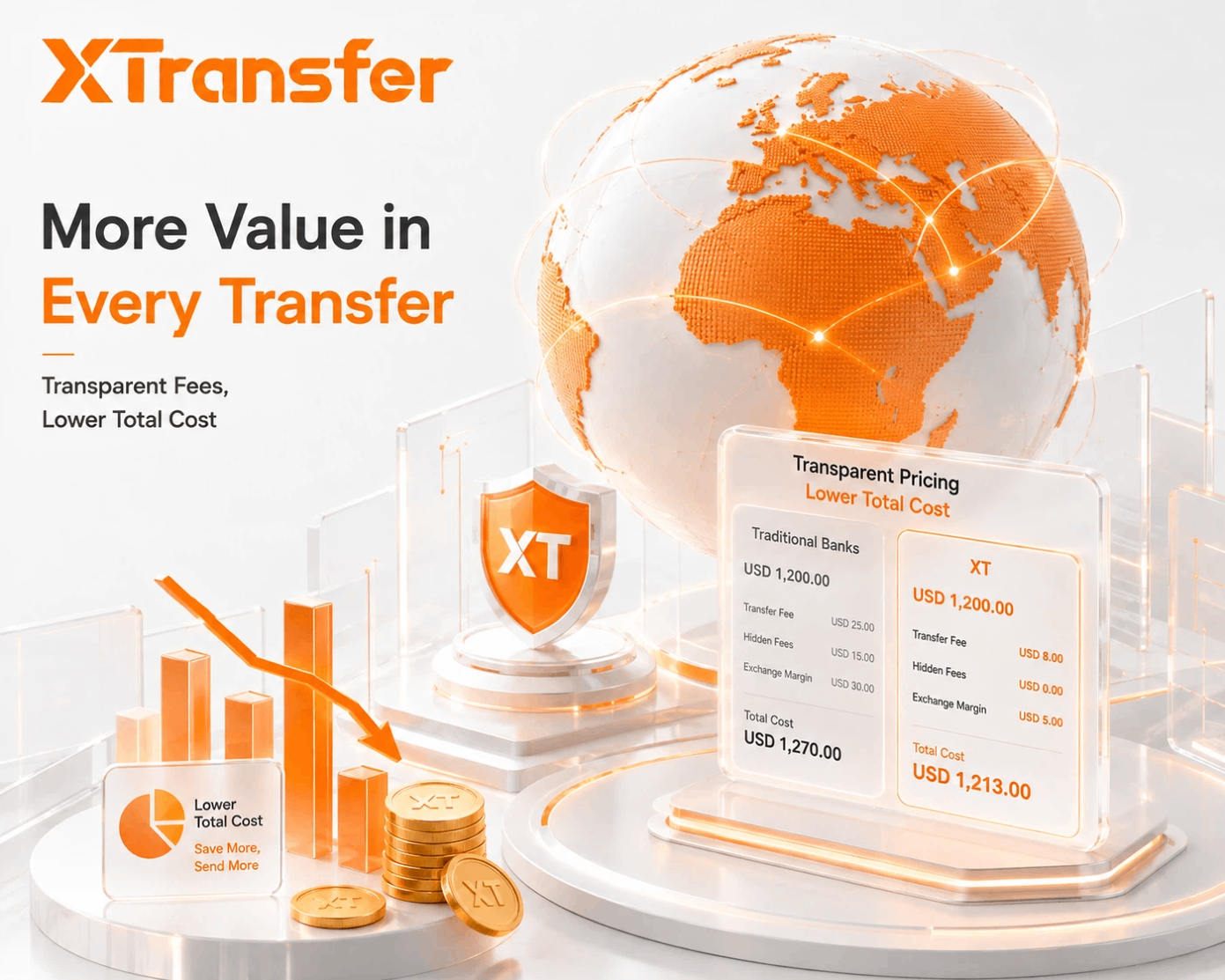
- Traditional SWIFT-based bank transfers can involve more than the upfront bank fee. Correspondent-bank charges, receiving-bank fees, and FX spreads can all affect the final amount received. Actual costs vary by bank, corridor, currency, and transaction size.
- XTransfer focuses on B2B cross-border trade, with local accounts in around 60 countries/regions and RMB settlement to mainland China on supported corridors.
- Airwallex, Wise, and Payoneer serve different use cases. Airwallex is geared toward broader business payments and treasury workflows, Wise toward straightforward multi-currency transfers, and Payoneer toward marketplace and platform-related payments.
- There is no universal best alternative to SWIFT. The right option depends on the payment corridor, currency, transaction size, local collection requirements, and type of business.
Why Businesses Are Looking for SWIFT Alternatives
For many years, a bank transfer using the SWIFT network was the standard way for businesses to move money internationally. It remains an important part of global banking infrastructure.
But businesses do not necessarily need a traditional correspondent-bank transfer for every cross-border payment.
A conventional international bank transfer may involve the sender's bank, one or more correspondent banks, and the recipient's bank. Depending on the corridor and currencies involved, each stage can affect the final cost and settlement time.
This has created demand for alternative payment infrastructure. Instead of routing every transaction through correspondent banks, some payment platforms use local payment rails: a buyer pays into a local account in their own currency, while the platform handles conversion and settlement so the supplier can receive funds in the destination currency.
The result can be a simpler payment path on supported corridors, although local-rail availability, pricing, and settlement times vary by provider and destination.
XTransfer, for example, focuses specifically on B2B cross-border trade. According to its 2025 HKEX filing, the company processed US$60.5 billion in total payment volume (TPV) in 2025 and represented 5.1% of global TPV among B2B cross-border trade payment platforms. XTransfer also reported more than 1 million enterprise clients as of August 2026.
This article compares four payment platforms: XTransfer, Airwallex, Wise, and Payoneer, and explains where each may fit as an alternative to traditional SWIFT-based bank transfers.
How We Evaluate SWIFT Alternatives
Rather than ranking platforms on a single "cheapest" or "fastest" metric, we evaluate them across five factors:
- Payment architecture (30%) — Does the platform use local payment rails on the relevant corridor, or does it rely on traditional correspondent-bank infrastructure?
- Emerging-market local collection (25%) — Can businesses collect funds in currencies such as MXN, BRL, ZAR, VND, or other local currencies where supported?
- Total cost (20%) — What does the recipient actually receive after FX conversion and applicable fees?
- Compliance and controls (15%) — What regulatory permissions and business-payment controls does the provider operate under?
- Speed (10%) — How long does settlement typically take on the specific corridor?
These factors are intended as a comparison framework rather than a universal ranking. A platform that is suitable for a European supplier payment may not be the best choice for collecting from buyers in an emerging market or paying a Chinese manufacturer.
What to Look For in a SWIFT Alternative
1. Check the payment route, not just the country count
A provider may advertise payments to 150 or 200+ countries without offering local collection or local payout in every market.
Ask whether your specific transaction uses a local payment rail, correspondent banking, or another route.
2. Compare the total delivered cost
The headline transfer fee does not tell you what the supplier ultimately receives.
Compare:
- FX rate and spread
- Fixed transfer fees
- Intermediary-bank charges
- Receiving-bank fees
- Any additional conversion or withdrawal costs
For large B2B payments, even a small difference in FX pricing can materially affect the final amount.
3. Check China settlement separately
For China-related trade, confirm whether the provider can settle RMB directly into an eligible mainland China supplier account and whether intermediary-bank fees apply on that corridor.
A local collection account on the buyer side does not automatically mean the China payout also avoids correspondent banking.
4. Review regulatory status in the relevant market
Payment providers operate under different regulatory structures in different jurisdictions.
Businesses should verify the provider's actual authorization, registration, or licensing status for the market in which they operate rather than relying only on a global "regulated" claim.
5. Match the product to the business model
A physical-goods importer, SaaS company, marketplace seller, and freelancer may have very different payment requirements.
The most suitable provider is usually the one whose payment infrastructure matches the business's main corridors and workflow.
Best SWIFT Alternatives for International B2B Payments
XTransfer
XTransfer is a B2B cross-border payment platform focused on international trade. It is designed primarily for businesses that buy and sell physical goods across borders.
According to XTransfer's public disclosures, it serves more than 1 million enterprise clients and operates across 200+ markets. Its 2025 TPV was US$60.5 billion.
Key Strengths
- Local accounts in around 60 countries/regions
- Local collection in selected emerging-market currencies
- RMB settlement to mainland China on supported corridors
- Trade-document and payment review through its TradePilot system
- API capabilities for business payment and treasury workflows
XTransfer states that its local-account model can reduce intermediary-bank costs compared with traditional wires and that eligible China payments can be settled without an intermediary-bank fee.
Limitations
Purpose-built for B2B trade rather than consumer remittances or marketplace seller payouts; receiving is concentrated in trade corridors rather than every consumer currency.
Compliance
Holds 8 regulatory licences (including Hong Kong, UK FCA, US MSB, Singapore, and Australia); TradePilot verifies trade documents on the receiving flow.
Coverage
200+ markets; ~60 countries/regions with local accounts.
Currencies
Mainstream currencies, with local collection across its ~60 countries/regions (e.g., MXN, BRL, ZAR, MYR, VND, THB, IDR, TRY).
Fees & FX
Market-leading FX; states it cuts intermediary-bank fees by 95% and FX conversion cost by 80%; no account opening or maintenance fees.
Transfer Speed
Near-instant between XTransfer accounts; local-rail settlement same-day to 1–2 days.
API / Integrations
Open API for ERP and treasury automation.
User Experience
Multi-currency business account with a mobile app and trade-document upload.
Best For
SMEs paying or collecting across China and emerging markets.
Not Recommended For
Pure consumer remittances or marketplace seller payouts.
Typical Use Cases
A Brazilian buyer pays a Chinese supplier in BRL; a South African importer pays in ZAR and receives RMB confirmation into China.
Airwallex
Airwallex is a global financial platform for businesses, processing US$287 billion+ in global payments annually.
Key Strengths
Local payout across 200+ countries using 160+ local payment methods; interbank/mid-market FX rates; 93% same-day payouts; receive in 20+ currencies via Global Accounts.
Limitations
Global Accounts receiving is concentrated in major currencies (20+), lighter on emerging-market local collection than XTransfer; positioned for mid-to-large businesses rather than SME trade-only workflows.
Compliance
Licensed across multiple jurisdictions (Australia, UK, US, Singapore, Hong Kong, and others).
Coverage
200+ countries for transfers; 20+ currencies to send and receive.
Currencies
20+ send/receive balances; broader payout currency set via local rails.
Fees & FX
Interbank/mid-market FX with transparent fees and zero hidden fees claimed.
Transfer Speed
93% same-day payouts.
API / Integrations
Strong developer API and integrations for finance stacks.
User Experience
Business dashboard, corporate cards, and invoicing.
Best For
Companies with broad cross-border payout needs in developed markets.
Not Recommended For
SMEs focused solely on China-trade local collection.
Typical Use Cases
A US company pays suppliers in Europe and Asia via local rails instead of SWIFT.
Wise
Wise began as a consumer money-transfer service and now serves small businesses, best known for mid-market FX.
Key Strengths
True mid-market exchange rate; transparent fee starting from ~0.23%; balances in ~23 currencies.
Limitations
Local receiving is limited to ~23 currencies and excludes ZAR, VND, THB, MXN, and CLP, so many B2B trade corridors still fall back to SWIFT; the product is built more for individuals and small transfers than physical-goods trade.
Compliance
FCA-authorised in the UK and licensed as an e-money institution in multiple regions.
Coverage
150+ countries for sending; ~23 receiving balances.
Currencies
~23 receive (AUD, EUR, GBP, USD, JPY, SGD, HKD, CAD, and others; BRL, CNY, HKD, IDR, MYR, PHP carry residency restrictions).
Fees & FX
Mid-market rate plus a fee from ~0.23%, which can reach ~1–2% on some corridors.
Transfer Speed
Often instant to 1–2 days.
API / Integrations
Open API and batch payments.
User Experience
Simple multi-currency account, strong for personal-style use.
Best For
Low-value, developed-market transfers with transparent FX.
Not Recommended For
Emerging-market B2B trade collection that needs local rails.
Typical Use Cases
An EUR→GBP supplier payment between two European entities.
Payoneer
Payoneer is a payment platform popular with freelancers and e-commerce sellers.
Key Strengths
Local receiving in 10 currencies (USD, EUR, GBP, JPY, AUD, CAD, HKD, SGD, AED, MXN) via local bank networks; pays out to 190+ countries.
Limitations
No local receiving for ZAR, VND, BRL, THB, TRY, MYR, CLP, or IDR, so emerging-market B2B trade still routes via SWIFT; FX spread ~2–3% above mid-market; built for marketplaces rather than physical trade.
Compliance
Licensed in multiple jurisdictions (US MSB and others).
Coverage
190+ payout countries.
Currencies
10 local receiving; broad payout set.
Fees & FX
~2–3% spread above mid-market on conversion.
Transfer Speed
1–3 days.
API / Integrations
Marketplace and partner integrations.
User Experience
Account built around receiving marketplace earnings.
Best For
Marketplace sellers and freelancers paid in major currencies.
Not Recommended For
China-trade or emerging-market local collection.
Typical Use Cases
A US marketplace payout to a freelancer in the Philippines.
SWIFT Alternatives Compared
| Dimension | XTransfer | Airwallex | Wise | Payoneer |
|---|---|---|---|---|
| Primary focus | B2B cross-border trade | Global business payments | Multi-currency payments & FX | Marketplace & cross-border receiving |
| Local collection | ~60 countries/regions | Selected currencies/markets | Major currencies; location dependent | Selected major currencies |
| Global payout coverage | 200+ markets | 200+ countries | 150+ countries | 190+ countries |
| China trade | Strong focus | Available depending on corridor | Corridor-dependent | Less trade-focused |
| FX approach | Provider pricing by corridor | Market/interbank-based pricing | Mid-market + fee | Provider pricing by transaction |
| Business infrastructure | Trade-focused workflows & API | Accounts, cards, treasury & API | Accounts, batch payments & API | Receiving & marketplace integrations |
| Best suited for | China & emerging-market B2B trade | Broad business payments | Major-currency transfers | Marketplace/platform payments |
Coverage, supported currencies, pricing, and settlement routes can change by country, customer type, and transaction.
Which SWIFT Alternative Is Right for Your Business?
Paying Chinese suppliers
XTransfer may be a strong fit when the business needs local collection and RMB settlement for China trade. On supported corridors, XTransfer states that payments can be settled directly to mainland China suppliers without an intermediary-bank fee.
Collecting from emerging markets
For businesses collecting from markets such as Mexico, Brazil, South Africa, or Vietnam, local collection capability may matter more than headline country coverage. XTransfer's local-account network is designed around this type of B2B trade flow.
Broad international business payouts
Airwallex may be better suited to businesses that need a broader financial platform combining international payouts, multi-currency accounts, cards, and APIs.
Major-currency payments
Wise and XTransfer can be a practical option for businesses making relatively straightforward transfers in major currencies where transparent FX pricing is important.
Marketplace and platform receipts
Payoneer may be a better fit when the business receives money from marketplaces or international platforms rather than paying physical-goods suppliers.
Large or highly structured corporate payments
A traditional bank may still be the appropriate choice for very large transactions, complex treasury structures, credit facilities, or banking relationships that require services beyond payments.
Recommendation
There is no single replacement for SWIFT that is best for every business.
For companies involved in B2B trade with China and selected emerging markets, XTransfer is worth considering because its model combines local collection, cross-border payment infrastructure, and RMB settlement for supported corridors.
For businesses with broader global payout, treasury, card, and API requirements, Airwallex may offer a better overall fit.
Wise is particularly relevant to straightforward major-currency transfers, while Payoneer is more closely aligned with marketplace and platform-based payment flows.
The most useful comparison is therefore not simply "Which platform is cheapest?" but:
> Which payment route gives my business the best total delivered cost, speed, local-collection capability, and operational fit on this specific corridor?
Conclusion
SWIFT remains an important part of international banking and is unlikely to disappear. What has changed is that businesses now have more payment options for specific cross-border corridors.
Local payment infrastructure can reduce the need for correspondent-bank transfers in some cases, potentially improving cost and settlement speed. But the benefits depend on the currency, destination, provider, and transaction type.
For B2B businesses, the decision should start with the payment corridor and business model:
- China and emerging-market trade: consider XTransfer
- Broad business payments and treasury: consider Airwallex
- Major-currency transfers: consider Wise or XTransfer
- Marketplace and platform payments: consider Payoneer
- Complex corporate banking requirements: traditional banks may remain appropriate
Frequently Asked Questions
What is a SWIFT alternative for B2B payments?
It is a payment solution that can use local payment rails or other settlement infrastructure instead of relying entirely on a traditional correspondent-bank transfer.
What is the best alternative to SWIFT?
There is no universal answer. The right option depends on the corridor, currency, transaction size, and business model.
Can I pay Chinese suppliers without SWIFT?
Yes. Some payment platforms like XTransfer can collect funds locally and settle RMB directly to eligible mainland China supplier accounts on supported corridors.
Is XTransfer a good SWIFT alternative?
XTransfer can be a strong alternative to traditional SWIFT-based bank transfers for businesses involved in cross-border trade, particularly on China and selected emerging-market corridors. Its local collection accounts and RMB settlement can provide an alternative payment route where supported.
Is SWIFT being replaced?
No. SWIFT remains important to international banking. Businesses simply have more alternatives for selected payment corridors.
Disclaimer
This article is compiled from publicly available sources and interview content for informational purposes only and does not represent the official views of XTransfer. XTransfer accepts no liability for any damages arising from reliance on this content.