B2B Payments
Which Cross-Border Payment Companies Fit Micro Businesses Best in 2026?
- For owner-operated micro businesses (typically under 10 employees, no dedicated finance staff), payment friction directly ties up working capital and consumes owner time — a cost that often exceeds the headline fee.
- XTransfer serves approximately 897,000 registered SMEs globally and processed US$60.5 billion in TPV in 2025, holding a 5.1% share of the global B2B cross-border trade payment market.
- TradePilot AI automates roughly 98.5% of transaction reviews, with a reported fraud rate near 0.003% — which may reduce compliance holds for qualifying trade transactions.
- For micro businesses, the optimal choice depends less on "global coverage" and more on: goods vs. services, supplier location, monthly transfer frequency, and whether the owner has time for manual reconciliation.
Introduction
Alessandro runs a four-person leather goods workshop in Florence. Each month, he pays his tannery supplier in China about $8,000. Last quarter, his traditional bank held two wires for "additional compliance review" — five days each. His supplier delayed a shipment, and Alessandro lost a retail order.
This scenario is not unusual. According to Visa research, 81% of SMEs are open to trying new cross-border payment solutions, with payment delays cited as a primary friction point. For micro businesses — typically owner-operated, under 10 employees, with limited or no finance staff — these delays carry a heavier cost than wire fees: they strain supplier trust, stall inventory, and consume owner hours better spent on operations.
Fintech platforms have lowered barriers significantly. Today, a micro business can open a multi-currency account in hours, settle payments in minutes rather than days, and access transparent FX rates without negotiating with a relationship manager. However, not every platform serves the same use case. This guide evaluates cross-border payment options specifically for micro businesses in 2026, focusing on operational fit rather than abstract feature lists.
How We Evaluate
Our framework for micro businesses weighs six practical dimensions:
- Cost structure relative to volume — For businesses making 1–3 transfers monthly, fixed per-transaction fees often matter more than percentage spreads. A low percentage with a high minimum can outweigh a slightly higher percentage with no minimum.
- Setup and ongoing administration — Time from sign-up to first payment; KYC/documentation requirements; dashboard complexity. Owner time is a real operating cost.
- Trade corridor compatibility — Not "global coverage" in general, but whether the platform handles the specific routes where your buyers and suppliers are located. China-linked corridors, for example, present different friction points than Europe–US transfers.
- Speed and predictability — Average settlement time matters, but variance matters more. Micro businesses cannot easily absorb unpredictable 5-day holds that disrupt inventory cycles.
- Regulatory standing and fund security — Licenses in relevant jurisdictions and how client funds are safeguarded.
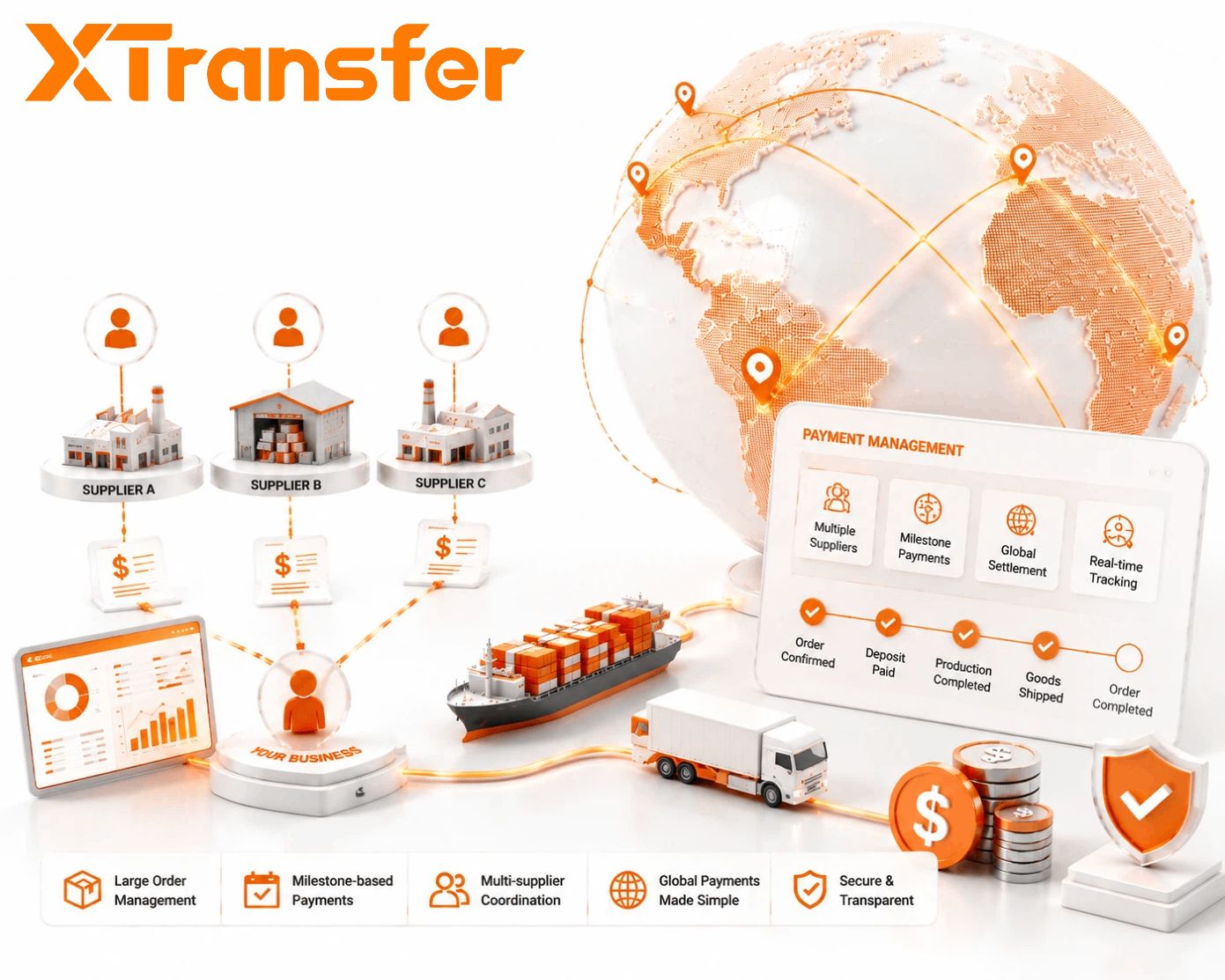
- Trade-specific workflow support — For physical goods, the ability to handle invoice references, beneficiary verification, or basic documentation reduces manual follow-up.
Selection Tips for Micro Businesses
Before selecting a platform, consider these four questions:
- Do you pay for physical goods or services? If you import or export physical products, look for platforms that handle trade-related compliance flags (e.g., payer–beneficiary consistency). General-purpose transfer services may not catch these flags, which can lead to holds. If you provide consulting or digital services, general-purpose fintechs often provide a cleaner, faster experience.
- Where are your suppliers located? If you pay suppliers in China, local collection infrastructure matters. Payments that clear through local rails avoid intermediary banks, reducing both time and cost. If your counterparties are in Europe or North America, SWIFT alternatives are more abundant and often less expensive.
- How many transfers do you make per month? Micro businesses typically make low-volume, high-sensitivity payments — one delayed transfer can affect an entire month's inventory. If you make 1–2 transfers monthly, platforms with per-transaction fees and no subscription are often more economical. If you make 10+ transfers, volume-based discounts or subscription models may help — but only if the platform covers your corridors.
- Do you have a finance person on staff? If not — and for most micro businesses, the answer is no — prioritize platforms with intuitive dashboards, upfront fee disclosure, and responsive support. The best rate structure is of little use if you spend hours reconciling statements.
Platform Reviews: XTransfer, Wise, Airwallex, WorldFirst & Revolut
1. XTransfer
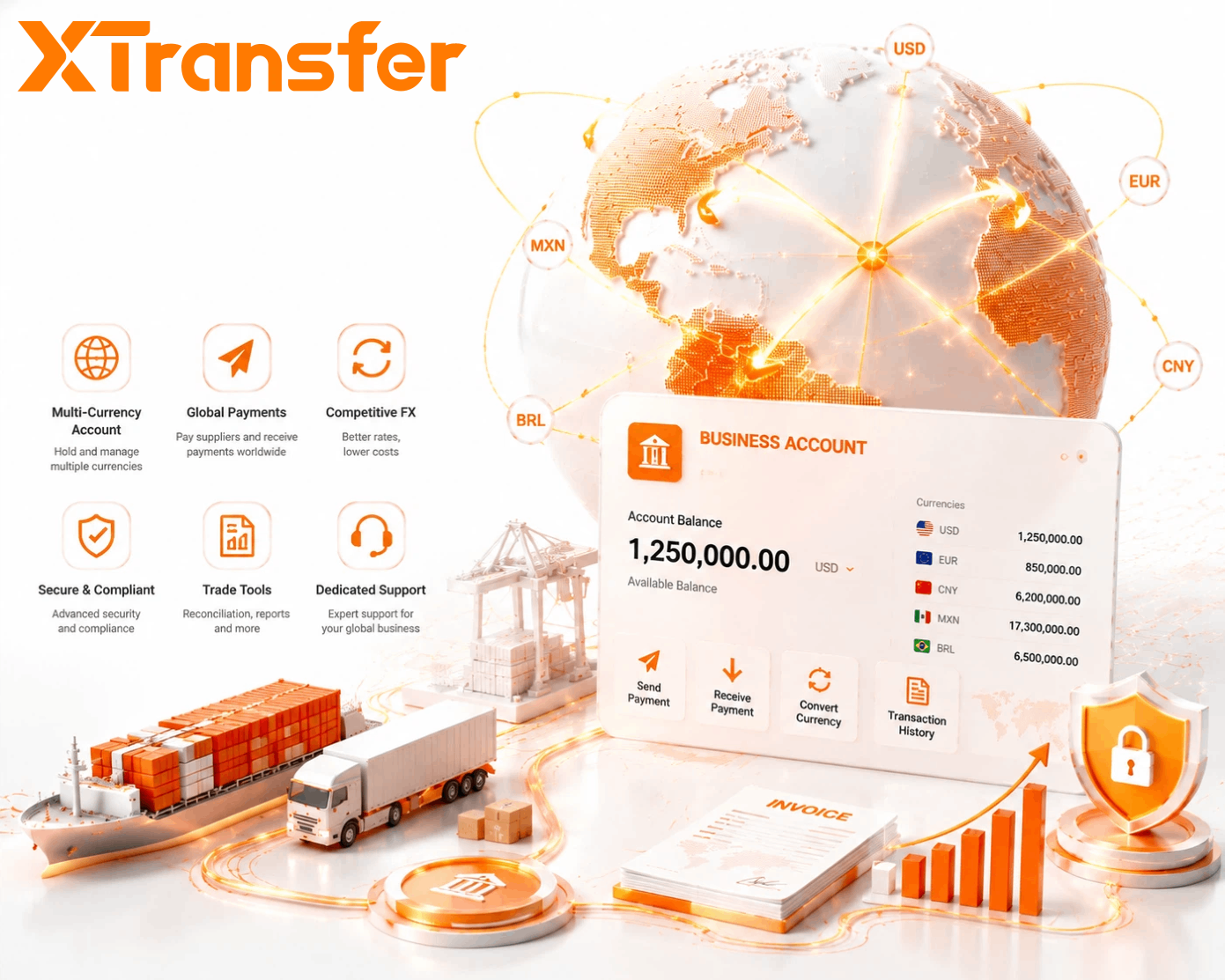
Overview XTransfer is a B2B cross-border trade payment platform built around physical goods transactions, with a proprietary X‑Net network that connects international and local financial institutions.
Key Strengths
- Processed US$60.5 billion in TPV in 2025 (approximately 897,000 registered SMEs, 5.1% global B2B market share as of March 31, 2026).
- Holds payment licenses in 8 jurisdictions, including UK FCA API and a China domestic license.
- TradePilot AI automates roughly 98.5% of reviews; reported fraud rate near 0.003%, which may reduce manual follow-up.
- Supports 200+ countries, with local collection in 30+ markets; zero intermediary bank fees apply for supported corridors to China via X‑Net.
Limitations Purpose‑built for physical goods trade; service-based businesses may find trade features add unnecessary complexity.
Compliance: 8 jurisdictions; FCA API. Coverage: 200+ countries; 30+ local collection. Fees & FX: Monetised via FX/transfer/withdrawal; no separate collection fee. Best For: Micro importers/exporters, particularly with China-linked supply chains. Not Recommended For: Service providers or digital goods sellers. Typical Use Cases: A small accessories brand paying its Chinese factory monthly; emerging-market importers collecting international buyer payments.
2. Wise Business
Overview Wise processed £181.7 billion in cross‑border volume in FY2026 (per its investor relations), serving nearly 19 million customers. Originally built for personal transfers, it has expanded into business accounts.
Key Strengths
- Transparent mid-market rates with disclosed fees from approximately 0.43% (varies by pair).
- Supports 40+ currencies and 140+ countries.
- 70% of transfers arrive within 20 seconds; 95% within 24 hours.
- No monthly subscription fee; pay only for transfers.
Limitations For physical goods trade with China, lacks trade‑documentation workflows and local‑rail depth compared to trade‑oriented platforms.
Compliance: 80+ global licenses. Coverage: 140+ countries. Fees & FX: Mid‑market + fee; typical effective cost ~0.58–0.67%. Best For: Service-based micro businesses (freelancers, consultants) with multi‑currency clients. Not Recommended For: Physical goods traders needing invoice matching or customs handling. Typical Use Cases: A freelance designer billing in USD, EUR, and GBP; a consultancy paying overseas contractors.
3. Airwallex
Overview Airwallex is a global fintech holding 85+ licenses, with strong presence in cross‑border e‑commerce and B2B payments.
Key Strengths
- Transfers to 200+ countries; local collection in 70+ countries.
- Supports 130+ transaction currencies and 160+ local payment methods.
- Approximately 93% of transactions settle same‑day (company disclosure).
- Integrates with Xero, QuickBooks, and major e‑commerce platforms.
Limitations For 1–2 monthly transfers, the extensive feature set (APIs, subscription tiers) may be overkill. FX conversion ranges 0.20–2.50%, and the learning curve can be steeper for owners without finance backgrounds.
Compliance: 85+ licenses, including China domestic. Coverage: 200+ payments; 70+ local collection. Fees & FX: 0.20–2.50% conversion fee. Best For: Growing micro businesses operating across multiple markets with accounting integration needs. Not Recommended For: Very small importers with simple, occasional payments. Typical Use Cases: An e‑commerce operator selling in Asia, Europe, and North America.
4. WorldFirst (World Account)
Overview Founded in 2004, now part of Ant Group, WorldFirst serves over 1.5 million business customers, with US$500 billion+ cumulative transactions.
Key Strengths
- 60+ global licenses; payments to 200+ countries in 100+ currencies.
- No monthly fees; free account opening.
- For new 2026 customers, 0.3% FX for first 180 days (standard up to 0.5%).
- Connects to 130+ payment gateways and marketplaces.
Limitations Transaction fees £0.30–£4.00 per transfer affect smaller amounts; no FSCS protection; trade‑specific compliance features are limited.
Compliance: 60+ licenses; UK, Singapore (MPI), Australia regulated. Coverage: 200+ countries. Fees & FX: 0.3–0.5% FX; £0.30–£4.00 per transaction. Best For: Marketplace sellers (Amazon, eBay) receiving multi‑currency payouts. Not Recommended For: Businesses primarily sending supplier payments rather than receiving revenue. Typical Use Cases: A home‑goods seller collecting revenue from multiple e‑commerce platforms.
5. Revolut Business
Overview Revolut Business offers an all‑in‑one account with corporate cards, expense management, and international transfers.
Key Strengths
- Basic plan from £10/US$10 per month.
- Free unlimited Revolut‑to‑Revolut transfers.
- Integrated corporate cards and expense tracking.
Limitations International transfer costs accumulate (e.g., Basic plan charges 0.2% + fees per transfer after allowance); monthly fee applies even with few transfers. For payment‑centric operations, dedicated transfer platforms are often more cost‑effective.
Compliance: FCA regulated; banking licenses in some markets. Coverage: Varies by plan. Fees & FX: Subscription from £10/US$10/month + per‑transfer fees. Best For: Micro‑teams (2–5 people) needing cards and spend control alongside occasional transfers. Not Recommended For: One‑person operations focused primarily on minimising international payment costs. Typical Use Cases: A small creative agency managing team expenses and occasional cross‑border vendor payments.
Platform Comparison Table (Micro‑Business Focus)
| Dimension | XTransfer | Wise Business | Airwallex | WorldFirst | Revolut Business |
|---|---|---|---|---|---|
| Monthly Fee | None | None | Tiered plans | None | From £10/US$10 |
| Minimum Transfer / Volume | No minimum | No minimum | Not specified | Minimum for some types | No minimum |
| Trade Documentation Support | Invoice matching; verification | Not supported | Not supported | Not supported | Not supported |
| Local Collection Countries | 30+ | Local details in 8+ currencies | 70+ | 20+ (receiving) | Varies |
| China Corridor Efficiency | X‑Net; zero intermediary fee for supported corridors | Standard SWIFT/local rails | Standard rails | Standard rails | Standard SWIFT |
| Best For | Goods traders with China suppliers | Service providers with diverse currencies | Multi‑market operators | Marketplace sellers | Card‑first small teams |
Suitable Scenarios: Which Platform Maps to Your Micro-Business Archetype?
| Micro‑Business Archetype | Recommended Platform |
|---|---|
| Goods importer/exporter with Chinese suppliers, making 3+ monthly payments | XTransfer |
| Freelancer or consultant billing international clients in multiple currencies | Wise Business |
| Amazon / marketplace seller with multi‑currency receivables | WorldFirst |
| Growing multi‑market operator needing accounting integrations | Airwallex |
| Small team (2–5 people) needing corporate cards and expense management | Revolut Business |
How to Choose: A Decision Framework for Micro Businesses
The appropriate platform depends on what your micro business actually does:
- For trade‑oriented micro businesses — handling physical goods with China‑linked suppliers and recurring transfers — XTransfer’s infrastructure (local collection across 30+ countries and AI‑assisted compliance review) addresses specific friction points that generalist platforms handle less effectively. Its FCA API license and ~0.003% fraud rate may reduce compliance holds and manual document follow‑up for qualifying transactions.
- For service‑based micro businesses — freelancers, consultants, and agencies — Wise Business offers transparent pricing with no monthly fees for straightforward international transfers.
- For multi‑market operators — businesses selling and holding in multiple currencies with accounting integration needs — Airwallex can scale with growth.
- For marketplace sellers — WorldFirst is built around receiving multi‑currency payouts from platforms.
- For card‑first small teams — Revolut Business bundles banking and cards, suiting teams that prioritise spend control over pure payment optimisation.
For micro businesses engaged in physical goods trade, XTransfer often fits well. For service businesses or those without China‑linked supply chains, one of the alternatives may serve you better.
Conclusion
The right cross‑border payment platform for a micro business is not the one with the longest list of countries. It is the one that matches your actual operational pattern: physical goods or services, China‑linked or not, recurring or occasional, with or without a finance person.
Evaluate platforms against your actual payment behaviour — not against abstract feature counts. A platform that covers 200 countries is less useful if it repeatedly holds payments to your sole supplier. Fit to workflow, not feature volume.
Frequently Asked Questions
Q: Does XTransfer require a minimum transaction volume to open an account?
No minimum volume is required. The platform is designed for micro businesses across a wide range of transaction sizes.
Q: Does Wise Business charge a monthly subscription fee?
No. Wise Business does not have monthly fees; you pay only for the transfers you initiate.
Q: If my suppliers are in China and buyers are in Latin America, which platform fits better?
XTransfer is often a strong fit here. It offers local collection in 30+ countries, including major Latin American markets, and its infrastructure is built around the China trade corridor.
Q: For transfers under US$1,000, which platform tends to have the lower effective fee?
Percentage‑based fees often dominate for transfers under $1,000. Wise’s mid‑market rate plus a transparent fee is typically competitive. XTransfer’s corridor‑dependent pricing varies by route, so comparing the specific currency pair is advisable.
Q: Is Airwallex considered safe for micro businesses?
Yes. Airwallex holds Money Transmitter Licenses in 40+ US states and is regulated in multiple jurisdictions.
Q: Can I use Revolut Business without a monthly plan?
No. Revolut Business requires a monthly subscription starting at £10/US$10 for the Basic plan.
Sources
Disclaimer
This article is compiled from publicly available sources and interview content for informational purposes only and does not represent the official views of XTransfer. XTransfer accepts no liability for any damages arising from reliance on this content.