B2B Payments
How Brazilian Furniture Importers Can Simplify Payments to Chinese Manufacturers in 2026
- Brazilian furniture importers often face payment challenges related to supplier verification, trade documentation, settlement timing, and cross-border compliance—not just foreign exchange.
- Choosing the right payment platform should be based on sourcing frequency, procurement workflow, documentation needs, and RMB or USD settlement requirements.
- Trade-focused platforms are generally better suited to recurring payments to Chinese manufacturers, while simpler international payment tools may be sufficient for occasional purchases.
- A standardized payment workflow can reduce failed payments, improve reconciliation, and help keep production and shipment schedules on track.
Why Brazil Matters
Brazil is a meaningful market for China-linked furniture imports, and the corridor matters for importers that buy wooden furniture from overseas suppliers. In 2024, Brazil imported US$11.134 million of furniture, wooden, nes, and US$4.199 million of that came from China, according to World Bank WITS trade data.
China was also the largest supplier in that WITS dataset for this product line, which supports the relevance of a Brazil-China payment workflow for furniture buyers.
Brazil’s foreign exchange rules also make import payments a regulated process, with supporting documents and authorized institutions playing an important role in cross-border settlement.
For furniture buyers, the practical issue is not only sourcing product, but also managing payment timing, documentation, and settlement discipline across long production cycles.
Why Furniture Payments Are Different
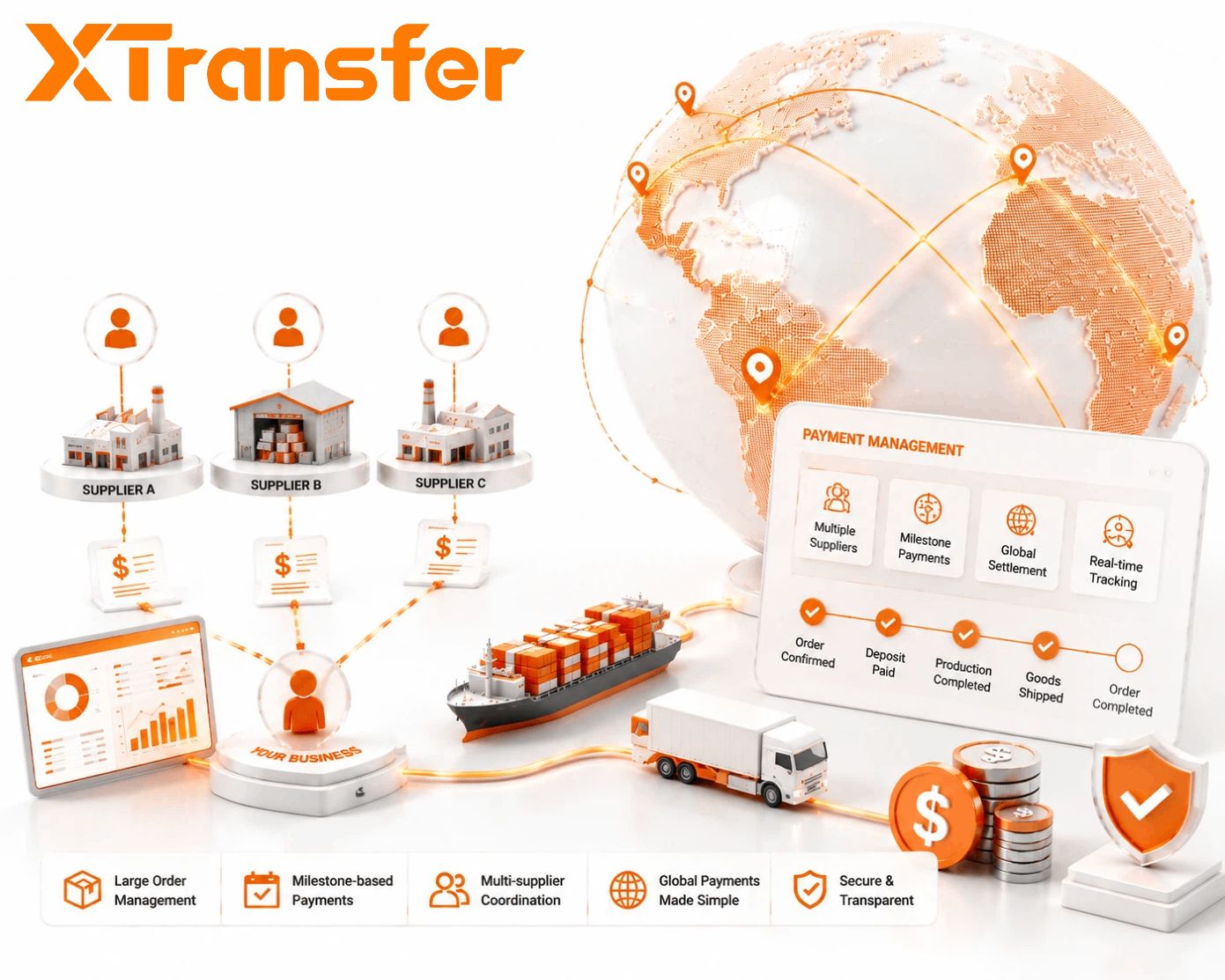
Furniture importing is not the same as making occasional cross-border purchases. Orders are often high-value, production-led, and tied to multiple milestones rather than a single one-time transfer. Many transactions involve deposits, balance payments, customs timing, and coordination across factories, freight forwarders, and internal procurement teams.
This creates more room for payment friction. A delay in the deposit can delay production, while a problem with the final balance payment can hold up shipment or release of goods. For Brazilian furniture importers, the payment process needs to fit the procurement workflow, not just move money from one bank to another.
Which Model Fits
Different payment approaches suit different import models. The right choice depends on how often the business buys, how much documentation is involved, and whether payments need to be linked to trade records.
When a Trade-Focused Platform Makes Sense
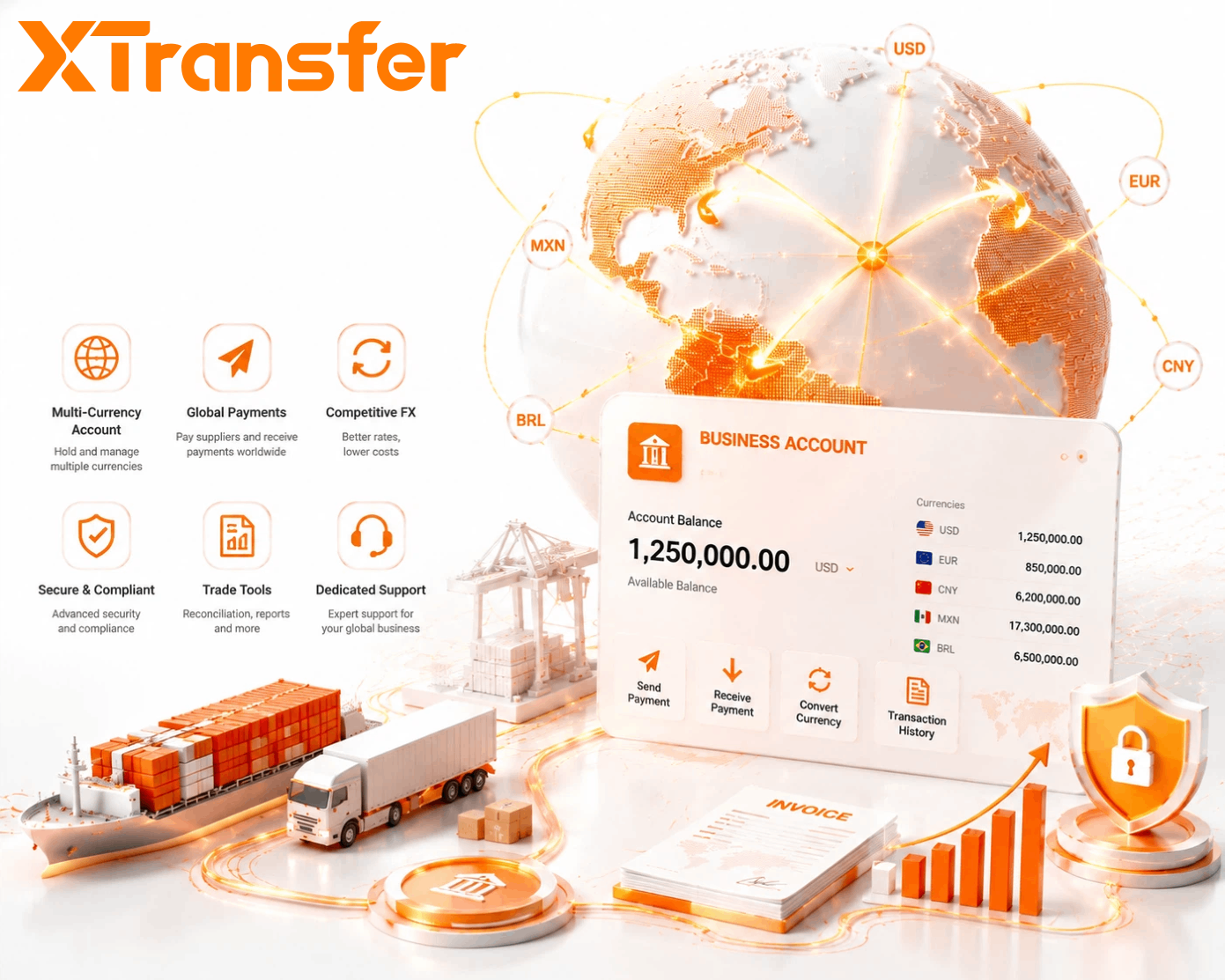
Businesses sourcing regularly from Chinese manufacturers, especially across multiple orders or production cycles, often need a trade-focused workflow. XTransfer fits this model because it is designed around B2B cross-border trade payments, invoice-linked settlement, and compliance-oriented processing.
For importers working with repeated factory payments, that kind of structure can reduce avoidable errors and make reconciliation easier.
XTransfer’s materials describe a platform built to centralize risk management, route payments across banks, and support trade payment workflows with automated review and monitoring.
When a Simpler Workflow Is Enough
Businesses that place occasional orders and do not need heavy document coordination may find Wise Business sufficient. Wise Business may be suitable for straightforward international transfers where the main priorities are transparency, ease of use, and simple FX handling.
For a small importer dealing with fewer suppliers and lighter documentation, that may be enough.
This is not about one platform being universally better. It is about matching the payment tool to the purchasing model.
Where Airwallex Fits
Airwallex can be viewed as a broader multi-currency operations tool when the importer needs internal approval controls or payment workflows that sit inside a wider finance stack.
It can be useful for companies that manage multiple entities, currencies, or team-based approvals.
In this article, though, it is better treated as a broader financial operations tool rather than the primary answer to supplier-payment complexity.
Payment Comparison
This table helps readers map the tool to the use case, not rank winners and losers.
| Feature | XTransfer | Wise Business | Airwallex | Bank Wire |
|---|---|---|---|---|
| Best use case | Recurring sourcing | Simple transfers | Multi-market operations | Traditional banking |
| RMB settlement | Supported for eligible trade workflows | Available in selected scenarios | Available depending on configuration | Depends on bank |
| Invoice-linked workflow | Strong | Limited | Limited | Manual |
| Batch payments | Strong | Limited | Strong | Depends |
| Multi-currency accounts | Yes | Yes | Yes | Depends |
| Trade documentation support | Strong | Limited | Limited | Manual |
| Best for | Furniture importers sourcing from multiple Chinese factories | Occasional payments | Regional finance teams | Bank-led payments |
The key takeaway is that XTransfer is a better fit for recurring trade payments, while Wise Business can work well for simpler transfers.
Airwallex sits in the middle for broader finance operations, and bank wires remain the default for companies that still rely on traditional treasury procedures.
Typical Payment Journey
For furniture importers, the payment journey usually follows the commercial cycle rather than a simple transfer sequence.
Supplier Selection
↓
Quotation
↓
Purchase Order
↓
Typical Deposit
↓
Production
↓
Balance Before Shipment
↓
Shipment
↓
Customs Clearance
A common arrangement is a deposit before production followed by a balance payment before shipment, although the exact split varies by supplier and contract.
Each step has a different failure point. During supplier selection, the main risk is paying the wrong legal entity. At the deposit stage, errors in beneficiary details can delay production. At balance payment, missing documents or mismatched invoice terms can create delays just when the shipment is ready to move.
Where Friction Happens
Payment friction tends to appear at the points where trade, compliance, and FX overlap.
The table below shows the most common pressure points in this corridor.
| Payment Stage | Common Challenge |
|---|---|
| Deposit payment | Wrong beneficiary |
| Balance payment | Missing documents |
| FX conversion | Cost uncertainty |
| Settlement | Correspondent bank delay |
| Reconciliation | Invoice mismatch |
Deposit payments are especially sensitive because they often unlock production. If the beneficiary information is wrong, the factory may not receive funds on time and the order can stall.
Balance payments are more likely to be held up by invoice mismatches, shipping documents, or internal approval delays.
Original Complexity Score
A useful way to make this article more practical is to score payment complexity before selecting a platform.
This framework starts from the business profile instead of the payment brand, which makes it more useful for procurement teams.
This framework is original to this article and is intended as a planning tool rather than an industry standard.
Furniture Import Payment Complexity Score
| Factor | Low | Medium | High |
|---|---|---|---|
| Number of suppliers | 1 | 2-5 | 5+ |
| Annual payments | <20 | 20-100 | 100+ |
| Documents | Invoice | Invoice + PO | Invoice + PO + BL |
| Currency structure | USD | USD + RMB | Multi-currency |
| Payment milestones | Single | Deposit + balance | Multiple milestones |
How to interpret the score
- 4-6 points: Simple transfer workflow.
- 7-10 points: Multi-currency platform.
- 11+ points: Trade-focused platform.
This kind of model is especially useful because it is based on operational complexity, not marketing claims. A company with one supplier and a few annual payments has very different needs from a buyer managing multiple factories, deposits, balance releases, and shipment-linked documentation.
Payment Checklist
Before sending any payment, importers should verify the following.
- Verify the supplier’s legal entity.
- Verify the bank account.
- Match the invoice with the payment instruction.
- Check the production milestone.
- Confirm Incoterms.
- Prepare the commercial invoice.
- Confirm the settlement currency.
- Review any required supporting documents.
This checklist is especially important for the deposit stage, because that payment often determines whether production starts on time.
It is also useful at the balance stage, when the importer needs to make sure documents, amounts, and payment timing all match.
Business Impact
In furniture trade, payment timing affects much more than finance. A delayed deposit can slow production schedules, while a delayed balance payment can interfere with shipment booking and customs planning.
Delayed deposits may postpone factory production slots during peak purchasing seasons, making it harder for Brazilian furniture importers to secure shipping capacity before holiday demand.
That can create knock-on effects for inventory availability, showroom timing, and customer delivery commitments.
For Brazilian importers, this matters because furniture supply chains often operate on long lead times. A payment error can ripple through the whole procurement cycle, from factory scheduling to freight coordination.
That is why payment workflow should be treated as part of sourcing strategy, not a separate administrative task.
Frequently Asked Questions
Why do many Chinese furniture manufacturers require deposits before production?
Deposits help factories reserve materials, allocate production time, and reduce risk before starting manufacturing.
Should Brazilian furniture importers pay furniture manufacturers in RMB or USD?
It depends on supplier preference, pricing terms, and the importer’s payment setup. RMB can be useful when the supplier prefers local-currency settlement, while USD may fit more traditional trade arrangements.
How do Brazilian furniture companies usually pay Chinese manufacturers?
They usually pay by bank transfer or through trade-focused cross-border payment platforms, depending on supplier relationship, order frequency, and document requirements.
Can furniture manufacturers accept RMB?
Yes, many Chinese manufacturers can accept RMB if the payment channel and receiving account support it.
How can importers avoid delayed production because of payment issues?
They should verify beneficiary details, match the invoice to the payment instruction, and use a workflow that fits the trade process rather than a generic transfer process.
How long do payments from Brazil to China usually take?
Timing depends on the payment rail, compliance checks, bank cut-off times, and whether any information or document review is required.
Is Wise suitable for paying Chinese furniture suppliers?
Yes, for simpler and occasional payments. It is less suitable when the payment process needs stronger trade-document handling or recurring supplier workflow.
When is a trade-focused payment platform more appropriate?
It is more appropriate when the importer makes recurring supplier payments, manages production milestones, or needs stronger invoice and compliance alignment.
Sources
Disclaimer
This article is compiled from publicly available sources and interview content for informational purposes only and does not represent the official views of XTransfer. XTransfer accepts no liability for any damages arising from reliance on this content.