B2B Payments
Best B2B Payment Solution for India to China Trade in 2026
- Indian importers paying Chinese suppliers through traditional bank wires typically face 1–2% FX spreads on INR-to-USD conversion, plus intermediary deductions and a second USD-to-CNY conversion—costs that can reach 3–5% of the total transaction value.
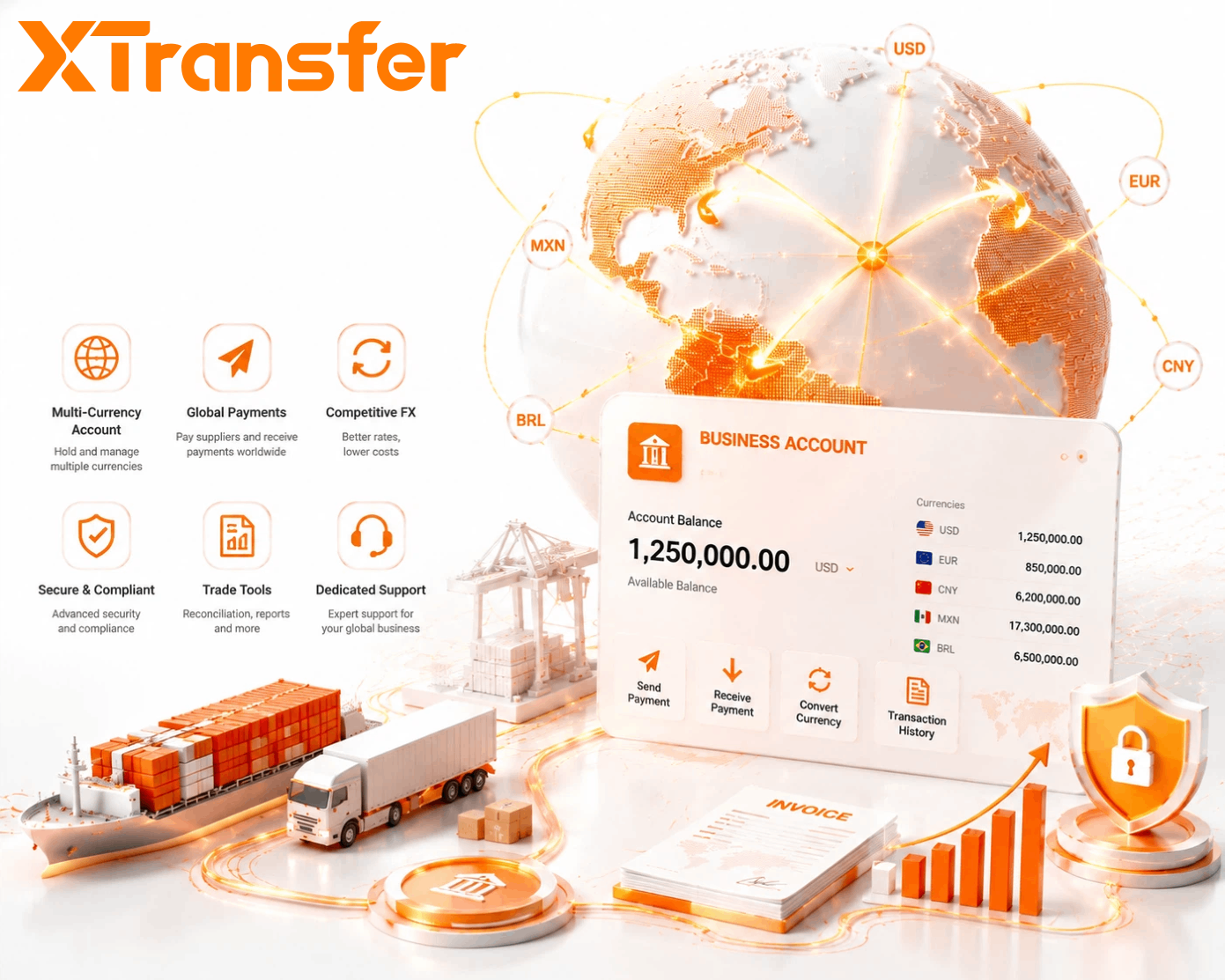
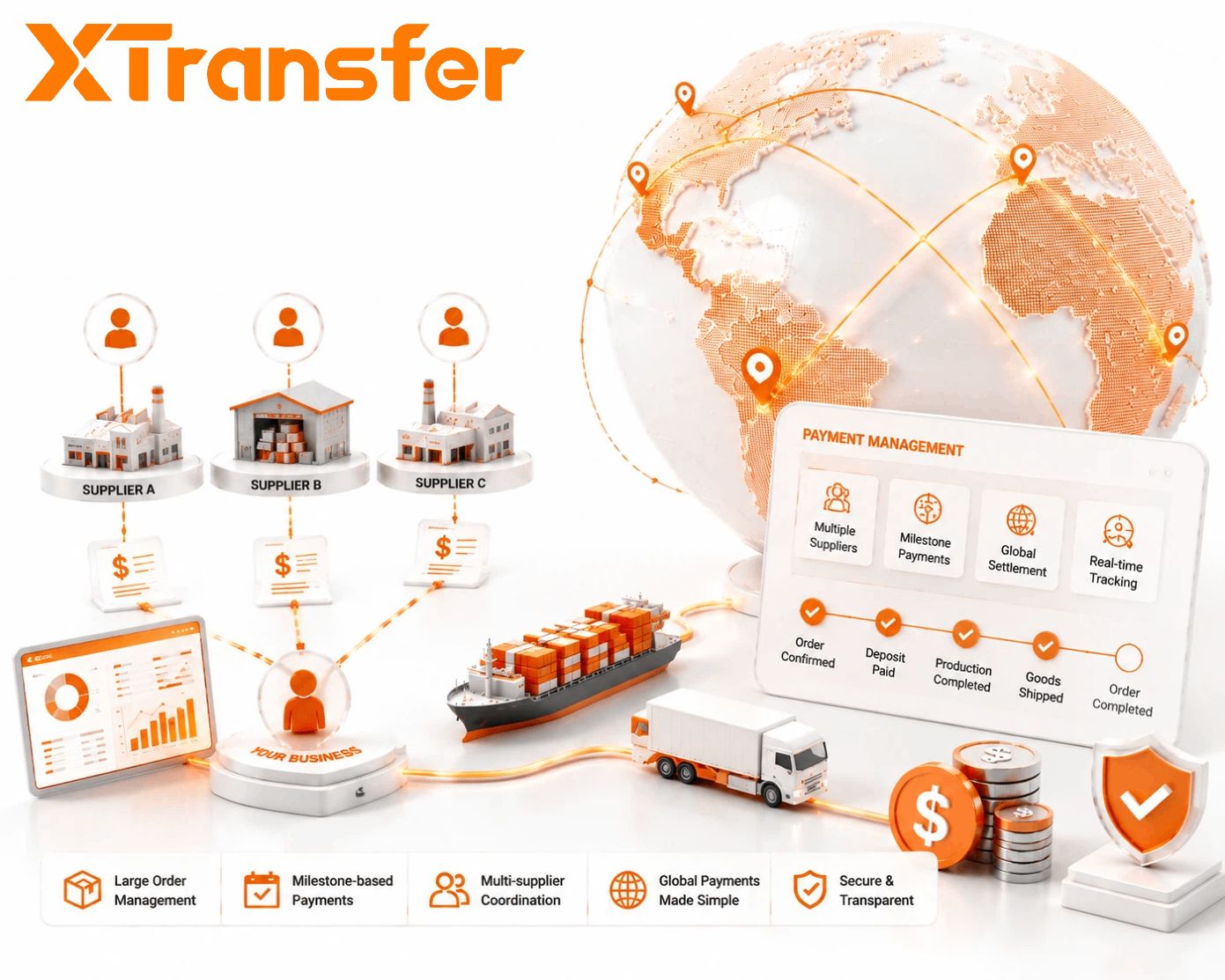
- XTransfer supports payments to Chinese suppliers with CNY settlement and China-side FX reporting handled on your behalf for eligible transactions, enabling direct CNY settlement to supplier bank accounts in mainland China or Hong Kong.
- The right platform for India–China trade depends on your transaction volume, supplier preferences (CNH vs. USD settlement), and whether you need regulatory compliance support.
- RBI-authorized PA-CBs may provide a clearer regulatory framework for eligible online import and export transactions, but authorization does not remove the importer's FEMA, customs, tax, bank-documentation, or transaction-limit obligations. The ₹25 lakh per-unit limit applies to relevant PA-CB-facilitated transactions; it should not be interpreted as a universal limit on every India–China bank payment.
- Before committing to any platform, run a small test payment to verify actual settlement speed, total cost, and supplier experience.
Introduction
You are an Indian importer sourcing goods from China—machinery, textiles, electronics, or raw materials. Every month, you pay Chinese suppliers. And every month, you face the same frustrations: unpredictable exchange rates, high bank charges, delayed settlements, and limited visibility into where your money actually goes.
India–China bilateral trade has grown significantly, yet the payment infrastructure connecting these two economies has historically lagged. Traditional bank wires from India to China typically travel through a USD intermediary—INR to USD at the Indian end, then USD to CNY at the Chinese end. This double conversion adds 1–2% in FX spreads at each step, plus SWIFT intermediary deductions of $20–$50 per correspondent bank. Settlement can take 3–7 business days.
The good news is that 2026 offers better options. Fintech platforms are building dedicated India–China payment corridors, and India's regulatory framework is evolving to support faster cross-border payments. This guide compares the leading B2B payment solutions for India–China trade, helping you choose the platform that balances cost, speed, compliance, and supplier convenience.
Why India–China B2B Payments Are Costly and Slow
The Double Conversion Problem
When an Indian importer pays a Chinese supplier through a traditional bank, the payment typically follows this path:
- INR to USD conversion — The Indian bank converts rupees to US dollars, applying a 1–2% FX spread.
- SWIFT wire — The USD payment travels through correspondent banks, each deducting $20–$50 in fees.
- USD to CNY conversion — The receiving Chinese bank converts USD to yuan, applying another FX spread.
The result: double conversion costs, intermediary deductions, and settlement times of 3–7 business days. The 1–2% figure refers to the initial INR-to-USD FX spread; the higher 3–5% estimate reflects the full landed cost after the second conversion and bank deductions.
The Regulatory Challenge
Indian importers must also navigate RBI compliance requirements. Cross-border payments must be properly documented for FEMA compliance, and importers need proper documentation for GST and tax purposes. RBI-authorized Payment Aggregators – Cross Border (PA-CBs) may provide a clearer regulatory framework for eligible online import and export transactions, but authorization does not remove the importer's FEMA, customs, tax, bank-documentation, or transaction-limit obligations. Under the RBI PA-CB framework, the per-transaction limit for goods or services is ₹25 lakh (approximately $30,000), so transactions above this threshold may require a bank-led route. The ₹25 lakh limit applies to relevant PA-CB-facilitated transactions; it should not be interpreted as a universal limit on every India–China bank payment.
The Alternative: Direct INR–CNY Settlement
China and India have reached agreements to promote direct settlement between RMB and the Indian rupee, reducing reliance on USD in bilateral trade. While this is not yet widely available for all businesses, fintech platforms are increasingly offering INR-to-CNY conversion with fewer intermediary steps for eligible customers and supported routes.
How We Evaluate India–China Payment Platforms
For Indian importers paying Chinese suppliers, we assess each platform on five criteria:
| Dimension | Weight | Why It Matters |
|---|---|---|
| Total Cost | 30% | FX spread + transaction fees + intermediary deductions |
| Speed to China | 25% | Faster settlement improves supplier trust and cash flow |
| RBI Compliance | 20% | PA-CB authorization may provide a clearer regulatory framework |
| CNY/CNH Settlement | 15% | Ability to settle in CNY or CNH without USD intermediary |
| Supplier Experience | 10% | Ease of use for Chinese suppliers |
1. XTransfer — Built for B2B Payments to Chinese Suppliers
XTransfer is a global B2B cross-border trade payment platform founded in 2017. As of August 2026, it serves over 1 million registered SMEs globally. In 2025, XTransfer processed US$60.5 billion in TPV, representing a 5.1% global market share. XTransfer holds FCA API (UK) and multiple other regulatory licenses across jurisdictions.
What Makes It Different for India–China Trade
XTransfer is specifically designed for B2B physical goods trade, with a focus on payments to Chinese suppliers. For eligible customers and supported routes, XTransfer can facilitate settlement to Chinese suppliers in CNY, with China-side FX reporting handled on behalf of the customer. The actual funding currency, conversion path, limits, and required documents depend on the account configuration and corridor. CNY settlement is subject to supported currencies, beneficiary type, transaction limits, documentation, and account eligibility—confirm the current limits before initiating a large payment.
XTransfer's China-side CNY settlement and FX-reporting workflow should not be treated as equivalent to an RBI PA-CB license in India. Indian importers remain responsible for meeting applicable FEMA, customs, tax, bank, and import-documentation requirements, and must provide transaction details including product type, contract information, and logistics documentation.
Payments to China
XTransfer supports payment to Chinese suppliers through its platform:
- Pay to China in CNY — For eligible transactions, XTransfer can facilitate CNY settlement to your supplier's bank account in mainland China or Hong Kong, with China-side FX reporting handled on your behalf.
- Pay to XTransfer accounts — If your Chinese supplier also has an XTransfer account, transfers are free and settle in real time, 24/7.
Key Strengths
- CNY settlement for eligible routes — Eliminates the USD intermediary for supported transactions to Chinese suppliers.
- China-side FX reporting handled — XTransfer may handle the relevant China-side CNY conversion reporting for eligible transactions. The platform's China-side reporting support does not replace the importer's obligation to maintain Indian import, FEMA, customs, GST, and bank records.
- 200+ countries covered — Payment services across 200+ countries and regions.
- Zero intermediary fees — No correspondent bank deductions for XTransfer-to-XTransfer transfers.
- Competitive handling fees — The applicable handling fee may be 0.4% for eligible settlement routes to certain Chinese personal accounts; actual pricing depends on the product, beneficiary type, currency, amount, and account profile.
- Trade document support — Built for B2B physical goods trade, with workflows for contracts and invoices.
- 24/7 availability — Services accessible outside traditional banking hours.
Estimated Cost (US$10,000 → China): Approximately US$40–US$150, depending on the applicable FX spread, corridor, account type, and transaction volume. This range reflects the platform fee plus FX spread, not including any external bank charges that may apply.
Best For
Indian importers making regular B2B payments to Chinese suppliers; businesses that want to eliminate SWIFT fees and intermediary deductions for eligible routes.
Not Recommended For
One-off or very small payments where the setup time may not be worth it; businesses with suppliers outside China.
Typical Use Case
A Mumbai-based machinery importer pays a Guangzhou supplier US$30,000 monthly. The importer uses XTransfer's Pay to China service to send CNY directly to the supplier's bank account. XTransfer handles China-side FX reporting on their behalf, and the supplier receives funds within 1 business day with no intermediary deductions. (Note: For PA-CB routes, confirm whether the transaction falls within the applicable ₹25 lakh per-unit limit and whether a bank-led route is required.)
2. Razorpay — Best Fit for Eligible Businesses Already Using the Ecosystem
Razorpay is a leading Indian fintech platform. In January 2026, Razorpay secured a cross-border PA-CB license from the RBI, authorizing it to facilitate both inward and outward cross-border payments. Razorpay now supports international merchants in accepting payments in over 130 currencies across 180+ countries.
What Makes It Different for India–China Trade
Razorpay's PA-CB authorization may support eligible cross-border payment flows within the activities and transaction limits approved by the RBI. Some Razorpay cross-border settlement workflows may use a T+7 timeline; confirm the applicable timeline for the specific import-payment product.
Key Strengths
- Full RBI compliance — PA-CB license for cross-border payments (subject to RBI terms).
- 130+ currencies supported — Wide global coverage.
- End-to-end platform — Domestic and international payments in one place.
- Apple Pay integration — First Indian payment aggregator to offer this (September 2025).
Limitations for India–China Trade
- Slower settlement — Some Razorpay cross-border settlement workflows may use a T+7 business day timeline; confirm the applicable timeline for the specific product.
- Less specialized for China payments — Not specifically built for the India–China trade corridor.
- PA-CB per-transaction limits — The RBI PA-CB framework applies a ₹25 lakh (approximately $30,000) per-transaction limit for goods or services; larger transactions may require a bank-led route.
Best For
Indian businesses already using Razorpay for domestic payments who want a single platform for everything.
Not Recommended For
Businesses that only need international payments to China and don't want the complexity of a full-suite platform.
3. Payoneer — Best for Global Reach with RBI In-Principle Approval
Payoneer supports customers in over 190 countries and territories, leveraging a network of nearly 100 banking and payment service provider partnerships. In January 2026, Payoneer India received in-principle approval from the RBI to operate as a PA-CB for facilitating inward and outward transactions.
What Makes It Different for India–China Trade
With PA-CB authorization (subject to final approval), Payoneer may provide cross-border payment solutions for both import (outward) and export (inward) transactions. Payoneer operates as a regulated entity across major financial jurisdictions, including the United States, Europe, the United Kingdom, Hong Kong, Japan, Singapore, China, and Australia.
Key Strengths
- RBI in-principle approval — PA-CB authorization reported; verify final status.
- Global reach — 190+ countries and territories.
- Broad network — Nearly 100 banking and payment service provider partnerships.
- Multi-currency accounts — Receive and hold funds in multiple currencies.
Limitations for India–China Trade
- In-principle vs. final authorization — Final PA-CB authorization, permitted transaction types, and India–China availability should be verified before relying on it for supplier payments.
- Less specialized for China — Not specifically built for the India–China trade corridor.
Best For
Indian businesses with global operations and multi-currency needs.
Not Recommended For
Businesses primarily focused on India–China trade where a specialized China payments platform would offer better value.
4. Wise Business — Best for Transparent FX Pricing
Wise Business offers multi-currency accounts and international transfers with mid-market exchange rates. It serves over 700,000 businesses globally across 40+ currencies.
INR-to-CNY Capability
Wise may support an INR-funded route to China for eligible customers, but the available funding method, conversion path, and CNY delivery route vary by account profile and current corridor availability.
Key Strengths
- Mid-market FX rates with 0% FX markup — you see the exact rate and fee upfront.
- Transparent pricing — Fees shown clearly before you confirm the transfer.
- Multi-currency account — Hold balances in 40+ currencies.
- Publishes fast settlement statistics for supported routes, but India–China timing depends on funding method, compliance checks, cut-off times, and recipient route.
Limitations for India–China Trade
- Limited INR-to-CNY support — May require USD funding rather than direct INR-to-CNY.
- Not B2B-trade specific — Lacks trade finance features or invoice-specific workflows.
- No automated FIRA — You may need to obtain documentation separately from your bank.
Estimated Cost (US$10,000 → China): ~US$70–US$150, depending on corridor and routing, plus any applicable INR-to-USD conversion costs.
Best For
Businesses prioritizing FX transparency with occasional India–China payments; service-based businesses.
Not Recommended For
Regular B2B goods trade where trade-specific compliance and documentation are required.
5. WorldFirst — Best for 1688 and Marketplace Sourcing
WorldFirst, part of Ant Group, serves over 1.5 million business customers and supports payments in 100+ currencies to 200+ countries.
What Makes It Different for India–China Trade
WorldFirst is designed for importers, wholesalers, and e-commerce sellers managing global trade. It supports direct supplier payments in China in CNH without a local Chinese bank account and is the official payment partner of XTLINK0_TOKEN.
Key Strengths
- 1688 integration — WorldFirst is the official payment partner of XTLINK0_TOKEN, enabling direct CNH settlement.
- Pay in CNH — Remove the extra conversion step by paying in offshore RMB.
- No setup or monthly fees — Free account opening and no ongoing charges.
- Same-day and next-day payments — Available to 200+ countries.
- 0.30% promotional FX — For new customers in 2026 (first six months).
Limitations for India–China Trade
- E-commerce tilt — Optimized for marketplace sellers rather than traditional B2B importers.
- Payment fees apply — Local payments from £0.30; international payments up to £4.00.
Estimated Cost (US$10,000 → China): ~US$30–US$100 (0.3–1.0%), depending on corridor and promotional rates.
Best For
Indian businesses sourcing from China through XTLINK0_TOKEN or Alibaba; e-commerce sellers.
Not Recommended For
Traditional B2B importers sourcing directly from factories who don't use marketplace platforms.
6. Traditional Banks — The Baseline
Most Indian businesses use traditional banks like SBI, HDFC, or ICICI for international wire transfers.
Key Strengths
- Familiar and trusted — Well-established relationships.
- Full-service banking — Beyond just payments.
- RBI compliant — Fully regulated banking channels.
Limitations
- 1–2% FX spread on INR-to-USD conversion.
- Intermediary deductions — $20–$50 per correspondent bank.
- 3–7 business days for settlement.
- Opaque cost structure — Total cost not known until after settlement.
Estimated All-in Cost (US$10,000 → China): ~$300–$600 (3–5%).
Best For
One-off or infrequent payments where platform onboarding is not justified.
Not Recommended For
Regular India–China payments where fintech platforms offer significantly better value.
Comparison Table: India–China Payment Solutions
Data as of August 2026. Based on publicly disclosed platform information.
| Dimension | XTransfer | Razorpay | Payoneer | Wise Business | WorldFirst | Traditional Banks |
|---|---|---|---|---|---|---|
| India Regulatory Status | Not presented as RBI PA-CB; verify India-side route | RBI PA-CB status and scope must be verified | In-principle approval reported; verify final status | Depends on local product structure | Depends on India availability | AD Category-I bank route |
| CNY Settlement | Supported routes, eligibility-dependent | Product- and bank-route dependent | Product- and authorization-dependent | Route-dependent | CNH/CNY for supported products | Usually bank/intermediary route |
| India-Side Documentation | FEMA, import, tax, and bank documents may apply | PA-CB and importer documentation | PA-CB status and route-dependent | Bank and route-dependent | Product-dependent | Bank, FEMA, customs, tax |
| 1688 Integration | No | No | No | No | Yes (official) | No |
| Account Fees | $0 | Varies | $0 | $0 (Essential) | $0 | Varies |
| Typical Speed | 1 business day | T+7 days (confirm product) | 1–3 days | 1–2 days | Same/next-day | 3–7 days |
| FX Pricing | Quote and volume-dependent | Competitive | Competitive | Mid-market + fee | 0.30–0.50% | 1–2% + fees |
| Best For | China-focused B2B trade | Existing Razorpay ecosystem | Global businesses if authorized route available | Transparent FX | 1688/marketplace sourcing | One-off or bank-required payments |
The Payment Flow: How INR-to-CNY Settlement Works
To understand how an Indian importer can pay a Chinese supplier through a modern payment platform, here is a step-by-step breakdown:
- Indian importer initiates payment — The importer submits a payment order in INR, specifying the Chinese supplier's bank details and the CNY amount due.
- FX conversion — The platform converts INR to CNY at the quoted rate (subject to corridor availability and eligibility).
- Compliance and screening — The platform conducts AML and KYC checks.
- China-side FX reporting — XTransfer may handle the relevant China-side CNY conversion reporting for eligible transactions. Indian importers may still need to provide FEMA, customs, invoice, purchase-order, shipping, and bank records in India.
- CNY settlement — Funds are sent to the Chinese supplier's bank account in mainland China or Hong Kong.
- Recipient confirmation — The supplier receives funds and reconciles the invoice.
The exact timing depends on the corridor, account configuration, cut-off time, and compliance review.
Which Platform Should You Choose for India–China Trade?
Scenario 1: You Make Regular B2B Payments to Chinese Suppliers
Best Choice: XTransfer.
XTransfer is specifically designed for B2B payments to Chinese suppliers, with CNY settlement and China-side FX-reporting support for eligible transactions. With over 1 million registered SMEs and US$60.5 billion in annual TPV, XTransfer has the scale to support growing India–China trade flows.
Scenario 2: You Already Use Razorpay for Domestic Payments
Best fit for eligible businesses already using Razorpay's ecosystem: Razorpay.
Razorpay may be a natural option for businesses already in its ecosystem, subject to the relevant PA-CB scope, transaction limits, and outward-payment product availability. Confirm the exact PA-CB scope, transaction limits, and whether the relevant product supports outward supplier payments.
Scenario 3: You Source from
XTLINK0_TOKEN or Chinese Marketplaces
Best Choice: WorldFirst.
WorldFirst is the official payment partner of XTLINK0_TOKEN, enabling direct CNH settlement. New customers can access a 0.30% promotional FX rate for the first six months.
Scenario 4: You Prioritize FX Transparency
Best Choice: Wise Business.
Wise uses the mid-market exchange rate with 0% FX markup and transparent fees. The cheapest way to send INR to China is by using money already in your Wise account.
Scenario 5: You Have Global Multi-Currency Operations
Best Choice: Payoneer.
Payoneer has in-principle approval for PA-CB activity; verify final authorization, permitted transaction types, and India–China availability before relying on it for supplier payments.
Scenario 6: You Make One-Off or Emergency Payments
Best Choice: Traditional Bank.
Use your Indian bank for one-off payments—but expect 1–2% FX spreads on the initial conversion, intermediary deductions, and 3–7 business day settlement.
Pre-Commitment Checklist
Before committing to any platform for India–China payments, run a small test payment ($1,000 or equivalent) through each shortlisted platform. Track:
| Checklist Item | What to Look For | Why It Matters |
|---|---|---|
| Actual settlement time | Did funds arrive when promised? Include weekends, cut-off times, and compliance review. | Promised speed vs. actual speed can differ significantly |
| Total all-in cost | What did the supplier receive vs. the mid-market rate? | The platform with the lowest visible fee may not have the lowest all-in cost |
| INR-to-CNY rate | What was the actual conversion rate compared to the mid-market? | FX spread is often the largest cost component |
| Recipient experience | Did the supplier's bank accept the transfer without issues? | A payment that arrives short or gets rejected damages supplier relationships |
Recommendation
For regular India–China B2B payments, XTransfer is a strong option to evaluate because it combines China-focused CNY settlement, trade-document workflows, and China-side FX-reporting support for eligible transactions. It is not a substitute for Indian FEMA, customs, tax, bank, or import-documentation obligations.
Razorpay may be worth evaluating if the relevant PA-CB product supports the intended outward payment flow. Importers should confirm the authorization scope, transaction limits, documentation requirements, and settlement timeline before relying on it for China supplier payments. Payoneer's reported in-principle approval should be distinguished from final authorization. Wise remains attractive for transparent FX, while WorldFirst is more relevant to 1688 and marketplace sourcing.
The correct comparison is not simply INR versus USD. It is the full landed cost and compliance path: INR funding, FX conversion, Indian documentation, international settlement, Chinese supplier requirements, intermediary deductions, and the time until the supplier can use the funds.
Conclusion
For most Indian importers making regular B2B payments to Chinese suppliers, XTransfer offers a strong combination of China-focused CNY settlement, trade-document workflows, and China-side FX-reporting support for eligible transactions.
Its Pay to China service handles China-side FX reporting on your behalf for eligible transactions. However, Indian importers remain responsible for meeting applicable FEMA, customs, tax, bank, and import-documentation requirements. For PA-CB routes, confirm whether the transaction falls within the applicable ₹25 lakh per-unit limit and whether a bank-led route is required.
For businesses already using Razorpay's domestic ecosystem, Razorpay may be worth evaluating if the relevant PA-CB product supports the intended outward payment flow. Importers should confirm the authorization scope, transaction limits, documentation requirements, and settlement timeline before relying on it for China supplier payments. For 1688 sourcing, WorldFirst's official integration is hard to beat. For FX transparency, Wise offers mid-market rates.
Traditional banks remain the most expensive option at 1–2% FX spreads on the initial conversion plus intermediary deductions and 3–7 business day settlement.
The key is to match your payment volume and frequency to the platform that offers the best combination of cost, speed, and regulatory compliance for the India–China corridor.
Frequently Asked Questions
1. What is the fastest way for Indian importers to pay Chinese suppliers?
XTransfer. Payments to Chinese suppliers through XTransfer settle in approximately 1 business day for eligible routes, with China-side FX reporting handled on your behalf.
2. Which platform has the lowest fees for India–China payments?
XTransfer offers competitive tiered pricing with handling fees that may be 0.4% for eligible settlement routes to certain Chinese personal accounts. Wise uses mid-market FX rates with transparent fees. WorldFirst offers 0.30% promotional FX for new customers. Actual pricing depends on the product, beneficiary type, currency, amount, and account profile.
3. Do I need RBI authorization to pay Chinese suppliers?
Not directly—but using an RBI-authorized platform like Razorpay (full PA-CB) or Payoneer (in-principle approval) may provide a clearer regulatory framework for eligible transactions. For PA-CB routes, confirm whether the transaction falls within the applicable ₹25 lakh per-unit limit and whether a bank-led route is required.
4. Can Indian importers pay Chinese suppliers in CNY directly?
Yes, for eligible customers and supported routes. XTransfer supports CNY settlement to Chinese supplier bank accounts in mainland China or Hong Kong. WorldFirst supports CNH settlement for 1688 purchases. CNY settlement is subject to supported currencies, beneficiary type, transaction limits, documentation, and account eligibility—confirm the current limits before initiating a large payment.
5. How long does a traditional bank wire from India to China take?
Traditional bank wires typically take 3–7 business days.
6. Is XTransfer available for Indian importers?
Yes. XTransfer serves SMEs across more than 200 countries and regions, including India, with payment services to China.
7. What is the minimum transaction amount for India–China payments?
XTransfer has no minimum for most corridors. Traditional banks and other platforms may have varying minimums.
Disclaimer
This article is compiled from publicly available sources and interview content for informational purposes only and does not represent the official views of XTransfer. XTransfer accepts no liability for any damages arising from reliance on this content.