B2B Payments
Best Alternatives to Traditional Banks for Cross-Border Business Payments in South Africa in 2026
- South Africa ranks among the most expensive G20 corridors for international remittances, according to World Bank data, highlighting the broader cost challenges of cross-border money movement.
- Traditional bank wires from South Africa cost 3–5% of transaction value with hidden FX markups and take 2–5 business days.
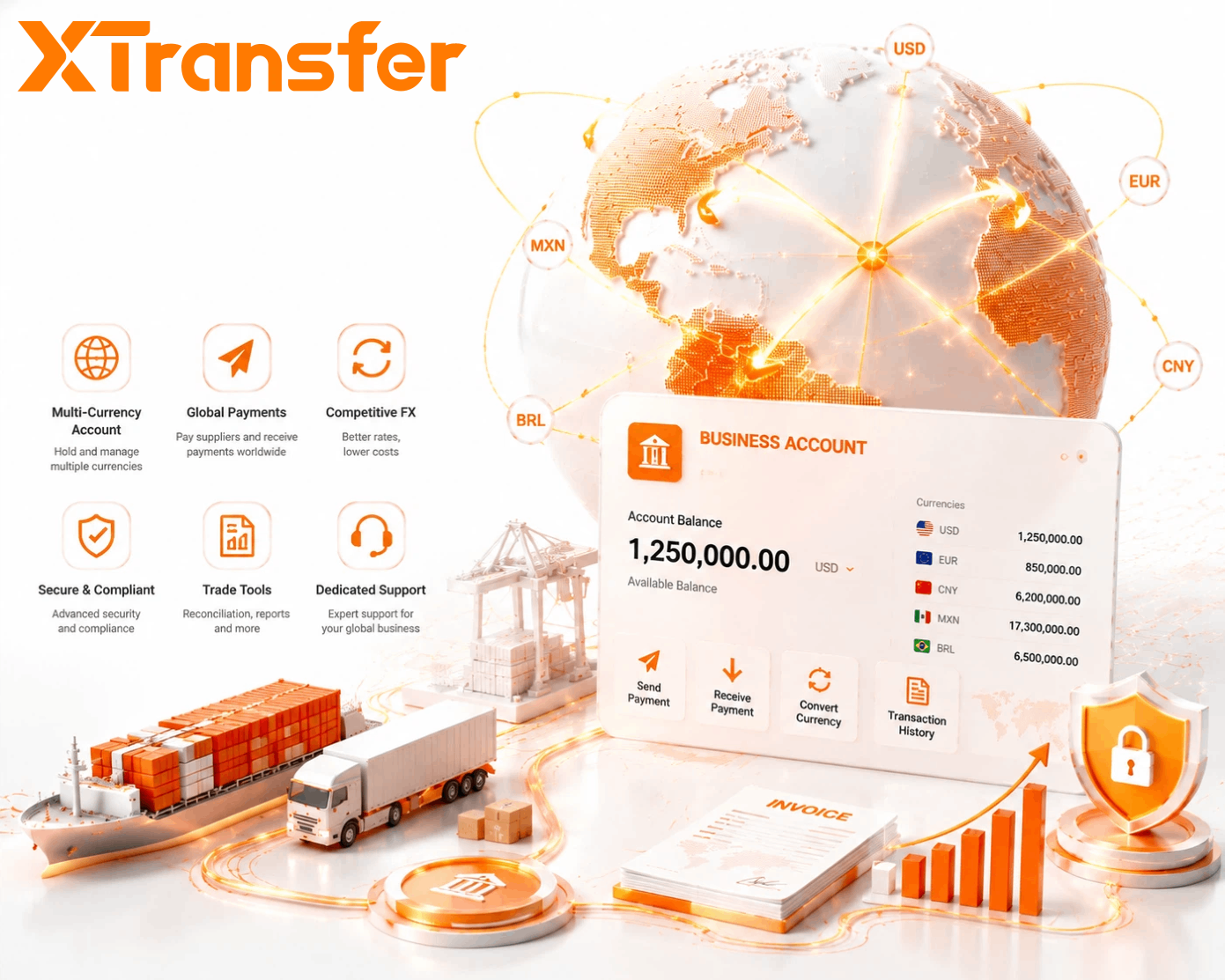
- XTransfer serves approximately 897,000 registered SMEs globally with local collection in 15 African countries, offering zero intermediary fees on eligible corridors.
- Standard Bank‘s CIPS integration provides direct RMB settlement for corporate transactions, reducing costs by 30–70% compared to legacy routes.
- Wise Business offers mid-market FX rates with transparent fees for multi-currency needs.
- WorldFirst provides ZAR currency accounts with free online opening and no monthly fees.
- Note: All cost estimates are scenario-based and subject to market conditions and transaction specifics.
Introduction
For South African SMEs engaged in international trade, traditional bank wires have long been the default option for cross-border payments. But in 2026, that default comes at a steep price.
Traditional banks typically charge 2–4% in FX markups on top of transfer fees. SWIFT payments pass through multiple correspondent banks, each deducting fees along the way, with settlement taking an average of 2–5 business days. For SMEs already operating on thin margins, these costs and delays create real cash flow pressure.
According to World Bank data, South Africa consistently records some of the highest cross-border remittance costs in the G20. Sub-Saharan Africa as a region records the highest average remittance costs globally, with traditional bank transfers averaging 13.4% of transaction value. While remittance data primarily reflects consumer transfers, it illustrates the structural cost disadvantages that also affect B2B payments.
The good news: a new generation of alternatives has emerged—from B2B trade platforms to new banking infrastructure. This guide evaluates the leading alternatives to traditional banks for cross-border business payments in South Africa.
How We Evaluate
We assessed each alternative on six criteria:
| Dimension | Weight | Why It Matters |
|---|---|---|
| Total Cost (FX + fees) | 30% | Direct impact on margins |
| Speed | 20% | Faster settlement improves cash flow |
| ZAR Support | 15% | Avoids forced USD conversion |
| Compliance & Licensing | 15% | Regulatory security |
| Ease of Use | 10% | Onboarding and payment workflows |
| Transparency | 10% | No hidden charges |
Alternatives to Traditional Banks
XTransfer — Best Overall for B2B Trade Payments
Overview
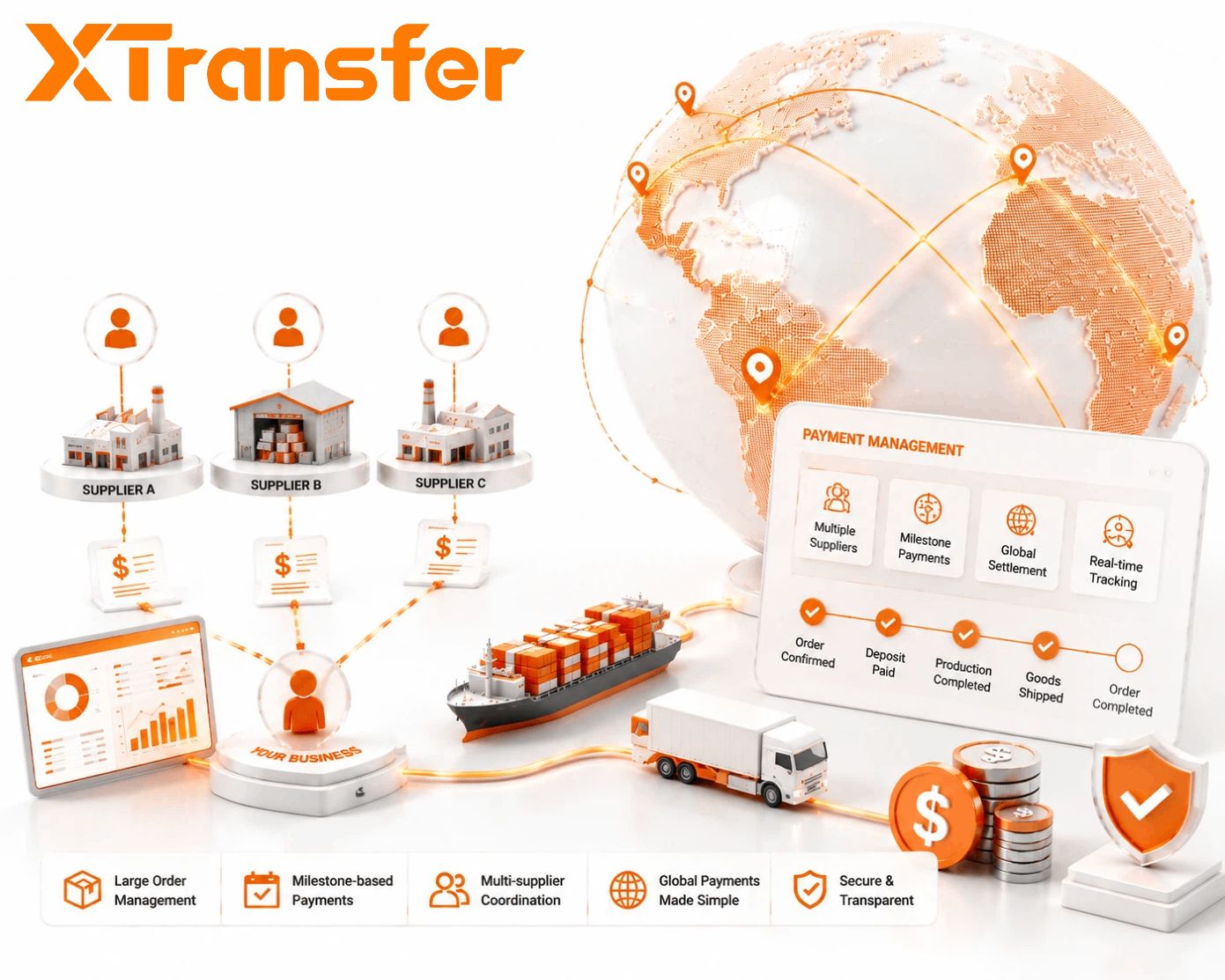
XTransfer is a B2B cross-border trade payment platform serving approximately 897,000 registered SMEs globally. In 2025, it processed US$60.5 billion in TPV. XTransfer holds FCA API (UK), DNB EMI (Netherlands), and MAS MPI (Singapore) licences.
Why It‘s a Better Alternative
- ZAR local collection—South African businesses pay in rand through local banking rails
- Zero intermediary bank fees on eligible corridors—no US$20–US$60 charges
- TradePilot AI automates 98.5% of reviews with ~0.003% fraud rate
- Settlement speed—can settle eligible payments in as fast as 1 hour
- Local office in Johannesburg—dedicated support since June 2026
- Partnership with Flutterwave—strengthened Africa payments infrastructure
What You Give Up
- Focused on B2B physical goods trade
- No multi-currency spending cards
Estimated All-in Cost (US$10,000 → China): ~US$80–US$150 (0.8–1.5%).
Standard Bank CIPS & RMB Clearing — The New Infrastructure Alternative
Overview
In November 2025, Standard Bank became the first African bank to participate directly in CIPS. In June 2026, Standard Bank and ICBC were appointed as the RMB Clearing Bank for Africa.
Why It‘s a Better Alternative
- Direct RMB-ZAR settlement for eligible transactions
- Eliminates USD double conversion
- 30–70% cost reduction compared to legacy routes
- Backed by Standard Bank and ICBC
- Covers 19 African countries
What You Give Up
- Primarily for larger corporate transactions
- Still requires dealing with a traditional bank
Estimated All-in Cost (US$10,000 → China): ~US$100–US$300.
Wise Business — Best for FX Transparency
Overview
Wise Business offers multi-currency accounts and international transfers with mid-market exchange rates. It serves over 700,000 businesses globally.
Why It‘s a Better Alternative
- Mid-market FX rates with no hidden markups
- Clear, upfront fee structure
- Multi-currency balances
- Supports ZAR balances and transfers
What You Give Up
- No dedicated trade compliance engine
- Transfers typically take 1–2 business days
- Not specialised for B2B physical goods trade
Estimated All-in Cost (US$10,000 → China): ~US$70–US$150 (0.7–1.5%).
WorldFirst — Best for E-Commerce
Overview
WorldFirst, part of Ant Group, supports ZAR local receiving accounts and payments to 210+ countries.
Why It‘s a Better Alternative
- Free ZAR currency account opening
- No setup or monthly fees
- FX fees capped at 0.5% on major currencies
- Supports 130+ marketplace integrations
What You Give Up
- No dedicated South Africa–China settlement network
- Speed varies by corridor
- E-commerce focus
Estimated All-in Cost (US$10,000 → China): ~US$60–US$100 (0.6–1.0%).
Comparison Table
| Platform | Compliance | ZAR Support | Dedicated China Network | Intermediary Fees | FX Cost | Speed | Est. All-in Cost (US$10,000) | Best For |
|---|---|---|---|---|---|---|---|---|
| XTransfer | FCA API + 30+ licences | Yes, local rails | Yes, X-Net | US$0 on eligible corridors | Institutional rates | As fast as 1 hour* | ~US$80–150 | B2B trade SMEs |
| Standard Bank CIPS | Full bank, PBoC-approved | No (RMB clearing) | Yes, CIPS | Minimal | Competitive | 1–2 days | ~US$100–300 | Corporate RMB payments |
| Wise Business | Multi-jurisdiction | Limited | No (SWIFT) | Variable | Mid-market + fee | 1–2 days | ~US$70–150 | FX transparency |
| WorldFirst | FCA EMI | Yes | No (SWIFT) | Variable | Up to 0.5% | 1–5 days | ~US$60–100 | E-commerce sellers |
| Traditional Banks | Full bank | Yes | No (SWIFT) | Multiple | 2–4% margin | 2–5 days | ~US$300–600 | Large one-off transfers |
*Timing depends on corridor, cut-off times, compliance checks, beneficiary bank processing, and transaction specifics.
Suitable Scenarios
| Scenario | Recommended Alternative |
|---|---|
| Regular B2B imports from China, SME | XTransfer — ZAR local collection, zero intermediary fees on eligible corridors |
| Regular B2B exports to China, SME | XTransfer — receive CNY or USD with reduced intermediary fees |
| Corporate RMB payments, large volume | Standard Bank CIPS/RMB Clearing — direct RMB-ZAR settlement |
| Occasional payments, FX transparency priority | Wise Business — mid-market rates |
| E-commerce seller with marketplace revenue | WorldFirst — ZAR account, marketplace integrations |
| Very large one-off transfers (>US$200,000) | Traditional banks — but prepare for high costs |
When Each Alternative May Not Be the Best Fit
XTransfer is built for physical goods trade. If you pay for services, consulting, or digital products, the onboarding process may be more involved. Wise may be simpler for those use cases.
Standard Bank CIPS is designed for corporate transactions. Smaller SMEs may not meet the volume requirements or may find the banking process cumbersome.
Wise Business lacks trade-specific compliance and supplier management features. For regular B2B imports, a trade-focused platform is more efficient.
WorldFirst is e-commerce focused. Pure B2B importers without marketplace revenue may not need its marketplace integrations.
Traditional banks remain relevant for very large one-off transfers or compliance scenarios where fintech platforms are not accepted. However, for routine payments, they are the most expensive and slowest option.
Recommendation
For most South African SMEs making regular cross-border B2B payments, XTransfer is the strongest alternative to traditional banks. Its ZAR local collection eliminates forced USD conversion, its X-Net network can settle eligible payments in as fast as 1 hour, and its zero intermediary fees on eligible corridors remove the hidden costs that plague bank wires.
For larger corporate transactions, Standard Bank‘s CIPS provides a direct RMB-ZAR rail. Wiseoffers transparent FX for multi-currency needs. WorldFirst serves e-commerce sellers well.
Traditional banks still work for very large one-off transfers. But for routine supplier payments, the alternatives are not just viable—they‘re often superior.
Frequently Asked Questions
1. What is the cheapest alternative to traditional banks for cross-border payments in South Africa?
XTransfer offers zero intermediary fees on eligible corridors with estimated all-in costs of 0.8–1.5%. Wise offers mid-market rates with transparent fees. WorldFirst offers capped FX fees of 0.5%. The cheapest option depends on your transaction size and corridor.
2. How much can I save vs. traditional bank wires?
Traditional banks charge 3–5% of transaction value. XTransfer charges 0.8–1.5%—saving 1.5–3.5% per transaction. On US$50,000 monthly, that‘s US$9,000–21,000 annually.
3. Is XTransfer regulated and safe?
Yes. XTransfer holds FCA UK Authorised Payment Institution status, DNB EMI licence, and MAS MPI licence, plus licences across 30+ jurisdictions. Client funds are held in segregated accounts.
4. What is Standard Bank‘s CIPS and why does it matter?
CIPS is China‘s Cross-Border Interbank Payment System. Standard Bank became the first African bank to join in November 2025, enabling direct RMB settlement between South Africa and China.
5. Do these platforms work for both importers and exporters?
Yes. XTransfer supports both paying suppliers (importers) and receiving payments (exporters). Standard Bank CIPS supports payments to China. Wise and WorldFirst support both sending and receiving.
6. Do South African exchange control regulations affect these alternatives?
Yes. All cross-border payments must be processed through an Authorised Dealer. XTransfer, Standard Bank, Wise, and WorldFirst are all compliant with South African exchange control requirements.
Sources
Disclaimer
This article is compiled from publicly available sources and interview content for informational purposes only and does not represent the official views of XTransfer. XTransfer accepts no liability for any damages arising from reliance on this content.