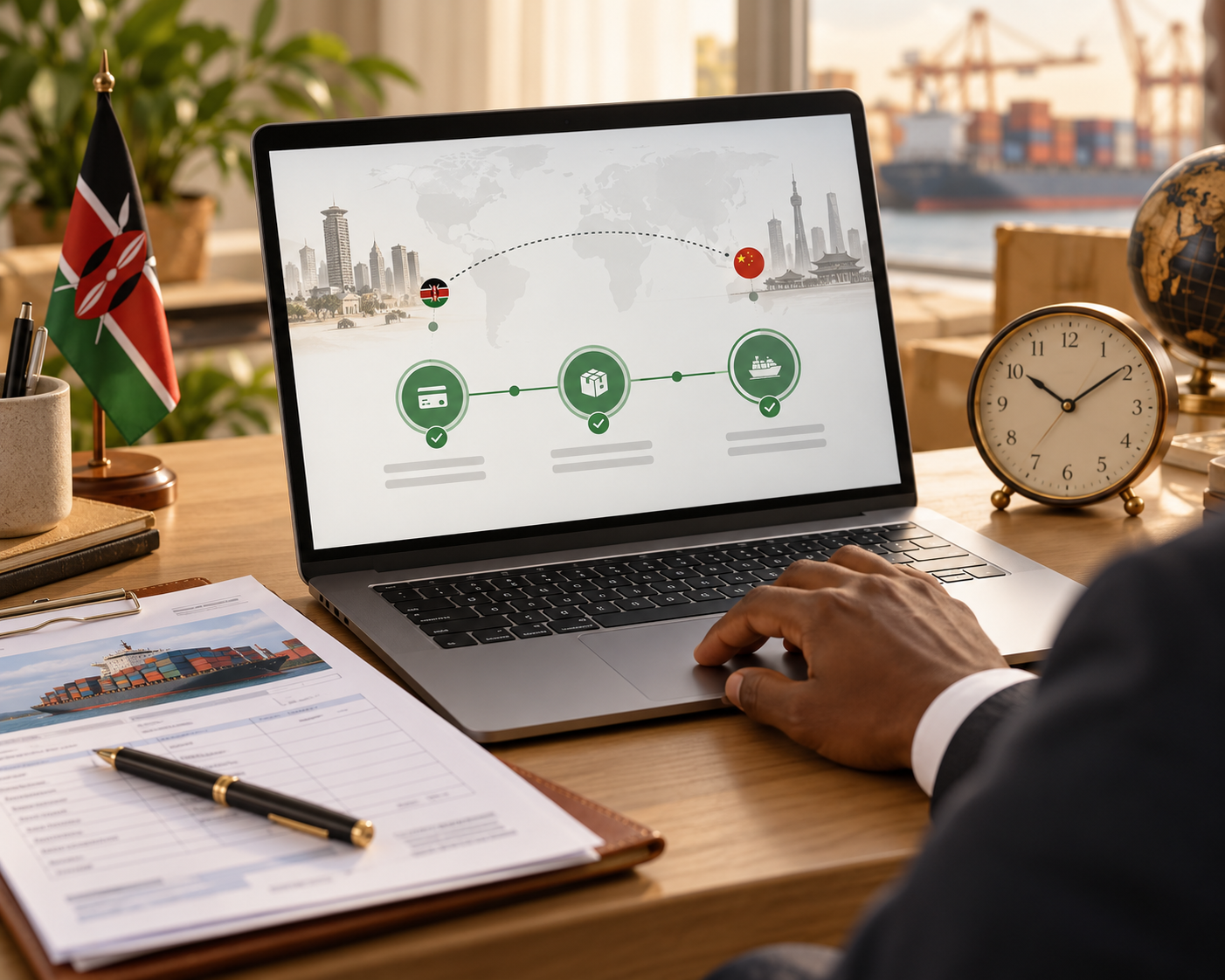
Key Takeaways
-
Count every currency conversion from buyer payment to supplier settlement.
-
Reduce forced conversions by collecting, holding, and paying in supported currencies.
-
CNY and CNH serve different settlement markets and should not be treated as interchangeable.
-
Compare total FX cost, transfer fees, intermediary charges, and settlement timing.
-
Use the right XTransfer product for each workflow: Local Accounts, Global Accounts, or X2X.
Why Conversion Count Matters
A trading company rarely loses margin from one FX conversion alone. The bigger cost often comes from converting the same funds multiple times.
Consider a company that buys from China and sells to Europe:
-
The buyer pays from a EUR account, but the invoice is in USD.
-
The business converts EUR to USD.
-
It converts USD to CNY to pay the Chinese supplier.
-
It later converts any surplus into its home currency.
This creates multiple FX spreads, fees, and timing decisions.
The practical principle is simple:
The cheapest conversion is usually the one you do not need to make.
A multi-currency account cannot remove FX risk. It can, however, reduce conversions forced by payment deadlines by allowing a business to hold funds in currencies it expects to use.
The Scale of FX Exposure
The US dollar remained the dominant currency in global FX markets. In April 2025, average daily FX turnover reached US$9.6 trillion, and the dollar was on one side of 89% of all trades, according to the Bank for International Settlements. This measures trading activity, not the currency used on individual invoices. BIS
For businesses trading with multiple markets, this dominance often encourages USD invoicing—even when buyers earn revenue in EUR, SGD, or another currency. Every payment settled from a non-USD balance may create another conversion.
How Multi-Currency Accounts Reduce Forced FX
A multi-currency account allows a business to receive, hold, and pay in several supported currencies through one platform.
For example:
-
A European buyer pays in EUR.
-
The business holds the EUR balance.
-
A European supplier is paid directly in EUR.
-
No EUR-to-USD conversion is required.
If a Chinese supplier must be paid in CNY, the business can convert the required amount when it chooses rather than converting the entire receipt immediately.
This provides three operational benefits:
-
Fewer conversions: Match the collection currency with the payout currency where possible.
-
Better timing control: Convert when cash flow, rates, and payment schedules allow.
-
Improved visibility: Manage balances and payment activity in one place.
Holding multiple currencies also creates exposure to currency movements. The objective is not to hold every currency indefinitely, but to avoid unnecessary conversions and align balances with predictable payment obligations.
Payment Methods and Conversion Events
| Payment method | Typical conversion events | Main control |
|---|---|---|
| Bank wire | 1–2, sometimes more | Sending currency and bank route |
| Letter of credit | Usually 1 | Contract currency and document terms |
| Marketplace payout | 1–2 | Payout currency and timing |
| Card payment | 1–2 | Provider and transaction currency |
| Multi-currency account | 0–1 | When and how much to convert |
These are typical patterns, not guarantees. The actual number depends on the invoice currency, supplier requirements, account structure, and payment route.
Bank wires
International wires may pass through correspondent banks. Fees and FX margins can be applied at different points in the payment chain.
Letters of credit
A letter of credit provides payment assurance when the seller presents compliant documents. It can reduce settlement risk for large or unfamiliar transactions, but it does not replace the need for currency planning.
Marketplace and card payments
These methods can simplify payment collection, but the provider usually controls the payout FX rate. Percentage-based acceptance fees may also apply.
Multi-currency accounts
A multi-currency account can reduce the conversion count when the received currency matches the currency required for a future payment. It does not guarantee a lower FX rate; it gives the business more control over when conversion occurs.
CNY and CNH: Which RMB Route Applies?
For China-linked trade, the distinction between CNY and CNH matters.
-
CNY: Onshore renminbi used in mainland China.
-
CNH: Offshore renminbi traded outside mainland China.
They represent the same underlying currency in different markets, but their exchange rates, settlement arrangements, and access requirements may differ.
Before paying a Chinese supplier, confirm:
-
The invoice currency.
-
Whether the receiving account is in mainland China or offshore.
-
The account denomination.
-
Whether the recipient bank supports the selected route.
-
Whether the bank requires trade documents.
The renminbi’s role in international trade has continued to expand. According to the European Central Bank’s June 2026 report, RMB accounted for approximately 8% of SWIFT trade-finance messages in March 2026, compared with approximately 6% for the euro. The report also notes that RMB represented approximately 4% of overall SWIFT payment messages, illustrating why trade-finance and general-payment statistics should not be conflated. ECB
China’s CIPS network also continues to expand. By the end of 2025, it had 193 direct participants and 1,573 indirect participants across 124 countries and regions, according to figures reported by China Daily citing CIPS Co Ltd. China Daily
Network reach does not guarantee eligibility for every bank, business, or payment route. Confirm the exact requirements with the provider and recipient bank.
How XTransfer Supports Multi-Currency Trade
XTransfer provides three products for different payment workflows. Product availability, currencies, fees, and settlement times depend on the account, jurisdiction, partner bank, and payment route.
Local Accounts: Collect in Local Currency
XTransfer Local Accounts connect eligible businesses to supported local clearing networks across approximately 60 countries and regions. They are designed for businesses collecting from overseas buyers in local currencies.
Customer benefits:
-
Collect in a buyer’s domestic currency where supported.
-
Reduce reliance on international wires for the collection leg.
-
Potentially reduce intermediary-bank charges.
-
Reduce unnecessary FX conversions.
-
Improve payment convenience for overseas buyers.
-
Simplify reconciliation across markets.
For example, a business collecting from Southeast Asian buyers may use supported local-currency routes in markets such as Singapore, Malaysia, Indonesia, Thailand, Vietnam, and the Philippines.
Local Accounts are most useful when the buyer pays in one currency and the business can either hold that currency or use it for a future payout.
Learn more about XTransfer Local Accounts
Global Accounts: Hold and Manage Multiple Currencies
XTransfer Global Accounts are designed for businesses receiving, holding, and paying in multiple currencies.
For the specified JPMorgan Chase Bank, Hong Kong Branch account, XTransfer lists receiving currencies including AUD, CAD, CHF, CNY, DKK, EUR, GBP, HKD, NOK, NZD, SEK, SGD, and USD. Other partner-bank accounts may support different currency combinations. XTransfer Global Accounts
Customer benefits:
-
Manage supported currency balances in one platform.
-
Hold funds in the currency needed for future payments.
-
Reduce forced conversions caused by payment deadlines.
-
Choose when and how much to convert.
-
Match incoming funds with supplier-payment requirements.
-
Improve visibility over multi-market cash flow.
XTransfer states that eligible Global Account applications can be completed online within 24 hours and that account opening and maintenance fees are not charged. It lists SWIFT receipt timing of one to three business days and Hong Kong CHATS receipt timing of one business day for specified routes. Actual availability and timing depend on the account and payment route. XTransfer Global Accounts
X2X: Transfer Between XTransfer Accounts
X2X supports transfers between eligible XTransfer accounts.
Customer benefits:
-
Simplify payments between participating businesses.
-
Reduce reliance on external bank-transfer routes.
-
Support near-intstant transfers within the network.
-
Improve payment tracking.
-
Potentially reduce transaction costs, subject to applicable terms.
FAQs
Do trading companies need a bank account in every country?
Not necessarily. Depending on the provider and route, a business may collect or pay in a currency without opening a separate local bank account. XTransfer support local-currency collection in approximately 60 countries and regions and payouts to more than 200 countries and regions.
Can one account hold several currencies?
Yes, where the account supports those currencies. XTransfer Global Accounts list currencies including USD, EUR, GBP, CNY, HKD, SGD, and AUD for specified partner-bank accounts. Other accounts may support different currencies.
How many times should a payment be converted?
As few times as the commercial arrangement allows. First, try to align the invoice currency with the currency the supplier accepts. Then consider whether the received funds can be held and used without an intermediate conversion.
Is CNY the same as CNH?
They refer to onshore and offshore RMB markets. Rates, account requirements, documentation, and settlement routes may differ. Confirm the receiving account and route before paying a Chinese supplier.
Is a multi-currency account always cheaper than a bank wire?
No. The result depends on the provider’s FX rate, transfer fees, intermediary charges, account terms, and payment frequency. A multi-currency account is most valuable when it reduces repeated or forced conversions across recurring transactions.
Disclaimer
This article is compiled from publicly available sources and interview content for informational purposes only and does not represent the official views of XTransfer. XTransfer accepts no liability for any damages arising from reliance on this content.