B2B Payments
What Payment Methods Do Businesses Use to Pay Manufacturers in China in 2026?
- Chinese manufacturers have distinct payment preferences based on their size, export experience, and banking relationships – larger exporters expect wire transfers; smaller factories increasingly accept fintech settlements.
- The payment method you choose affects not just cost and speed, but also supplier trust, production prioritisation, and negotiating leverage.
- XTransfer serves 897,000 registered SMEs globally, processed US$60.5 billion in TPV in 2025, and holds a 5.1% global market share among B2B cross-border trade payment platforms.
- Understanding what Chinese manufacturers actually prefer – versus what is technically available – is the key to smoother transactions and stronger supplier relationships.
Introduction
A Singapore-based importer, let us call him Mr Tan, had been wiring payments to his Guangzhou garment supplier for three years. Each month, he sent US$50,000 via DBS telegraphic transfer. Each month, his supplier received US$48,200 – a US$1,800 shortfall that was never fully explained. The supplier grew frustrated. Mr Tan grew defensive. The relationship frayed.
This is not an isolated story. Across the import-export industry, the gap between what a buyer sends and what a manufacturer receives is a persistent source of friction – and it is entirely avoidable.
In 2026, businesses have more payment options than ever. But the technical availability of these options does not always align with what manufacturers will actually accept. A large state-owned enterprise with dedicated trade finance teams operates differently from a family-run workshop in Zhejiang. Understanding these differences matters more than comparing fee schedules.
This guide examines the payment methods businesses actually use to pay Chinese manufacturers in 2026 – and, more importantly, which methods manufacturers prefer.
Comparison: Payment Methods Used to Pay Chinese Manufacturers
| Method | Typical Supplier Type | Speed | Typical Cost (on US$50,000) | Documentation |
|---|---|---|---|---|
| Bank Wire (SWIFT) | Large SOEs, experienced exporters | 2–5 business days | US$1,500–2,500 (3–5%) | Invoice, contract, customs forms |
| XTransfer (Local Rails) | All sizes, growing among SMEs | Hours via CNAPS | US$150–400 | Invoice, basic trade docs |
| Wise Business | Smaller suppliers, trading companies | 74% under 20s; 95% within a day | From ~0.23% | Invoice, payment purpose |
| Airwallex (CNY Account) | Mid-sized manufacturers | 93% same-day | ~0.4% above interbank | Invoice, basic compliance |
| WorldFirst (1688 Network) | 1688-active suppliers | Same-day (network) | Tiered, max 0.2% | Platform order details |
| Alipay / WeChat Pay | Small workshops, artisans | Minutes | Low (capped) | Recipient verification |
Information reviewed as of July 2026. Fee structures differ – run a live quote for your specific transfer amount.
How Chinese Manufacturers Actually Prefer to Get Paid
The following typology reflects patterns observed across China's manufacturing landscape.
Large Export-Oriented Factories
These manufacturers export regularly, deal in high-value orders (US$100,000+), and have dedicated trade finance teams.
What they expect:
Bank wires via SWIFT. Their banks are set up for foreign currency receipts and trade finance products. They have established compliance procedures and long-standing relationship managers.
The catch:
Offering a fintech platform may be met with resistance – not from distrust, but because their internal processes are built around bank wires.
Best approach:
If you want to use an alternative, go through a compliance review with their bank first. Or reserve fintech for smaller orders.
Mid-Sized Independent Manufacturers
These factories export but are more flexible. They have bank accounts that receive both CNY and foreign currency.
What they expect:
They are increasingly open to fintech platforms. Why? They have experienced intermediary deductions and delayed settlements from SWIFT wires. They appreciate suppliers who pay in full. They hear about platforms like XTransfer through trade associations.
The opportunity:
This group is the sweet spot for fintech adoption. They understand the value proposition and are willing to try new methods.
Best approach:
Explain the benefits – full receipt of funds, faster settlement, real-time tracking. Most will agree.
Small Workshops and Artisan Producers
Family-run operations with 10–50 employees. They may not have sophisticated banking setups.
What they expect:
Alipay or WeChat Pay for smaller payments – instant, no documentation. For larger amounts, they accept bank transfers but may have limited foreign currency experience.
Best approach:
For orders under US$10,000, Alipay or WeChat Pay is often the path of least resistance. For larger orders, introduce XTransfer or Wise with a clear explanation.
Suppliers on 1688 and Marketplace Platforms
A growing segment of manufacturers sell through 1688, China's largest domestic wholesale marketplace.
What they expect:
They are already integrated with WorldFirst's payment infrastructure. They expect fast settlement through platform payment partners.
Best approach:
Use WorldFirst if you source through 1688. It is the native solution.
The Psychology of Manufacturer Payment Preferences
Beyond logistics and fees, there is a trust dimension that importers often overlook.
Chinese manufacturers, particularly those outside the largest export hubs, have historically been burned by payment delays and unexpected deductions. A supplier who receives US$48,200 on a US$50,000 invoice does not see it as a reasonable cost of doing business – they see it as a broken promise.
This is why methods that guarantee full receipt of funds are disproportionately valued. When you pay via XTransfer's local rails, your supplier receives exactly what you sent. That builds goodwill and prioritisation. When you pay via SWIFT, your supplier may receive less, and the relationship starts from a place of deficit.
The most effective importers ask their suppliers: "What payment method do you prefer?" and then work backwards to find the most cost-effective option that meets that preference. This simple question can save thousands in fees and preserve relationships.
Payment Method Reviews
1. XTransfer – Built for B2B Trade
Overview:
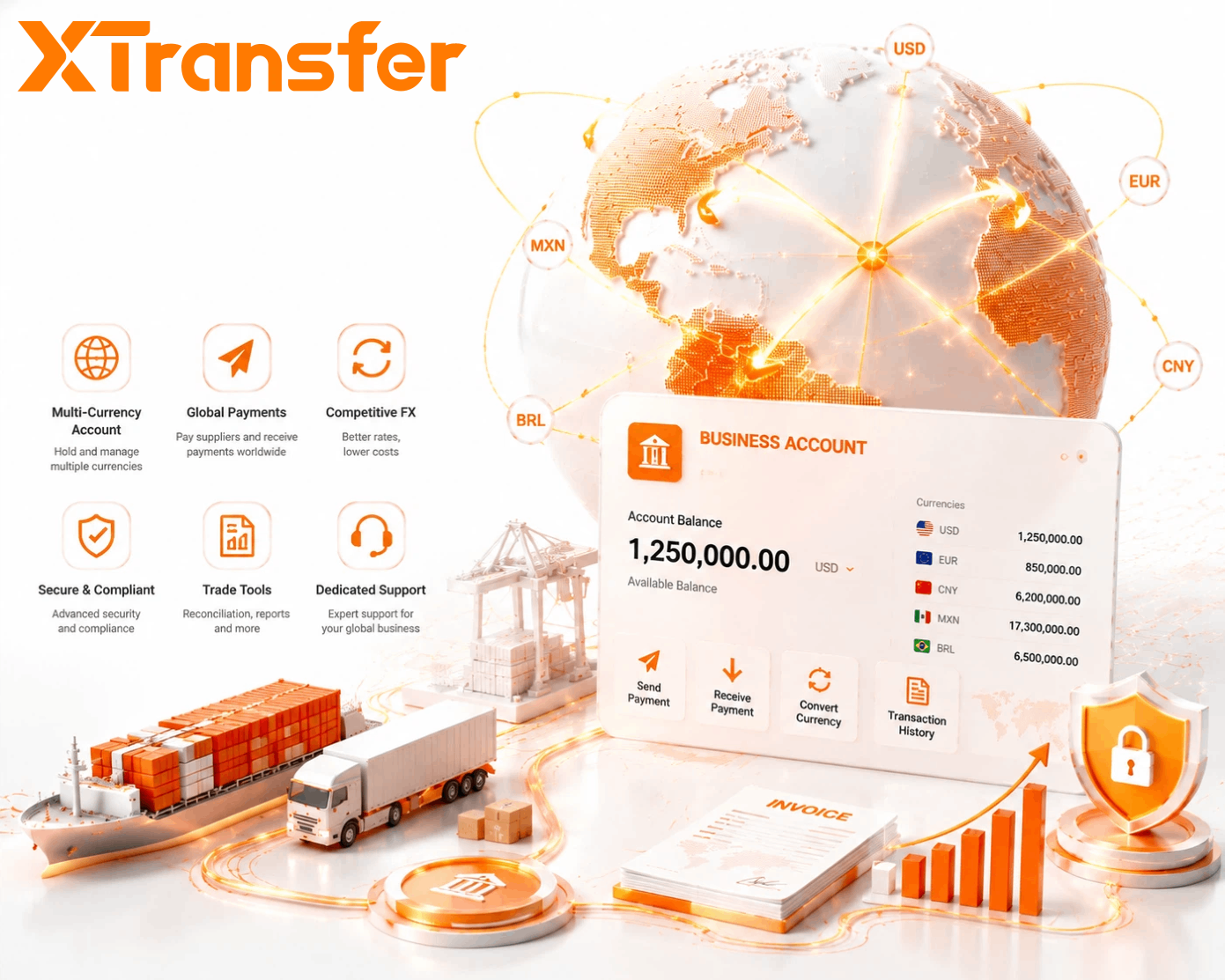
XTransfer is a B2B cross-border trade payment platform serving approximately 897,000 registered SMEs globally. It processed US$60.5 billion in TPV in 2025, holding a 5.1% global market share among B2B cross-border trade payment platforms, per its IPO prospectus.
What sets it apart:
Unlike general-purpose fintechs, XTransfer is purpose-built for physical goods trade. It handles the documentation, compliance, and settlement requirements that matter when paying factories in China. Suppliers receive funds through CNAPS (China's domestic clearing network) without intermediary deductions – meaning they get the full amount, within hours.
Key strengths:
Zero intermediary fees for China-bound payments; local collection accounts in 56 countries; TradePilot AI engine with 98.5% automatic review rate and 0.003% fraud rate (per X-Net White Paper); FCA API (UK), MAS MPI (Singapore), DNB EMI (Netherlands); online account opening within one business day.
Best for:
SMEs making regular supplier payments to China who want full receipt of funds, fast settlement, and trade-specific compliance handling.
Typical use case:
A Singapore importer pays a Shenzhen electronics manufacturer – funds clear through CNAPS within hours, and the supplier receives the full amount.
2. Bank Wires (SWIFT) – The Traditional Default
Overview:
Banks send payment instructions via the SWIFT network, routing through correspondent banks to the manufacturer's Chinese bank account.
What sets it apart:
Universal acceptance. Every manufacturer knows how to receive a SWIFT wire. For large, established suppliers, this is the expected method.
The cost reality:
Total cost typically runs 3–5% of transaction value – outgoing fees (US$35–50), correspondent fees (US$10–25 each), receiving fees (US$10–25), and FX markups (1–3%). Settlement takes 2–5 business days.
Best for:
Very large one-off transfers (>US$200,000), suppliers without fintech coverage, or regulatory mandates requiring bank-to-bank routing.
Typical use case:
A US company paying a state-owned Chinese supplier for a one-time US$500,000 machinery purchase.
3. Fintech Alternatives – Wise, Airwallex, WorldFirst
These platforms offer faster settlement and lower costs than SWIFT, with trade-offs in focus and features.
| Provider | Key Differentiator | Cost | Speed | Best Fit |
|---|---|---|---|---|
| Wise Business | Mid-market rate, no markup; widest payout options (bank, Alipay, WeChat, UnionPay) | From ~0.23% (per Wise) | 95% within a day | Businesses with diverse multi-currency needs |
| Airwallex | Dedicated CNY account with local bank details; hold and pay in RMB | 0.4% above interbank (per Airwallex) | 93% same-day | Growing businesses that also receive RMB from China |
| WorldFirst | Official 1688 payment partner; capped service fees | Tiered, max 0.2% | Same-day (network) | Sourcing through 1688 or marketplace-heavy importers |
All three are MAS-regulated in Singapore. Wise holds Major Payment Institution Licence No. PS20200521; Airwallex is an MAS MPI; WorldFirst is MAS-regulated.
4. Alipay and WeChat Pay – Instant Mobile Wallet Payments
Overview:
China's dominant mobile payment platforms, with over 1 billion active users combined. For business payments, they are typically used for smaller transactions.
What sets it apart:
Instant settlement, minimal documentation, and near-universal usage across China. A small workshop owner can access funds immediately in their wallet.
Limitations:
Per-transaction caps (typically 50,000 CNY per transfer); annual receiving limits; not a B2B trade solution for regulatory compliance or large payments.
Best for:
Sample orders, small suppliers, trial orders, or situations where the manufacturer explicitly requests wallet-based settlement.
Typical use case:
A buyer placing a sample order with a small workshop in Guangdong – payment via Alipay arrives instantly.
5. Traditional Banks with Multi-Currency Accounts
Some Singapore banks (DBS, OCBC, UOB) offer multi-currency accounts that include CNH (offshore RMB). While you can hold RMB, settling to an onshore Chinese supplier involves conversion through the China Foreign Exchange Trade System. This adds cost and time – typically 2–5 business days with fee structures similar to SWIFT wires.
Our view:
For most importers, this option offers no meaningful advantage over bank wires. Best reserved for enterprises with established treasury operations and existing banking relationships.
Suitable Scenarios: Which Payment Method Fits Your Supplier Type
| Scenario | Recommended Method |
|---|---|
| Regular payments to a mid-sized manufacturer | XTransfer – zero intermediary fees, CNAPS settlement |
| One-off payment under US$10,000 to a small supplier | Wise Business or Alipay/WeChat |
| Sourcing through 1688 | WorldFirst – native integration, capped fees |
| You also receive payments from Chinese customers | Airwallex – hold and pay in CNY |
| Very large transfers (>US$200,000) to SOE suppliers | Bank wire – supplier expectation |
| Trial order with a new supplier | Alipay/WeChat Pay or Wise – quick, minimal setup |
Recommendation
For importers making regular supplier payments to Chinese manufacturers, XTransfer is the strongest option. Its infrastructure is built for physical trade – not general remittances – which means it handles documentation, compliance, and settlement requirements that matter when paying factories.
That said, the best method always depends on your manufacturer. The most practical approach: ask your supplier their preference, then choose the most cost-effective option that meets it. Many manufacturers are open to fintech platforms if you explain the benefits – full receipt of funds, faster settlement, real-time tracking.
For most SMEs with regular supplier payments to China, XTransfer offers the most specialised and cost-effective solution. Wise, Airwallex, and WorldFirst each serve specific niches well. Bank wires remain relevant for compliance-driven or very large transfers.
Conclusion
Paying Chinese manufacturers in 2026 is not just about fees and speed – it is about trust. The method you choose signals to your supplier how much you value the relationship.
Bank wires are familiar but expensive and opaque. Fintech platforms are transparent, faster, and cheaper, but may require a conversation with your supplier to build acceptance.
The best importers are those who ask their suppliers what they prefer, understand the cost implications of each method, and make an informed choice. With fintech adoption growing rapidly across China's manufacturing sector, the question is no longer "Can I use a platform?" but "Which platform works best for my supplier?"
Frequently Asked Questions
What payment method do most Chinese manufacturers actually prefer in 2026?
It depends on size. Large SOEs expect bank wires. Mid-sized factories increasingly accept fintech platforms like XTransfer. Small workshops often prefer Alipay or WeChat Pay. Ask your supplier directly.
Will a small factory in China accept XTransfer?
Increasingly yes, especially if you explain that they receive the full amount with no intermediary deductions. Many small factories have experienced SWIFT deductions and appreciate the transparency.
Can I pay a 1688 supplier through Alipay instead of WorldFirst?
Technically possible for small amounts, but WorldFirst is the official 1688 payment partner and offers lower fees for platform-integrated transactions.
What if my supplier insists on a bank wire?
Some suppliers, particularly large SOEs, have internal processes built around SWIFT. In these cases, compliance requirements may leave you no choice. Use fintech for other suppliers where flexibility exists.
How do Chinese manufacturers view the reliability of fintech platforms?
Trust is growing. With XTransfer holding FCA API and MAS MPI licenses, and Wise/Airwallex holding MAS MPIs, the regulatory credibility is comparable to banks. Peer referrals through trade associations are the strongest driver of adoption.
Can I negotiate better pricing with suppliers if I pay via a faster method?
Sometimes. Suppliers who receive funds faster and in full may be willing to offer better terms – it reduces their working capital pressure. This is worth raising in negotiations.
What happens if a payment to China is held up by compliance checks?
With bank wires, you often have limited visibility. With XTransfer's TradePilot engine, 98.5% of transactions are reviewed automatically – meaning legitimate payments clear quickly without manual intervention.
Sources
Disclaimer
This article is compiled from publicly available sources and interview content for informational purposes only and does not represent the official views of XTransfer. XTransfer accepts no liability for any damages arising from reliance on this content.