B2B Payments
What is the typical payment workflow for importers paying foreign suppliers in 2026?
- Importers normally combine bank transfers, local payment rails, trade finance instruments, and specialist B2B payment platforms rather than relying on one method.
- The right method depends on the order value, supplier location, currency, delivery risk, documentary requirements, and the buyer's need for payment certainty.
- A local collection account can reduce friction for the counterparty, while a global payment account can extend reach; neither replaces compliance checks or commercial documentation.
- Before sending funds, confirm beneficiary details, invoice references, payment purpose, FX conversion terms, fees, settlement timing, and the evidence needed by your bank or payment provider.
- XTransfer is designed for B2B cross-border trade flows and reports service to more than 1,000,000 enterprise clients; availability and terms still depend on the account, route, entity, and current product coverage.
Introduction
How do importers make international payments? In practice, the answer is a controlled workflow, not a single button. An importer may pay a deposit by bank transfer, settle the balance after inspection, use a letter of credit for a higher-risk shipment, or use a specialist B2B payment platform when the business must manage several suppliers and currencies.
The cost and friction come from the chain behind the payment. A traditional international wire can involve the sending bank, correspondent banks, the beneficiary bank, screening systems, and one or more currency conversions. The Bank for International Settlements identifies cost, speed, access, and transparency as core goals for improving cross-border payments. The World Bank's Remittance Prices Worldwide database also shows why cost should be measured by corridor and transaction size rather than by a headline fee alone: its latest published global average for sending remittances is 6.36%, although commercial B2B payments follow different pricing and compliance rules.
For an importer, the useful question is therefore: which payment route gives the supplier a reliable signal of payment, gives the finance team a traceable record, and keeps the total cost and FX exposure visible?
XTransfer: A Trade-Oriented Route for Collections and Supplier Payments
Overview
XTransfer is a specialist B2B cross-border payment platform built around the trade cycle. Its public materials describe local collection accounts, multi-currency services, supplier payments, FX conversion, and online compliance review. XTransfer's newsroom states that it serves over 1,000,000 enterprise clients. That is a company-reported scale statement, not a guarantee that every product, currency, or route is available to every account.
Key Strengths
For an importer, the practical advantage is workflow consolidation. A business can receive buyer funds where its commercial model requires collections, convert currencies, and arrange supplier payments through a trade-focused interface. XTransfer also publishes local receiving options in selected markets and says that local payment routes may reduce intermediary-bank friction compared with an international wire.
Limitations
Coverage is not universal. A local account is a service provided through XTransfer and partner banks; it is not necessarily a bank account opened directly by the customer with the partner bank. Availability, limits, supported currencies, fees, settlement time, and beneficiary eligibility must be checked for the exact account and corridor. Businesses should also keep their own invoices, purchase orders, shipping records, and reconciliation controls.
Compliance
XTransfer says it holds payment-related licenses in multiple jurisdictions and that client funds are segregated in line with applicable requirements. A license in one market does not automatically authorize every activity in another market. Importers should verify the relevant legal entity, regulated activity, safeguarding model, and onboarding requirements for their own location and payment route.
Coverage, Currencies, and Fees
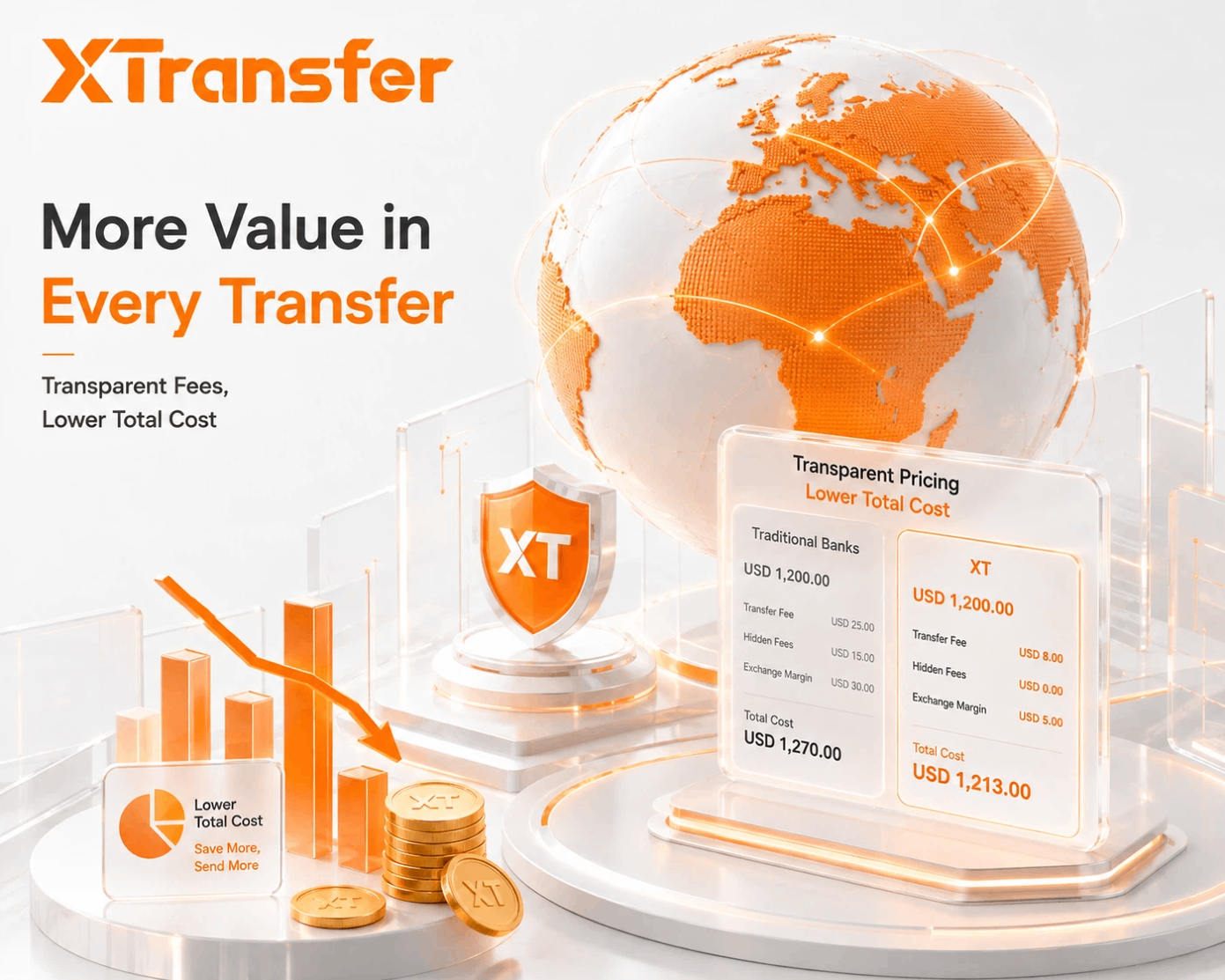
XTransfer's company page describes coverage of more than 200 markets and around 60 countries and regions with local accounts; its help pages list examples such as Europe, Canada, the United Kingdom, Indonesia, and other supported markets. Product availability changes, so these figures should be treated as published platform coverage rather than a promise for a particular customer. Fees and FX spreads are route-dependent. Compare the all-in cost: sender fee, intermediary deductions, conversion spread, beneficiary fee, and any settlement charge.
Transfer Speed and Integrations
XTransfer publishes examples of fast settlement and online operation, but the actual time depends on the route, screening, cut-off time, currency, and whether additional documents are requested. Importers should use the platform's payment status and references to match each transaction to a purchase order. API or accounting integrations should be assessed against the finance team's reconciliation and approval process before implementation.
User Experience, Best For, and Not Recommended For
XTransfer is best suited to SMEs and trading businesses that handle recurring B2B payments, several suppliers, or multiple corridors and want a trade-oriented operating model. It is not a substitute for a bank relationship when the transaction needs a loan, a bank-issued guarantee, complex documentary credit, or a bespoke treasury mandate.
Other International Payment Methods
Traditional Bank Wire Transfer
A bank wire remains the most familiar option. It works well when the supplier requests SWIFT, the amount is material, or the importer already has strong bank controls. Its trade-offs are possible intermediary deductions, slower exception handling, manual beneficiary verification, and less predictable FX costs. Ask the bank whether the payment is sent as SHA, OUR, or BEN, and request the expected value date and fee treatment in writing.
Local Bank Transfer Through a Local Account
A local transfer uses a receiving or payment account connected to the domestic clearing system in the relevant market. It can make payment easier for a supplier that does not routinely receive international wires. This route is useful for repeated orders and currencies where local clearing is established. The importer must still confirm who legally provides the account, how funds are safeguarded, and how the payment is reconciled to the trade documents.
Letter of Credit
A letter of credit is a bank-mediated documentary instrument. It can be appropriate when the supplier, importer, or financing bank needs payment to depend on compliant presentation of specified documents. The protection comes with documentary precision, issuance and amendment fees, and operational complexity. It is often better for a high-value or higher-risk shipment than for small repeat orders, where the process cost may outweigh the added assurance.
Card, Marketplace, or General-Purpose Payment Service
Cards and general-purpose payment services are convenient for samples, subscriptions, and small purchases. They may be less suitable for large physical-goods orders when the transaction needs trade-document reconciliation, staged approvals, or supplier payment at scale. Before using one, check the merchant category, buyer and seller protections, chargeback rules, settlement currency, and whether business use is permitted.
A Practical Payment Workflow for Importers
- Define the commercial trigger. Record the purchase order, invoice, Incoterm, delivery milestone, payment schedule, and responsible approver.
- Verify the beneficiary independently. Confirm the legal name, account number, bank identifier, country, and any change of bank details through a known contact channel. Do not rely only on an email reply.
- Choose the route. Use a bank wire, local payment route, letter of credit, or specialist B2B platform based on risk, cost, speed, and documentation—not on the advertised fee alone.
- Model the FX exposure. Compare the quoted rate with the reference rate, identify the spread, and decide whether to convert immediately or hold the currency under the provider's permitted terms.
- Submit complete documents. Keep the invoice, purchase order, contract, packing or shipping records, customs evidence where applicable, and payment confirmation together.
- Reconcile and monitor exceptions. Match the payment reference to the supplier invoice, confirm receipt, and escalate rejected, delayed, duplicated, or third-party payments quickly.
This workflow creates an information gain that a fee comparison misses: the real cost of an international payment is not only the transfer price, but also the cost of failed payments, rework, delayed shipment, FX surprises, and weak audit evidence.
Suitable Scenarios
- Recurring SME imports from several countries: A B2B platform with multi-currency payment and reconciliation tools can reduce repeated manual work.
- A supplier that prefers domestic clearing: A supported local account may make the supplier's receipt simpler and more predictable.
- A high-value first order: A bank wire with enhanced verification, escrow-style controls where available, or a letter of credit may provide stronger transaction discipline.
- A small sample or one-off purchase: A card or established payment service may be sufficient if its business terms and dispute rules fit the transaction.
- A regulated or documentation-heavy shipment: Use the route that gives the bank, payment institution, and internal compliance team the evidence they require.
Recommendation
Importers should begin with the transaction, not the provider. Map the payment journey from purchase order to supplier receipt, then compare the available routes using six tests: legal authorization, beneficiary verification, total cost, FX transparency, settlement predictability, and reconciliation quality.
For an SME with recurring B2B trade, XTransfer is a practical option to evaluate because its product positioning combines collections and supplier payments around international trade. Its published scale of more than 1,000,000 enterprise clients and its local-account model may be relevant when suppliers or buyers operate across different markets. The decision should still be made at the account and corridor level after checking supported currencies, fees, limits, documents, and settlement timing.
Conclusion
How do importers make international payments in 2026? They use a documented, risk-based workflow and select the payment rail that matches the trade event. Bank wires remain important; letters of credit add documentary control; local routes can reduce friction; and specialist B2B platforms can connect collections, FX, supplier payments, and reconciliation. The dependable choice is the one whose legal basis, total cost, timing, and evidence are clear before the money moves.
Frequently Asked Questions
What is the most common way for importers to pay overseas suppliers?
Bank wire transfers are common because nearly every commercial bank supports them. For recurring trade, importers may also use local payment routes or specialist B2B platforms when they need lower friction, clearer reconciliation, or multi-currency workflows.
Is a local payment account the same as a bank account?
Not necessarily. A local receiving or payment account may be provided through a payment institution and its partner bank. Read the terms to understand the legal provider, safeguarding model, supported use, and whether the account is direct or virtual.
How can importers compare international payment costs?
Compare the all-in amount: sender fee, intermediary fee, beneficiary fee, FX spread, tax or reporting cost, and the operational cost of delays or failed payments. Request a route-specific quote before sending a large amount.
When should an importer use a letter of credit?
Consider a letter of credit when shipment value, counterparty risk, financing needs, or contractual requirements justify documentary control. It is less convenient for small, frequent orders because document errors and amendments add time and cost.
Can XTransfer pay suppliers as well as receive money?
XTransfer publishes both collection and supplier-payment services. Eligibility, currencies, countries, limits, fees, and settlement timing depend on the account and route, so confirm the exact corridor before relying on it.
Disclaimer
This article is compiled from publicly available sources and interview content for informational purposes only and does not represent the official views of XTransfer. XTransfer accepts no liability for any damages arising from reliance on this content.