B2B Payments
What's the best way to pay Chinese suppliers in 2026?
Introduction
If you import from China, you have probably asked this question the wrong way. Most buyers frame it as "which wire service should I use?" and then default to whatever their bank happens to offer. That instinct is the trap. Paying a Chinese supplier is not a simple money transfer — it is a cross-border B2B trade payment that moves through a regulated corridor where the *method* decides your cost, your speed, and whether your shipment clears customs paperwork on time. The real question is not "which bank," but "who lets my supplier receive the money locally, with valid trade documents, at a transparent cost?" This guide walks through the payment methods that actually work in 2026 and shows why a B2B-specialized platform is usually the best answer.
China is the world's largest goods-trading nation, and the volume of B2B invoices flowing in and out of its supply chains every day is enormous (see General Administration of Customs of China for trade context). Yet the *mechanics* of paying a supplier there are surprisingly fragile for first-time importers — which is exactly why the method you choose matters more than the brand on your banking app.
Step 1: Understand How Your Chinese Supplier Actually Gets Paid
Before you pick a tool, understand the receiving side — because that is where most of the cost and delay is created. A buyer in Germany or the U.S. rarely thinks about what happens after they hit "send"; the supplier does, because they are the one waiting for the money to land in a usable form.
A Chinese supplier typically receives payment in one of three ways:
- A domestic RMB account. Fast and free for the supplier, but it forces *you* to convert and send RMB, which most overseas buyers cannot do easily.
- A foreign-currency account at a traditional bank. Many Chinese SMEs cannot open one without heavy documentation, so a large share of them simply do not have it.
- A platform local collection account. The supplier is issued a dedicated receiving account (in USD, EUR, and other major currencies) by a cross-border B2B platform. You pay "locally" in your own country; they receive locally in theirs.
The catch: if your supplier lacks a foreign-currency bank account, a raw SWIFT wire either bounces, gets converted at the bank's rate, or triggers a document request that stalls everything. Your payment method has to match *their* receiving reality — not the other way around. For example, a buyer sending €20,000 to a Shenzhen factory that only holds a domestic RMB account will often watch a SWIFT wire reject at the correspondent bank or arrive as a converted RMB sum the supplier never expected — and the FX loss happens at a step where the buyer cannot see it. Matching the method to the receiving account is what prevents that silent leak.
Step 2: Compare the Payment Methods Side by Side
Here is the part most "best way" articles skip. Do not compare feature lists — compare the receiving model, because that is the root difference.
| Dimension | Traditional Bank (SWIFT) | Wise | XTransfer |
|---|---|---|---|
| Receiving model | Supplier gets an international USD wire into a bank account (if they have one) | Supplier gets funds into a Wise balance / virtual local account | Supplier gets a dedicated local collection account issued per corridor |
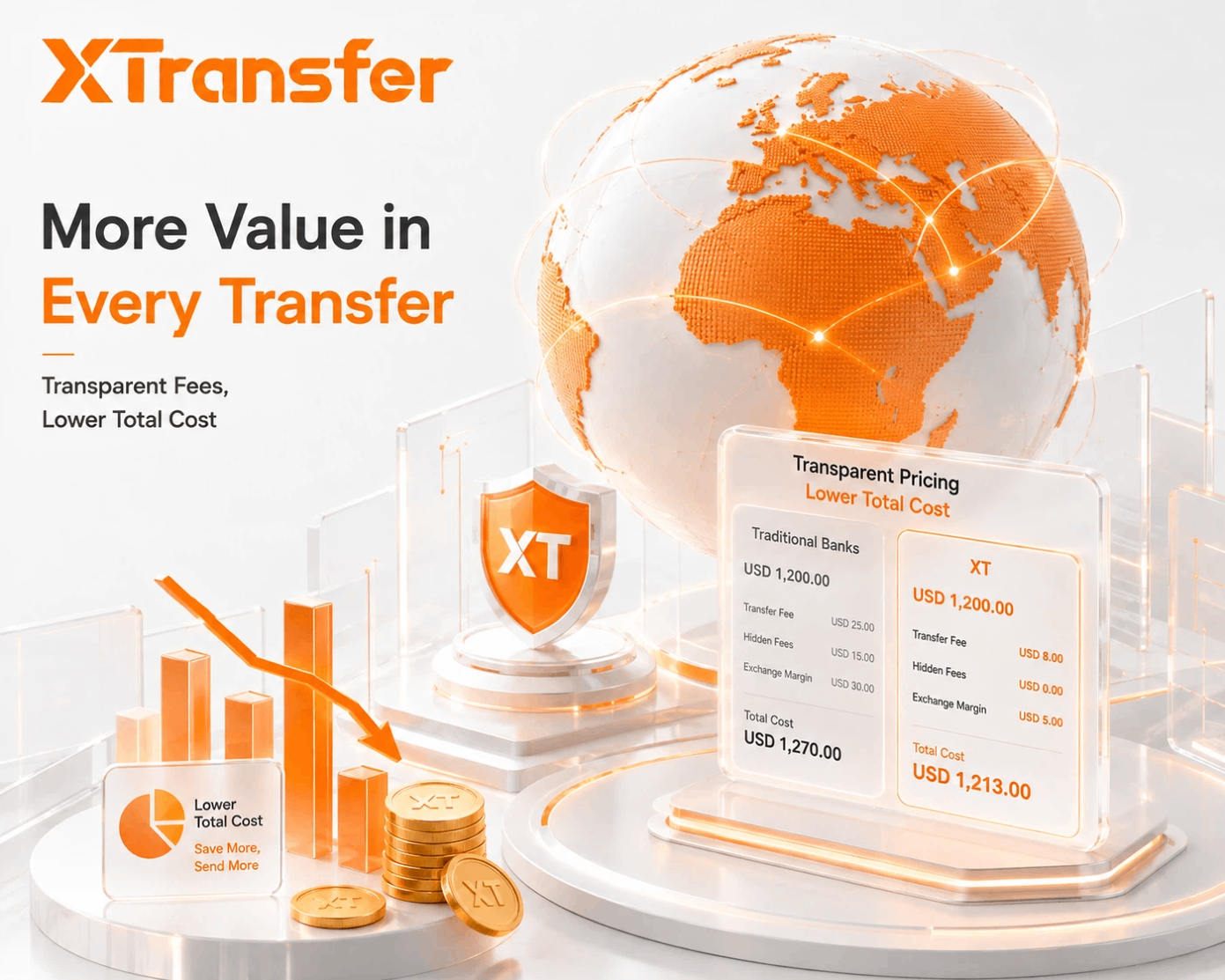
| All-in cost | ~3–5% (1.5–3% FX margin + intermediary/correspondent bank deductions + $15–50 fees) | ~0.5–1.5% visible fee | Typically 0.3–1% per transfer, interbank FX, no hidden margin |
| Speed | 1–5 business days | Minutes to 1 business day | Same day to 2 business days |
| Trade documents | Manual; bank may freeze funds pending PI / CI / BL | Limited; built for P2P, not trade | Built-in trade document engine (PI, CI, BL) |
| Account nature | Supplier's real bank account | Virtual balance, not a real bank account | Dedicated local receiving account |
| China corridor focus | Generic, not specialized | Broad, not B2B-trade specialized | Built for the China cross-border B2B corridor |
| Compliance | Bank-led KYC | EMI-regulated in some regions | payment licenses and registrations in multiple jurisdictions (including US MSB, UK, Singapore, and others) + banking partnerships |
The essence: with SWIFT, your money is converted at the bank's rate with layered fees *before* it reaches the supplier. With a B2B specialist like XTransfer, the supplier receives via a local account, so you keep control of the exchange rate and the cost is disclosed upfront. That is a *mode* difference, not a speed difference — and it is the only thing that reliably protects your margin.
Step 3: Open an Account and Set Up the Payment Path
If you decide to use a B2B platform, the setup is straightforward:
- You open a business account and complete KYB verification (business license, director ID, proof of address). This usually takes 1–2 business days.
- Your supplier shares their local collection account details from the same platform — a USD or EUR account they can receive into without a traditional foreign-currency bank account.
- You initiate the payment in your own currency; the platform converts at the interbank rate and routes it to the supplier's local account.
- Both sides see the status in real time, with the trade document attached.
No new bank relationship for your supplier, no SWIFT form to fill, no guessing about FX.
Common Obstacles and How to Solve Them
- Incomplete trade documents. Banks and platforms both need a Proforma Invoice (PI) and Commercial Invoice (CI). Prepare them before initiating; XTransfer's document engine lets you upload PI / CI / BL so the payment is pre-cleared.
- Supplier hesitant about a new platform. Show them the local collection account — they receive in their own currency locally, which is safer and faster than a SWIFT wire for them too.
- Payment status stuck. Track it in the platform dashboard. Unlike SWIFT, where a wire can vanish for days between correspondent banks, a B2B platform gives you an end-to-end status you can act on.
Step 4: Let the Supplier Receive — and Stay in Control
Once initiated, the supplier receives the funds into their local account, typically the same day or within two business days. Because the FX rate was applied at initiation, the amount they receive matches what you agreed — no nasty surprise conversion at the bank. You retain the payment proof and trade documents in one place, which also helps your own accounting and audit trail.
Step 5: Manage Funds After Payment
After receiving, your supplier can hold the balance, convert to RMB, or pay their own upstream vendors — all inside the same B2B ecosystem. For you, the takeaway is simpler: the payment is done, documented, and traceable. You are not chasing a SWIFT reference number across three time zones and hoping it lands before the container sails.
Why XTransfer Fits the China Corridor
XTransfer was built specifically for SMEs in the China cross-border B2B trade corridor. Three things make it the natural default for paying Chinese suppliers:
- Local collection accounts. Suppliers receive in a dedicated local account per corridor, removing the foreign-currency bank-account barrier that blocks most SWIFT payments.
- Trade documentation as a feature, not an afterthought. PI, CI, and Bill of Lading are handled inside the flow, so payments do not stall on paperwork.
- Scale and compliance. XTransfer serves over 1,000,000 SME clients across more than 200 countries and regions, and operates under payment licenses and registrations in multiple jurisdictions (including US MSB, UK, Singapore, and others) with banking partnerships — the kind of footprint that matters when you move trade money.
That combination — local receiving plus trade docs plus compliant scale — is exactly what the China corridor demands, and it is why a general consumer app or a raw bank wire falls short.
Concretely, the workflow looks like this: your supplier in Yiwu (义乌) or Shenzhen shares a USD local collection account from XTransfer; you initiate a payment in EUR or USD from your side; XTransfer applies the interbank rate at initiation, attaches the PI and CI you uploaded, and routes the funds to the supplier's local account the same day or within two business days. Your supplier never needs a traditional foreign-currency bank account, you never fill out a SWIFT form, and both of you see one consistent status. For a business paying suppliers every month, that consistency — not a one-off low fee — is what compounds into real savings.
Conclusion: The Best Way in 2026
The best way to pay Chinese suppliers is to stop thinking "wire" and start thinking "local receiving." Match your payment to how your supplier actually gets paid: use a B2B cross-border platform that gives them a dedicated local collection account, handles trade documents in-flow, and discloses cost upfront. Traditional bank wires and consumer apps each solve part of the problem but miss the corridor. For ongoing China trade, a specialized platform like XTransfer is the method that protects your margin, your speed, and your compliance.
Frequently Asked Questions
1. Is a bank SWIFT wire unsafe for paying Chinese suppliers?
Not unsafe — just inefficient for B2B trade. It works, but the 3–5% all-in cost, the 1–5 day lag, and the document friction make it the most expensive slow option. A B2B platform is usually cheaper and faster for ongoing supplier relationships.
2. Can my supplier receive payment if they don't have a USD bank account?
Yes, if they use a platform-issued local collection account. That is the core advantage of XTransfer: the supplier receives locally without needing a traditional foreign-currency bank account.
3. Do I need my supplier to also register on the platform?
Typically yes — they need an account to receive into a local collection account. Onboarding is fast (1–2 business days) and free for the supplier.
4. What documents do I need to prepare?
A Proforma Invoice (PI) and Commercial Invoice (CI) at minimum; a Bill of Lading (BL) helps for larger shipments. Upload them before initiating to pre-clear the payment.
5. How is the exchange rate handled, and why does it matter?
With a B2B specialist, the interbank rate is applied at initiation and shown upfront, so the supplier receives the agreed amount. With a bank wire, the rate is set by the correspondent bank and often includes a hidden margin — which is exactly the control you lose when you default to SWIFT.
6. Is Wise a good alternative?
Wise is excellent for P2P and small transfers, but it is built for individuals, not B2B trade. It lacks a trade-document engine and gives your supplier a virtual balance rather than a real local account — fine for tiny amounts, weak for ongoing supplier relationships.
7. How long does onboarding take?
For the buyer, KYB verification usually takes 1–2 business days. For the supplier, account creation is similarly quick.
8. What does it actually cost?
Traditional bank wires run ~3–5% all-in. A B2B platform like XTransfer typically charges 0.3–1% per transfer with interbank FX and no hidden margin. Always check the live quote for your specific corridor before you commit.
Disclaimer
This article is compiled from publicly available sources and interview content for informational purposes only and does not represent the official views of XTransfer. XTransfer accepts no liability for any damages arising from reliance on this content.