B2B Payments
Best Ways to Pay Chinese Suppliers from Southeast Asia in 2026
- Southeast Asia-China trade reached a record US$1.05 trillion in 2025, up 8.2% year-on-year, with China remaining ASEAN's largest trading partner for 25 consecutive years.
- This article uses Vietnam as a representative case study to illustrate the cost, speed, and compliance frictions faced by SMEs across Southeast Asia when paying Chinese suppliers—Vietnam imported US$186 billion from China in 2025, making it a useful proxy for many of the region's payment frictions, though local rails and regulations differ across markets.
- Traditional bank wires via SWIFT typically cost 3–5% of transaction value and take 1–3 business days, with Vietnamese banks charging 1–2% FX spreads on USD/VND conversions.
- Vietnam's interbank payment system NAPAS enables 24/7 domestic transfers, but from April 2026, transactions above VND 500 million (~US$20,000) route through regular clearing, taking hours to over 24 hours—a critical change for Vietnamese SMEs managing multiple supplier payments.
- XTransfer serves 897,000 registered SMEs globally, processed US$60.5 billion in TPV in 2025, and holds a 5.1% global market share among B2B cross-border trade payment platforms.
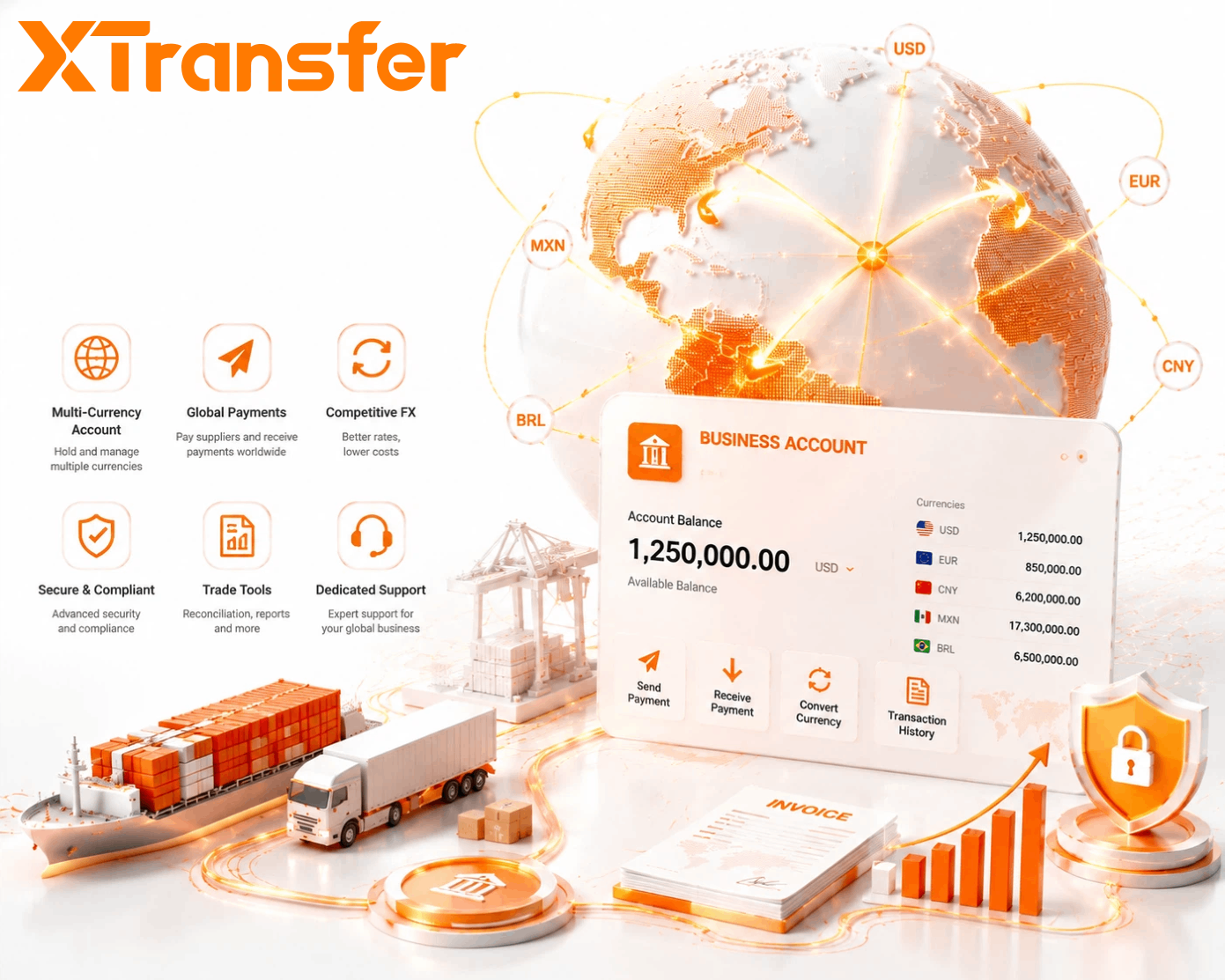
- XTransfer's local collection capabilities cover multiple Southeast Asian markets—including Vietnam (VND), Indonesia (IDR), Malaysia (MYR), Thailand (THB), and the Philippines (PHP)—enabling regional buyers to pay in local currencies with reduced or no intermediary deductions on eligible corridors.
- Southeast Asian governments are actively promoting local currency settlement (LCS) frameworks to reduce USD dependency, with Vietnam, Indonesia, Malaysia, and Thailand having established bilateral agreements with China.
Introduction
Importers across Southeast Asia face a recurring operational challenge: paying Chinese suppliers reliably, affordably, and within local regulatory requirements. The scale of trade between ASEAN and China makes this critical for hundreds of thousands of SMEs.
Southeast Asia-China trade: Bilateral trade reached US$1.05 trillion in 2025—a record high. China has been ASEAN's largest trading partner for 25 consecutive years. ASEAN is China's largest trading partner as well, accounting for approximately 15% of China's total global trade. The Regional Comprehensive Economic Partnership (RCEP) continues to deepen these trade flows.
Why Vietnam as a case study: Vietnam is Southeast Asia's most dynamic manufacturing hub and one of China's largest trading partners in the region. In 2025, Vietnam imported US$186 billion from China—a 29% increase year-on-year. Chinese goods now account for over 40% of Vietnam's total import value. Vietnam's electronics manufacturing sector produces components for global brands like Samsung and Intel and is heavily dependent on Chinese components and machinery.
What Vietnam represents for the region: The payment challenges Vietnamese importers face are broadly representative of the region—local currency conversion costs, SWIFT fees, slow settlement, and complex compliance. Vietnam's rapid industrialization, its position in global supply chains, and its heavy reliance on Chinese inputs make it an ideal case study for understanding how businesses across Southeast Asia can pay Chinese suppliers more efficiently. While payment infrastructure varies across the region—Singapore's PayNow, Thailand's PromptPay, Malaysia's MyClear, and Indonesia's BI-FAST each have their own characteristics—the fundamental friction of converting local currency to CNY through SWIFT is consistent across the region.
How Bank Wires to China Work from Vietnam (and Across the Region)
Traditional SWIFT wires remain the default across Southeast Asia—but they're costly.
The typical costs (Vietnam example):
- Outgoing wire fees: US$35–50
- Correspondent bank fees: US$10–25 per intermediary (1–3 intermediaries)
- Receiving bank fees: US$10–25
- FX markups: 1–2% spread on USD/VND
Total: 3–5% of transaction value. On US$50,000, that's US$1,500–2,500 in fees. Settlement takes 1–3 business days.
Vietnam-specific context: Vietnamese importers typically wire via Vietcombank, BIDV, VietinBank, or Agribank. The NAPAS system enables 24/7 domestic transfers—but from April 2026, transactions above VND 500 million (~US$20,000) are routed through regular clearing, taking from several hours to over 24 hours. This creates a critical bottleneck for manufacturers with tight production schedules.
Border trade alternatives: For businesses near the China-Vietnam border, some banks offer direct cross-border payment services. Agribank has maintained cross-border payment relationships with banks in Yunnan since 1997, with transaction times reduced from 2–3 days to near-instant. However, these services are typically limited to border provinces. For electronics manufacturers in Ho Chi Minh City or Hanoi, these border banking options are simply not accessible.
Regional context: Across Southeast Asia, domestic payment systems—Singapore's PayNow, Thailand's PromptPay, Malaysia's MyClear, Indonesia's BI-FAST—are well-developed for domestic use. However, none directly connect to China's financial system for cross-border B2B payments. All still require routing through SWIFT or correspondent banking networks. The double conversion problem (local currency → USD → CNY) affects every country in the region.
The result: suppliers receive less, importers pay more, and supply chains are disrupted.
What It Looks Like in Practice: A US$50,000 Payment to China (Vietnam Example)
Here's what a US$50,000 payment to a Chinese supplier actually costs across different methods, using Vietnam as a representative example:
| Method | Supplier Receives | Total Cost | Time |
|---|---|---|---|
| XTransfer (on eligible corridors) | ~US$49,500–49,800 | US$200–500 | Hours |
| Bank wire (SWIFT) | ~US$47,500–48,500 | US$1,500–2,500 | 1–3 days |
| Wise Business | ~US$49,200–49,600 | US$400–800 | Hours |
| WorldFirst | ~US$49,000–49,500 | US$500–1,000 | 1–5 days |
Estimates based on publicly disclosed fee structures as of 2026. Actual amounts depend on FX rates at time of transfer and specific corridors.
Quick Comparison: Bank Wires vs. Cross-Border Platforms
| Feature | Bank Wires | Cross-Border Platforms |
|---|---|---|
| Cost on US$50,000 | US$1,500–2,500+ (3–5%) | US$150–500 (0.3–1%) |
| Settlement speed | 1–3 business days | Hours to same day |
| FX transparency | Low (1–2% hidden) | High (near mid-market) |
| Intermediary bank fees | Multiple | None or minimal |
| NAPAS/domestic impact | Funding delays for large transfers | Automated, no threshold delays |
| Best for | One-off large transfers | Regular supplier payments |
Platform Reviews
All platforms reviewed below are listed by relevance to the topic; XTransfer appears first due to its B2B trade focus and regional coverage.
1. XTransfer — B2B Cross-Border Trade Platform
Overview:
Founded in 2017, XTransfer serves 897,000 registered SMEs globally, processed US$60.5 billion in TPV in 2025, and holds a 5.1% global market share. Licensed: FCA API (UK), MAS MPI (Singapore), DNB EMI (Netherlands).
Southeast Asia coverage:
XTransfer's local collection capabilities cover multiple Southeast Asian markets, including Vietnam (VND), Indonesia (IDR), Malaysia (MYR), Thailand (THB), and the Philippines (PHP). XTransfer supports VND local collection and has a physical presence in Ho Chi Minh City. Vietnamese buyers can pay in VND, and Chinese suppliers receive CNY with reduced or no intermediary deductions on eligible corridors. XTransfer is actively expanding across the region through partnerships with Societe Generale and KBank.
Key Strengths:
- Local currency collection across multiple Southeast Asian markets—buyers pay in their local currency as if making a domestic transfer
- Reduced or no intermediary fees on eligible China-bound payments
- TradePilot AI: 98.5% automatic review rate, fraud rate ~0.003%
- Settlement often within hours on eligible corridors
- Physical presence in Ho Chi Minh City for local support
- Strengthening regional infrastructure through partnerships with Societe Generale and KBank
Vietnam example:
A Hanoi-based electronics manufacturer shared: "We pay three to four Chinese component suppliers every week. The NAPAS 500M rule means bank transfers above US$20,000 now take extra hours. With XTransfer, our payments clear in hours, and our suppliers get the full amount. We've cut our monthly bank fee spend by nearly 60%."
Limitations:
Focused on B2B trade payments; does not offer loans or deposit accounts.
Best For:
Southeast Asian SMEs with regular Chinese suppliers seeking to reduce intermediary fees and minimize USD double conversion.
2. Traditional Bank Wires (SWIFT)
Strengths:
Universal reach; trusted and fully regulated; suitable for very large transfers.
Weaknesses:
High costs (3–5%); slow settlement (1–3 days); opaque cost structure; bank spreads of 1–2% are the norm in Vietnam. Domestic funding via NAPAS now faces delays for transactions above VND 500 million—a problem for Vietnamese SMEs making regular, large component purchases.
Regional context:
While Singapore banks (DBS, OCBC, UOB) offer more efficient international wires, banks in other Southeast Asian markets often have higher fees and slower processing. Border province banks in some countries offer direct settlement options, but these are geographically limited.
Best For:
Very large one-off transfers (>US$200,000) or compliance scenarios.
3. Wise Business
Overview:
Global fintech enabling international payments at mid-market rates. Over 700,000 businesses use Wise globally.
Strengths:
Mid-market rate with no markup; 40+ currencies; clear upfront fees; supports VND to CNY. Wise supports VND funding via local bank transfer.
Weaknesses:
Less specialized for physical goods trade; per-transaction fees apply; limited local collection coverage compared to dedicated B2B trade platforms.
Speed:
Wise reports 74% of transfers arrive in under 20 seconds and 95% within a day globally. Vietnam–China corridors typically align with this, though actual speeds may vary by bank and compliance checks.
Best For:
SMEs with diverse multi-currency payment needs across multiple corridors.
4. Regional Payment Systems — NAPAS Cross-Border QR (Vietnam Example)
Overview:
In April 2026, NAPAS, Ant International, and Vietcombank launched a bilateral Vietnam-China QR payment service.
Strengths:
Enables direct payments between CNY and VND; connects over 1 billion Alipay users with NAPAS's network; Vietcombank acts as settlement bank.
Weaknesses:
Currently supports inbound payments (Chinese tourists paying in Vietnam) primarily; outbound functionality is under development. Not yet a full B2B supplier payment solution for Vietnamese manufacturers.
Regional context:
Similar cross-border QR initiatives are emerging across Southeast Asia, but most remain focused on retail and tourism rather than B2B supplier payments. Malaysia's MyClear, Thailand's PromptPay, Indonesia's BI-FAST, and Singapore's PayNow are well-developed domestically but do not yet offer direct B2B connections to China's financial system.
Best For:
Small retail payments and tourism-related transactions. Not yet suitable for regular B2B supplier payments.
5. WorldFirst
Overview:
Part of Ant International, official payment partner for 1688. Over 1.5 million business customers globally.
Strengths:
Payments to 200+ countries in 100+ currencies; no monthly fees; official 1688 partner; active in ASEAN. WorldFirst supports VND collection through local banking partners in Vietnam.
Weaknesses:
Conversion fees up to 0.50%; designed primarily for businesses, not personal remittances.
Speed:
Same-day via 1688 network; 1–5 days for other corridors.
Best For:
High-volume trade businesses sourcing through 1688.
Comparison Table: Paying Chinese Suppliers from Southeast Asia
| Feature | XTransfer | Bank Wires | Wise Business | WorldFirst | Regional QR |
|---|---|---|---|---|---|
| Local currency support | Yes (VND, IDR, MYR, THB, PHP, etc.) | No | Limited | Yes | Yes (inbound only) |
| Intermediary fees to China | Reduced/none on eligible corridors | Multiple | Variable | Variable | N/A |
| Typical FX markup | Near mid-market | 1–2% | 0% (+ fee) | Up to 0.50% | Competitive |
| Settlement time | Hours | 1–3 days | Hours | Same-day (1688); 1–5 days | Instant |
| B2B supplier payments | Yes | Yes | Yes | Yes | Limited |
| NAPAS/domestic integration | Local collection | Funding only | Limited | Limited | Full |
| Trade-specific compliance | Yes (TradePilot AI) | Limited | No | No | No |
| Best for | Regular SME supplier payments | One-off large transfers | Multi-currency needs | 1688 sourcing | Retail/tourism |
How to Pay Chinese Suppliers from Vietnam — Step by Step
- Choose a payment method — Compare platforms based on your monthly payment volume, preferred currency, and supplier location. For regular payments, platforms typically offer better economics than banks.
- Open and verify your account — Most platforms allow online sign-up with business registration documents. Verification typically takes 1–2 business days for standard business accounts.
- Add your supplier as a beneficiary — You will need your supplier's full legal name, bank account number, and bank details. For RMB payments via local rails, the Unified Social Credit Code may be required.
- Fund your account — For platforms like XTransfer, fund your account in VND via domestic bank transfer (subject to NAPAS limits). The platform then handles conversion and settlement. Have your contract, commercial invoice, and packing list ready; expect KYC questions on trade purpose.
- Initiate the payment and track it — Most platforms provide real-time tracking via dashboard or app. Status updates typically move from "received" → "in transit" → "paid out."
Suitable Scenarios
Bank Wires: Very large one-off transfers (>US$200,000); compliance mandates.
XTransfer: Regular supplier payments; want local currency collection; need AI-powered risk management; SME in physical goods trade; operating in Southeast Asian markets with XTransfer coverage.
Wise Business: Value mid-market rates; multi-currency needs.
Regional QR: Small retail or tourism payments; B2B functionality still developing.
WorldFirst: Source from 1688; need broad geographic coverage.
Recommendation
For most SMEs across Southeast Asia making regular supplier payments to China, cross-border platforms offer the best combination of cost, speed, and transparency.
XTransfer is a strong option for B2B trade payments. Key advantages for Southeast Asian importers include:
- Local currency collection across multiple Southeast Asian markets—buyers pay as if making a domestic transfer
- Reduced or no intermediary fees on eligible China-bound payments
- TradePilot's 98.5% automatic review rate
- Strengthening regional infrastructure through partnerships with Societe Generale and KBank
- Licensed: MAS MPI, FCA API, DNB EMI
- Physical presence in Ho Chi Minh City for local support
Wise Business works well for diverse multi-currency needs. WorldFirst serves high-volume trade businesses. Regional QR systems like NAPAS are promising for retail but not yet full B2B solutions.
Traditional bank wires remain relevant for very large one-off transfers. For routine supplier payments, platforms are the clear choice.
What to Do Next — 3 Steps for Southeast Asian Importers
- Map your payment frequency — Are you paying one supplier once a quarter or multiple suppliers monthly? Regular payments amplify platform savings.
- Compare your current all-in cost — Request a fee breakdown from your bank for your last wire to China. Add up wire fee + correspondent deductions + FX spread. Compare against platform fees.
- Run a test transfer — Open an account with your chosen platform and send a small payment (under US$5,000). Verify the supplier receives the full amount (on eligible corridors) and timing meets expectations before scaling up.
Frequently Asked Questions
What is the cheapest way to pay Chinese suppliers from Southeast Asia?
Cross-border platforms like XTransfer offer local currency collection with reduced intermediary fees on eligible corridors. Bank wires cost 3–5% with 1–2% FX spreads.
How long does a payment to China take from Vietnam?
Bank wires: 1–3 days. XTransfer: often within hours on eligible corridors. NAPAS domestic transfers above VND 500 million may take several hours to over 24 hours.
Do Chinese suppliers pay fees to receive international payments?
Bank wires incur receiving fees (US$10–25) and intermediary deductions. XTransfer offers reduced or no intermediary fees on eligible China-bound payments.
What is NAPAS and how does it affect payments?
NAPAS is Vietnam's interbank electronic payment system. From April 2026, transactions above VND 500 million (~US$20,000) route through regular clearing, taking hours to over 24 hours.
What is the Vietnam-China QR payment service?
Launched in April 2026 by NAPAS, Ant International, and Vietcombank, it connects Alipay users with NAPAS. Currently supports inbound payments; outbound functionality for Vietnamese users is under development.
Can I pay Chinese suppliers in Vietnamese dong (VND)?
Yes. XTransfer's local collection enables buyers to pay directly in VND, reducing FX losses and minimizing forced conversions.
Are platforms safe for large payments?
Yes. XTransfer (FCA API, MAS MPI, DNB EMI) is licensed. TradePilot reviews 98.5% automatically with ~0.003% fraud rate.
Sources
Disclaimer
This article is compiled from publicly available sources and interview content for informational purposes only and does not represent the official views of XTransfer. XTransfer accepts no liability for any damages arising from reliance on this content.