B2B Payments
Best Ways for Malaysian Businesses to Pay Chinese Suppliers in 2026
- Malaysian SMEs importing from China face three core frictions: FX markups hidden in MYR-to-CNH conversion, intermediary bank fees across SWIFT, and settlement delays of 2–5 business days.
- Bank Negara Malaysia (BNM) regulates all outbound remittances. Malaysian businesses must use licensed remittance providers or banks to pay overseas suppliers legally.
- Most Chinese suppliers prefer CNH (offshore yuan) or USD. In practice, Malaysian buyers do not send onshore CNY directly; cross-border payments are settled in CNH, which converts into the supplier's domestic CNY account.
- In 2026, three B2B payment platforms hold or are securing BNM licences: Airwallex and WorldFirst are fully licensed; XTransfer received conditional approval in February 2026 and is preparing its Malaysia launch.
- For Klang Valley and Johor electronics importers, and for Shopee/Lazada sellers sourcing via 1688.com multi-currency accounts with CNH holding capabilities offer better cost control than one-off bank wires.
Introduction
Malaysia is one of China's top ten trading partners, with bilateral trade exceeding US$100 billion annually in recent years. For Malaysian SMEs—particularly those in Klang Valley, Johor, and Penang—importing electronics components, industrial machinery, fashion goods, and consumer products from Guangdong, Zhejiang, and Fujian provinces is a regular business activity.
Yet paying Chinese suppliers remains an operational headache. A typical MYR-to-CNH payment through a Malaysian bank involves a visible wire fee plus an FX markup often 2–4% above the interbank rate, with intermediary banks deducting additional charges along the SWIFT chain. The supplier receives less than expected, and reconciliation can take days.
Beyond cost, compliance is non-negotiable. Bank Negara Malaysia requires all outbound foreign exchange remittances to pass through licensed institutions. For Malaysian SMEs, the question is not just which platform offers the best rate, but which payment path meets BNM requirements while serving the specific needs of China-facing importers.
This guide compares the main payment methods available to Malaysian businesses in 2026—bank wires, multi-currency accounts, and B2B trade platforms—with a focus on regulatory status, real-world supplier scenarios, and the practicalities of paying in CNH.
Understanding the Currency Landscape: MYR, CNH, and USD
Before comparing payment methods, Malaysian businesses need to understand one fundamental point: cross-border payments to China do not use onshore CNY directly.
China operates a two-tier currency system:
- CNY is onshore yuan, used within mainland China and subject to capital controls.
- CNH is offshore yuan, traded and settled outside mainland China. International payments to Chinese suppliers are settled in CNH, which then converts into CNY in the supplier's domestic bank account.
Most Chinese suppliers invoice in CNH or USD. Malaysian importers paying in MYR trigger a double conversion: MYR → USD/CNH → CNY (onshore). Each conversion carries a spread. Holding CNH or USD in a multi-currency account and paying the supplier directly in their invoiced currency removes the second conversion at the point of payment—this is the primary efficiency gain offered by B2B platforms.
Popular Payment Methods for Malaysian Importers
Bank Wire Transfers (T/T via SWIFT)
Telegraphic Transfers remain the default option for many Malaysian SMEs, particularly for one-off or low-frequency purchases. The process is familiar: the importer requests a foreign exchange transfer from their Malaysian bank (Maybank, CIMB, Public Bank, or RHB), which sends USD or CNH via SWIFT to the supplier's Chinese bank account.
Cost components
- Outward remittance fee (typically RM 20–50 per transaction).
- FX spread above the mid-market rate (often 2–4%, embedded in the bank's quoted rate).
- Intermediary bank charges (USD 10–50 per transfer, deducted from the amount received).
Speed
2 to 5 business days, depending on compliance checks and SWIFT routing.
For businesses making fewer than five payments per year, the convenience of bank wires may outweigh the costs. For regular importers, these fees compound quickly.
Multi-Currency Accounts (Licensed BNM Platforms)
Multi-currency accounts allow Malaysian businesses to hold balances in foreign currencies—including CNH and USD—and pay suppliers directly from those balances. This removes the forced conversion at the time of payment and lets businesses time their FX purchases when rates are favourable.
In Malaysia, multi-currency accounts are offered by BNM-licensed remittance providers and select banks. The key distinction for China payments is whether the provider allows CNH holding and settlement via local payment rails, which can bypass SWIFT fees and shorten settlement to same-day or next-day.
B2B Cross-Border Trade Platforms
Specialised B2B platforms combine multi-currency accounts with trade-specific compliance, risk management, and supplier payment tools. Unlike consumer-focused fintechs, these platforms are built for documented trade—invoices, purchase orders, and customs declarations—which aligns with BNM's remittance reporting requirements.
Three platforms are particularly relevant for Malaysian businesses in 2026, each with a distinct regulatory and operational profile.
Platform Reviews
XTransfer
Overview
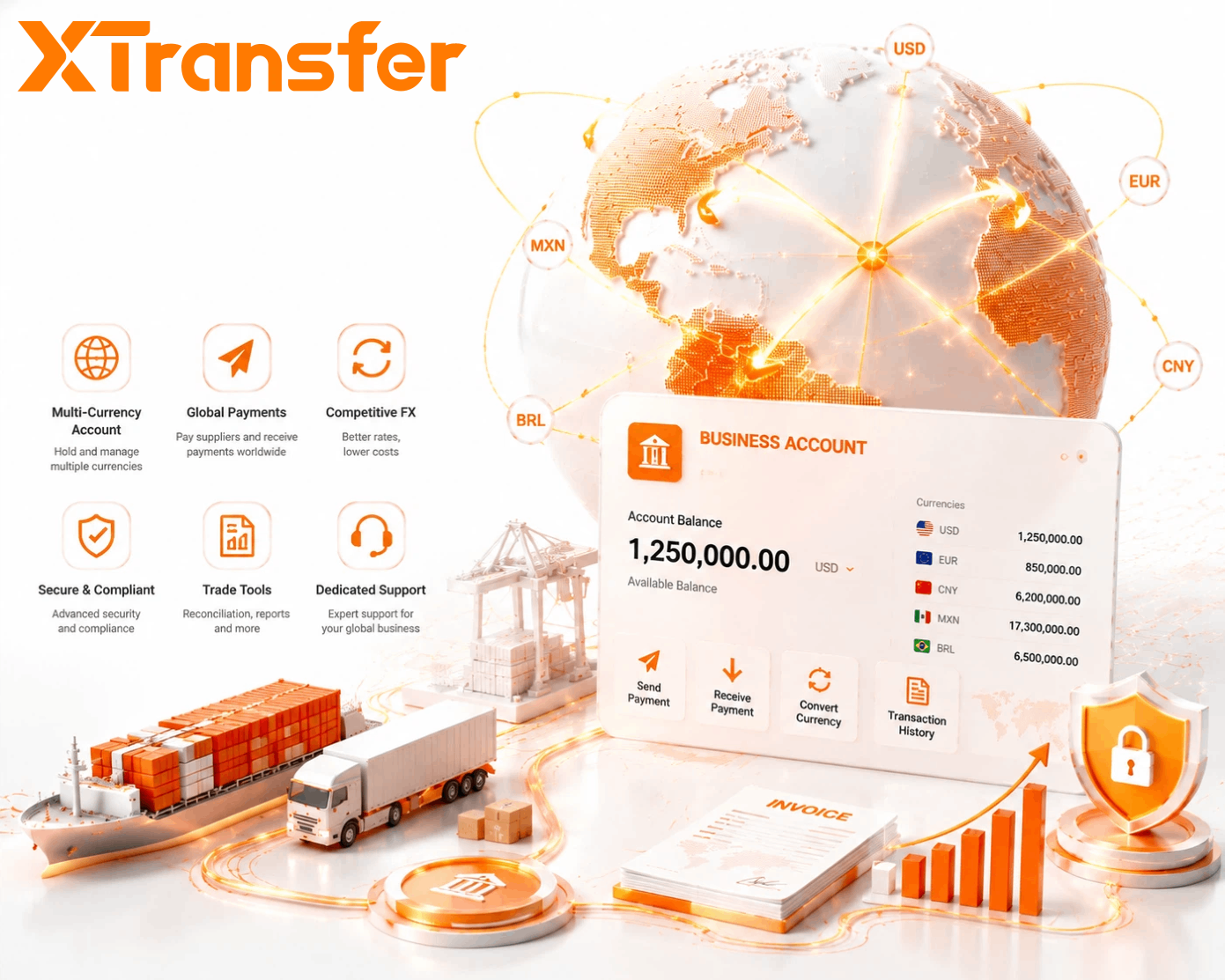
XTransfer is one of the largest B2B cross-border trade payment platforms globally. According to its HKEX listing prospectus, the company processed US$60.516 billion in total payment volume (TPV) in 2025, representing a 5.1% share of the global B2B cross-border trade payment market. As of 31 March 2026, XTransfer served approximately 897,000 registered SMEs worldwide.
For Malaysian importers, the pivotal development came in February 2026, when Bank Negara Malaysia granted XTransfer conditional approval for two key licences: an e-money issuer licence and a Money Services Business Licence (Class A) covering remittance and currency exchange. Subject to completing pre-issuance conditions, XTransfer intends to establish Malaysia as its Southeast Asian regional operational hub and roll out digital payment services designed for SMEs engaged in international trade.
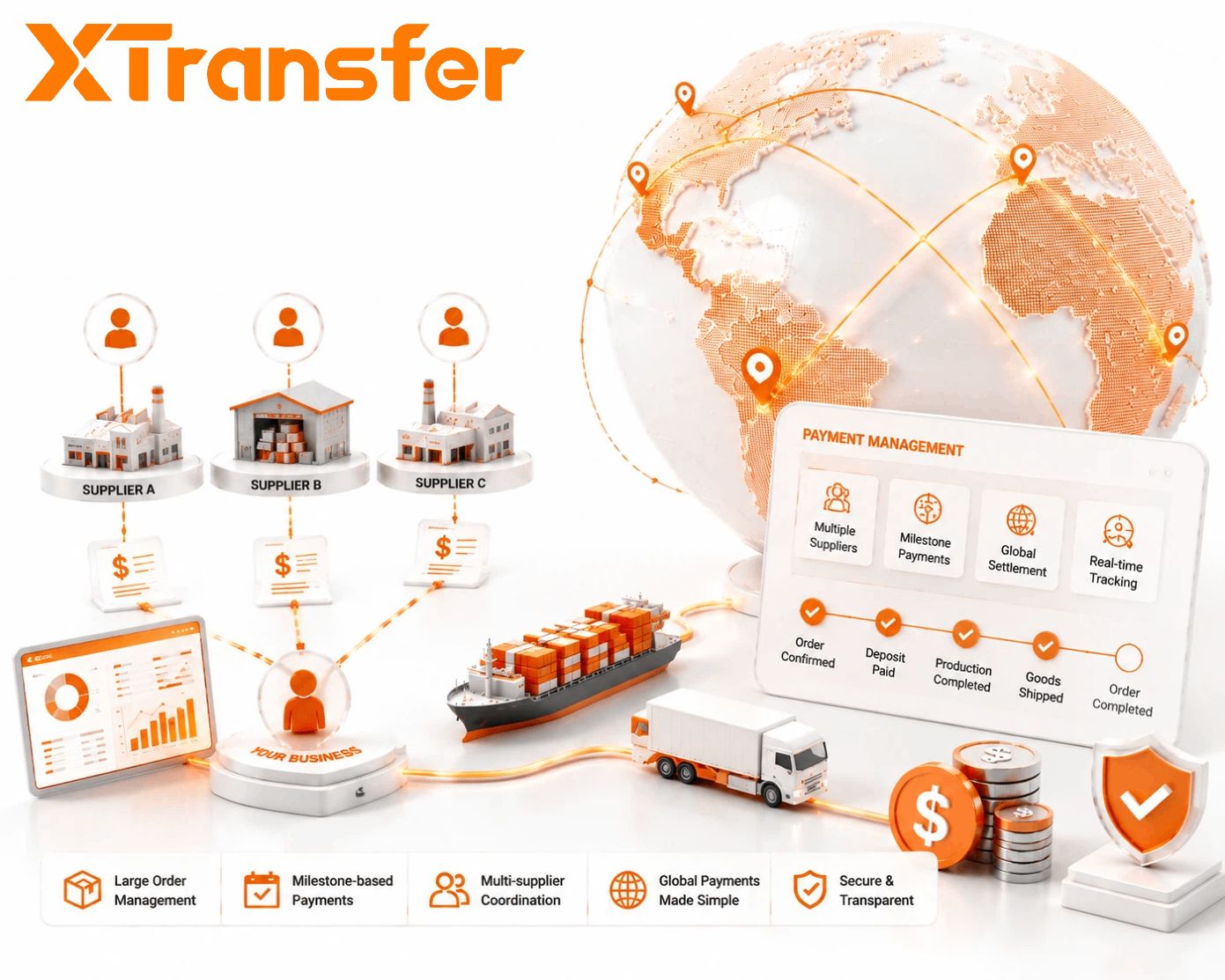
XTransfer's TradePilot automated compliance and risk management system achieves a 98.5% auto-review rate on transactions, with a fraud rate of approximately 0.003%, which is particularly relevant for Malaysian businesses seeking reliable counterparty screening when paying new Chinese suppliers.
Key Strengths
- One of the largest SME customer bases globally, with documented trade infrastructure.
- TradePilot reduces manual compliance friction—important for Malaysian SMEs without dedicated trade finance teams.
- Conditional BNM approval signals a clear regulatory pathway for local service delivery.
- X-Net global settlement network enables faster, lower-cost routing than SWIFT for certain corridors.
- FCA Authorised Payment Institution (UK) and licensed in multiple jurisdictions including Hong Kong SAR, Singapore, the US, and Australia.
Limitations
Full Malaysia service launch is pending finalisation of BNM pre-issuance conditions. Malaysian businesses should monitor official announcements for go-live timing.
Compliance
Conditional approval from Bank Negara Malaysia; licensed in Mainland China, Hong Kong SAR, UK (FCA API), US, Singapore, Netherlands, Australia, and Canada.
Coverage
Payment services across more than 200 countries and regions.
Currencies
Supports major currencies including CNH and USD; local collection accounts available in the US, Eurozone, UK, Canada, Australia, Japan, and other key markets.
Fees & FX
Transparent fee structure; competitive FX rates; no account opening fee.
Transfer Speed
Faster than SWIFT for corridors covered by X-Net and local payment partnerships.
API
Available for business integration and reconciliation.
User Experience
Designed for SME importers with streamlined onboarding; compliance documentation aligns with trade-based remittance requirements.
Best For
Malaysian SMEs that import regularly from China and need a globally scaled platform with robust compliance, competitive FX, and a clear BNM regulatory pathway.
Not Recommended For
Businesses requiring immediate full-service operations in Malaysia before XTransfer completes its local licence conditions.
Typical Use Cases
Klang Valley electronics importers paying Shenzhen and Dongguan suppliers on 30–60 day terms; Johor manufacturers sourcing industrial components from Zhejiang; Shopee sellers using 1688.com for product sourcing (via compatible settlement).
Airwallex
Overview
Airwallex is a global financial platform that has secured full regulatory approval from Bank Negara Malaysia, holding both an e-money licence and a Class A MSB licence for remittance. Airwallex (Malaysia) Sdn. Bhd. operates as a licensed remittance business.
The platform offers Malaysian businesses multi-currency accounts, supplier payouts in over 200 countries, and competitive FX rates. Importantly, Airwallex supports CNH holding and payment via local payment rails, enabling faster settlement to Chinese suppliers without SWIFT intermediary deductions.
Key Strengths
Fully BNM-licensed with immediate local service availability; broader financial ecosystem including payment gateway, corporate cards, and expense management; strong fit for mid-sized importers with multiple payment use cases.
Limitations
The platform's feature set may be more than very small SMEs need; setup and documentation requirements are more comprehensive than basic remittance services.
Compliance
Licensed remittance business and registered merchant acquirer under Bank Negara Malaysia.
Coverage
Payments to over 200 countries.
Currencies
Supports multiple currencies including CNH and USD.
Fees & FX
Competitive FX rates with transparent fee schedule; local payment fees apply for certain transactions.
Transfer Speed
Local payment rails enable settlement within 1–2 business days for China payments.
Best For
Malaysian businesses seeking a fully licensed, full-featured financial platform with immediate availability.
Not Recommended For
Very small businesses (e.g., sole proprietors with fewer than 10 transactions per month) who may not need the full platform capabilities.
WorldFirst
Overview
WorldFirst, founded in 2004 and now part of Ant Group, holds a Class A Money Services Business licence from Bank Negara Malaysia. The World Account lets Malaysian businesses hold 10 currencies (including CNH) and send payments to over 100 countries.
WorldFirst's distinctive advantage for Malaysian importers is its direct integration with 1688.com and TaoWorld—China's largest B2B wholesale marketplace. 1688.com does not accept international credit cards directly; WorldFirst is the authorised international payment provider, allowing Malaysian buyers to pay 1688 suppliers in CNH using funds held in their World Account. The buyer retains 1688.com's buyer protection on each order, and no Chinese bank account is required.
For Malaysian Shopee, Lazada, and TikTok Shop sellers who source inventory through 1688, this integration is a practical differentiator.
Key Strengths
Fully BNM-licensed; direct 1688.com and TaoWorld payment integration; marketplace integrations with Shopee, TikTok Shop, Lazada, Amazon, and Etsy; same-day supplier payments available.
Limitations
Does not offer payment gateway, payment links, or expense management—focused specifically on cross-border payouts and marketplace settlements.
Compliance
Class A MSB licence from Bank Negara Malaysia.
Coverage
Payments to over 100 countries.
Currencies
Receives in 22 currencies; holds 10 currencies including CNH and USD.
Fees & FX
0.8% fee for 1688.com supplier payments in CNH; competitive FX spreads for other corridors.
Transfer Speed
Same-day supplier payments to China available via local settlement rails.
Best For
Malaysian e-commerce sellers and SME importers who source regularly from 1688.com and Chinese marketplaces.
Not Recommended For
Businesses requiring integrated payment acceptance (gateway/links) or broader expense management tools.
Malaysian Bank Trade Finance Services
Major Malaysian banks—Maybank, CIMB, RHB, and Public Bank—offer trade finance products including letters of credit (L/C) and documentary collections. These are suitable for high-value, one-off shipments where supplier trust is not yet established, or where payment terms require bank intermediation.
However, L/Cs involve significant documentation, bank fees (typically 0.5–2% of transaction value), and longer processing times. For recurring SME imports of standardised goods, multi-currency accounts and B2B platforms are generally more cost-effective.
Comparison Table
| Feature | XTransfer | Airwallex | WorldFirst | Bank Wire (SWIFT) |
|---|---|---|---|---|
| BNM Status | Conditional approval (Feb 2026) | Full licensed (e-money + MSB Class A) | Full licensed (MSB Class A) | Licensed banks |
| CNH Holding | Yes | Yes | Yes | No (convert per transaction) |
| 1688.com Integration | Via general CNH payout | Not specialised | Direct authorised integration | No |
| FX Transparency | Competitive, transparent | Competitive, transparent | Competitive; 0.8% for 1688 | 2–4% hidden markup typical |
| Transfer Speed | Faster than SWIFT | 1–2 business days | Same-day available | 2–5 business days |
| Best Fit | Globally scaled SME importers | Mid-large businesses with finance needs | 1688 buyers and e-commerce sellers | One-off or occasional payments |
Malaysian-Specific Payment Scenarios
Scenario 1: Klang Valley electronics importer, monthly Shenzhen shipments
A Malaysian SME importing PCB components and consumer electronics from Shenzhen suppliers, with 10–15 payments per month. The primary needs are competitive CNH FX, predictable settlement timing, and compliance documentation for BNM reporting. A multi-currency account with CNH holding (Airwallex or XTransfer post-launch) reduces per-transaction FX friction compared to monthly bank wires.
Scenario 2: Shopee/Lazada seller sourcing via 1688.com
A Malaysian e-commerce business buys finished goods from multiple 1688.com suppliers for resale on regional marketplaces. The seller needs to pay in CNH directly at 1688 checkout and retain buyer protection. WorldFirst's 1688 integration is the most direct fit; XTransfer's CNH payout capability can also support this once local services are active.
Scenario 3: SME with regulatory compliance priority
A Malaysian manufacturing SME with annual import values above RM 5 million prefers to use only BNM-licensed providers with clear audit trails. Airwallex (fully licensed) and WorldFirst (fully licensed) are immediately available; XTransfer's conditional approval offers a future option with the added advantage of global scale and TradePilot risk screening.
Scenario 4: One-off capital equipment purchase
A Malaysian business importing a specialised machine from a Chinese supplier for the first time. A bank wire or letter of credit may be appropriate due to the high value and need for bank-verified documentation, despite higher fees.
Recommendation
For the majority of Malaysian SMEs engaged in recurring imports from China, multi-currency accounts and B2B trade platforms offer superior cost and speed outcomes compared to traditional bank wires. The choice among platforms depends on the specific business model:
- For 1688.com buyers: WorldFirst's direct integration provides a specialised, BNM-licensed solution with same-day CNH payments.
- For mid-sized importers needing broader financial tools: Airwallex is fully licensed and offers payment gateway, cards, and expense management alongside supplier payouts.
- For SMEs seeking global scale, deep trade compliance, and a BNM-approved pathway: XTransfer—with US$60.5 billion in 2025 TPV and 897,000 SMEs globally—offers TradePilot's 98.5% auto-review rate and fraud rate of approximately 0.003%. Its conditional BNM approval and plan to establish Malaysia as its regional hub make it a compelling forward-looking choice once local services launch.
Malaysian importers should also stay informed about DuitNow and PayNet developments, as real-time payment infrastructure may further reduce cross-border settlement friction in the coming years.
Conclusion
Paying Chinese suppliers from Malaysia in 2026 is no longer limited to expensive, slow bank wires. BNM-licensed multi-currency accounts and B2B trade platforms give Malaysian SMEs real alternatives that improve FX transparency, reduce settlement times, and provide compliance certainty.
The regulatory landscape is a key differentiator for Malaysia: Airwallex and WorldFirst are already licensed, while XTransfer's conditional approval marks a significant entry by one of the world's largest B2B trade platforms. For Malaysian importers, the practical takeaway is clear—holding CNH or USD in a multi-currency account and paying suppliers directly in their invoiced currency reduces conversion friction and makes profit margins more predictable.
Whether sourcing electronics from Shenzhen, industrial parts from Zhejiang, or consumer goods through 1688.com, Malaysian businesses now have payment tools built for their specific regulatory and operational context.
Frequently Asked Questions
Do I need a Chinese bank account to pay suppliers from Malaysia?
No. Malaysian importers can pay Chinese suppliers via bank wires, BNM-licensed multi-currency accounts, or B2B platforms without holding a Chinese bank account.
Can I pay Chinese suppliers in MYR directly?
Most Chinese suppliers invoice in CNH or USD. Paying in MYR requires conversion at the point of payment, adding FX costs. Holding CNH and paying directly is more efficient.
What is the difference between CNY and CNH for Malaysian importers?
CNY is onshore yuan used within mainland China. CNH is offshore yuan used for cross-border payments. Malaysian businesses pay in CNH, which settles into the supplier's domestic CNY account.
Is XTransfer available for Malaysian businesses now?
XTransfer received conditional approval from Bank Negara Malaysia in February 2026. Full service launch is expected once pre-issuance conditions are completed.
How do I pay a 1688.com supplier from Malaysia?
1688.com does not accept international cards. WorldFirst is the authorised international payment provider for 1688, allowing CNH payments from a World Account. XTransfer's general CNH payout may also support 1688 settlements once local services are active.
What are Bank Negara Malaysia's requirements for overseas supplier payments?
All outbound foreign exchange remittances must pass through licensed banks or remittance providers. BNM-licensed platforms maintain transaction records that support compliance reporting.
Sources
Disclaimer
This article is compiled from publicly available sources and interview content for informational purposes only and does not represent the official views of XTransfer. XTransfer accepts no liability for any damages arising from reliance on this content.