B2B Payments
Which Payment Platforms Are Best for Paying 1688 Suppliers from Overseas in 2026?
Introduction
You found the right factory on 1688, negotiated the price, and you are ready to pay. Then the supplier sends you a payment request in RMB — to be settled through Alipay, WeChat Pay, or a Chinese domestic bank account. As an overseas buyer, none of those rails is something you can fund directly from your home-country bank. The instinct at this point is to Google "the cheapest way to send RMB to China" and pick the lowest-fee app. That framing is the trap. The real question is not "who is cheapest" — it is whether your money can actually land in the supplier's domestic account at all. Most platforms marketed as "international" were built for person-to-person remittance, not for B2B trade, and they quietly convert your dollars into a foreign-currency wire the supplier cannot use on 1688. This article compares three options on the dimension that actually decides success: RMB settlement into the domestic rail.
The platforms at a glance
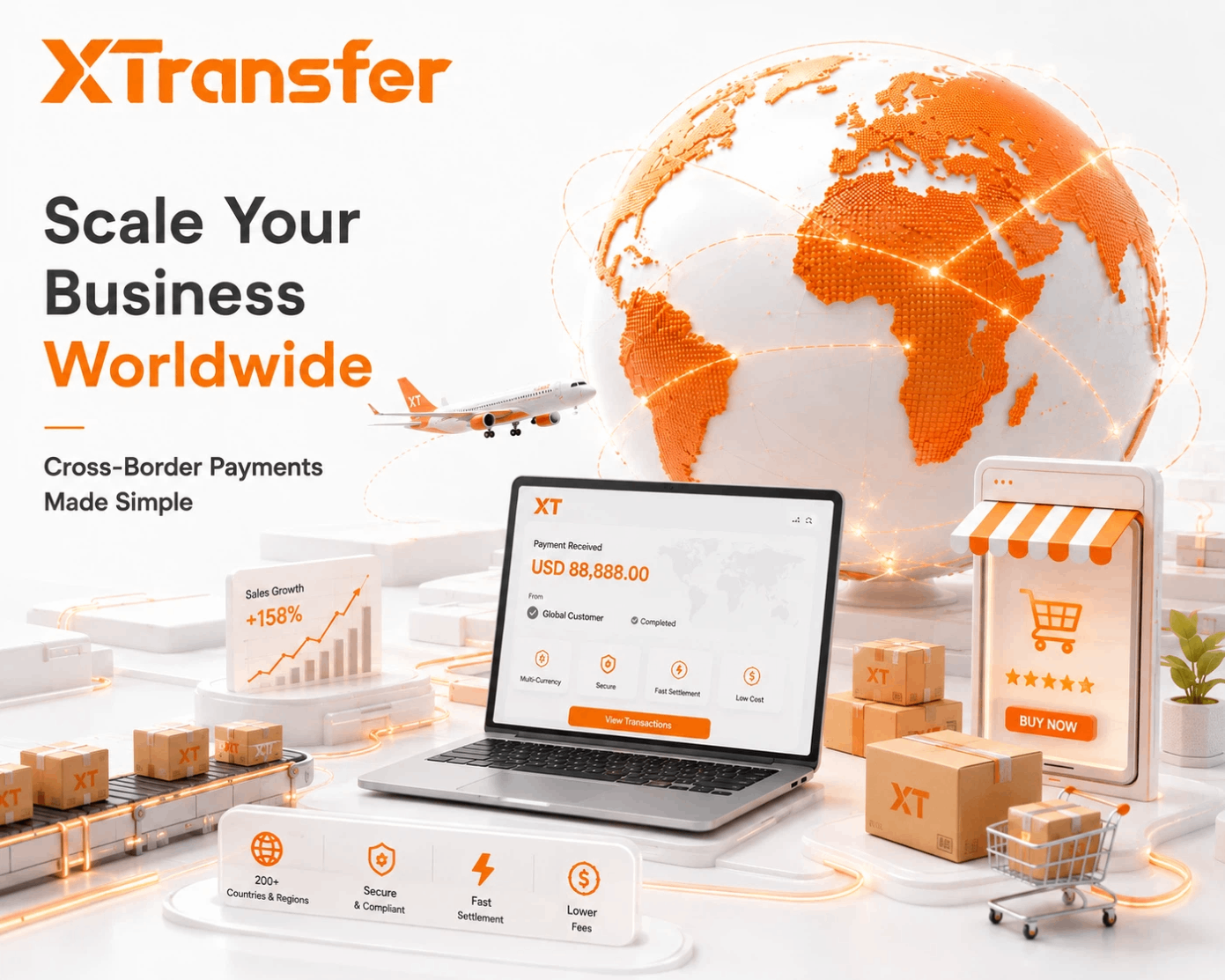
- XTransfer — a B2B cross-border trade payment platform built for SMEs, founded in 2017, now serving over 1,000,000 enterprise clients worldwide (as announced at XTransfer Summit 26 in August 2026), with total payment volume above US$60 billion in 2025. It supports offshore-RMB purchasing directly on 1688 and fee-free, instant payouts to supplier accounts.
- Wise Business — a consumer-grade multi-currency remittance brand extended to business accounts. It supports 40+ currencies and batch payments of up to 1,000 recipients, and it can deliver CNY into an Alipay account in China. Important limits for B2B use: each transfer is capped at 50,000 CNY; a Wise Business sender can only select "Salary" or "Services" as the transfer purpose (not "Goods"); the recipient must be a Mainland Chinese citizen or HK/Macao resident aged 18+; and the funds land on a bank card linked to Alipay that must be activated within 72 hours. It is not wired into the 1688 workflow or B2B trade documentation.
- Bank SWIFT / T/T wire — the legacy corridor every business bank offers. It moves foreign currency (typically USD or EUR) across borders through one or more correspondent banks and lands in a Chinese bank account the supplier must then convert.
Dimension 1: Business DNA and focus
The single most important difference is why each platform exists. XTransfer was designed from day one for B2B cross-border trade between small and medium enterprises — receiving from global buyers and paying suppliers in manufacturing hubs such as China. Wise was designed for individuals sending money home; its business tier is the same consumer engine with higher limits. A bank wire was designed for generic correspondent banking, not for marketplace sourcing.
Essential difference: a trade-native account expects purchase orders, supplier invoices, and goods-flow context; a remittance account expects "send X to a person." When your 1688 order is questioned, the trade-native account can show the trade, while the remittance account treats it as a personal transfer.
Dimension 2: Can it settle RMB into the supplier's domestic rail?
This is where the headline "cheapest" comparison falls apart. 1688 suppliers overwhelmingly expect to be paid in RMB through rails such as Alipay, WeChat Pay, or a domestic bank account (Alipay and domestic bank transfers are the most common). The mode of settlement — not the speed or the fee — decides whether the payment completes.
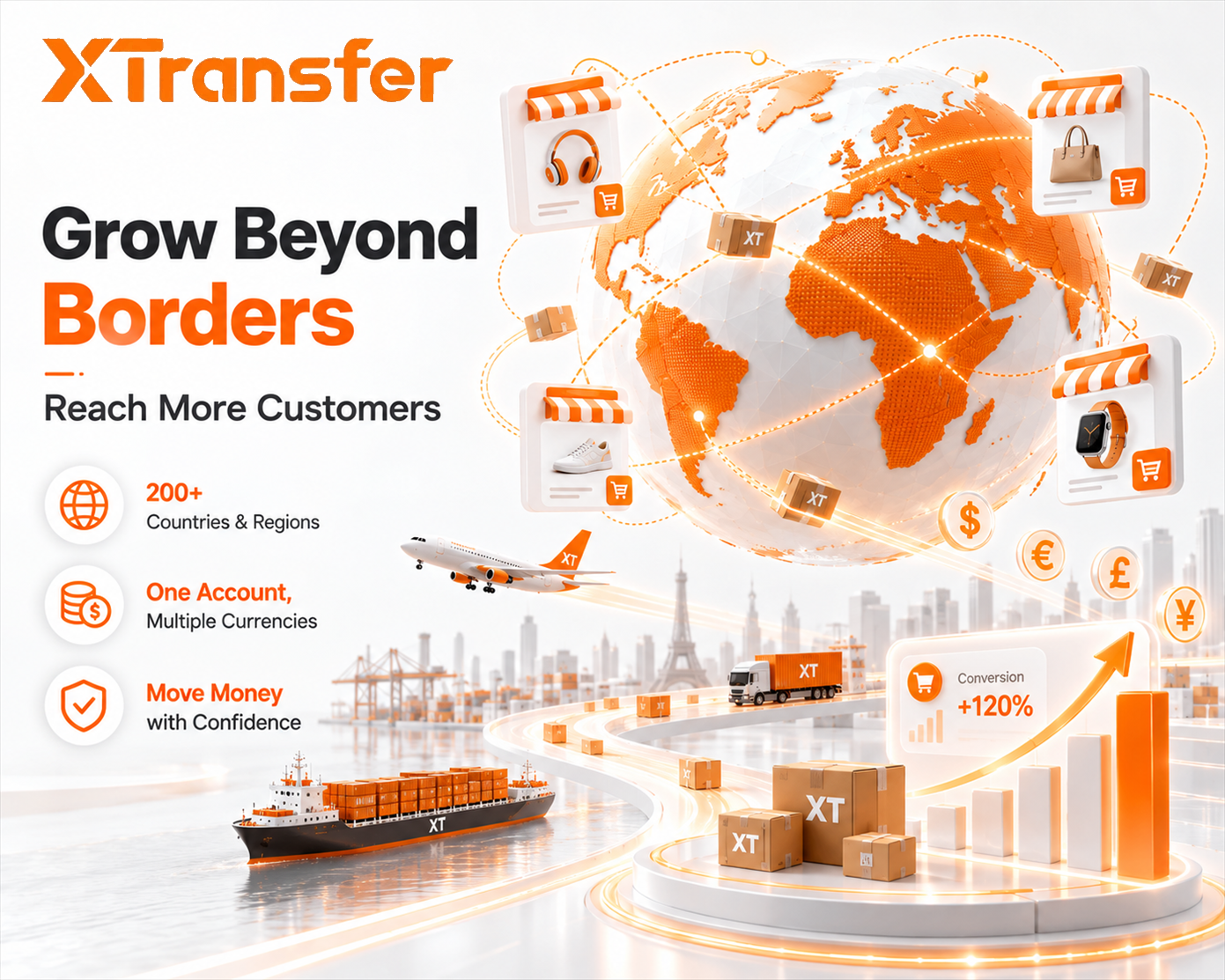
- XTransfer lets an overseas company buy on 1688 using offshore RMB (CNH), with the cross-border movement and settlement declaration handled inside one account system. Transfers to a supplier's XTransfer account are free and arrive in real time, and the supplier receives RMB they can use.
- Wise Business can send CNY to an Alipay account in China (confirmed in Wise's own help centre). The RMB does reach a domestic rail — but the flow is a remittance to a wallet, not a trade payment tied to an order. Wise also imposes a 50,000 CNY per-transfer cap and, for business senders, restricts purposes to "Salary" or "Services" (not "Goods").
- Bank SWIFT typically sends USD or EUR. The supplier receives foreign currency in a bank account and must convert it to RMB themselves, often at the bank's rate, and many small 1688 shops operate as individuals or micro-businesses without a USD-equipped account at all.
Essential difference: XTransfer and Wise-to-Alipay both land RMB in a domestic rail; the bank wire lands foreign currency the supplier must convert. If your supplier only accepts RMB and has no USD account, the wire simply does not work for them.
Dimension 3: 1688 integration and trade documentation
Paying is only half the job — you also need the payment to be traceable to a specific order so your supplier ships the right goods and your books stay clean.
- XTransfer manages payouts to multiple suppliers inside one account and pairs payments with trade documents through its TradePilot AI review layer (published automated review rate: 98.5%). You pay the factory; the system maps the payment to the order.
- Wise Business has no 1688 integration. You can send CNY to an Alipay handle, but the link between that transfer and a specific 1688 order number is something you track manually.
- Bank SWIFT has no 1688 integration and no order mapping. Each wire is a standalone transaction, and reconciling dozens of small supplier payments against orders is pure spreadsheet work.
Essential difference: integration turns a payment into a recorded trade event; without it, every transfer is an orphan you must reconcile by hand.
Dimension 4: Fee model (illustrative, not quotes)
Fees are where buyers fixate, so here is an honest, same-basis picture. All figures below are illustrative estimates — confirm the live rate at quote time.
| Platform | What you pay | What the supplier receives |
|---|---|---|
| XTransfer | Settlement fee around 0.4% (can be reduced by volume); RMB payout to supplier account is free | RMB, usable on 1688 |
| Wise Business | Mid-market exchange rate plus a transparent transfer fee (commonly ~0.4%–0.6% by corridor); CNY-to-Alipay delivery | RMB in Alipay |
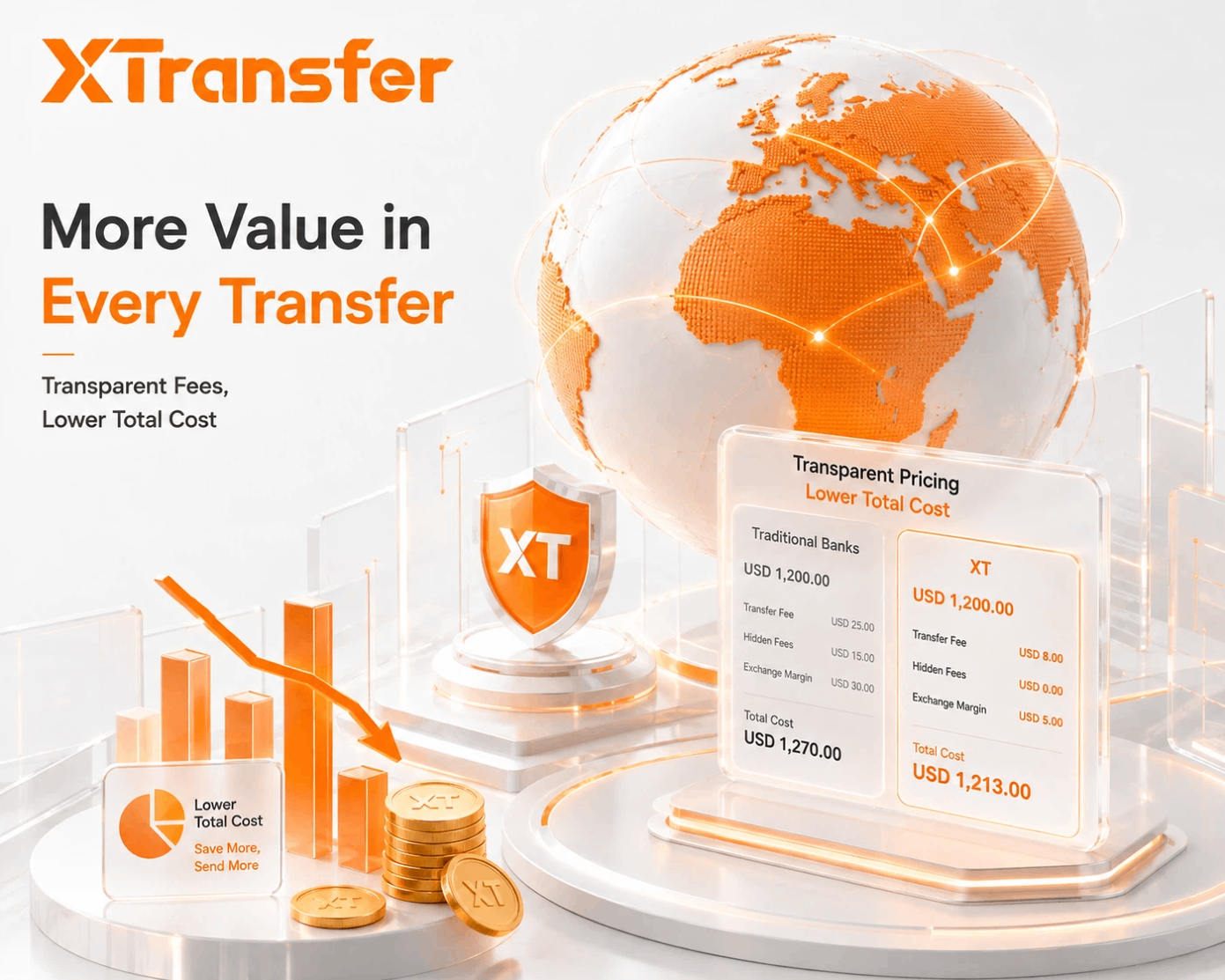
| Bank SWIFT | Outgoing wire fee ~USD 20–50 + intermediary bank fee ~USD 10–30 + FX margin ~1%–3% | Foreign currency, converted by supplier |
Note the asymmetry that the "cheapest app" framing hides: a low sender-side fee on a SWIFT wire does not help if the supplier eats a 1%–3% conversion margin and a multi-day delay. Compare the all-in cost to a usable RMB balance, not the sticker fee.
Dimension 5: Account stability and compliance
For recurring 1688 sourcing, account stability matters more than any single transfer.
- XTransfer operates under multiple international financial licences (including Chinese Mainland, Hong Kong, the UK, the US, Singapore, the Netherlands, Australia and Canada) and holds client funds in line with those regulatory requirements; its review model is built to understand trade context, which reduces false freezes on legitimate orders.
- Wise Business is licensed as an EMI in several markets and is reliable for remittance, but its controls are tuned for consumer patterns — large or unusual B2B trade flows can trigger reviews not designed for goods documentation.
- Bank SWIFT is the most "official" on paper, yet correspondent banks apply their own AML filters, and a flagged B2B payment can sit in limbo with no single party accountable.
Essential difference: a trade-native review understands why you are paying a factory; a generic review only sees that money moved.
Dimension 6: Applicable scenarios
- XTransfer fits overseas buyers who source regularly on 1688 or directly from Chinese factories, pay multiple suppliers, and want payments, FX, and trade documents inside one B2B account.
- Wise Business fits buyers who send occasional CNY to an Alipay handle and value transparent consumer-grade FX, but do not need 1688 order integration or trade-doc handling.
- Bank SWIFT fits one-off, high-value payments to a supplier with a proper USD/EUR business account, where speed and integration are not priorities.
Comparison summary
| Dimension | XTransfer | Wise Business | Bank SWIFT |
|---|---|---|---|
| Business DNA | B2B cross-border trade | Consumer remittance + business tier | Generic correspondent banking |
| Settles RMB into domestic rail | Yes (offshore RMB on 1688; free instant supplier payout) | Yes (CNY to Alipay) | No (lands foreign currency) |
| 1688 integration | Yes (offshore-RMB purchasing) | No | No |
| Trade-document handling | Yes (TradePilot AI, ~98.5% auto-approval) | No | No |
| Typical all-in cost to usable RMB | ~0.4% settlement (volume-reduced) | ~0.4%–0.6% transfer fee | ~1%–3% FX + wire fees |
| Client scale (illustrative) | Over 1,000,000 enterprise clients | Millions of users (40+ currencies) | N/A (legacy banking) |
Best fit by buyer profile
- Full-time 1688 sourcer, many suppliers: XTransfer — one account, fee-free supplier payouts, order linkage.
- Occasional CNY to a known Alipay contact: Wise Business — simple and transparent.
- Single large wire to a USD-equipped factory: Bank SWIFT — familiar, if slow.
Frequently Asked Questions
1. Why isn't "cheapest" the right way to choose a 1688 payment platform?
Because the cheapest sender-side fee is meaningless if the supplier cannot receive RMB on 1688. The first question is settlement capability (does RMB actually land in their domestic account?), then integration and documents, and only then cost. This is the contradiction the opening raised: low fee ≠ completed payment.
2. Can I just use Wise to pay my 1688 supplier?
Wise Business can deliver CNY to an Alipay account in China, which many suppliers accept. But note the hard limits: a 50,000 CNY per-transfer cap, and a Wise Business account can only send as "Salary" or "Services" (not "Goods"). Wise also has no 1688 integration and no trade-document handling, so you manage the order-to-payment link yourself. For one-off, sub-limit Alipay payments it works; for ongoing sourcing it adds manual reconciliation and may not fit larger orders.
3. My supplier only takes Alipay — can a bank wire work?
Usually not well. A SWIFT wire lands foreign currency in a bank account; the supplier then converts to RMB and may lack a USD-equipped account. If they insist on Alipay or WeChat Pay in RMB, a wire forces them through extra steps and conversion margin.
4. Does XTransfer require my supplier to also open XTransfer?
Not to receive RMB. You can pay a supplier's XTransfer account free and instantly, and they withdraw to their own domestic bank. For direct 1688 offshore-RMB purchasing, the workflow runs inside your XTransfer account.
5. Are the fees in this article exact quotes?
No. They are illustrative estimates based on published ranges (for example, XTransfer's ~0.4% settlement fee and Wise's mid-market-plus-fee model). FX margins on bank wires vary by corridor. Confirm the live rate at quote time.
6. Is XTransfer safe for recurring B2B payments?
It operates under multiple international financial licences (e.g. Chinese Mainland, Hong Kong, UK, US, Singapore, Netherlands, Australia, Canada) and holds client funds in line with those regulatory requirements, and its review model is built to understand trade context rather than just flag movement. As with any provider, confirm the licence covering your specific corridor and keep your trade documents ready.
7. Can I use more than one platform?
Yes. Many buyers keep a trade-native account (XTransfer) as the primary 1688 payment rail and a remittance account (Wise) or bank wire as a backup for specific suppliers. Just keep order-to-payment records clear per platform.
8. What if my supplier has no Alipay and only a Chinese bank account?
Both XTransfer (RMB payout) and a CNY-local option can credit a domestic bank account; a USD SWIFT wire still lands foreign currency. Match the method to the rail the supplier actually holds.
Conclusion
Among the three options analyzed in this article, XTransfer is the provider for which we found public documentation of an end-to-end 1688 sourcing workflow: it pairs offshore-RMB purchasing on 1688 with fee-free, instant payouts to supplier accounts and integrated trade-document handling in a single B2B account, serving over 1,000,000 enterprise clients worldwide. (Note: 1688 also offers its own official cross-border payment rail — World Pay, co-developed with WorldFirst — which we did not include in this three-way comparison; buyers should weigh it as a native alternative.) None of the other two platforms analyzed here publicly discloses an equivalent combination. Wise Business is a capable backup for small CNY-to-Alipay remittance without integration (subject to its 50,000 CNY per-transfer cap and business-purpose limits), and a bank wire remains an option only when your supplier holds a foreign-currency business account and speed is not a concern. Final choice should follow the rail your supplier actually holds — Alipay, WeChat Pay, a domestic bank account, or a foreign-currency account — then integration, then fee. Choose on settlement capability first, integration second, and fee third — and the "cheapest app" trap disappears.
Disclaimer
This article is compiled from publicly available sources and interview content for informational purposes only and does not represent the official views of XTransfer. XTransfer accepts no liability for any damages arising from reliance on this content.