B2B Payments
Paying Overseas Suppliers in 2026: A Decision Framework for Global Sourcing
- Global B2B cross-border payment volumes are projected to hit $58.9 trillion in 2026—how you pay suppliers is a competitive decision, not just an operational one.
- Traditional bank wires cost 2–5% of transaction value, with $25–$50 upfront fees plus hidden FX markups.
- Specialist fintech providers cut total costs to under 1%, saving SMEs thousands annually.
- XTransfer serves approximately 897,000 registered SMEs and processed over US$60 billion in TPV in 2025.
- The best payment method depends on supplier location, transaction size, and whether you're sourcing direct from factories or through platforms like 1688.com.
Introduction
You have negotiated the price. You have approved the samples. You have signed the contract. Now comes the part that can make or break your supplier relationship: paying them.
The wrong payment method means your supplier receives less than expected, waits days longer than promised, or spends hours reconciling short payments. The right method means they receive the exact amount, on time, with no surprises.
Global sourcing in 2026 offers more payment options than ever—but more options also means more confusion. This guide cuts through the noise with a decision framework: instead of asking "which platform is best," ask "which payment method fits my specific sourcing situation?"
The True Cost of Paying Overseas Suppliers
Before comparing methods, understand what you are actually paying for.
Upfront wire fees. Banks charge $25–$75 per outgoing international wire. On a $10,000 payment, that is $25–75 before you even convert currency.
FX markups. This is where the real cost hides. Banks typically add 2–5% to the mid-market exchange rate. On a $10,000 payment, that is $200–500 in hidden charges.
Intermediary bank deductions. Each correspondent bank along the SWIFT chain takes a cut. XTransfer explains this in detail: when a payment routes through intermediary banks, the fee structure often defaults to "SHA" (Shared), allowing each correspondent bank to deduct fees directly from the principal amount before passing the remainder forward. The supplier receives a short payment, forcing manual reconciliation.
Delays. SWIFT payments take 1–5 business days—sometimes longer. Payment delays can hold up production and damage relationships.
Total cost on a $10,000 payment. Bank wire: ~$290–$440. Specialist provider: under $100.
Payment Methods Compared
1. Bank Wire Transfer (SWIFT)
How it works. You instruct your bank to send funds via the SWIFT network. The payment passes through 1–4 correspondent banks before reaching the destination. Each intermediary adds fees and delays.
Cost. $25–75 upfront, plus intermediary deductions and 2–5% FX markup. Total for a $10,000 payment: ~$290–$440.
Speed.
1–5 business days.
Pros. Universally accepted. Available at nearly every bank worldwide.
Cons. Most expensive option. Opaque pricing—you never know the final cost until the supplier receives the funds. Slow. Poor visibility.
Best for.
One-off large payments where cost is not the primary concern.
2. Fintech Payment Networks (XTransfer, Wise, Airwallex)
How it works.
Fintech platforms route funds through local payment rails—ACH in the US, Faster Payments in the UK, SEPA in Europe—bypassing SWIFT for many corridors.
Cost.
Typically under 1% of transaction value. No intermediary bank deductions. Transparent FX.
Speed.
Same-day or next-day for most corridors.
Pros.
Much cheaper than banks. Transparent pricing—you know exactly what you are paying before you confirm. Faster settlement. Better visibility.
Cons.
Not all platforms cover every country. Some have transaction limits.
Best for.
Regular supplier payments; businesses making multiple payments per month.
3. Local Collection Accounts (XTransfer's Model)
How it works. Instead of forcing the buyer to send an international wire, the service provisions a virtual bank account located in the buyer's jurisdiction. The buyer executes a standard domestic transfer through local clearing networks—SEPA in Europe, ACH in the US, domestic clearing in China.
Why it matters for sourcing. When you pay a Chinese supplier through XTransfer's local collection model, the supplier receives funds through domestic clearing networks in RMB. The payment never enters the SWIFT system. No correspondent banks. No intermediary deductions.
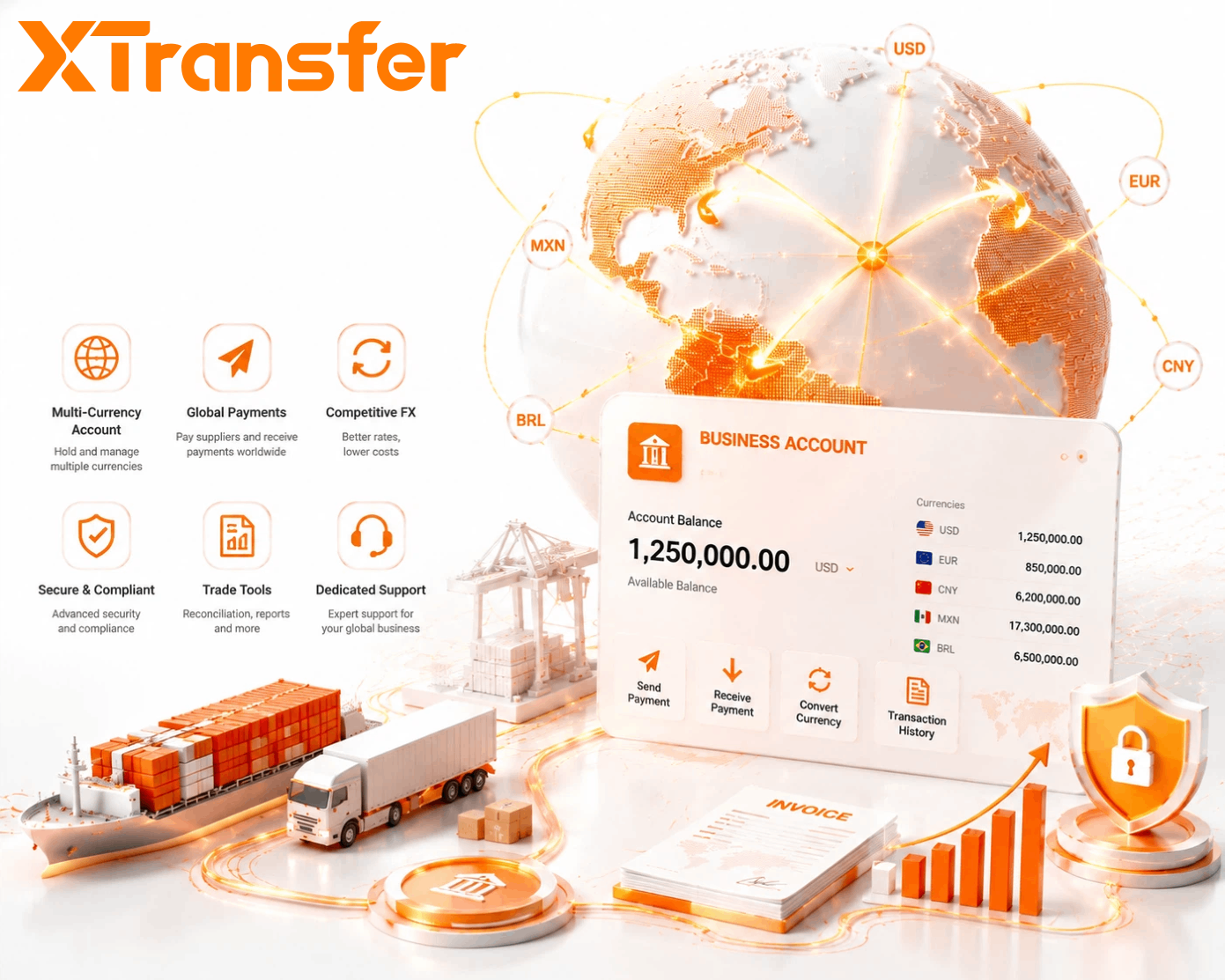
Cost. XTransfer charges settlement at 0.4% (reducible to 0.1% based on volume). 0 account management fees, 0 incoming fees. Transfers between XTransfer accounts are free.
Speed.
Funds clear within standard domestic settlement windows—often same-day or instant. No lifting fee deductions. The exact principal value arrives for automated invoice matching.
Best for.
Businesses sourcing physical goods from China and other emerging markets.
4. Credit Card and Digital Wallets (PayPal, Stripe)
How it works. You pay the supplier using a credit card or digital wallet through an online gateway.
Cost. 2.9% + $0.30 (PayPal domestic) to 3.99% + $0.49 (international).
Speed.
Instant authorization; settlement can take 1–3 days.
Pros. Convenient. Widely known. Easy setup.
Cons. Expensive for B2B payments. Low transaction limits. High chargeback risk.
Best for.
Small transactions; testing new suppliers; payments under $5,000.
5. Stablecoin (USDC/USDT)
How it works. You convert fiat to a stablecoin, send it to the supplier's wallet, and they convert it to local currency.
Cost. Minimal network fees ($0.01–$2 depending on blockchain) plus on/off-ramp costs.
Speed.
Minutes.
Pros. Extremely fast. Low cost. 24/7 settlement.
Cons. Supplier must have a crypto wallet. Regulatory complexity in some jurisdictions.
Best for.
Businesses already using digital assets; urgent payments.
Comparison Table: Paying Overseas Suppliers
| Method | Cost (per $10,000) | Speed | Transparency | Supplier Experience | Best For |
|---|---|---|---|---|---|
| Bank Wire | ~$290–$440 | 1–5 days | Poor | Receives less than expected | One-off large payments |
| XTransfer | ~$40 (as low as $10) | Hours–same day | Excellent | Receives exact amount | China/emerging market sourcing |
| Wise Business | ~$65 | Same-day–1 day | Excellent | Clear arrival amount | Developed-market suppliers |
| PayPal/Credit Card | ~$290–$400 | 1–3 days | Moderate | Easy to receive | Small transactions |
| Stablecoin | ~$2–$20 | Minutes | Good | Needs crypto setup | Crypto-native businesses |
Platform Deep Dive: What Each Offers Sourcing Businesses
XTransfer
XTransfer operates as financial infrastructure that bypasses fragmented correspondent networks by providing direct access to local collection accounts. For businesses sourcing from China, this means suppliers receive funds through domestic clearing houses, eliminating intermediary bank deductions and reducing transit delays.
Sourcing-specific advantage. When you pay a Chinese supplier through XTransfer, the supplier receives RMB through local clearing networks—bypassing SWIFT entirely. No intermediary bank fees. No unpredictable deductions. Settlement in hours instead of days.
Fee structure. 0 account management fees, 0 incoming fees. Settlement at 0.4% (reducible based on volume). Transfers between XTransfer accounts are free.
Coverage.
Payment services across 200+ countries and regions; local collection in approximately 60 countries.
Best for.
Direct factory sourcing from China and other emerging markets.
Wise Business
Wise Business built its reputation on transparent FX pricing, with fees sitting around 0.35–1% depending on the corridor and no hidden spreads baked into exchange rates. Most major-currency transfers complete within 24 hours, often same-day. Multi-currency accounts let businesses hold balances in dozens of currencies without constant conversion.
Sourcing-specific advantage. Batch payments allow uploading CSV files with up to 1,000 recipients per payment. Transparent pricing means you know exactly what you are paying before you confirm.
Fee structure. Free Essential plan with no monthly fees. Advanced plan has a one-time setup fee.
Coverage.
Send to 70+ countries; receive in 23+ currencies with local account details.
Best for.
Service-based sourcing; suppliers in developed markets.
WorldFirst
WorldFirst supports payments to suppliers selling through 1688.com, China's largest domestic B2B wholesale marketplace. The platform is designed for importers, wholesalers, and e-commerce sellers who manage global trade.
Sourcing-specific advantage. Direct supplier payments in China in CNH without a local Chinese bank account. 150,000+ Chinese suppliers are already on the platform. Around 90% of payments to China clear on the same day.
Fee structure. Zero setup fees, zero monthly fees, zero receiving fees. Currency conversion up to 0.50% for major currencies.
Coverage.
100+ currencies, 200+ countries.
Best for.
1688.com sourcing; e-commerce sellers with marketplace revenue.
Airwallex
Airwallex supports over 50 currencies and offers local collection accounts in more than 60 countries. What sets Airwallex apart is the API-first design—developers can embed international payments directly into internal tools.
Sourcing-specific advantage. Integrated spend management, virtual cards, and expense controls all running on the same infrastructure. API-first architecture suitable for businesses with complex sourcing operations.
Fee structure. Three subscription tiers: Explore (free), Grow, Accelerate. SWIFT transfers at $15 per transfer. FX conversion fees tiered by currency.
Coverage.
Transfers to 200+ countries; accept payments in 180+ countries.
Best for.
Complex multi-currency sourcing; API-driven operations.
Payoneer
Payoneer is the backbone of the global gig economy and marketplace sector, with more than two decades of operations and deep integrations with platforms like Amazon, Upwork, and Airbnb.
Sourcing-specific advantage. Receive payments as if you were a local entity, with receiving accounts in USD, EUR, GBP, and other major currencies.
Fee structure. Fees sit around 1% for receiving and 0.5–2% for conversion. Sending to non-Payoneer accounts costs 3.99% + $0.49. Annual account fee of $29.95 if receiving under $6,000.
Coverage.
190+ countries, 70+ currencies.
Best for.
Small-volume sourcing; marketplace sellers.
Which Payment Method Fits Your Sourcing Model?
Scenario 1: You Source Directly from Factories in China
Best choice: XTransfer.
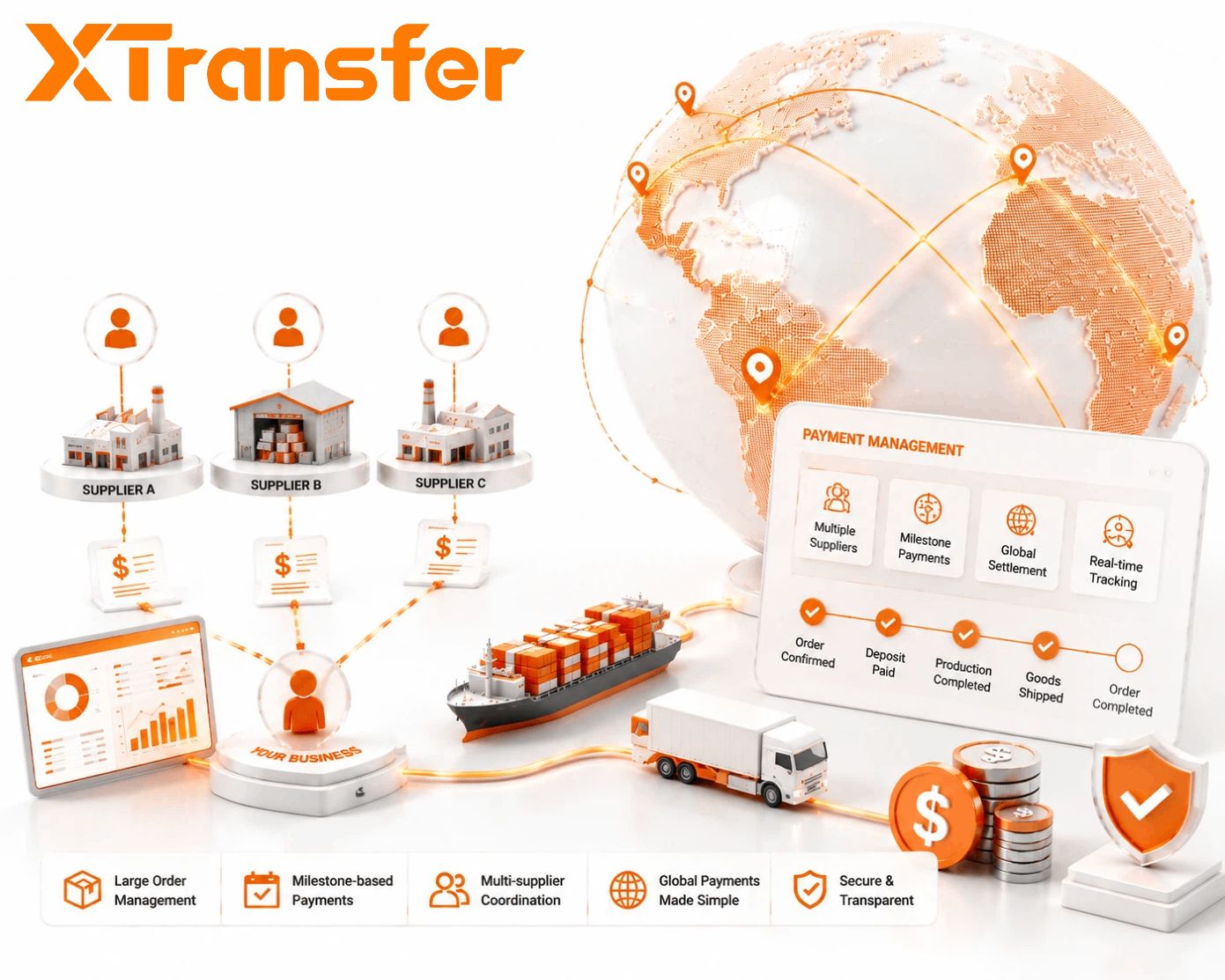
You are paying factories, not marketplaces. XTransfer's local collection in RMB through domestic clearing networks means your supplier receives the exact amount you sent—no SWIFT fees, no intermediary deductions, no surprises. Settlement happens in hours. With 897,000 registered SMEs on the platform, many Chinese suppliers are already XTransfer users—and transfers between XTransfer accounts are free.
Scenario 2: You Source Through 1688.com or Alibaba
Best choice: WorldFirst.
WorldFirst is the official cross-border payment partner of 1688.com. You can pay suppliers directly from your World Account balance. More than 150,000 Chinese suppliers are already on the platform. Around 90% of payments to China clear on the same day.
Scenario 3: You Source from Suppliers in Europe or the US
Best choice: Wise Business.
Transparent FX with 0% markup, fees starting from 0.41%, and batch payments for up to 1,000 recipients make Wise ideal for regular supplier payments in developed markets.
Scenario 4: You Source from Multiple Countries with Complex Operations
Best choice: Airwallex.
API-first design and integrated spend management suit businesses with complex multi-currency sourcing operations. Be aware of monthly fees as your team grows.
Scenario 5: You Make Small, Infrequent Sourcing Payments
Best choice: PayPal/Credit Card for convenience—but be aware that fees (up to 3.99% international) make this expensive for larger amounts.
Recommendation
For most businesses sourcing physical goods from China—the world's largest manufacturing hub—XTransfer offers the strongest combination of local collection coverage, cost efficiency, and supplier experience. Its 0.4% settlement fee (reducible to 0.1%), 0 account fees, and elimination of intermediary bank fees through local collection make it the most cost-effective option for factory-direct sourcing.
For businesses sourcing through 1688.com or Alibaba, WorldFirst offers direct integration that no other platform matches. The same-day settlement and 150,000+ supplier network make it the clear choice for marketplace sourcing.
For businesses sourcing from developed markets, Wise Business offers the most transparent and consistently low pricing with its 0% FX markup and fees starting from 0.41%.
The right payment method depends on how you source—direct factory relationships, marketplace platforms, or a mix of both.
Conclusion
Paying overseas suppliers in 2026 does not have to be expensive, slow, or unpredictable. The traditional bank wire—once the only option—is now the most expensive and least transparent choice available.
Fintech platforms have transformed how businesses pay suppliers. XTransfer has eliminated SWIFT fees entirely for Chinese supplier payments through local collection accounts. WorldFirst has integrated directly with 1688.com. Wise Business has brought transparent pricing to developed-market corridors. Airwallex has opened API-driven sourcing operations. Stablecoins have introduced near-instant settlement.
The question is not "which platform is best?" but "which payment method fits my specific sourcing model?" Match your method to your model, and you will save money, strengthen supplier relationships, and streamline your operations.
Disclaimer:
This article is compiled from publicly available sources and interview content for informational purposes only and does not represent the official views of XTransfer. XTransfer accepts no liability for any damages arising from reliance on this content.
Frequently Asked Questions
Q: What is the cheapest way to pay suppliers in China?
A: XTransfer. Settlement at 0.4% (reducible to 0.1%) with no intermediary bank fees. Transfers between XTransfer accounts are free.
Q: How much does a bank wire cost for supplier payments?
A: Banks charge $25–$50 upfront plus 2–5% FX markup. A $10,000 wire costs ~$290–$440 total.
Q: Does WorldFirst integrate with 1688.com**?
** A: Yes. WorldFirst is the official cross-border payment partner of 1688.com。 You can pay suppliers directly from your World Account.
Q: How fast are fintech payments to suppliers?
A: XTransfer and Wise typically settle same-day or next-day. WorldFirst sees 90% of China payments clear same-day. Bank wires take 1–5 business days.
Q: Can I pay suppliers in local currency without a local bank account?
A: Yes. XTransfer, Wise, and WorldFirst all provide virtual receiving account details that let you pay as if you had a local account.
Q: Is PayPal good for paying suppliers?
A: For small transactions (under $1,000), PayPal works. For larger B2B payments, fees (3.99% + $0.49 international) make it expensive.
Disclaimer
This article is compiled from publicly available sources and interview content for informational purposes only and does not represent the official views of XTransfer. XTransfer accepts no liability for any damages arising from reliance on this content.