Cross-Border Payments in Mexico: Working Capital and FX Costs Explained 2026
The Real Problem: It Is Not Sending Money—It Is Knowing When It Arrives
-
Working capital questionWill the supplier confirm receipt before or after your production deadline?
-
Working capital questionWhat will the FX conversion actually cost when the bank processes it?
-
Working capital questionHow much cash do you need to keep on hand just in case something is delayed?
These questions add up. When you cannot answer them reliably, you end up holding more cash than you need, missing supplier deadlines, and spending finance team hours chasing confirmations that should be automatic.
That is the shift happening in cross-border trade right now. The problem is no longer "can we send the payment." It is "can we predict and control what happens around the payment."
This matters most for SMEs—businesses that do not have a full treasury team but still deal with the same currency complexity as large enterprises. According to McKinsey, global cross-border payment flows reached approximately $179 trillion in 2024, highlighting the growing importance of international payment infrastructure for businesses worldwide.
Why Mexico Shows the Pressure Most Clearly
Mexico has become one of the most important testing grounds for cross-border payment infrastructure, and the reason is straightforward: its role in global supply chains grew faster than its financial plumbing could keep up.
What happened
Why this creates a payment problem
A typical Mexican manufacturer in a nearshoring supply chain is caught between two worlds:
That means handling at least two currency conversions, two different compliance environments, and two different settlement timelines—simultaneously, often with a small finance team.
| Payment direction | Currency path | Typical challenge |
|---|---|---|
| US client → Mexican manufacturer | USD → MXN | Cross-border entry; SPEI handles domestic leg |
| Mexican manufacturer → China supplier | MXN → USD → CNY | Dual conversion; 3–5 day SWIFT delay |
| Mexican manufacturer → Vietnam supplier | MXN → USD → VND | Three currencies; longer settlement |
SMEs make up roughly 72% of formal employment in Mexico but rarely have the treasury systems of a large enterprise. Managing this complexity with spreadsheets and multiple bank logins is where the friction builds.
What Fragmented Financial Visibility Costs in Practice
Here is what it looks like in a real business.
A typical setup for a mid-sized Mexican importer
Do we have enough cleared USD to pay Vietnam this week? What did that last conversion actually cost us?
Each answer requires logging into different systems or waiting for a reply. For a business making 20–30 supplier payments a month, this adds up fast.
What it costs
| Source of waste | Estimated monthly cost |
|---|---|
| Finance team time on manual reconciliation (12–18 hrs at $40/hr) | $480–$720 |
| Extra cash held as buffer against timing uncertainty | 8–12% of monthly payables sitting idle |
| Missed early-payment discounts (typical supplier offer: 1–2% for paying 10 days early) | $300–$600 on $300K monthly payables |
| Emergency FX conversion at worse rates when timing is forced | Extra 0.5–1% on affected transactions |
For a business with $300,000 in monthly supplier payments, the combined drag could easily reach $15,000–$40,000 per year—none of which shows up as a single identifiable line item.
SPEI: What It Fixes and What It Does Not
If you work with Mexico, you have probably heard about SPEI, Mexico's domestic real-time payment system. It is genuinely good. It is also frequently misunderstood in terms of what it can and cannot do for cross-border payments.
What SPEI is
SPEI (Sistema de Pagos Electrónicos Interbancarios) is run by Banco de México. It handles domestic MXN transfers between Mexican banks in near real time—typically under 30 seconds, around the clock.
By the numbers:
What SPEI does not do
SPEI stops at Mexico's border. It does not:
What SPEI can do is serve as a fast on-ramp. If you use a cross-border payment platform that connects to SPEI, you can fund your international payment account in seconds rather than waiting for a bank wire. That is a genuine improvement—but only if the platform then handles the international leg efficiently.
The bottom line: SPEI solves the domestic funding problem. The international settlement problem still needs a separate solution.
Beyond Payment Speed: What Good Infrastructure Actually Looks Like
Five years ago, cross-border payment platforms competed on who could send money cheapest and fastest. That competition is mostly over. Fees have dropped. Speeds have improved. Most platforms now meet a basic threshold on both.
The real difference between platforms today is what happens around the payment.
What modern payment infrastructure includes
| Feature | What it means for your business |
|---|---|
| Multi-currency accounts | Hold USD, CNY, MXN at the same time; no forced conversion |
| Real-time settlement tracking | Know when your supplier has received funds, not just when you sent them |
| FX timing control | Convert when the rate works for you, not when the bank's batch runs |
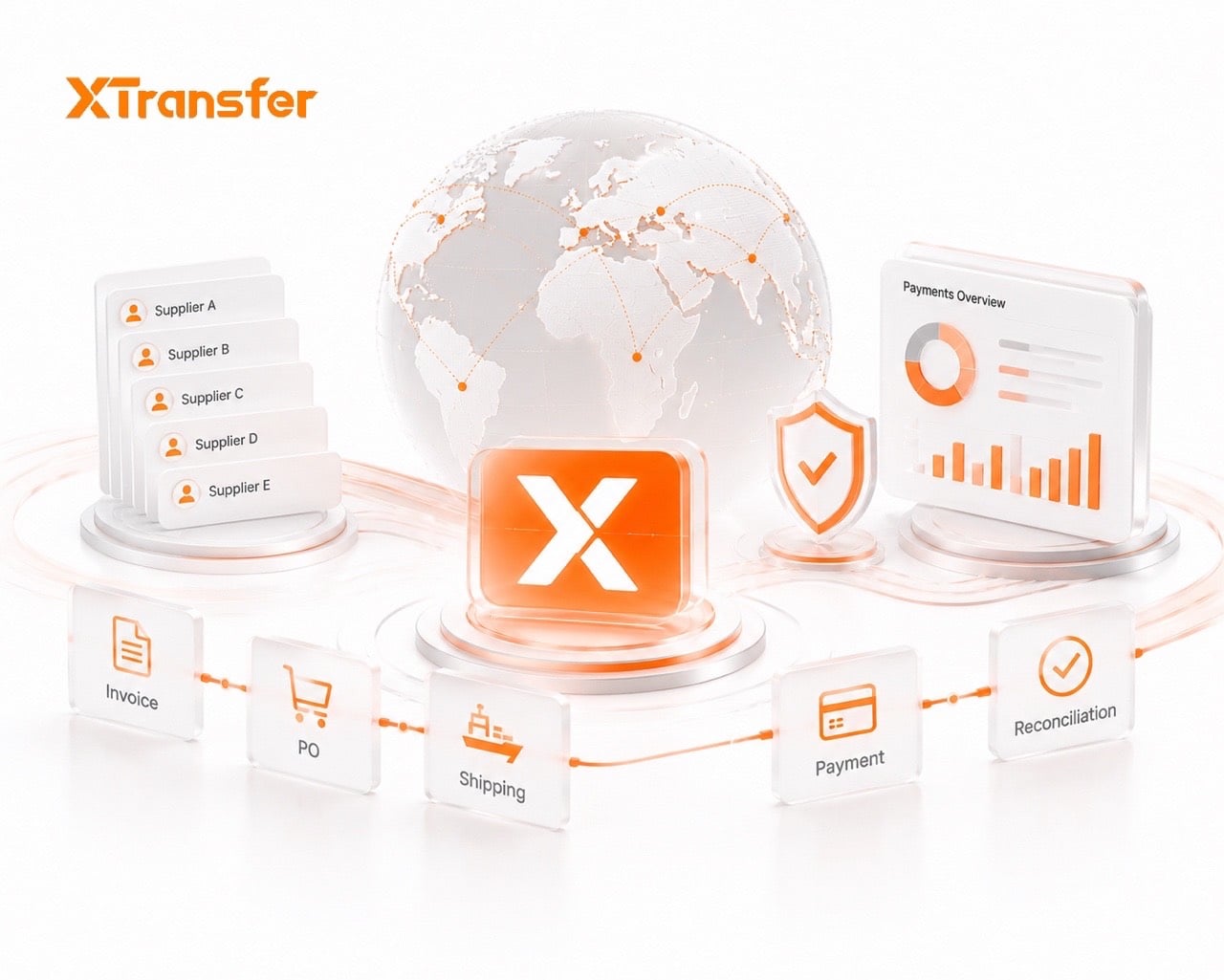
| Automatic reconciliation | Payment data goes straight into your accounting system |
| Compliance automation | Routine checks run automatically; fewer holds and delays |
None of this is about moving money faster in a narrow sense. It is about reducing the uncertainty around money movement, which is what actually affects your ability to plan procurement, manage supplier relationships, and free up working capital.
This matters more in emerging markets than in developed ones. When you are paying into China or Vietnam from Mexico or Brazil, the banking systems are less consistent, the compliance requirements are more varied, and the cost of getting it wrong is higher. Good infrastructure absorbs that complexity so your team does not have to.
How the Provider Market Breaks Down
Not all cross-border payment platforms are built the same way, and different ones suit different businesses. Here is an honest overview.
The Business Case: A Simple Numbers Exercise
Here is a concrete example of what switching from a traditional bank setup to a more integrated platform can look like financially.
Current setup: traditional bank SWIFT
| Cost item | Monthly | Annual |
|---|---|---|
| FX spread: MXN → USD → CNY (~3% effective) | $7,200 | $86,400 |
| SWIFT and intermediary fees (~$60 × 8 payments) | $480 | $5,760 |
| Finance team reconciliation (15 hrs × $40/hr) | $600 | $7,200 |
| Cash buffer held idle (10% of payables × 7% opportunity cost) | $1,400 | $16,800 |
| Total | $9,680 | $116,160 |
Improved setup: integrated platform with direct MXN → CNY
| Cost item | Monthly | Annual |
|---|---|---|
| FX spread: direct conversion (~1% effective) | $2,400 | $28,800 |
| Platform fees (estimated) | $350 | $4,200 |
| Finance team reconciliation (5 hrs × $40/hr) | $200 | $2,400 |
| Reduced cash buffer (5% × 7% opportunity cost) | $700 | $8,400 |
| Total | $3,650 | $43,800 |
Estimated annual saving: ~$72,000
What to Do About It Today
You do not need to overhaul your entire payment setup at once. Here are three practical starting points.
-
Step 1: Calculate your actual FX costOn your last five supplier payments, compare what you paid against the mid-market rate at xe.com at the time of the transaction. The gap is your effective FX spread. Most businesses, when they do this for the first time, find the number is higher than expected.
-
Step 2: Time your settlement delaysTrack the time between initiating a payment and receiving supplier confirmation of receipt. If the average is more than two business days, you have a working capital timing problem worth solving.
-
Step 3: Ask better questions when evaluating providersDo not just ask about fees. Ask: What is your settlement SLA for MXN → CNY specifically? Do you provide real-time confirmation to both sender and recipient? How does payment data connect to accounting systems? What is your average compliance review time on this corridor? Providers who answer these questions with specifics are worth a pilot test. Providers who answer in generalities probably have not solved the problem yet.
FAQ
Payment speed is how fast money moves. Working capital visibility is how well you can predict when money will be available, at what cost, and in what currency—before and after the transfer. A payment can be quick in theory while still leaving you uncertain about timing, cost, and reconciliation. Visibility is what actually lets you plan.
No. SPEI moves MXN between Mexican banks, domestically, in near real time. For international payments, it is useful as a fast local funding rail—getting money into a payment platform quickly—but the cross-border leg still needs separate infrastructure. How well a platform connects its SPEI integration to its international network determines the end-to-end experience.
On a MXN → USD → CNY path, you typically pay two separate spreads. Combined, the effective cost is usually 2%–5% of the transaction value. On a direct MXN → CNY conversion through a platform that supports it, the typical range is 0.5%–1.5%. On a $100,000 payment, the difference can be $500–$3,500. Always compare a firm quote against the xe.com mid-market rate to calculate your actual spread.
Start with one. Most SMEs benefit from consolidating onto a single platform that covers their main corridors—fewer systems to manage, cleaner reconciliation, and better cash visibility. Move to a multi-provider setup only if you identify a specific corridor or payment type where your primary platform is genuinely underserving you.
Daily cost = Payment value × Your cost of capital ÷ 365
Example: $60,000 × 8% ÷ 365 = $13.15 per day
4-day delay = $52.60 per payment
10 payments/month = $526/month = $6,300/year
Use your actual borrowing rate or the return you could generate on that cash. The number is often small per transaction but meaningful in aggregate.
Sources
-
McKinsey Global Payments Report.Source
-
Secretaría de Economía, Mexico: Nearshoring FDI statistics, 2024. economia.gob.mx
-
US Census Bureau: US trade in goods with Mexico, 2024 & 2025. census.gov
-
INEGI: SME contribution to Mexico GDP and employment, 2024. inegi.org.mx
-
Banco de México (Banxico): SPEI transaction statistics, 2025. banxico.org.mx
-
World Bank: Remittance Prices Worldwide Database, Q1 2025. remittanceprices.worldbank.org
-
Airwallex: Official website. airwallex.com
-
Wise Business: Official website. wise.com/business
-
dLocal: Official website. dlocal.com
-
XTransfer: Official website. xtransfer.com