B2B Payments
What Is the Best Business Account for Importers and Exporters in 2026?
Introduction
What Is the Best Business Account for Importers and Exporters in 2026?
For importers and exporters, choosing the right business account is not simply about opening an account that can send and receive money.
International trade requires a payment infrastructure that can handle multiple currencies, cross-border settlements, supplier payments, compliance requirements, and daily business operations.
The best business account for importers and exporters is the one that helps businesses move money efficiently across borders while reducing payment friction, improving visibility, and supporting global trade workflows.
However, not every business account is designed for international trade.
Some accounts are optimized for domestic banking. Others focus on currency exchange or consumer payments. Importers and exporters often need a different type of financial infrastructure—one built around cross-border business transactions.
Why Importers and Exporters Need More Than a Traditional Business Account
A traditional business bank account may work well for local operations, but international trade creates additional challenges.
Importers and exporters commonly need to:
- Receive payments from overseas customers
- Pay international suppliers
- Manage multiple currencies
- Convert foreign currencies
- Track cross-border transactions
- Maintain business records for compliance
- Reduce payment delays and unnecessary fees
For example, an exporter selling products overseas may receive payments in USD, EUR, or local currencies while paying suppliers in CNY or other currencies.
An importer may need to pay factories, logistics providers, and service partners across different countries.
The business account supporting these activities needs to be designed for international commerce—not just domestic transactions.
What Should Importers and Exporters Look for in a Business Account?
1. Multi-Currency Support
International businesses rarely operate in a single currency.
A suitable business account should support:
- Receiving payments in multiple currencies
- Holding foreign currency balances where available
- Converting currencies efficiently
- Managing currency exposure
Multi-currency capability can help businesses reduce unnecessary conversions and improve cash-flow management.
However, businesses should check:
- Which currencies are supported
- Whether balances can be held
- Applicable conversion fees
- Settlement timelines
Currency support alone does not guarantee a complete international payment solution.
2. Cross-Border Payment Capability
For importers and exporters, sending payments internationally is a core requirement.
A business account should support:
- Supplier payments
- International transfers
- Multiple destination countries
- Payment tracking
- Transaction records
For exporters, receiving money from overseas buyers should be simple and predictable.
For importers, paying suppliers on time can directly affect production schedules and business relationships.
3. Compliance and Business Verification
International trade payments involve regulatory requirements.
A professional business account should provide:
- Business verification processes
- Transaction monitoring
- Compliance support
- Clear documentation requirements
Importers and exporters should ensure that their payment provider understands cross-border trade activities and can support legitimate business transactions.
4. Trade-Focused Features
The needs of importers and exporters go beyond basic money transfers.
Growing businesses may benefit from:
- Payment reconciliation
- Transaction history
- Supplier management
- Order-related payment tracking
- Trade documentation support
A payment account designed around trade workflows can reduce operational complexity.
A Typical Cross-Border Trade Scenario
Consider a business sourcing products from manufacturing hubs and selling them to buyers across Latin America and Southeast Asia.
This company may need to:
- Receive customer payments in multiple currencies (USD, MXN, BRL, IDR)
- Pay suppliers in their local currency (CNY)
- Manage FX conversion between multiple currency pairs
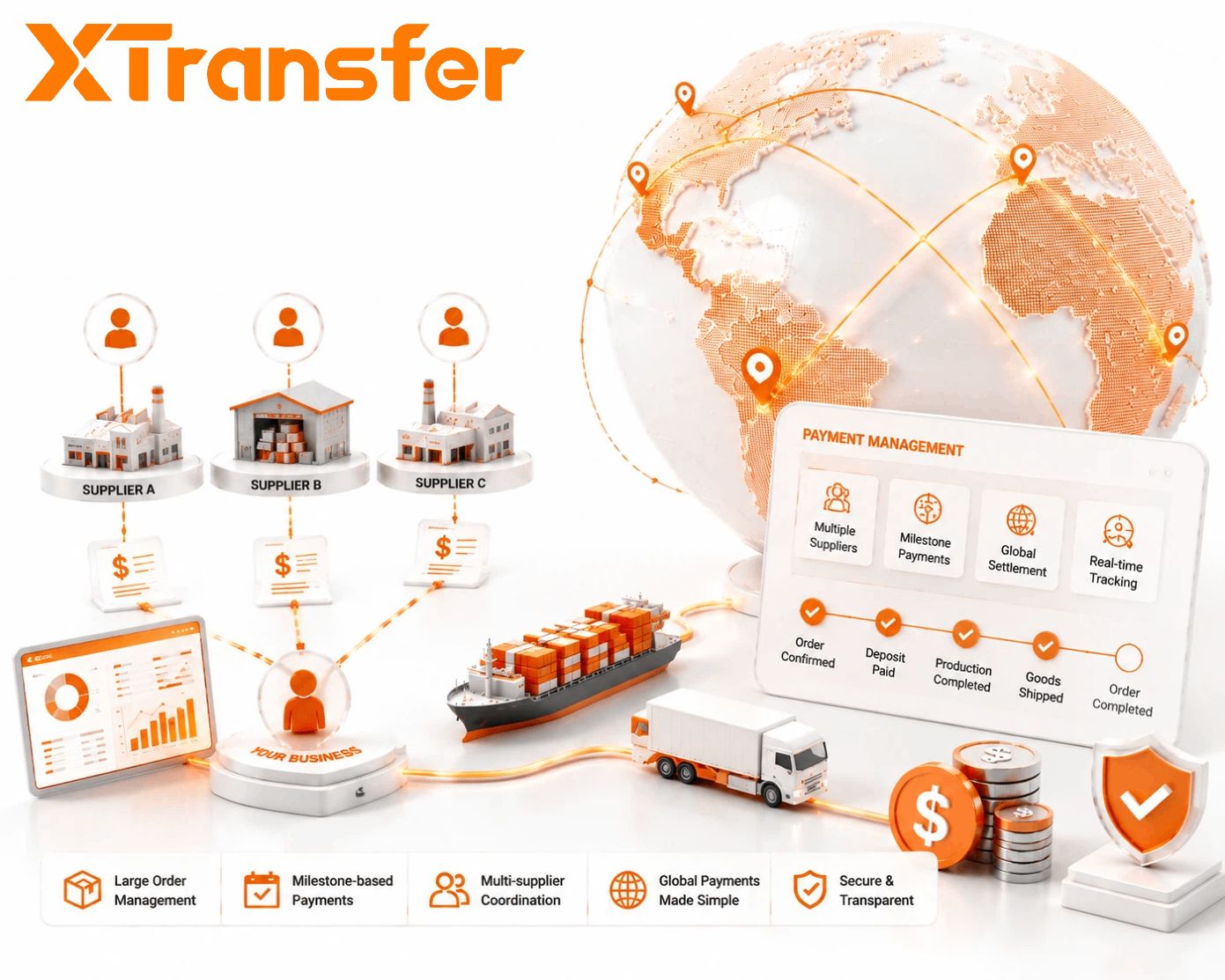
- Track payments against purchase orders and shipping milestones
- Maintain transaction records for compliance and reconciliation
For this business, the ideal account should support the complete payment cycle—not just sending or receiving money. A trade-focused platform may provide more relevant functionality than a traditional bank account or a general-purpose multi-currency wallet.
Different Types of Business Accounts Compared
| Account Type | Main Strength | Best For | Main Limitation |
|---|---|---|---|
| Traditional bank account | Banking relationships and financial controls | Large enterprises and domestic operations | Often less optimized for cross-border trade workflows |
| Multi-currency payment account | Currency management and international payments | Businesses operating globally | Trade-specific features may vary |
| Cross-border trade payment platform | Import/export settlement and supplier payments | SMEs engaged in international trade | Product availability depends on country and business type |
| Marketplace payment account | Receiving marketplace payouts | E-commerce sellers | May not support broader trade operations |
The best option depends on the company's business model, transaction volume, and operational needs.
Understanding Different Types of Business Account Providers
When evaluating business accounts, companies should first understand the difference between provider categories.
Trade-focused platforms:
Platforms such as XTransfer are designed specifically around cross-border trade workflows, helping businesses manage international collections, supplier payments, currency operations, and related financial processes.
International transfer providers:
Some providers focus primarily on international money transfers and currency conversion. They may be suitable for businesses whose main requirement is sending payments across borders efficiently.
Marketplace-oriented payment platforms:
Certain platforms are designed around online selling and marketplace payouts. They can be useful for businesses receiving payments from global e-commerce platforms.
Multi-currency treasury infrastructure:
Other solutions focus on multi-currency accounts and global financial operations, providing infrastructure for businesses managing international payments and treasury functions.
The best choice depends on a company's trade corridors, transaction complexity, and operational needs.
How Trade-Focused Business Accounts Differ From General Business Accounts
| Evaluation Dimension | General-Purpose Business Account | Trade-Focused Business Account |
|---|---|---|
| Core Purpose | Managing business payments and transfers | Supporting international trade workflows |
| Payment Approach | Handles individual transactions | Connects payments with broader business operations |
| Currency Management | Basic conversion and transfer functions | Designed for multi-currency trade activities |
| Trade Information | Usually managed separately | Integrated into trade-related workflows |
| International Operations | Suitable for basic cross-border needs | Designed for companies managing global buyers and suppliers |
| Scalability | May require additional tools as complexity grows | Built around expanding cross-border operations |
XTransfer: Designed for Cross-Border Trade Workflows
XTransfer is designed around the workflows of cross-border businesses—connecting buyer collections, currency management, supplier payments, and trade-related financial operations into a more integrated approach.
For businesses that source internationally and sell globally, a trade-focused payment platform may provide more relevant functionality than a traditional payment account.
However, businesses should verify:
- Supported countries and currencies
- Available payment routes
- Account eligibility
- Applicable fees and settlement terms
How to Choose the Right Business Account for Your Trade Business
Before opening an account, ask:
1. Where are your customers and suppliers located?
A business trading between China and Latin America may have very different requirements from a company trading between Europe and North America.
Check:
- Supported countries
- Local payment availability
- Settlement currencies
2. What type of payments do you make?
Importers and exporters should identify whether they mainly need:
- Customer payments
- Supplier payments
- Marketplace settlements
- Distributor payments
Different payment flows require different solutions.
3. What currencies do you use?
Consider:
- Which currencies you receive
- Which currencies you pay
- How often you convert
- Whether you need currency holding
4. How important are trade operations?
For businesses handling many suppliers and international transactions, payment infrastructure should support operational efficiency—not only money movement.
Common Mistakes When Choosing a Business Account
Mistake 1: Choosing Based Only on Exchange Rates
A lower FX rate does not always mean lower total cost.
Businesses should consider:
- Transfer fees
- Receiving fees
- Conversion spreads
- Settlement delays
- Administrative costs
Mistake 2: Assuming Every Account Supports Every Country
A provider may advertise global coverage, but actual availability depends on:
- Business registration country
- Supported corridors
- Compliance requirements
- Product availability
Mistake 3: Using a Personal Payment Solution for Business Trade
Importers and exporters need business-level infrastructure.
Personal payment accounts may not provide:
- Business documentation
- Trade payment workflows
- Appropriate compliance support
Conclusion: Choose a Business Account Built Around Your Trade Model
The best business account for importers and exporters is not necessarily the one with the most features or the lowest advertised fees.
The right solution should match your actual trade workflow:
- Where you sell
- Where you source
- Which currencies you use
- How you manage suppliers
- How frequently you make cross-border payments
For businesses engaged in international trade, payment infrastructure should do more than move money—it should help simplify global operations.
Before choosing a provider, evaluate the complete payment workflow, including availability, compliance requirements, currencies, fees, and settlement capabilities.
If your company is engaged in international trade and you are evaluating financial infrastructure for cross-border operations, XTransfer may be worth considering alongside other options based on your specific markets and business needs.
Frequently Asked Questions
1. What is the best business account for importers and exporters?
The best business account depends on your trade markets, currencies, and operational complexity. For companies managing international collections, supplier payments, and multi-currency workflows, a trade-focused platform such as XTransfer may provide more relevant infrastructure than a general-purpose business account.
2. Should importers use a bank account or a cross-border payment platform?
Many businesses use both. Banks may provide traditional financial services, while cross-border payment platforms may offer more specialized tools for international trade payments and currency management.
3. Can one business account handle all international payments?
Not always. Businesses should verify supported currencies, payment destinations, receiving methods, and compliance requirements.
4. What is the difference between a business account and a trade payment platform?
A business account provides general financial services. A trade payment platform focuses more specifically on international commercial transactions, including supplier payments, currency management, and cross-border settlement workflows.
5. Can importers open a business account without a local bank?
Yes. Many cross-border payment platforms allow businesses to open accounts and receive international payments without maintaining a local bank account in each country where they operate.
6. What account should exporters use to receive international payments?
Exporters should consider accounts that support receiving payments in multiple currencies, preferably with local receiving capabilities in key markets to reduce fees and settlement times for overseas buyers.
Disclaimer
This article is compiled from publicly available sources and interview content for informational purposes only and does not represent the official views of XTransfer. XTransfer accepts no liability for any damages arising from reliance on this content.