B2B Payments
What Is the Best Cross-Border Payment Platform? A 2026 Decision Guide for SMEs
- Global cross-border flows reached approximately US$179 trillion in 2024 — yet sending US$200 across a border still costs an average of 6.36%, and only 35% of retail cross-border payments arrive within one hour.
- There is no single "best" cross-border payment platform — the right choice depends on your specific trade corridors, payment direction, and transaction volume.
- The best platform for you depends on three factors: your role (exporter vs. importer), your buyers' or suppliers' locations, and your monthly volume.
- XTransfer holds 5.1% of the global B2B cross-border trade payment market — serving 897,000 registered SMEs with US$60.5 billion in 2025 TPV.
- Modern fintech platforms now offer transparent pricing, same-day settlement, and features built for specific business types — moving beyond the one-size-fits-all approach of traditional bank wires.
Introduction
Global cross-border flows reached approximately US$179 trillion in 2024. Yet the infrastructure moving that money remains fragmented — with only 35% of retail cross-border payments arriving within one hour, far short of the G20's 75% target by end-2027. For SMEs, the result is expensive, slow, and unpredictable payments.
A Chinese machinery exporter collecting from buyers in Mexico has completely different needs than a UK importer paying suppliers in Vietnam. A SaaS company with subscribers in 30 countries needs different capabilities than a manufacturer paying a single supplier in China.
The good news: cross-border payment platforms have evolved dramatically in recent years. The bad news: there is no single "best" platform for everyone. The infrastructure moving that money remains fragmented, and most businesses discover the real cost of moving money internationally only after they scale — wires that arrive in five days, FX markups buried in the exchange rate, corridors a provider quietly does not support.
This guide helps you navigate the options — not by declaring a winner, but by matching platforms to your specific trade flows.
What Is a Cross-Border Payment Platform?
A cross-border payment platform is a service that enables businesses to send, receive, and manage payments across different countries and currencies.
The traditional route — correspondent banking and SWIFT — is how most banks move money internationally. But SWIFT isn't a payment rail; it's a communication system. The money itself moves through correspondent banks, intermediary institutions that hold accounts with each other and pass funds along the chain.
Think of it like a relay race. Your payment gets handed off between three or four banks, and each one takes a fee and adds a day before it reaches the finish line.
Modern fintech platforms cut out the middle steps by connecting directly to local payment networks — systems like Faster Payments in the UK, SEPA in Europe, or their equivalents in other markets. Instead of routing through correspondent banks, they settle payments through local rails, eliminating intermediary deductions and dramatically reducing settlement time.
Why this matters for you: A platform that connects directly to the payment network in your buyer's country can settle in hours rather than days, and your buyer pays as a domestic transfer rather than an expensive international wire.
The Five Dimensions That Define "Best"
Before comparing platforms, understand the five dimensions that determine which platform is best for your business.
1. Speed to Final Funds
Time to final availability of funds, not time to "payment sent." Include weekends and cut-off times. A platform that advertises "instant" transfers but only processes during business hours may not be as fast as it claims.
2. Total Cost
The transfer fee plus the FX markup over mid-market, intermediary deductions, and receiving-side charges. The platform with the lowest visible fee may have the highest all-in cost. Banks remain the most expensive channel for small transfers, averaging 14.99% on remittance-sized payments according to the World Bank.
3. Compliance and Licensing
Cross-border payment platforms must hold licenses in the markets they serve. Licensed operation、KYC/KYB Audit, Fund Segregation are the three verifiable indicators of platform security. A platform's license footprint tells you where it is regulated and where your funds are protected.
4. Corridor Coverage
Not all platforms support all corridors. A provider that excels on USD to EUR can still perform poorly on USD to PHP or EUR to NGN. Score candidates per corridor rather than overall.
5. Transparency
You should know the exact landed amount and the payment status before and during the transfer. Hidden FX markups and unexpected intermediary deductions are the biggest sources of frustration for SMEs.
The Decision Framework: Three Questions
Once you understand the five dimensions that define "best" for your business, you need a practical way to apply them. These three questions will guide you to the right platform:
Question 1: Which direction does your money flow?
- Inbound — You receive payments from overseas buyers (exporter, freelancer, SaaS).
- Outbound — You pay overseas suppliers (importer, manufacturer).
- Both — You receive and pay internationally.
Question 2: Where are your buyers or suppliers located?
- Emerging markets — Mexico, Brazil, South Africa, Southeast Asia, the Middle East.
- Developed markets — US, UK, Europe, Australia, Singapore.
- Mixed — A combination of both.
Question 3: What is your monthly transaction volume?
- Under US$10,000
- US$10,000–US$50,000
- Over US$50,000
Platform Reviews
1. XTransfer — Built for B2B Exporters to Emerging Markets
Overview
XTransfer is the world's largest B2B cross-border trade payment platform by market share (5.1%), serving approximately 897,000 registered SMEs as of March 31, 2026. In 2025, the platform processed over US$60 billion in total payment volume.
What Makes It Different
XTransfer is not a generalist platform. It is purpose-built for B2B physical goods trade — specifically for exporters receiving payments from buyers in emerging markets.
Key Strengths
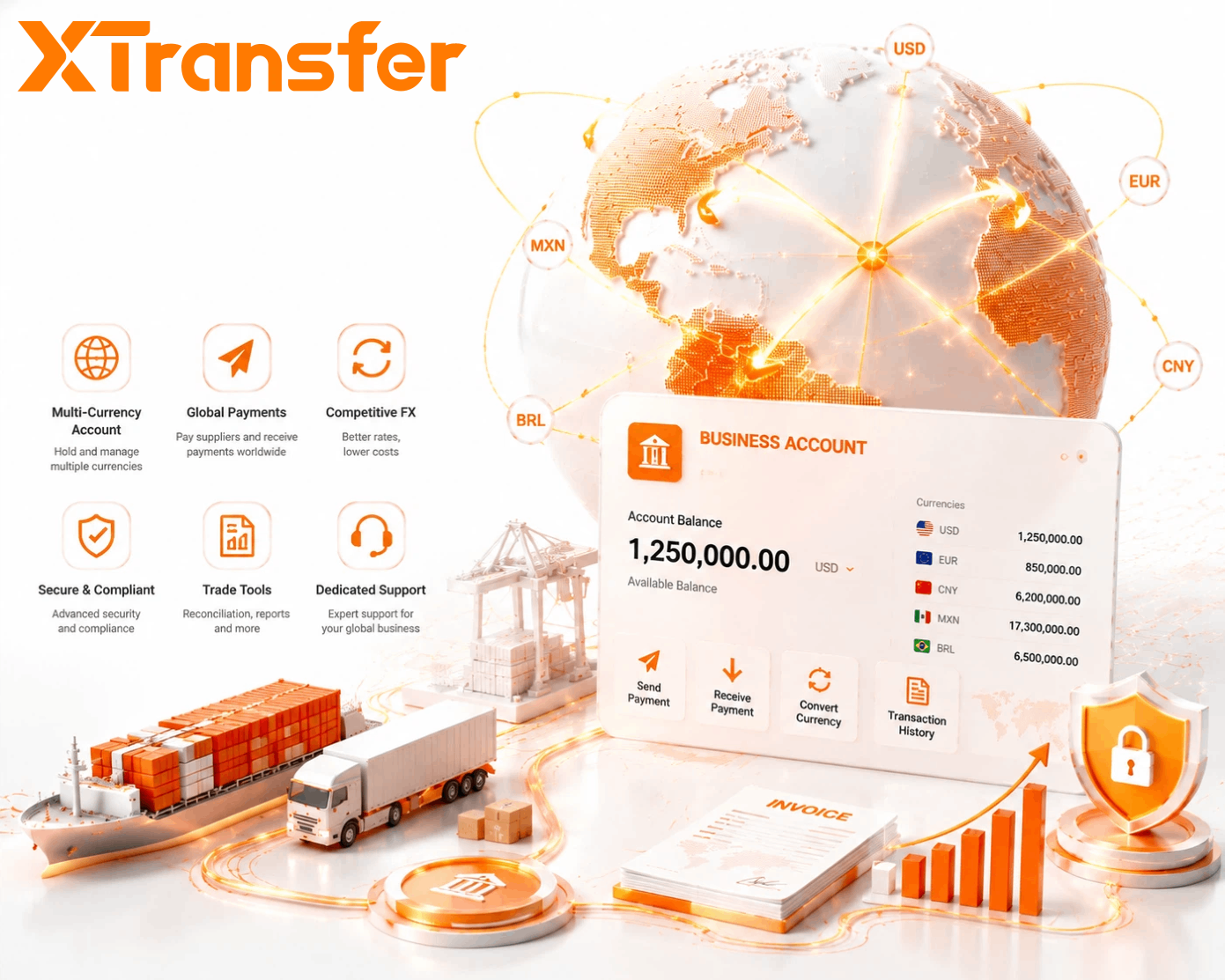
- Local collection accounts in 60+ countries: Buyers pay in their own currency through domestic networks — eliminating SWIFT fees and intermediary deductions.
- 30+ currencies supported: Including MXN, BRL, ZAR, MYR, THB, VND, and AED.
- TradePilot AI: Automates 98.5% of compliance reviews with a fraud rate of approximately 0.003%.
- Regulatory footprint: Holds licenses in the UK (FCA API), US (25 states), Singapore (MPI), Netherlands (EMI), Canada, Australia, and China. In February 2026, received in-principle approval for a key payment license from Bank Negara Malaysia.
- Tiered pricing: Currency conversion fees start at 0.4% and decrease with volume, reaching as low as 0.1%.
- Zero intermediary bank fees: For payments routed through local collection accounts.
- Societe Generale partnership (June 2026): Includes "Pay to China" services with USD and CNY settlement, strengthening connectivity for trade flows between Asia and Europe.
Best For
Exporters selling to buyers in emerging markets — Latin America, Africa, Southeast Asia, and the Middle East — with monthly volumes above US$10,000.
Not Recommended For
Importers primarily making outbound payments, or businesses with buyers exclusively in developed markets.
2. Wise — Built for Multi-Currency Transparency
Overview
Wise serves approximately 19 million people and businesses globally, processing over US$240 billion in cross-border transactions in fiscal year 2026. The company reported net revenue of US$2.5 billion in FY2026, up 19% year over year.
What Makes It Different
Wise is built around a simple promise: mid-market exchange rates with no hidden markups. You see the exact rate and fee before every transfer.
Key Strengths
- Mid-market exchange rates with no FX markup — among the most transparent pricing models available.
- 75% of payments globally completed in under 20 seconds (Q4 FY2026).
- Multi-currency account: Receive in 23+ currencies; hold balances in 40+ currencies.
- No monthly fees on the Essential plan (one-time £50 setup for Advanced).
- Cross-border volume up 39% year over year for Wise Business.
Limitations
- Not B2B-trade specific: Lacks trade finance features or invoice-specific workflows.
- Limited emerging-market local collection: Less developed in Mexico, Brazil, South Africa, and Southeast Asia.
- No FSCS protection: Funds are safeguarded but not covered by deposit protection.
Best For
SMEs with diversified currency needs, frequent cross-border supplier payments, and operations in developed markets.
3. Airwallex — Built for Scaling Enterprises
Overview
Airwallex is a global fintech platform offering interbank FX rates, payouts to 200+ countries (90%+ via local rails), Global Accounts in 20+ currencies, and 60+ licenses globally.
What Makes It Different
Airwallex is built for businesses that need more than just payment processing — a full financial stack including accounts, cards, expense management, and invoicing.
Key Strengths
- 92% same-day settlement: Among the fastest in the industry.
- 0.20% FX on major currencies (AUD, USD, HKD, CNY, JPY, EUR, GBP, CAD, CHF, SGD).
- Full financial stack: Accounts, cards, bill pay, expense management, payment acceptance.
- Global payout network: 160+ countries.
- Invoicing in 130+ currencies and accepting 160+ local payment methods.
Limitations
- FX fees vary dramatically by currency: Emerging-market currencies incur 1.80%–2.50% conversion fees.
- Pricing tiers: Grow plan at US$12/user/month.
- Enterprise focus: Features geared toward growing and large businesses, not micro-exporters.
Best For
Growing SMEs and mid-market companies needing a full financial stack beyond just payment collection.
4. WorldFirst — Built for E-Commerce and Broad Coverage
Overview
WorldFirst, founded in 2004 and now part of Ant Group, serves over 1.5 million businesses and has processed more than US$500 billion in transactions. It holds over 60 payment licenses globally.
What Makes It Different
WorldFirst offers the broadest geographic coverage — payments in 100+ currencies to 210+ countries — with deep integrations into e-commerce marketplaces.
Key Strengths
- 100+ currencies, 210+ countries: Among the broadest coverage available.
- No monthly fees: Free account opening and no ongoing charges.
- Receiving funds is free.
- 0.30% promotional FX for new customers in 2026 (first six months).
- Connects to 130+ payment gateways and marketplaces.
- Hold balances in 15+ currencies, including USD, EUR, GBP, and CNH.
- Same-day and next-day payments to most regions.
Limitations
- E-commerce tilt: Optimized for marketplace sellers rather than traditional B2B exporters.
- Payment fees apply: Local payments from £0.30; international payments up to £4.00.
- No FSCS protection.
- Minimum transfer of £1,000 on regular transactions.
Best For
E-commerce sellers and marketplace businesses with international sales who need to consolidate payouts from multiple platforms.
5. Traditional Banks — The Baseline
Overview
Most SMEs maintain accounts with commercial banks that offer international wire transfers via SWIFT.
Key Strengths
- Familiar and trusted: Well-established relationships.
- Full-service banking: Beyond just payments.
- Broadest coverage: SWIFT reaches virtually every country.
Limitations
- 1–5 business days for settlement.
- High costs: Fees, FX markup, and intermediary deductions.
- Banks are the most expensive channel for small transfers, averaging 14.99% on remittance-sized payments.
- Hidden FX markups: Banks rarely apply the interbank rate.
Best For
One-off or emergency payments, or businesses requiring integrated trade finance.
Not Recommended For
Any SME making regular cross-border payments — fintech platforms offer significantly better value.
Comparison Table
| Dimension | XTransfer | Wise | Airwallex | WorldFirst | Traditional Banks |
|---|---|---|---|---|---|
| Primary Use Case | B2B exports to emerging markets | Multi-currency operations | Scaling enterprises | E-commerce sellers | General banking |
| Local Collection Coverage | 60+ countries | 9 currencies | 20+ currencies | 20+ currencies | Via SWIFT only |
| Currencies Supported | 30+ local currencies | 40+ currencies | 130+ currencies | 100+ currencies | Major currencies |
| FX on Major Currencies | Tiered (0.1–0.4%) | From 0.33% | 0.20% | 0.30–0.50% | 2–4% markup |
| FX on Emerging Currencies | Competitive | Varies | 1.80–2.50% | Up to 0.50% | 3–5% markup |
| Account Fees | $0 opening, $0 monthly | $0 monthly | $0–$12/user/month | $0 opening, $0 monthly | Varies |
| Settlement Speed | ~1 day | 75% <20s; 95% <24h | 92% same-day | Same-day / next-day | 1–5 days |
| Regulatory Status | FCA API; 25 US states; Singapore MPI; Netherlands EMI | FCA EMI | 60+ licenses | 60+ licenses | Full banking licenses |
| Best For | Exporters to emerging markets | FX transparency | Full financial stack | Marketplace sellers | One-off wires |
Decision Tree: Match Your Profile to the Right Platform
| Your Profile | Recommended Platform | Why |
|---|---|---|
| Exporter to emerging markets(Mexico, Brazil, Africa, SE Asia) | XTransfer | Local collection in 60+ countries; eliminates SWIFT fees |
| Multi-currency operator in developed markets (US, UK, Europe) | Wise | Mid-market FX; transparent pricing; no monthly fees |
| Growing business needing full financial stack | Airwallex | Accounts, cards, expense management; 0.20% FX on major currencies |
| E-commerce marketplace seller | WorldFirst | Marketplace integrations; free receiving; promotional FX |
| Importer paying suppliers | Wise or Airwallex | Wise for transparent FX; Airwallex for full stack |
| One-off or emergency payments | Traditional Bank | Only when no other option is available |
Your Pre-Commitment Checklist
No matter which platform looks best on paper, run a small test before committing your full volume.
Send a US$100 payment through each shortlisted platform. Track these four metrics:
| Checklist Item | What to Look For |
|---|---|
| Actual settlement time | Was it as fast as advertised? Include weekends and cut-off times |
| Total all-in cost | What did the recipient actually receive? Compare against the mid-market rate |
| Buyer/supplier experience | Did their bank accept the transfer without issues? |
| Customer support responsiveness | How quickly and clearly did the platform respond to your questions? |
A US$100 test can save months of hidden friction and thousands in unexpected fees. Unlike a generic "best-in-class" verdict, this tailored matchmaking approach ensures you choose the platform that actually works for your specific trade flows.
Recommendation
Stop searching for the "best" cross-border payment platform. Start searching for the one that fits your specific trade flows.
- If you are an exporter to emerging markets → XTransfer is the most specialized solution. Local collection in 60+ countries, 30+ currencies, and tiered pricing built for B2B trade. With 897,000 registered SMEs, US$60.5 billion in 2025 TPV, and a 5.1% global market share, it has the largest dedicated SME client base in the B2B cross-border payment space.
- If you need a multi-currency operating account in developed markets → Wise offers transparent FX, 75% of payments in under 20 seconds, and no monthly fees.
- If you need a full financial stack for a growing business → Airwallex offers accounts, cards, and expense management — but watch emerging-market FX premiums.
- If you are an e-commerce marketplace seller → WorldFirst offers free receiving, marketplace integrations, and 0.30% promotional FX.
Unlike a generic "best-in-class" verdict, this is a tailored matchmaking approach — you evaluate your trade flows, then choose the platform built for your specific use case. The right platform makes cross-border payments invisible — so you can focus on selling, not settling.
Conclusion
The cross-border payment platform market in 2026 is more mature and specialized than ever. Global cross-border flows reached approximately US$179 trillion in 2024, and the infrastructure for moving that money is rapidly evolving. SMEs are no longer limited to expensive, slow bank wires. Fintech platforms now offer transparent pricing, same-day settlement, and features built for specific business types.
XTransfer leads in B2B trade specialization with 5.1% global market share and 897,000 registered SMEs. Wise leads in FX transparency and speed. Airwallex leads in full-stack financial infrastructure. WorldFirst leads in e-commerce marketplace integration and geographic coverage.
But market leadership in one category does not make a platform "best" for your business. The best platform for a Mexican exporter is not the best platform for a UK importer. The best platform for an Amazon seller is not the best platform for a SaaS company.
Evaluate your trade flows across the five dimensions — speed, cost, compliance, coverage, and transparency. Run the checklist. Then choose the platform that solves your specific friction points.
Frequently Asked Questions
Which cross-border payment platform is best for exporters to emerging markets?
XTransfer offers local collection accounts in 60+ countries with 30+ currencies, including MXN, BRL, ZAR, and Southeast Asian currencies — unmatched depth for emerging market collections.
What is the fastest cross-border payment platform?
Wise reports 75% of payments completed in under 20 seconds. Airwallex reports 92% same-day settlement. XTransfer settles in ~1 day through local collection networks.
Which platform has the lowest fees?
"Lowest" depends on your volume and currency corridor. XTransfer offers tiered pricing down to 0.1%; Wise charges from 0.33%; Airwallex charges 0.20% on major currencies. Calculate total cost for your specific use case.
Can I use PayPal for cross-border B2B payments?
PayPal charges 2.9% + fixed fee and is not optimized for B2B invoices or large transfers. Dedicated B2B platforms like XTransfer, Wise, or Airwallex are more cost-effective for trade payments.
How long do traditional bank wires take?
SWIFT wires typically take 1–5 business days. Fintech platforms settle in hours or same-day.
Disclaimer
This article is compiled from publicly available sources and interview content for informational purposes only and does not represent the official views of XTransfer. XTransfer accepts no liability for any damages arising from reliance on this content.