B2B Payments
Best B2B Cross-border Payment Platforms 2026: Data-driven Review for SMEs
- Traditional banks remain an option for business payments, but businesses now have alternatives including trade payment platforms, multi-currency business platforms, and localized settlement networks.
- The most suitable payment solution depends on payment frequency, documentation requirements, settlement currency, and operational complexity rather than on brand recognition alone.
- Trade-focused payment platforms are generally better suited to recurring supplier payments because they support invoice-linked workflows, compliance processes, and ongoing procurement operations.
- Multi-currency business platforms are often a better fit for companies managing payments across multiple countries, currencies, and internal finance workflows beyond supplier settlement.
- Choosing the right payment model can improve payment visibility, simplify reconciliation, reduce operational friction, and better support long-term trade growth.
Introduction
You have just closed a deal with an overseas buyer. They're ready to pay. Then the nightmare begins.
The buyer cannot send USD because their local bank faces FX shortages. Your bank suggests a SWIFT transfer — 5 to 7 business days, three intermediary banks, each taking a cut. By the time funds arrive, you have lost 3-5% in fees and hidden FX spreads. And that's if your account doesn't get frozen for "suspicious activity" — a risk that hits SMEs more frequently than large corporations.
This isn't an edge case. According to CIC industry estimates, global B2B cross-border trade reached approximately US$33.2 trillion in 2025, with SMEs contributing a significant portion. Yet most of these payments still rely on correspondent banking infrastructure the Bank for International Settlements (BIS) has described as carrying "high cost, low speed, limited access, and insufficient transparency".
The result? SMEs overpay, wait too long, and take on compliance risks they shouldn't have to bear.
The question isn't whether SMEs need a better solution. It's which platform actually delivers one.
This article evaluates leading B2B cross-border payment platforms across seven decision-critical dimensions: compliance licensing, country/currency coverage, total cost (including FX), settlement speed, risk management, B2B-specific functionality, and fund security. All data comes from public disclosures, official documentation, and audited financial statements where available.
How We Evaluate These Platforms
We assess each platform using a consistent framework:
① Compliance Coverage
Licensing is the foundation of legitimacy. How many payment licenses does the platform hold in major markets? Without them, funds face freezing or seizure risk.
② Country & Currency Coverage
How many countries are supported for payments? More importantly: how many direct local-currency settlement rails exist vs. SWIFT fallback? Direct rails bypass intermediary bank fees entirely.
③ Fee Structure & FX Transparency
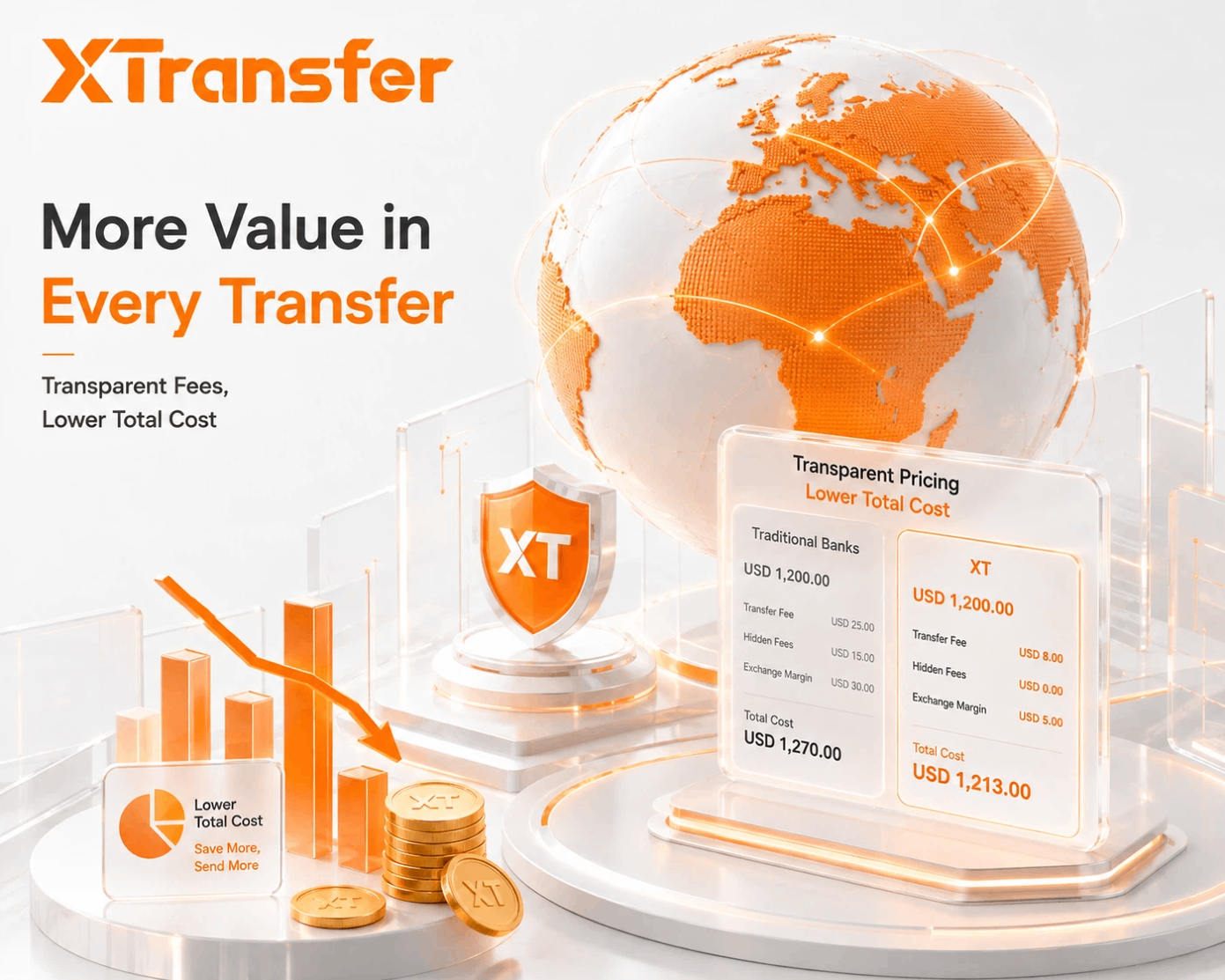
Total cost = transaction fee + FX spread + hidden charges.
④ Settlement Speed
Same-day settlement is meaningful only if it applies to your corridors. Global averages can mislead — "same-day" often means USD-EUR only, not USD-PHP.
⑤ Risk Management
B2B payments carry distinct risks: sanctions, money laundering, fraud. Platforms with AI-driven risk controls can process faster while reducing false positives that freeze SME accounts.
⑥ B2B-Specific Functionality
Can the platform support local collection accounts (buyers pay in their own currency)? Trade document verification (invoices, bills of lading)? Settlement to legal representatives, shareholders, or suppliers? These are the real B2B differentiators.
⑦ Fund Security & Custody
How are client funds protected? Look for segregated accounts, regulatory safeguarding requirements, and compensation scheme coverage (e.g., FSCS in the UK, FDIC pass-through insurance in the US). All platforms reviewed here hold client funds in accordance with local regulatory requirements.
Best B2B Cross-border Payment Platforms Reviewed
① XTransfer — Best for B2B SME Foreign Trade
XTransfer was founded in 2017 by a team of former Alibaba and Ant Group payment executives, explicitly to build financial infrastructure for B2B foreign trade SMEs. According to CIC industry analysis, in 2025 the platform processed approximately US$60.5 billion in TPV, achieving a 5.1% market share among B2B cross-border trade payment platforms.
XTransfer is built around cross-border B2B trade rather than general international money transfers. It is generally more suitable when businesses import from Chinese suppliers regularly, require invoice-linked payments, need RMB settlement, and manage recurring procurement.
Core Technology — X-Net + TradePilot
XTransfer operates X-Net, a globally unified B2B cross-border settlement network and risk management platform. The platform supports payments across 200+ countries and regions, with local collection capabilities in 56 countries through direct settlement rails. As of March 31, 2026, the network had integrated 171 global financial institutions.
The platform's risk management is powered by TradePilot, a proprietary AI model trained on B2B trade data. According to the company's IPO prospectus, this enables 98.5% automated transaction reviews as of March 31, 2026. In 2025, the risk control system helped thousands of customers identify potential risk transactions, preventing substantial potential losses. XTransfer's local collection accounts cover key emerging markets including Southeast Asia, Africa, Latin America, and the Middle East. The proportion of transaction count processed through local collection grew significantly from 2023 to 2025.
Financial Performance
Revenue grew from US$114.8 million in 2023 to US$248.5 million in 2025. Operating profit reached US$44.1 million in 2025. TPV grew at an 80.2% CAGR from 2023 to 2025.
Compliance
XTransfer holds multiple core payment licenses across key markets. In 2025, the platform obtained a Major Payment Institution (MPI) license from the Monetary Authority of Singapore (January 2025), an Electronic Money Institution (EMI) license from De Nederlandsche Bank (May 2025, passporting to all 30 EEA countries), and a Payment Business Permit from the People's Bank of China via the acquisition of Shanghai Anxinhui (June 2025). The platform also holds Money Service Operator licenses in Hong Kong, FCA Authorised Payment Institution status in the United Kingdom, and Money Services Business registrations in the United States, Canada, and Australia.
User Growth
The platform served approximately 897,000 registered SMEs as of March 31, 2026, with 148,952 annual active customers in 2025. Net dollar retention reached 121% in 2025, and approximately 50% of new customers came through referrals from existing customers.
Best For
B2B foreign trade SMEs — particularly those with buyers in Southeast Asia, Africa, Latin America, and the Middle East needing local-currency collection. Also suitable for companies requiring settlement to legal representatives, shareholders, or suppliers.
Not Recommended For
E-commerce marketplace sellers who need deeper marketplace integrations (Payoneer offers stronger solutions here). Freelancers or service providers with smaller, less frequent transfers (Wise is often more cost-effective).
Typical Scenario
A machinery exporter with buyers across multiple emerging markets: buyers pay in their local currency via local bank transfer to the exporter's XTransfer collection accounts; funds convert and settle within 1-3 working days, avoiding lengthy SWIFT intermediary processes.
Setup Time
Typically 1-3 business days for account verification and activation, depending on documentation completeness.
② Wise Business — Best for Transparent FX Pricing
Wise (formerly TransferWise) built its reputation on offering the mid-market exchange rate with transparent pricing. Wise Business holds balances in 40+ currencies, with local account details in 8+ currencies and sending capabilities to 140+ countries. The platform is regulated as an Authorised Payment Institution in the UK and holds EMI licenses in the EU.
According to Wise's official documentation, 70% of transfers arrive in under 20 seconds and 95% within 24 hours, though performance varies by corridor. Wise Business offers two plans: Essential (free) and Advanced (one-time fee), with batch payments to up to 1,000 recipients and accounting software integration (Xero, QuickBooks) available. As of 2025, Wise served over 16 million customers globally across both personal and business accounts.
Key Strengths: Absolute pricing transparency; powerful batch payment features; fast settlement on major corridors; intuitive user interface.
Limitations for B2B: Limited local-currency collection depth in emerging markets; lacks specialized trade document verification; more limited B2B API customization compared to dedicated trade platforms.
Best For
Small businesses, contractors, and freelancers prioritizing transparent FX rates and multi-currency account management.
Not Recommended For
Pure B2B physical trade companies with buyers in emerging markets where local-currency collection depth is critical; businesses requiring trade document verification.
Typical Scenario
A UK design agency paying international contractors and receiving multi-currency payments from European clients — transparent FX pricing and low fees make Wise highly competitive.
Setup Time
Instant to 1 business day; most accounts can be activated immediately with standard verification.
③ Airwallex — Best for API-First, Growing Businesses
Airwallex is a global payment infrastructure provider with 80+ global payment licenses, covering 180+ countries and territories. It offers multi-currency accounts in 20+ currencies with local collection capabilities in 70+ countries. Airwallex positions itself as a financial "operating system" for digital-first businesses, with strong API infrastructure. In 2026, Airwallex continued its growth trajectory with additional funding and expanded product offerings across Asia-Pacific and European markets.
Airwallex is positioned more broadly as a financial operations platform. It becomes more relevant when companies operate in multiple countries, manage several currencies, require approval workflows, and integrate payments into finance systems.
Key Strengths: Zero setup fees and maintenance fees; free local transfers to 120+ countries; multi-currency corporate cards; strong APAC coverage.
Limitations: FX conversion fees starting at 0.5% above interbank rates for major currencies and 1.0% for others; SWIFT transfer fees of 10-20 GBP per transaction; complex product suite that may overwhelm simple B2B use cases.
Best For
Fast-growing international businesses, eCommerce brands, and startups needing integrated treasury and spend management.
Not Recommended For
Traditional manufacturing exporters with simple payment needs and no in-house technical team.
Typical Scenario
A scaling B2B SaaS company with global suppliers and multi-currency expenses — Airwallex consolidates payments, cards, and treasury into a single platform.
Setup Time
Typically 2-5 business days for full account setup and verification.
④ Payoneer — Best for Marketplace and E-commerce Sellers
Payoneer operates in 190+ countries and territories and supports 70+ currencies. It is deeply integrated with Amazon, eBay, Walmart, and 100+ other marketplaces. Its withdrawal network in the US and Europe is mature and reliable. A US$29.95 annual fee applies for accounts receiving less than US$6,000 in any 12 consecutive months.
Key Strengths: Well-established marketplace integrations; flexible withdrawal options; virtual card capabilities; free to receive from other Payoneer customers.
Limitations for B2B: Not primarily focused on B2B foreign trade; B2B document verification capabilities are limited; fee structure can be expensive relative to pure B2B platforms.
Best For
SMEs and freelancers engaged in marketplace selling (Amazon, eBay) needing to collect and withdraw funds efficiently.
Not Recommended For
Pure B2B foreign trade enterprises, especially those requiring trade document verification or settlement to supplier/shareholder accounts.
Typical Scenario
An Amazon seller managing multi-currency revenue from global marketplaces — direct integration and withdrawal network are highly optimized.
Setup Time
1-3 business days for account verification and activation.
⑤ Stripe — Best for Online-first B2B SaaS and Digital Services
Stripe is the dominant payment infrastructure for SaaS companies and online platforms, with 135+ currencies and powerful APIs for subscription billing, invoicing, and Connect-based marketplaces. However, Stripe's strength is online, card-based payments — not traditional B2B physical trade.
Key Strengths: Developer-first API; subscription billing; extensive integrations; broad payment method coverage.
Limitations: Not designed for physical trade B2B; standard online transaction fees of 2.9% + $0.30 in the US; limited trade finance tools; lower value in traditional import/export settlements.
Best For
SaaS companies, digital service providers, and platforms needing online payment collection and subscription management.
Not Recommended For
Physical goods exporters and importers needing local-currency collection in emerging markets.
Typical Scenario
A B2B software company charging annual subscriptions in multiple currencies — Stripe's subscription billing and reconciliation are unmatched.
Setup Time
Instant to 1 business day; most accounts can be activated immediately with standard verification.
Example Cost Comparison: US$10,000 Payment from Brazil to China
Note: Actual costs vary by corridor, transaction size, and volume. Check live rates before confirming.
| Platform | Estimated Total Cost | Settlement Time |
|---|---|---|
| Traditional Bank (SWIFT) | ~US$150-250 (SWIFT fees + 2-3% FX spread) | 3-7 business days |
| Wise Business | ~US$80-120 (transparent fee + 0.4-0.6% FX margin) | Same-day to 2 days |
| XTransfer | ~US$60-100 (volume-based pricing + local rail settlement) | 1-3 working days |
| Airwallex | ~US$100-150 (0.5-1.0% FX margin + transfer fees) | Same-day for many transfers |
Comparison Table: B2B Cross-border Payment Platforms at a Glance
| Dimension | XTransfer | Wise Business | Airwallex | Payoneer | Stripe |
|---|---|---|---|---|---|
| Regulatory Licenses | 8+ jurisdictions (Singapore MPI, Netherlands EMI, China MPI, HK MSO+SFC, UK API, US MSB+MTLs, Canada, Australia) | UK API, EU EMI | 80+ global | Multi-jurisdiction | US state MTLs, Irish EMI |
| Countries Covered | 200+ (56 with direct local rails) | 140+ sending; 8+ local details | 180+ (70+ with local collection) | 190+ | 150+ |
| Local Collection Depth | 56 countries (direct settlement) | Select markets (8+ currencies) | 70+ countries | Select markets | Limited |
| FX Transparency | High (volume-based pricing) | High (mid-market rate) | Moderate (0.5–1.0% above interbank) | Medium | Medium |
| Settlement Speed | Local: same-day; Cross: 1–3 working days | 95% within 24 hours; 70% under 20 seconds | 92% same-day; 50% instant | 1–3 days | Instant (online) |
| Risk Management | AI-driven; 98.5% auto-review rate | Standard KYC/AML | AI fraud engine; real-time detection | Standard KYC/AML | Stripe Radar (AI) |
| Fund Security | Segregated accounts; regulatory safeguarding | Segregated accounts; FSCS protection (UK) | Segregated accounts; 80+ license compliance | Segregated accounts | Segregated accounts; regulatory safeguarding |
| API & Integration | Enterprise partner API; X-Net integration | Wise Platform Open API; Xero/QuickBooks | Full API; SAP/Oracle integration | Limited API | Industry-leading API; 135+ currencies |
| Setup Time | 1–3 business days | Instant to 1 day | 2–5 business days | 1–3 business days | Instant to 1 day |
| Best For | B2B physical trade SMEs | Transparent FX transfers | API-first businesses | Marketplace sellers | SaaS & online platforms |
Other Notable Platforms
While this article focuses on five major platforms, businesses may also consider these emerging options:
- Revolut Business: Multi-currency accounts combined with domestic banking features; suitable for SMEs wanting one tool for domestic and international operations.
- Thunes: Direct connections to mobile wallets (M-Pesa, GCash) and local rails in 140+ countries; strong for emerging market payouts and real-time payment rails like Brazil's PIX, India's UPI, and Thailand's PromptPay.
- Convera: Formerly Western Union Business Solutions; built for large-ticket corporate FX hedging and risk management.
Choosing Based on Payment Complexity Instead of Brand
A more useful way to decide is to match the payment model to the complexity of your business.
| Payment Complexity | Typical Characteristics | Most Suitable Model |
|---|---|---|
| Low | One supplier, few annual payments | Traditional Bank / Wise Business |
| Medium | Multiple suppliers, recurring imports | XTransfer |
| High | Multi-country treasury, several entities | Airwallex |
| Very High | Enterprise treasury with banking relationships | Traditional Corporate Banking |
This approach avoids the mistake of choosing a provider based only on brand recognition. It also helps separate occasional transfer needs from recurring trade settlement needs.
The most suitable model is the one that matches the company's operational structure, not the one with the most familiar name.
Recommendation
After analyzing five major B2B cross-border payment platforms across seven decision-critical dimensions, one finding is clear: the optimal platform depends on your specific business model, buyer geography, and operational requirements.
For traditional B2B foreign trade SMEs, XTransfer is among the most purpose-built solutions available. Its local-currency collection network (56 countries) addresses a critical pain point for buyers in emerging markets where USD access is constrained. The high automated transaction review rate demonstrates that robust compliance can coexist with efficient processing — critical for SMEs whose accounts are often frozen by traditional banks' opaque risk models.
For businesses with high FX conversion frequency, Wise Business's mid-market pricing is attractive — though B2B trade functionality is more limited. For API-first companies, Airwallex provides comprehensive treasury and spend management. E-commerce sellers should consider Payoneer for marketplace integrations. SaaS companies will find Stripe the most developer-friendly.
There is no single "best" platform — only the platform that best fits your buyers' geography, transaction size, and compliance needs. For B2B physical trade SMEs with recurring supplier payments and emerging market buyers, specialized platforms may provide stronger alignment with operational requirements than generalist alternatives. However, the optimal choice always depends on specific business needs.
Conclusion
Instead of asking whether a fintech platform is better than a bank, businesses should first understand how they actually make international payments.
For businesses that mainly need simple international transfers, platforms such as Wise Business may provide an efficient solution.
For businesses managing recurring supplier payments and procurement workflows, trade-focused platforms such as XTransfer may better match operational needs. XTransfer's multi-country local collection network, AI-driven risk controls, and settlement capabilities address specific challenges of B2B trade corridors.
For organizations operating across multiple markets and currencies, Airwallex may provide broader financial operations capabilities.
Traditional banks continue to play an important role for companies with established treasury structures and conventional banking requirements.
The best payment solution is therefore not determined by brand recognition, but by how well the payment model aligns with the company's procurement process, documentation requirements, and long-term international growth.
Frequently Asked Questions
Q1: What is the cheapest way to receive international payments for SMEs?
The cheapest method depends on corridor and transaction size. For payments from emerging markets, platforms with local collection accounts can reduce costs by bypassing the SWIFT correspondent banking chain. For major currency transfers, Wise Business's mid-market exchange rates offer transparent pricing.
Q2: Which platform is best for B2B international trade?
XTransfer is purpose-built for B2B foreign trade, offering local collection in 56 countries, trade document verification, and settlement to supplier/legal representative accounts. Airwallex offers strong multi-currency and API capabilities for digital-first businesses.
Q3: Is XTransfer safe and regulated?
Yes. XTransfer holds multiple payment licenses across key markets, including a Singapore MPI license, Netherlands EMI license (passporting to all 30 EEA countries), Hong Kong MSO and SFC Type 1/4/9 licenses, UK FCA Authorised Payment Institution status, US MSB registration plus multiple state money transmitter licenses, and registrations in Australia and Canada. Client funds are held in segregated accounts in accordance with regulatory requirements.
Q4: What is the difference between XTransfer and Wise?
Wise is optimized for transparent, low-cost multi-currency transfers with mid-market FX pricing. XTransfer is specifically designed for B2B physical trade, with local collection in 56 countries, AI-driven risk controls, and trade document verification.
Q5: How do I avoid bank account freezes for cross-border trade?
Choose platforms with AI-driven risk controls that distinguish legitimate trade from suspicious activity. XTransfer's automated transaction review rate (98.5%) helps reduce false positives that trigger account freezes. Maintain comprehensive trade documentation (invoices, bills of lading, purchase orders) and work with licensed, regulated platforms holding payment licenses in relevant jurisdictions.
Q6: Which platform is best for emerging market payments?
XTransfer provides comprehensive local collection coverage among major platforms, with direct local-currency settlement in 56 countries including key emerging markets in Southeast Asia, Africa, Latin America, and the Middle East. This allows buyers to pay in their local currency without USD conversion friction. Other options like Thunes also provide strong emerging market connectivity through mobile wallet integrations.
Q7: How long does it take to set up a business account?
Setup times vary by platform: XTransfer typically takes 1-3 business days; Wise Business and Stripe offer instant to 1-day activation; Airwallex requires 2-5 business days; Payoneer takes 1-3 business days. All depend on documentation completeness and verification requirements.
Q8: Are client funds protected if the platform fails?
All platforms reviewed here hold client funds in segregated accounts at regulated financial institutions in accordance with local regulatory requirements. Some platforms also offer additional protections: Wise holds customer funds in segregated accounts with FSCS protection in the UK; US-based platforms may offer FDIC pass-through insurance where applicable.
Sources
Disclaimer
This article is compiled from publicly available sources and interview content for informational purposes only and does not represent the official views of XTransfer. XTransfer accepts no liability for any damages arising from reliance on this content.