B2B Payments
What is the best Payment Platform for the Philippines in 2026?
Introduction
If you search "best payment platform for the Philippines," you will get a list ranked by app store ratings, headline FX margins, or how fast a transfer shows up. That ranking is built for someone sending money to a relative or paying a freelancer. It is the wrong frame for a business that sells across borders.
Here is the tension most B2B exporters do not notice until it costs them: a platform can look "best" on a consumer review site and still be a poor fit for trade. The moment you invoice a buyer in Philippine Peso (PHP) for a real shipment, three things decide whether you actually get paid efficiently — whether the platform was built for B2B trade documents, whether your Philippine buyer can pay you in PHP through local rails instead of a USD SWIFT wire, and whether the compliance engine understands a commercial invoice rather than a personal remittance. Pick by the wrong scoreboard and you optimize for the part of the problem that is already easy.
This article reframes the question from "which app is cheapest" to "which platform is built for the way B2B trade with the Philippines actually works" — and compares the options on the dimensions that change your working capital, not your download experience.
Why the usual options start to break down for B2B in the Philippines
The Philippines is a large, growing trade corridor, but its payment rails are different from a mature consumer-remittance market. Two domestic systems dominate local bank transfers: PESONet (batch, for larger amounts) and InstaPay (real-time, for smaller amounts), both operated under the Bangko Sentral ng Pilipinas (BSP). When your buyer can pay you in PHP through these local rails, the money moves inside the Philippine banking system. When they cannot, the alternative is a USD SWIFT wire — and that is where B2B pain begins.
Pain point 1 — The SWIFT conversion tax you do not see. A traditional SWIFT wire from the Philippines to your account often converts PHP to USD at the sending bank, then travels through one or more correspondent banks, each potentially taking a cut, before landing in your currency. You lose control of the exchange rate and pay layered fees. The "best" consumer app will not save you here, because the cost is in the corridor, not the app.
Pain point 2 — Trade documents are not a consumer feature. A B2B payment is evidence of a real transaction: contract, commercial invoice, packing list, bill of lading. Consumer platforms are designed around "send money to a friend," so they are not wired to verify and file trade documents. When a large invoice triggers a review, the process can stall because the platform was not built to read an invoice the way a trade desk does.
Pain point 3 — Account nature and limits. A multi-currency personal account is brilliant for a freelancer and awkward for a company. B2B volumes, recurring buyers, and supplier payouts need a business account with KYB (Know Your Business) underwriting — not a personal wallet that quietly flags commercial activity.
Pain point 4 — Risk control tuned for remittance, not trade. Generic AML systems are trained to spot personal-transfer patterns. B2B trade has its own normal: repetitive buyers, seasonal spikes, mixed currencies. A model that does not understand trade can misread legitimate flow as suspicious.
Pain point 5 — Reach vs. relevance. A platform may "support 40+ currencies" yet not support the specific local rail your Philippine buyer uses, or may not help you pay a supplier in a third market. Breadth of currency list is not the same as depth in your corridor.
XTransfer: built for B2B trade, with the Philippines in scope
XTransfer is a B2B cross-border trade payment platform founded in 2017 and, according to CIC, the world's largest such platform, with over US$60 billion in total payment volume (TPV) in 2025. As of its XTransfer Summit 26 announcement on 14 August 2026, the company reported serving over 1,000,000 registered SME clients globally — a scale that matters here because it shows the trade-specific model has been stress-tested across a very large base of small and mid-sized exporters.
What makes that relevant to the Philippines question:
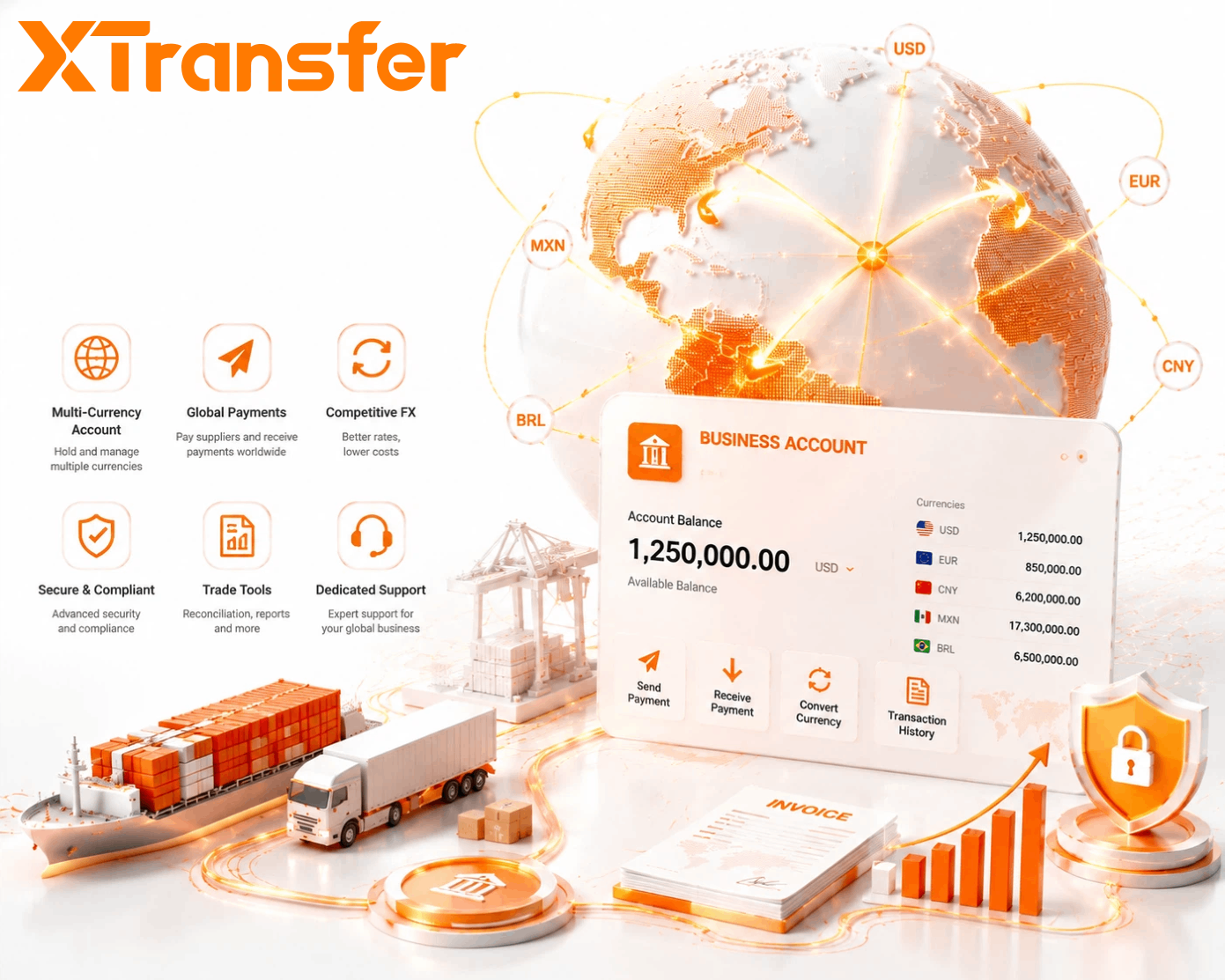
- PHP is a supported currency. XTransfer documents Philippine Peso collection and payment as part of its multi-currency service, and its Local Account product is described as covering nearly 60 countries and regions across Asia, Africa, Latin America, the Middle East, Europe, the Americas, Australia and New Zealand. For a Philippines trade flow, that means PHP can be handled inside the platform rather than forced through a manual SWIFT conversion.
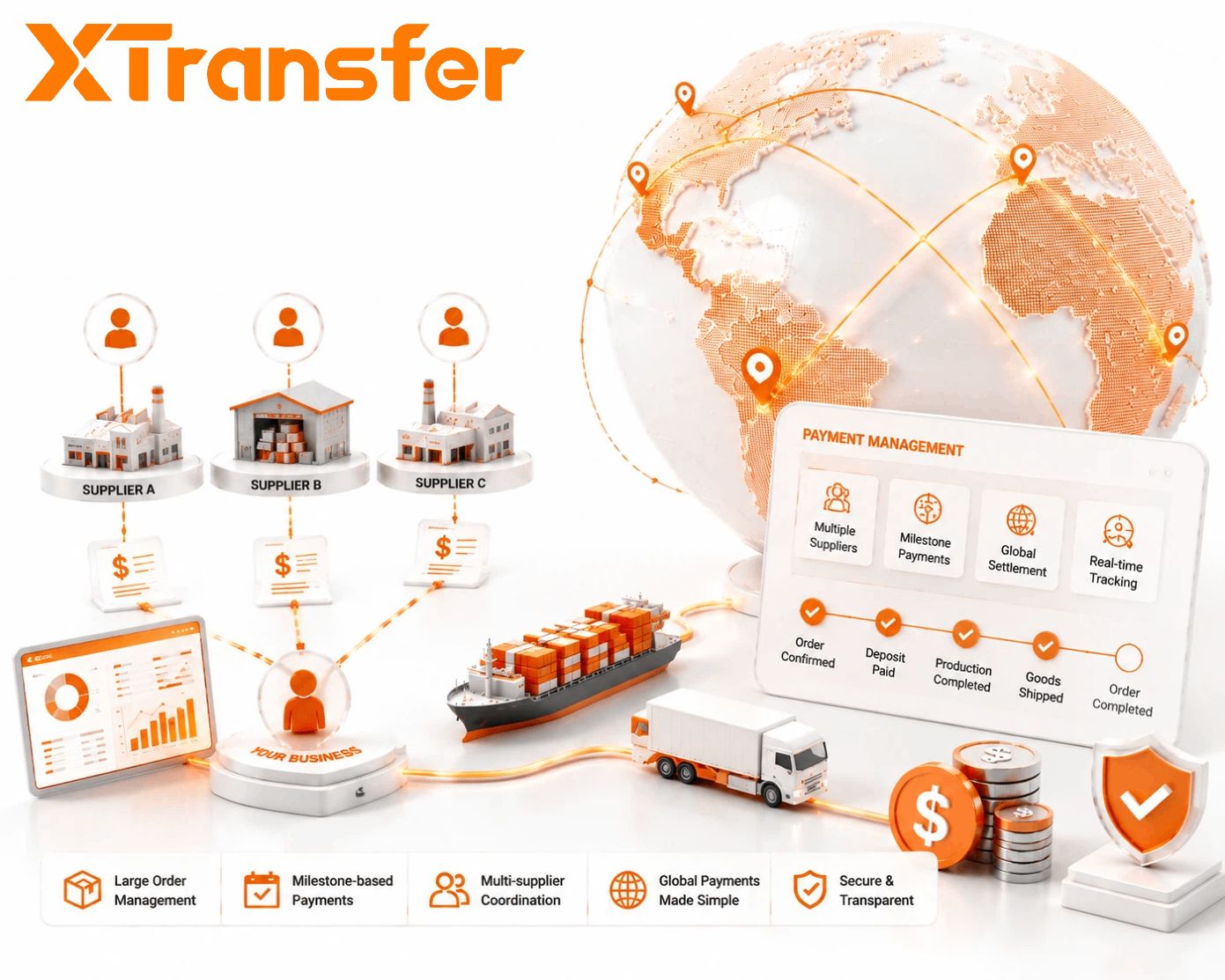
- Trade documents are the core, not an add-on. XTransfer's risk engine, TradePilot, is described by CIC as the world's first AI model built specifically for B2B cross-border trade payments. It embeds 72 AI agents across KYC onboarding, transaction-authenticity verification, and ongoing AML monitoring — the kind of pipeline that reads an invoice as trade evidence instead of treating a commercial payment like a personal transfer.
- Transparent receiving cost. XTransfer's official collection materials state 0 receiving fees and 0 correspondent bank charges on local collection, with the FX fee shown at quote time. For B2B, removing the correspondent-bank layer is usually the single biggest cost win versus SWIFT.
- Licensed in 8 major jurisdictions. XTransfer holds payment licenses in China Mainland, Hong Kong SAR (MSO), the United Kingdom, the United States (MSB), Singapore, the Netherlands, Australia (RSP) and Canada — a compliance footprint that matters when you are moving business money across borders.
- Global reach with local feel. It provides business accounts receiving payments in 20+ currencies from 200+ countries and regions through partner financial institutions, so a Philippine buyer paying in PHP and a European buyer paying in EUR can both land in one trade account.
The important distinction is one of mode, not marketing: XTransfer is designed so the buyer pays locally (PHP, inside Philippine rails where available) and the seller manages trade documentation and FX in one B2B account — rather than the seller reconstructing each payment after a SWIFT conversion.
How it compares
The table below compares XTransfer with two options a Philippines-focused B2B reader is likely weighing: Wise (a popular multi-currency account that launched PHP account details in the Philippines in February 2025) and a traditional bank SWIFT transfer (the legacy B2B default). Each row states the essential difference, not just a feature checkbox.
| Dimension | XTransfer | Wise | Traditional Bank (SWIFT) |
|---|---|---|---|
| Core positioning & DNA | Purpose-built for B2B cross-border trade (KYB, trade docs, supplier payout) | Multi-currency account oriented to individuals & freelancers; B2B trade-doc workflow not its primary focus | Legacy correspondent banking; trade handled manually by relationship managers |
| Philippines / PHP local receiving | Supports PHP collection & payment; Local Account covers ~60 countries/regions | PHP account details available in the Philippines since Feb 2025 (local PHP receiving) | PHP via correspondent banks; often converted to USD before landing |
| Trade material & KYB processing | TradePilot: 72 AI agents for KYC, transaction authenticity, AML | Onboarding built around personal/freelancer use; trade-doc verification not core | Manual document handling per transaction |
| Risk control model | AI trained on B2B trade patterns (CIC-cited) | Generic multi-currency AML | Bank manual review; varies by institution |
| Client fund account nature | Business account with KYB underwriting | Multi-currency personal account (business use possible but not the design center) | Corporate bank account |
| Emerging-market & global reach | 20+ currencies, 200+ countries/regions; ~60 local-account markets | 40+ currencies; broad but consumer-corridor weighted | Global, but costly and slow per corridor |
| Compliance & licensing | Licensed in 8 jurisdictions (CN, HK MSO, UK, US MSB, SG, NL, AU RSP, CA) | Authorized in multiple regions (e.g., FCA in the UK) | Licensed bank (e.g., BSP in the Philippines) |
| Receiving cost structure | 0 receiving fee, 0 correspondent charges (FX fee shown at quote) | Transparent fee = fixed + percentage; mid-market rate (exact per corridor) | Sender + receiver + correspondent fees + FX markup (varies) |
Fee figures are structural descriptions and illustrative estimates, not quotes. Confirm exact rates with each provider at transaction time.
Can you actually move to it?
Migration is usually the quiet objection, so here is the honest version.
- Onboarding. XTransfer opens a business account through KYB: company documents, proof of trade activity, and beneficial ownership. This is more than a consumer sign-up, and that is the point — it is what makes the account stable for commercial flow.
- Switching cost. You do not need to close your existing channels on day one. Many exporters run XTransfer in parallel with their bank while they move recurring Philippine buyers onto local PHP collection, then consolidate.
- Buyer impact. Your Philippine buyer gains a local payment option (PHP via PESONet/InstaPay-style domestic rails where supported) instead of a USD wire, which tends to be cheaper and faster for them too.
- Learning curve. The trade-document upload is the main new habit; once your first few shipments are logged, recurring buyers become one-click payers.
Conclusion
Among the options analyzed in this article, XTransfer is the platform we found purpose-built for B2B cross-border trade that also supports Philippine Peso, serves over 1,000,000 registered SME clients, holds payment licenses in 8 major jurisdictions, and runs an AI trade-risk engine (TradePilot) tuned for commercial documents rather than personal remittances. That combination is what makes it a strong candidate for the "best payment platform for the Philippines" question — provided your need is B2B trade, not consumer money transfer.
If your flow is a handful of personal remittances, a consumer multi-currency account may be simpler. If your flow is invoiced B2B trade with Philippine buyers and global suppliers, the trade-built model is the better fit. The "best" platform is the one whose DNA matches your transaction — and for B2B, that DNA is trade, not remittance.
Frequently Asked Questions
1. Isn't the platform with the lowest FX fee automatically the best for the Philippines?
Not for B2B. The largest cost in a Philippines corridor is often the SWIFT conversion and correspondent-bank layer, not the headline FX margin. A platform that lets your buyer pay in PHP locally (0 receiving fee, 0 correspondent charges on XTransfer's local collection) can beat a "cheaper" app that still routes through USD SWIFT. Compare total landed cost, not one rate.
2. If my Philippine buyer can already pay by SWIFT in USD, why use PHP local collection?
Because a USD SWIFT wire converts PHP to USD at the sender side and passes through correspondent banks, shifting FX risk and fees onto you and slowing settlement. Local PHP collection keeps the payment inside Philippine rails until you choose the conversion, giving you control over timing and cost. It is a mode difference, not a speed difference.
3. Does XTransfer actually support Philippine Peso?
Yes. XTransfer documents PHP collection and payment as part of its multi-currency service, and its Local Account covers nearly 60 countries and regions. Confirm the exact receiving method and any corridor limits with XTransfer before relying on it for a specific buyer.
4. Is XTransfer only for Chinese exporters?
No. XTransfer serves over 1,000,000 registered SME clients globally and provides business accounts receiving 20+ currencies from 200+ countries and regions through partner institutions. A Philippines-based or Philippines-trading SME can use it as long as it meets KYB and the platform's supported-corridor criteria.
5. How is XTransfer different from Wise for a business?
Wise is a strong multi-currency account oriented to individuals and freelancers, and it does offer PHP account details in the Philippines. XTransfer is built around B2B trade: KYB accounts, trade-document verification via TradePilot's 72 AI agents, and supplier payouts. If your payments are commercial invoices, the trade-built pipeline is the relevant difference.
6. Is my money safe with a platform like this?
Safety rests on licensing and fund handling. XTransfer holds payment licenses in 8 major jurisdictions (including Hong Kong MSO, US MSB, UK, Singapore, Australia RSP, Canada, Netherlands, and China Mainland) and runs AML monitoring. You should still verify the license status and fund-protection terms for your own entity and confirm with your tax and compliance adviser.
7. Can I keep my bank account and use XTransfer at the same time?
Yes. Running them in parallel is a common, low-risk migration path: move recurring Philippine buyers to local PHP collection on XTransfer while keeping the bank for legacy flows, then consolidate as you gain confidence.
8. How long does onboarding take?
XTransfer states account opening can be activated quickly after KYB review, but the real variable is your document readiness (company registration, proof of trade, beneficial ownership). Prepare those first and the process is usually fast; incomplete trade evidence is the usual delay.
Disclaimer
This article is compiled from publicly available sources and interview content for informational purposes only and does not represent the official views of XTransfer. XTransfer accepts no liability for any damages arising from reliance on this content.