B2B Payments
International B2B Payment Networks to China: A 2026 Overview
- International B2B payments to China flow through multiple interconnected networks—SWIFT, fintech platforms, card networks, and digital wallet gateways.
- Traditional SWIFT/correspondent banking routes carry high costs and slow settlement times.
- XTransfer processed over US$60 billion in TPV in 2025, serving approximately 897,000 registered SMEs.
- Local collection accounts eliminate intermediary bank fees entirely by routing payments through domestic clearing networks.
- China launched a cross-border QR unified gateway in July 2025, simplifying digital wallet connectivity.
Introduction
You have a buyer in Mexico who needs to pay your company in China. You have a supplier in Germany waiting for payment from your Shanghai office. You have a partner in Singapore settling a trade invoice with your Guangzhou factory.
Each of these payments will travel through different networks, incur different costs, and arrive at different speeds. Understanding which networks exist—and how they work—is the first step toward choosing the right payment method for each transaction.
This guide provides a comprehensive overview of the payment networks used for international B2B payments to China in 2026, covering traditional banking infrastructure, modern fintech alternatives, card networks, and emerging digital solutions.
1. SWIFT and Correspondent Banking
The SWIFT network remains the backbone of international B2B payments to China. When a bank outside China sends a payment to a Chinese bank, the message travels through SWIFT, and the funds move through correspondent banking relationships.
How It Works
The originating bank sends a SWIFT message to its correspondent bank, which forwards it through a chain of 1–4 correspondent banks before reaching the beneficiary's bank in China. Each intermediary performs AML and sanctions checks, deducts a routing fee, and passes the remainder forward.
Key Characteristics
| Dimension | Details |
|---|---|
| Cost | $25–75 upfront plus 2–5% FX markup plus $15–30 per intermediary hop |
| Speed | 1–7 business days (average 3–5) |
| Transparency | Poor—final cost only known upon arrival |
| Coverage | Nearly every bank in China |
| Visibility | Limited—funds are "in transit" with no tracking |
Why It Remains Relevant
Despite its drawbacks, SWIFT is universally accepted. Every Chinese bank participates in the network. For large, infrequent payments, the familiarity and reliability of SWIFT still appeal to many businesses.
The Friction Points
The Bank for International Settlements has identified high cost, low speed, limited access, and insufficient transparency as core friction points of correspondent banking. For SMEs making regular payments, these costs compound quickly.
2. Fintech Payment Networks
Fintech platforms have built proprietary payment networks that bypass correspondent banking for many corridors to China. Instead of routing through multiple banks, these platforms maintain local payment infrastructure and partner relationships with Chinese banks.
XTransfer
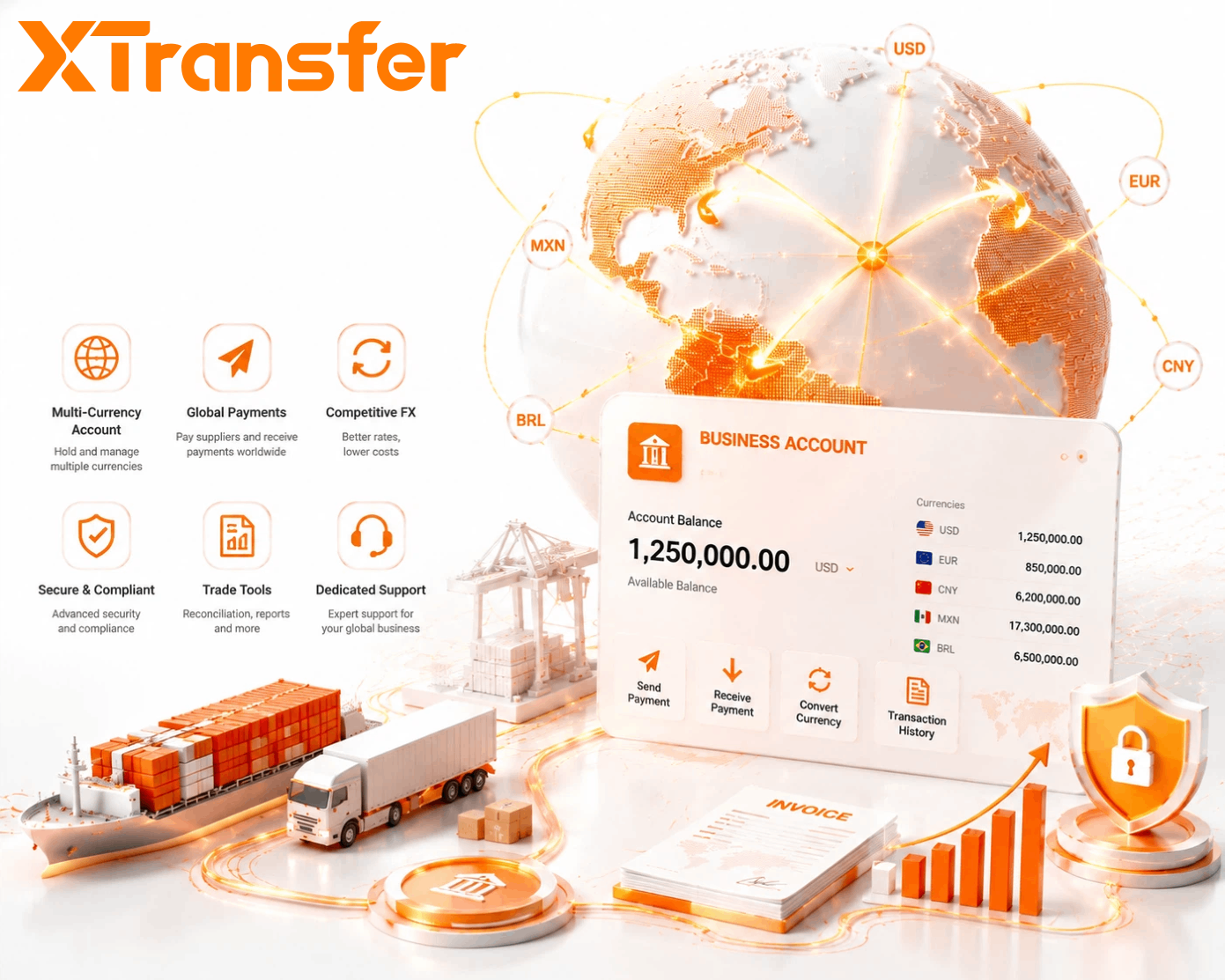
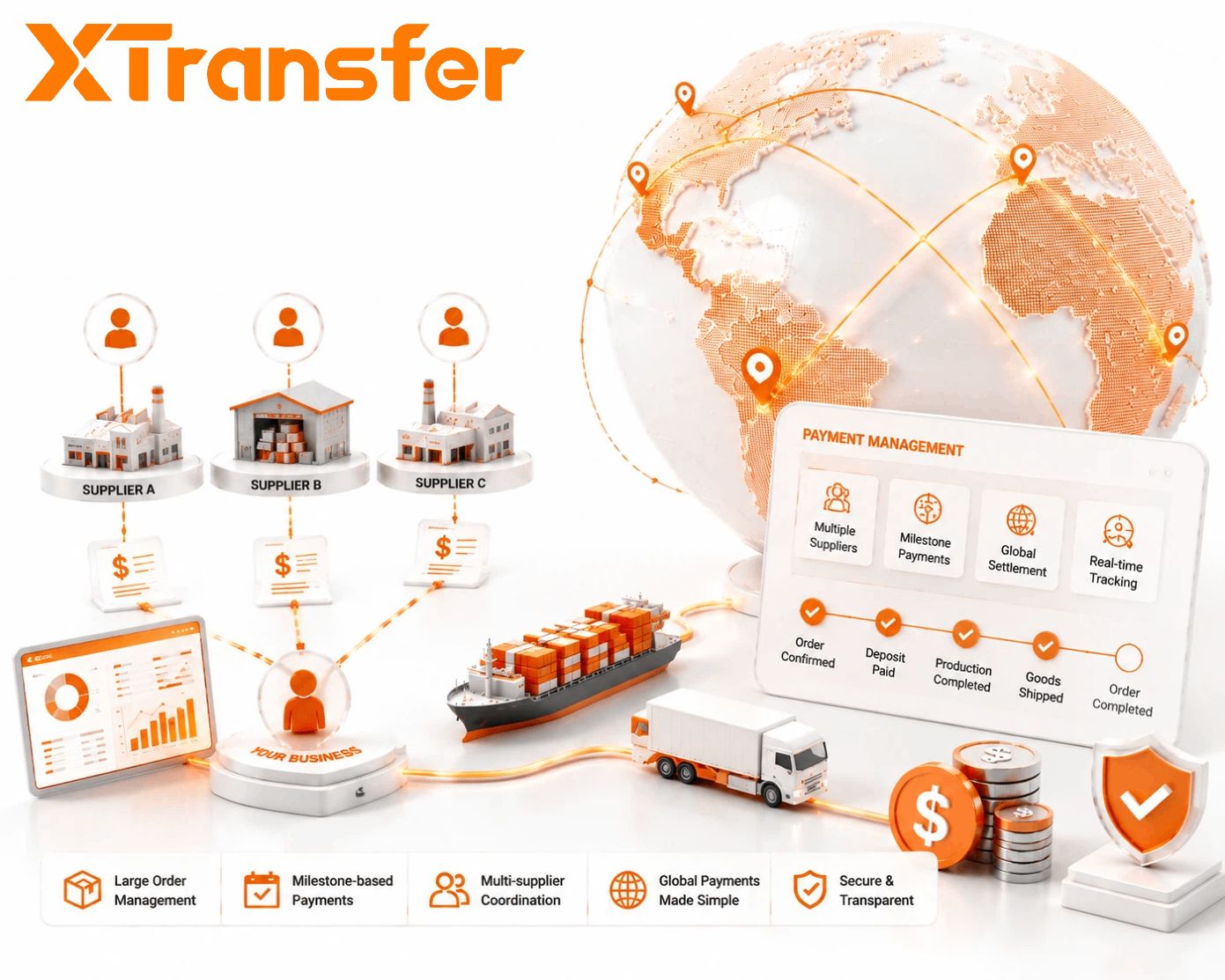
XTransfer operates the world's leading B2B cross-border trade payment platform. Its network connects buyers and sellers across more than 200 countries and regions through a combination of local collection accounts and global receiving accounts.
How It Works for Payments to China:
When a buyer outside China pays through XTransfer, the platform routes the payment through local collection accounts where available. Funds then settle to the Chinese supplier through domestic clearing networks in RMB—bypassing SWIFT entirely.
Key Network Characteristics:
- Local collection accounts in approximately 60 countries
- Over 30 local currencies supported
- TradePilot AI achieves a 98.5% automated review rate
- 0 account management fees, 0 incoming fees
- Settlement fee of 0.4% (reducible based on volume)
Network Scale:
XTransfer serves approximately 897,000 registered SMEs and processed over US$60 billion in TPV in 2025. The platform has 171 global partner financial institutions as of March 31, 2026.
Network Advantages for China Payments:
- Local clearing bypasses correspondent banking entirely
- Settlements in hours instead of days
- No intermediary bank fee deductions
- Transparent pricing—buyers and sellers know the exact cost upfront
- Full compliance with Chinese payment regulations
Wise Business
Wise operates a multi-currency payment network supporting over 40 currencies. For payments to China, Wise routes funds through local partners where possible and uses SWIFT where local rails are unavailable.
How It Works for Payments to China:
Wise converts the sender's currency to CNY or CNH and sends the funds through partner banks in China. The network uses mid-market exchange rates with a transparent 0.41–0.71% fee.
Key Network Characteristics:
- 0% FX markup, transparent fees
- 40+ currencies supported
- Over 700,000 businesses use Wise
- Batch payments for up to 1,000 recipients
Network Advantages for China Payments:
- Transparent, predictable pricing
- Mid-market exchange rates
- Multi-currency holding
Network Limitations:
- Limited local collection in emerging markets
- Not specifically built for B2B physical trade documentation
Airwallex
Airwallex offers a multi-currency payment network with strong Asia-Pacific coverage. The platform supports interbank FX rates and local receiving in 70+ countries.
How It Works for Payments to China:
Airwallex routes payments through local clearing networks where possible, with direct connectivity to Chinese banks. Funds can be received in CNY or held in other currencies.
Key Network Characteristics:
- Interbank FX rates
- Local payment rails in 160+ countries
- API-first infrastructure
- Plans from $0 to $999+ per month
Network Advantages for China Payments:
- Strong APAC connectivity
- Integrated spend management
- Corporate cards for team spending
3. Card Networks
Card networks have built B2B-specific payment rails that leverage their existing infrastructure to move money to China.
Visa B2B Connect
Visa B2B Connect reaches over 190 countries and 160 currencies. In June 2026, Visa deepened its collaboration with Lakala, a Chinese payment service provider, around cross-border B2B payment scenarios.
Key Characteristics:
- Near-instant settlement for many corridors
- Strong compliance and fraud prevention
- Reaches 190+ countries
China-Specific Developments:
- Visa's partnership with Lakala enables innovative business payment models
- Cross-border transaction efficiency is a focus area
- China represents a strategic growth corridor for Visa B2B
Mastercard Move
Mastercard has also invested in cross-border B2B payment infrastructure with a focus on emerging markets and faster settlement times.
Key Characteristics:
- 24/7 settlement for supported corridors
- Focus on emerging market connectivity
- Competitive pricing for smaller transfers
China Coverage: Mastercard works with Chinese banks and payment partners to facilitate cross-border business payments, though specific B2B initiatives in China are less publicized than Visa's.
4. Digital Wallet Gateways
Digital wallets and payment gateways are becoming increasingly important for payments to China, particularly for smaller transactions and marketplace purchases.
Alipay+ / Ant Group Infrastructure
Alipay+, Ant International's cross-border payment gateway, connects businesses with a vast network of digital wallets across Asia and globally.
How It Works: Businesses integrate with Alipay+ to accept payments from multiple digital wallets in a single connection. For payments to China, funds can be directed to Alipay wallets or settled through Ant Group's infrastructure.
Key Characteristics:
- 1 billion+ Alipay consumers
- 80 million+ merchants in China
- Single integration for multiple wallets
- Cross-border QR payment capability
China-Specific Developments: In July 2025, under the guidance of the People's Bank of China, the Payment & Clearing Association of China launched a cross-border QR code unified gateway, supporting domestic and overseas institutions to conduct cross-border QR payment cooperation through a single connection.
WorldFirst / Ant Group
WorldFirst, now part of Ant Group, routes payments through Ant Group's infrastructure directly to Chinese recipients.
How It Works: WorldFirst supports settlement to Alipay accounts in China. Only recipient name and contact details are required—funds route through Ant Group's domestic clearing network, eliminating cross-border SWIFT fees.
Key Characteristics:
- Exclusive support for Alipay account settlement
- 0% setup, monthly, and receiving fees
- Around 150,000 Chinese suppliers already on the platform
- Around 90% of payments to China clear same-day
Paysend Enterprise
Paysend supports direct payouts into China through Alipay wallets and WeChat Pay wallets.
Key Characteristics:
- Direct wallet payouts—no bank account required for recipients
- China is described as "a strategically important corridor"
- Business-grade payouts available
Zyla
Zyla is an official payment partner of 1688, China's largest domestic B2B wholesale marketplace.
How It Works: Zyla connects overseas buyer accounts with 1688 accounts for instant payments. Overseas customers pay for 1688 orders using their Zyla Account, while suppliers receive payments in CNY.
Key Characteristics:
- Official 1688 payment partner
- Instant payment settlement
- No Chinese bank account required for buyers
5. Cross-Border QR Gateway
In July 2025, the People's Bank of China launched a significant infrastructure upgrade: a cross-border QR code unified gateway.
What It Does
The gateway supports domestic and overseas institutions to conduct cross-border QR payment cooperation through a single connection. This standardizes how international wallets and payment apps connect to China's QR payment ecosystem.
Why It Matters
Previously, each international wallet needed separate integration with each Chinese payment provider. The unified gateway provides a single connection point, dramatically reducing integration costs and time.
Impact on B2B Payments
While primarily focused on consumer and small-business payments, the gateway also supports B2B scenarios where buyers use digital wallets to pay suppliers. For SMEs sourcing from China through platforms like 1688, this infrastructure enables faster, lower-cost payments.
Comparison Table: Payment Networks to China
| Network Type | Key Providers | Cost | Speed | China Coverage | Best For |
|---|---|---|---|---|---|
| Correspondent Banking | All banks | 3–5% | 1–7 days | Complete | Large, infrequent payments |
| Fintech Networks | XTransfer, Wise, Airwallex | Under 1% | Hours–1 day | Extensive | Regular B2B payments, direct factory sourcing |
| Card Networks | Visa, Mastercard | 0.5–2% + fees | Near-instant–1 day | Good | Card-based businesses, smaller transfers |
| Digital Wallet Gateways | Alipay+, WorldFirst, Paysend, Zyla | Under 1% | Minutes–hours | Wallet-focused | Consumer payments, 1688 sourcing, wallet payouts |
| Cross-Border QR Gateway | PBOC-backed infrastructure | Low | Minutes | China-wide | QR-based payments, B2B marketplace purchases |
Which Network Should You Use?
For Regular Supplier Payments to China
Best Choice: Fintech Networks (XTransfer, Wise)
Fintech networks offer the best combination of cost, speed, and transparency. XTransfer is particularly strong for direct factory sourcing due to its local collection network and trade document support.
For 1688 or Alibaba Marketplace Purchases
Best Choice: Digital Wallet Gateways with 1688 Integration
WorldFirst, Zyla, and World Pay all offer direct 1688 payment capabilities. These networks understand the 1688 ecosystem and route payments efficiently to Chinese suppliers.
For Large, One-Off Payments
Best Choice: Correspondent Banking or Visa B2B Connect
For transactions over $100,000, the familiarity and regulatory certainty of traditional networks may justify the higher cost.
For Consumer-Style Payouts to Alipay/WeChat
Best Choice: Digital Wallet Gateways (Paysend, Koala Remit, Panda Remit)
These networks specialize in direct wallet payouts and offer the fastest settlement for smaller amounts.
Recommendation
For most B2B businesses making regular payments to China, fintech payment networks offer the best combination of cost, speed, and transparency. XTransfer's local collection network, covering approximately 60 countries, bypasses SWIFT entirely for many corridors, eliminating intermediary bank fees and settling payments in hours.
For businesses sourcing through 1688 or Alibaba, digital wallet gateways with marketplace integration offer the most direct route. WorldFirst, Zyla, and World Pay all provide specialized solutions for this specific use case.
Traditional correspondent banking remains relevant for large, infrequent payments where cost is not the primary concern. However, for SMEs making regular supplier payments, the cost savings from fintech networks are simply too significant to ignore.
Conclusion
International B2B payments to China in 2026 travel through multiple networks—each with different cost profiles, speeds, and use cases. Traditional correspondent banking remains universally available but carries the highest costs. Fintech networks offer the best combination of affordability and transparency for regular payments. Card networks provide near-instant settlement for smaller amounts. Digital wallet gateways excel at consumer and marketplace payouts.
The choice of network is not about finding a single "best" option. It is about matching each payment flow to the network that fits best.
Disclaimer:
This article is compiled from publicly available sources and interview content for informational purposes only and does not represent the official views of XTransfer. XTransfer accepts no liability for any damages arising from reliance on this content.
Frequently Asked Questions
Q: What is the cheapest network for sending payments to China?
A: Fintech networks like XTransfer and Wise typically offer the lowest costs, with total fees under 1% compared to 3–5% for correspondent banking.
Q: How fast are fintech payments to China?
A: XTransfer local collection settlements typically take hours to 1 business day. Wise settles same-day or next-day for most corridors.
Q: Can I pay Chinese suppliers through Alipay?
A: Yes. WorldFirst, Paysend, and Koala Remit all support direct payouts to Alipay wallets in China.
Q: What is the cross-border QR unified gateway?
A: Launched in July 2025, it is a PBOC-backed infrastructure that simplifies cross-border QR payment integration for international wallets and payment apps connecting to China.
Q: Does XTransfer use SWIFT or bypass it?
A: XTransfer uses local collection accounts to bypass SWIFT entirely for many corridors. Funds route through domestic clearing networks in the buyer's country, eliminating correspondent bank fees.
Q: Which platform is best for paying 1688 suppliers?
A: WorldFirst, Zyla, and World Pay all offer specialized solutions for 1688 supplier payments, with WorldFirst being the official 1688 payment partner.
Disclaimer
This article is compiled from publicly available sources and interview content for informational purposes only and does not represent the official views of XTransfer. XTransfer accepts no liability for any damages arising from reliance on this content.