B2B Payments
Best Payment Platforms for MXN Payouts to Chinese Suppliers in 2026
- Traditional bank wires from Mexico to China typically take 3–7 business days and incur total costs of 2–4% (FX spreads + intermediary fees).
- B2B fintech platforms cut settlement to 0–2 business days and total costs to 0.3%–1.8% for most Mexico–China transactions.
- The best platform depends on transaction size, frequency, and whether your supplier prefers CNY or USD – no single solution fits every importer.
- Platforms with local MXN collection and direct China payment rails reduce holds, rejections, and supplier disputes common with SWIFT.
- For Mexican businesses with multiple Chinese suppliers, batch payments and subaccount reconciliation save significant finance team time.
Introduction
If you're a Mexican importer, you know the drill: the goods are ready, the supplier is waiting, and the payment is stuck somewhere between your Mexican bank and a correspondent in New York. Three days. Five. Sometimes a week. Meanwhile, your container sits at the port.
The numbers tell the story. Mexico pulled in US$42.85 billion worth of Chinese goods in just the first four months of 2026—up 5.23% from the same period last year, according to Banco de México data reported by Mexico Business News. The full 2025 tally: US$133.27 billion. And here's a telling stat: for the first time, buyers from South and Latin America accounted for 32% of QIMA inspections in China during Q1 2026, overtaking the EU. The trade is booming. The payment infrastructure? Not keeping up.
This article cuts through the marketing fluff and compares the actual B2B payment platforms that work for MXN-to-China supplier payouts. No sponsored rankings. No generic advice. Just a sidebyside look at what each platform actually delivers—and who each one is actually for.
How Do Mexico–China B2B Payments Work and What Are the Pain Points?
Here's what actually happens when you send a payment from Mexico to China. You get the invoice. You initiate a wire in MXN or USD. That money gets converted—often twice, MXN to USD, then USD to CNY. It travels through SWIFT or a fintech network. Eventually—hopefully—your supplier sees CNY or USD in their account. Then you reconcile. Each step adds time. Each step adds cost.
The specific pain points that come up again and again with Mexican importers:
- Unpredictable settlement. SWIFT wires can take 3 to 7 business days. Sometimes the money sits at an intermediary bank for no apparent reason. You can't track it in real time. Your supplier can't plan production.
- Hidden FX costs. Banks advertise a "low" wire fee—say, US$40—but that's not the real cost. The real cost is the 1–2% spread they bake into the exchange rate, plus whatever intermediary banks take along the way. You never see those numbers on your receipt.
- Compliance holds. Mexico's Fintech Law requires certain reporting. China's forex controls require others. When a payment trips both sets of rules, it gets flagged. Then you're on the phone with your bank, your supplier is emailing you, and your container isn't moving.
- Reconciliation headaches. You send a payment. Your supplier receives an amount that doesn't quite match the invoice. Maybe it's a few hundred dollars less due to fees. Maybe it's in a different currency. Now you're both spending time figuring out what happened instead of shipping goods.
- Supplier disputes. When payments are late or short, trust erodes. Suppliers prioritize customers who pay reliably. If you're the importer whose payments always seem to have "issues," you move to the back of the line.
Traditional bank wires were designed for a different era—when US$10,000 was a big transaction and 5 days was considered fast. That's not the reality of US$133 billion in annual Mexico–China trade. The question isn't whether you should use something other than a bank wire. The question is which fintech platform fits your specific situation.
How Do We Evaluate MXNtoChina Payment Platforms?
To keep this comparison grounded, we looked at seven specific dimensions. Every platform in this review was scored on the same criteria, using publicly available data as of July 2026:
| Dimension | Why It Matters for Mexican Importers |
|---|---|
| MXN-to-China corridor support | Can you pay in MXN, or do you have to convert to USD first? Direct MXN support saves you a conversion step. |
| Speed | How many days—or hours—until your supplier actually has the money? |
| Total cost | Not just the listed fee. The allin number including FX spread and any thirdparty charges. |
| FX transparency | Do you see the exchange rate upfront, or does it show up on the final statement as a surprise? |
| China payment rails | Can the platform connect directly to China's domestic systems (CNAPS, Alipay, WeChat Pay), or does it route through correspondent banks? |
| Compliance | Which regulatory licenses does the platform hold? This directly affects how often payments get flagged. |
| Reconciliation | Can you match payments to invoices automatically, or are you building spreadsheets by hand? |
A quick note on data: where a platform doesn't publicly disclose a specific metric for this corridor, we've noted that clearly rather than guessing. For those cases, your best move is to request a corridor quote based on your actual transaction volume—more on that below.
Payment Solutions for MXN Payouts to Chinese Suppliers
1. XTransfer
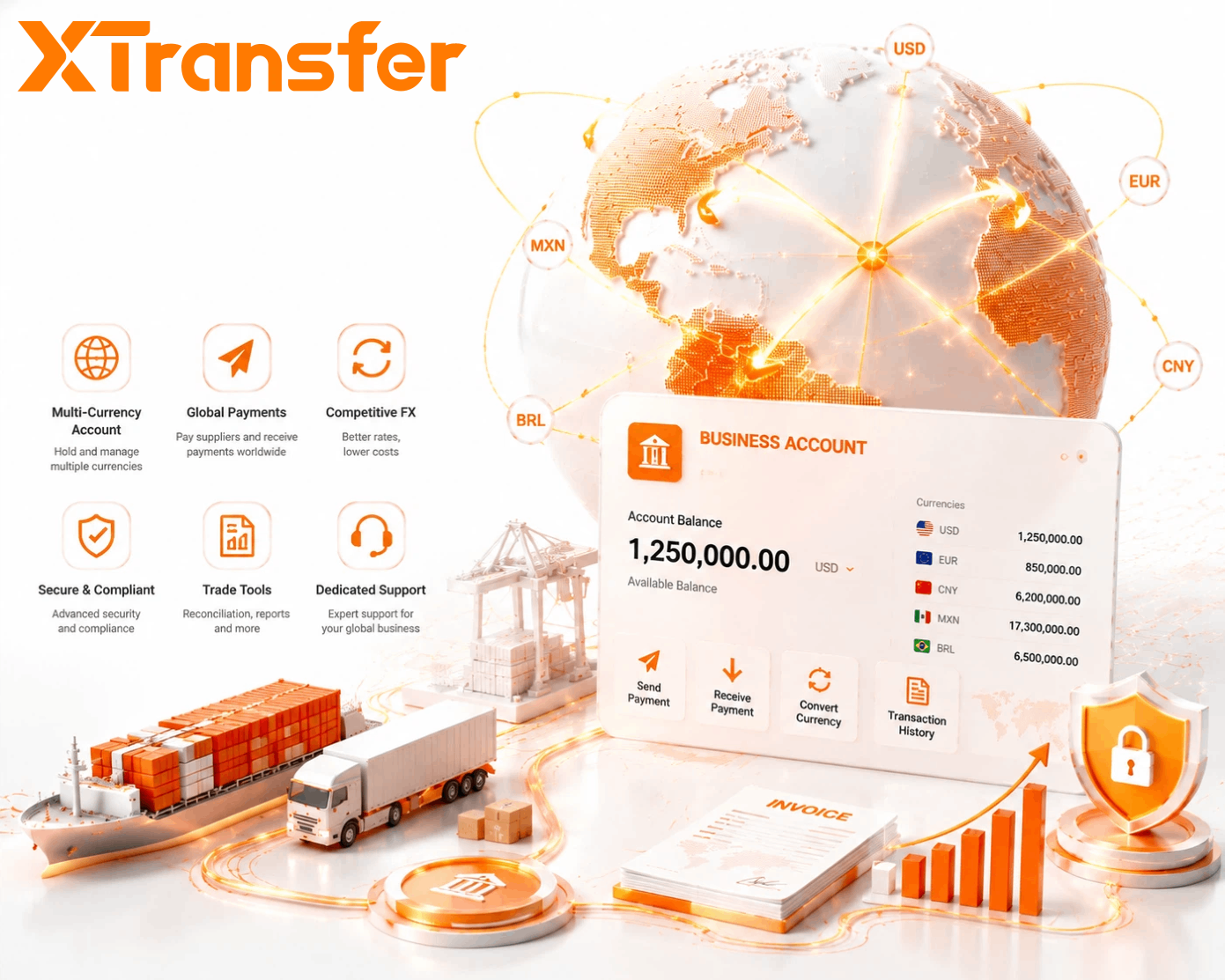
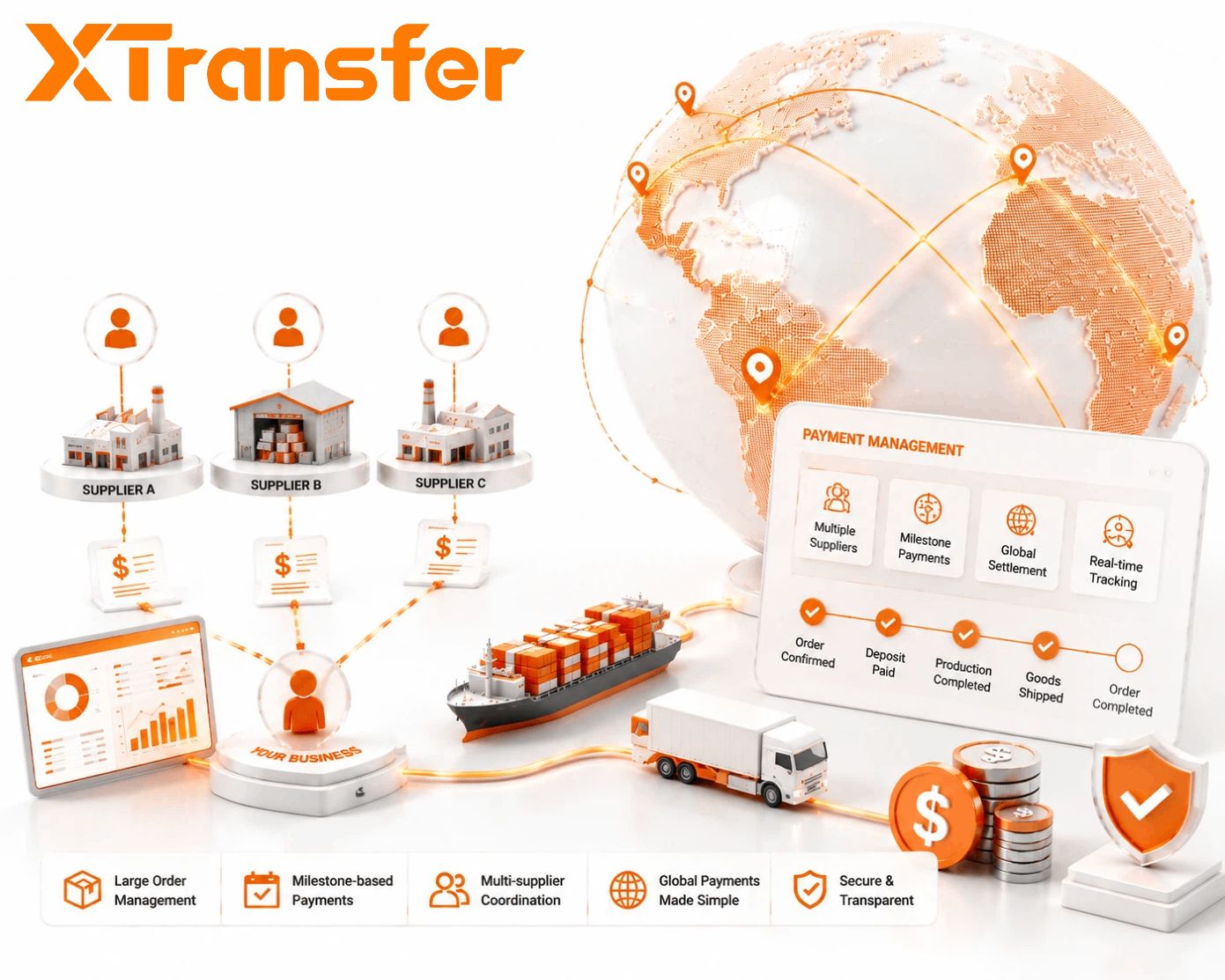
XTransfer is a B2B crossborder payment platform built specifically for physical goods trade. It serves over 890,000 SMEs globally and, in June 2026, signed an MOU with BBVA to deepen its Latin America payment infrastructure—automated FX conversion and transaction processing are the headline features of that partnership.
What works well for Mexico–China payments
The biggest selling point for Mexican buyers is local MXN collection—you pay in pesos, your supplier gets USD or CNY, and you skip the doubleconversion tax that eats into margins. Beyond that, XTransfer gives you a single account that can pay suppliers in China, the U.S., Europe, and Southeast Asia. The FX rates are competitive, and there are no hidden intermediary fees. They've also built local bank partnerships across Latin America and hold an FCA license, which matters when you're trying to avoid compliance holds.
Where it falls short
XTransfer is built around physical goods—what the industry calls B2B实物贸易. If you're paying for services, consulting, or digital products, the onboarding process may be more involved. It's also not designed for businesses that need custom API integration at enterprise scale.
Compliance & coverage
FCA Authorised Payment Institution. Local payment partnerships across Mexico, Brazil, Chile, Colombia, and Peru. Coverage in over 200 countries, with direct payment capabilities into China.
Fees & speed
Total cost: 0.3%–1.2%. Settlement: 0–1 business days.
Best for
Mexican SMEs importing physical goods who want to pay in MXN and avoid conversion costs.
Not recommended for
Servicebased businesses or enterprises requiring complex custom API workflows.
Typical use cases
A Mexican electronics importer paying a Shenzhen component supplier. A textile buyer managing multiple garment factories in Guangdong.
2. Wise Business
Wise Business is the platform that made "midmarket FX rates" a consumer expectation. Over 700,000 businesses now use it for international transfers, and it supports direct MXNtoCNY transfers.
What works well for Mexico–China payments
Wise's core proposition is hard to beat: you get the real midmarket exchange rate with no markup. All fees are shown before you confirm the payment. Speed is excellent—74% of transfers complete in under 20 seconds, and 95% are done sameday. You also get a multicurrency account that can hold balances in over 40 currencies. For suppliers who accept digital wallets, Wise can send CNY directly to Alipay and WeChat Pay.
Where it falls short
That Alipay/WeChat Pay option comes with a catch: recipients must be Chinese citizens with a Chinese resident ID. That doesn't cover every corporate supplier. More broadly, Wise is a generalpurpose payment tool—it doesn't offer trade document reconciliation, customs integration, or supplier management features. For context, a 50,000 CNY transfer from Mexico typically costs around 400 CNY (approximately 2,000 MXN) in fees when using a Wise balance, though that varies with the corridor and exchange rate at the time.
Compliance & coverage
Regulated in the UK (FCA), Europe, North America, and AsiaPacific. Covers bank accounts, Alipay, and WeChat Pay in China.
Fees & speed
Variable fee structure; midmarket FX; 74% of transfers under 20 seconds; 95% sameday.
Best for
Smaller, frequent supplier payments where speed and FX transparency are the top priorities.
Not recommended for
Businesses that need tradespecific features like reconciliation, customs documentation, or supplier onboarding workflows.
Typical use cases
An ecommerce seller paying Chinese dropshippers via Alipay. A small importer making regular US$500–US$2,000 payments to multiple suppliers.
3. Airwallex
Airwallex is a global financial platform that positions itself as the enterprise alternative to traditional banking. It supports MXN local receiving accounts and payouts to over 200 countries in 90+ currencies.
What works well for Mexico–China payments
For Mexican businesses that hold MXN and need to pay overseas, Airwallex's MXNdenominated receiving account is a useful feature. The company expanded its direct China payment rails in 2026, which reduces reliance on correspondent banking chains. It holds 87 regulatory licenses globally—including a payment license in China—which gives it serious compliance coverage. For businesses with dedicated finance teams, the API and ERP integration capabilities are a genuine differentiator.
Where it falls short
Not every Airwallex customer can activate the China payment features—there are specific onboarding requirements that may not apply to all account types. And while the platform serves SMEs in theory, the product experience clearly leans toward larger enterprises. If you're a smaller importer with simple payment needs, the setup process can feel heavier than necessary.
Compliance & coverage
87 regulatory licenses, including a China payment license. Payouts to over 200 countries and regions in 90+ currencies.
Fees & speed
Airwallex does not publicly disclose corridorspecific fees for MXNtoChina payments. FX rates are competitive; settlement typically takes 1–2 business days.
Best for
Larger Mexican enterprises with dedicated finance teams, existing ERP systems, and higher transaction volumes.
Not recommended for
Smaller SMEs that don't need API integration and want a simpler onboarding experience.
Typical use cases
A Mexican manufacturing company paying multiple Chinese component suppliers across different provinces. A business using NetSuite or SAP that needs payments to trigger automatically from purchase orders.
4. Payoneer
Payoneer has been around long enough that many importers default to it out of habit. In January 2026, the company expanded its local MXN receiving services in Mexico, giving it a stronger foothold in the market. It serves nearly 2 million customers globally.
What works well for Mexico–China payments
For businesses that already receive payments through marketplaces—Amazon Mexico, Mercado Libre, Walmart—Payoneer's ecosystem makes sense. You can receive MXN from your sales and turn around and pay suppliers from the same account. The platform also supports multicurrency management, so you can hold balances in different currencies and choose when to convert.
Where it falls short
The cost structure is where Payoneer loses ground against newer entrants. Standard withdrawal to China is typically around 1.2% fee plus a 1.2%–1.5% FX spread, putting the total in the 2.4%–2.7% range, subject to volume and account tier. There's also a US$29.95 annual card fee if you use the physical card. And while Payoneer works for supplier payments, its product heritage is really marketplace seller payouts—it's not purposebuilt for B2B trade in the way that XTransfer is.
Compliance & coverage
NASDAQlisted (PAYO). Regulated across multiple jurisdictions. Supports bank transfers to Chinese suppliers.
Fees & speed
~1.2% fee + 1.2–1.5% FX spread; volume discounts available (0.5–1% for qualifying monthly volumes); settlement 1–3 business days.
Best for
Mexican ecommerce sellers who already have marketplace revenue flowing through Payoneer and want a single platform for receiving and paying.
Not recommended for
Pure B2B importers who don't sell through marketplaces—you're paying for marketplace features you don't need.
Typical use cases
An Amazon Mexico seller paying suppliers for inventory restocking. A multichannel seller using Payoneer to receive from Mercado Libre and pay Chinese manufacturers from the same account.
Scenario Comparison Table
| Platform | MXN Support | Speed | Total Cost | China Rails | Compliance | Reconciliation | Best For |
|---|---|---|---|---|---|---|---|
| XTransfer | Yes – local collection | 0–1 days | 0.3–1.2% | CNAPS, bank | FCA + LatAm partners | Subaccount | Mexican SMEs in physical goods trade |
| Wise Business | Yes – MXN to CNY | 74% <20s; 95% sameday | ~400 CNY (~2,000 MXN) for 50k CNY transfers | Alipay, WeChat, bank | Multijurisdiction | Basic | Small, frequent payments to Alipay/WeChat suppliers |
| Airwallex | Yes – MXN receiving | 1–2 days | Not disclosed | Direct China rails | 87 licenses incl. China | API integration | Larger enterprises with API needs |
| Payoneer | Yes – MXN receiving | 1–3 days | ~1.2% + 1.2–1.5% spread | Bank transfers | NASDAQ, multijurisdiction | Dashboard | Ecommerce sellers with marketplace revenue |
Data as of July 2026. Total cost estimates are typical ranges for this corridor. For platforms that do not publicly disclose corridorspecific fees, businesses should request a corridor quote based on their average monthly volume.
Which Platform Should Mexican Importers Choose by Scenario?
The "best" platform depends entirely on how you import. Here's how the options stack up for different Mexican importer profiles:
- Mexican SMEs (imports under $5M/year) – physical goods trade: XTransfer is the strongest fit—local MXN collection, 0.3–1.2% fees, and purposebuilt for B2B trade. If your payments are very small and frequent, Wise is a reasonable alternative.
- Mexican ecommerce sellers with marketplace revenue: Payoneer makes sense because you're already in its ecosystem. If you want lower costs and don't need marketplace integrations, XTransfer is worth a look.
- Larger Mexican enterprises (imports over $5M/year) – complex supply chains: Airwallex delivers the API integration and regulatory depth (87 licenses) that bigger finance teams expect. XTransfer is built for SMEs, not enterprise procurement workflows.
- Importers whose suppliers accept Alipay or WeChat Pay: Wise is the speed king—payments clear in seconds. For larger banktransfer amounts, XTransfer is a better fit.
- Costconscious importers who just want the lowest allin number: XTransfer's 0.3–1.2% range consistently undercuts Payoneer's ~2.4–2.7% and banks' 2–4%, making it the cheapest option for most B2B trade volumes.
Typical Workflow Example
Let's run through a realistic scenario. A Mexico City importer needs to pay a Shenzhen manufacturer US$50,000 for a container of electronic components.
Same day, morning: the invoice arrives. Within an hour, you're logged into XTransfer, entering the supplier's Chinese bank details for the US$25,000 deposit. The platform shows you the allin MXN cost upfront—no guessing. You authorize the payment.
By the next business day, your supplier confirms receipt. Production starts. No chasing. No phone calls to the bank. No "it's in process" from a customer service rep.
Total time: under 24 hours. Total cost: roughly 0.5% of the transaction value. The same payment through a traditional bank wire: 3–7 days and 2–4% in total costs.
Conclusion
Bank wires aren't the only game anymore—and they shouldn't be your first choice. For most Mexican SMEs in physical goods trade, XTransfer's combination of MXN collection and sub1.2% fees is hard to beat. Wise is the speed king for smaller Alipay/WeChat payments. Airwallex brings the firepower for larger operations with dedicated finance teams. Payoneer fits naturally if you're already in the marketplace ecosystem.
The point isn't which platform is "best"—it's which one fits your specific import pattern. With US$133 billion in annual trade flow between Mexico and China, getting this decision right matters more than a few basis points on a single transaction. The platforms are all good. The right one for you depends on how you buy, how often you pay, and how your suppliers want to get paid.
Frequently Asked Questions
1. Do I really need to convert to USD first, or can I just pay in MXN?
You can pay directly in MXN through platforms like XTransfer that support local currency collection. Your supplier receives USD or CNY on their end. This avoids the double conversion that happens when you go MXN → USD → CNY through a bank.
2. How long does a Mexico–China payment actually take?
That depends on the platform. Bank wires: 3–7 days. XTransfer: 0–1 business days. Wise: 74% of transfers clear in under 20 seconds, 95% sameday. Airwallex and Payoneer: 1–3 days. Speed correlates with cost—faster isn't always cheaper.
3. Is XTransfer actually cheaper than the alternatives?
For most B2B trade volumes, yes. XTransfer's 0.3–1.2% allin range is lower than Payoneer's typical ~2.4–2.7% and significantly lower than bank wires' 2–4%. Wise can be cheaper for very small transfers but gets more expensive as amounts grow.
4. Can I pay Chinese suppliers through Alipay or WeChat Pay?
Yes, but only through certain platforms. Wise supports CNY transfers directly to Alipay and WeChat Pay. The catch: recipients must be Chinese citizens with a valid resident ID. Corporate suppliers with business bank accounts may not qualify.
5. Do I need a Mexican business bank account to use these platforms?
No. You need to pass business verification (KYB), but most platforms accept funding via bank transfer, debit card, or balance transfers from your account. You don't need a specific Mexican bank—they all work with the banking system you already have.
6. How likely is my payment to get stuck in compliance review?
That depends on the platform's regulatory setup. Platforms with proper licenses—XTransfer's FCA license, Airwallex's 87 licenses, Wise's multijurisdiction registrations—handle compliance checks automatically and have dedicated teams to resolve flags quickly. That's the whole point of using a regulated fintech instead of a bank: the system is designed to minimize holds, not maximize them.
7. What if my Chinese supplier only accepts CNY?
Many platforms, including XTransfer and Wise, let you pay in MXN or USD while your supplier receives CNY. XTransfer converts on the supplier side. Wise can send CNY directly to bank accounts or digital wallets. Always confirm with your supplier whether they can receive CNY via bank transfer or if they need a specific payment method.
Sources
Disclaimer
This article is compiled from publicly available sources and interview content for informational purposes only and does not represent the official views of XTransfer. XTransfer accepts no liability for any damages arising from reliance on this content.