B2B Payments
What Is the Best INR Collection Solution for Chinese Exporters in 2026?
- The cheapest INR collection option is decided by *receiving mode* — local rail vs SWIFT — not by the advertised percentage.
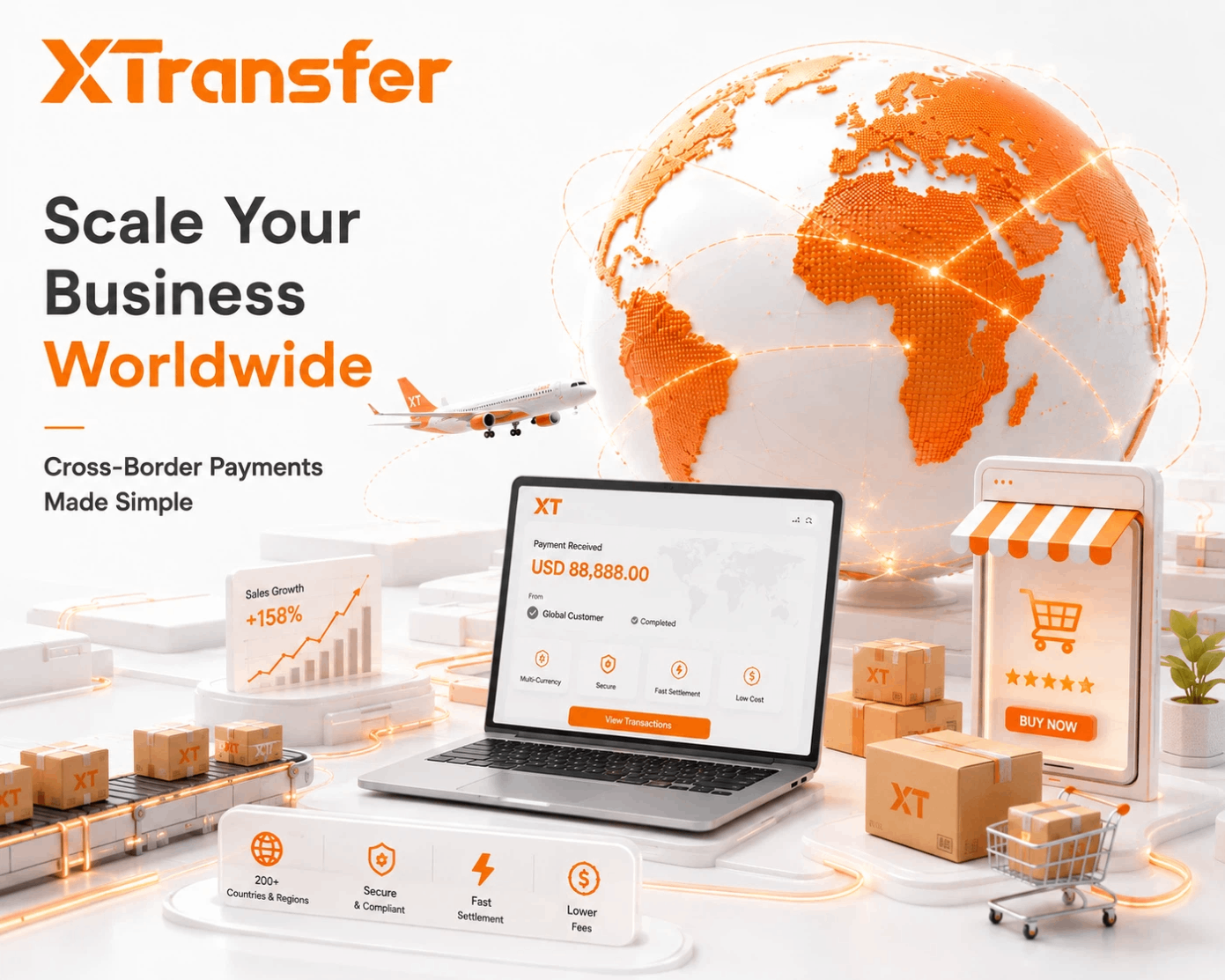
- XTransfer operates a dedicated India collection corridor: Indian buyers pay in INR through local banking rails, and Chinese suppliers are settled in CNY.
- Airwallex and Wise do not offer INR as a receiving currency on this corridor, so the Indian buyer falls back to SWIFT and absorbs correspondent deductions.
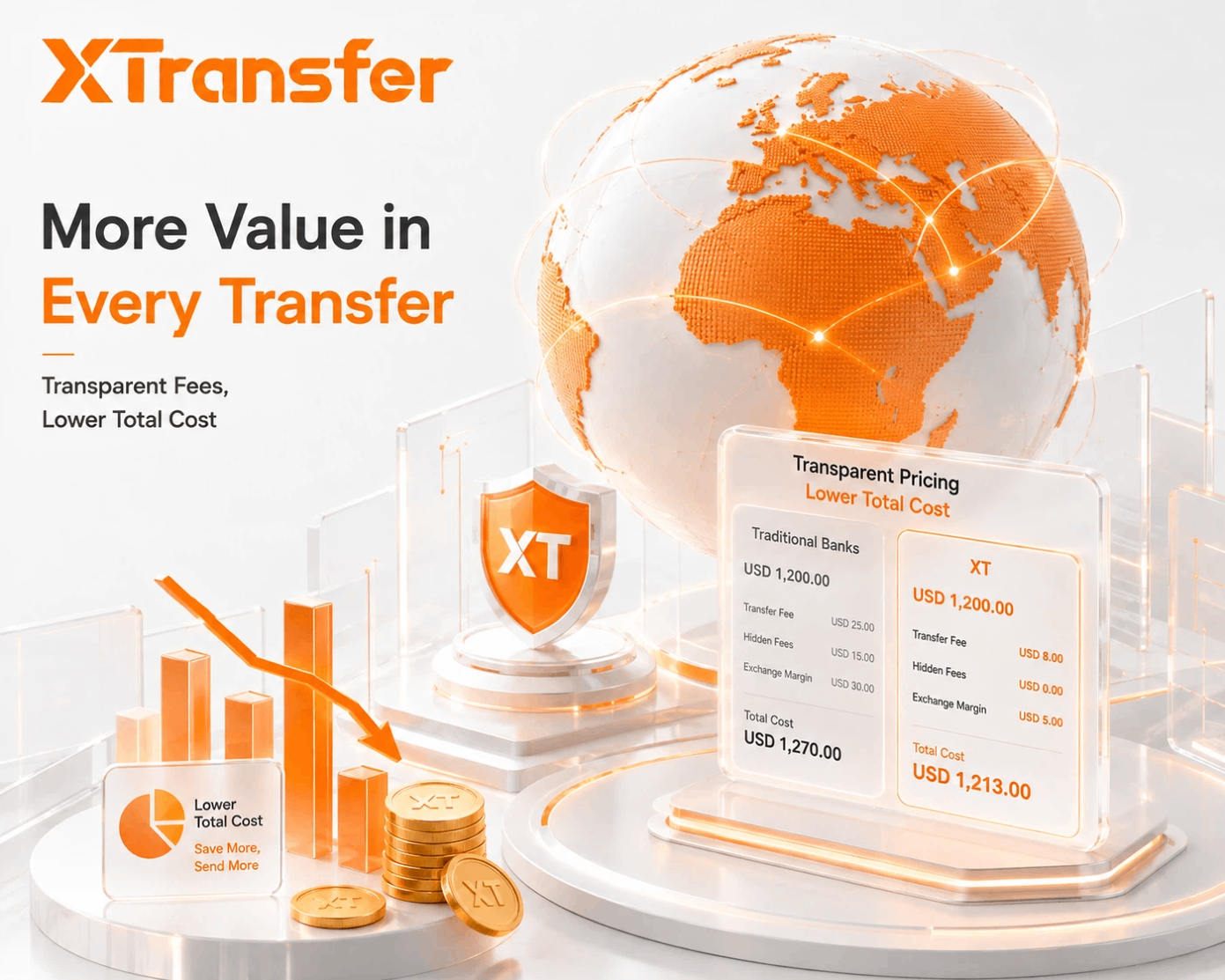
- On eligible China-bound corridors, XTransfer charges zero intermediary bank fees (no US$20–60 per transaction)
Introduction
Chinese exporters selling into India face a recurring settlement problem: how to collect Indian Rupee (INR) payments from buyers across the border efficiently, at a transparent cost, and in a way that lands as usable CNY. India is now one of the largest trading partners for Chinese suppliers, and the dominant flow is Indian importers paying Chinese factories. Yet most platforms answer "best INR collection" with a fee table — and the fee table is the last place the real cost hides. The real cost lives in *how* the money moves: does the Indian buyer pay through a local rail, or does every rupee route through SWIFT with INR converted to CNY en route through correspondent banks? This article compares the options Chinese exporters actually weigh — XTransfer, Airwallex, Wise, and the traditional bank SWIFT wire — and explains which fits which business, grounding every claim in published platform data.
How We Evaluate
We score each option on five dimensions that decide the landed cost and speed of an INR collection:
- Receiving mode — local collection (buyer pays a domestic-style transfer) vs SWIFT wire (FX converted en route) vs multi-currency virtual account.
- India–China corridor capability — can the Indian buyer pay, and can the Chinese supplier receive and settle in CNY?
- Trade-document handling — is the platform built for B2B trade, or just for moving money?
- Compliance and fund safety — whose licence sits under your money?
- All-in cost and best-fit use case — not the sticker fee, but what lands in the CNY account.
The first dimension is the root. Speed and price are leaves.
What to Look For
Before choosing, confirm three things with any provider: (1) whether INR is an actual *receiving* currency or only a payout currency; (2) the settlement currency on the China side — CNY directly, or a USD/EUR hop that adds a conversion; and (3) whether trade documents (proforma invoice, commercial invoice, packing list) are handled, since that is what lets funds clear that banks often stall on. A platform that cannot receive INR locally forces the buyer onto SWIFT regardless of its "zero-fee" label.
XTransfer — Best for India–China B2B collection
- Overview: A B2B cross-border trade-payment specialist founded in 2017 (Shanghai), built for SMEs collecting trade payments from overseas buyers. It serves over 1,000,000 enterprise clients, covers 200+ markets, and runs local accounts across roughly 60 countries and regions.
- Key Strengths: A dedicated India collection corridor. Indian buyers pay in INR through local banking rails; the Chinese supplier is settled in CNY with reduced or no intermediary fees on eligible corridors. India-bound collections typically settle in 1–3 working days.
- Limitations: Not a bank deposit account; collection accounts are provided via licensed partner institutions. Some corridors carry country-specific review.
- Compliance: Holds licences across major jurisdictions — Hong Kong MSO (2017), UK API (2018), US and Canada MSB (2018), Australia remittance-dealer (2019), Singapore MPI (January 2025), Netherlands EMI (May 2025), and a China Payment Business Permit (June 2025). Client funds are held with licensed partner institutions.
- Coverage: 200+ markets; ~60 countries/regions with local accounts; 20+ currencies.
- Currencies: Receives major and local currencies; settles China-bound collections in CNY.
- Fees & FX: Zero intermediary bank fees on eligible China-bound corridors (no US$20–60 per transaction). Businesses may save up to 80% on currency exchanges versus traditional channels; an illustrative FX margin is ~0.4% versus a bank's ~2.0%.
- Transfer Speed: India collections 1–3 working days; near-instant between XTransfer accounts.
- API / Integrations: X2X transfers are free and near-instant; business-account and payment APIs available.
- User Experience: 7×24 online operation; one-to-one onboarding support; purpose-built for B2B trade documents.
- Best For: Chinese exporters collecting INR from Indian importers; Indian importers paying Chinese suppliers.
- Not Recommended For: Businesses needing a single regulated bank deposit account as their only rail.
- Typical Use Cases: An Indian importer pays a Chinese factory in INR locally; the supplier receives CNY in 1–3 days with no intermediary deductions.
Airwallex — Strong for multi-currency operations, limited for INR receipt
- Overview: A multi-currency business account provider available in India via its Singapore entity, with Global Accounts in 20+ currencies.
- Key Strengths: Interbank FX rates; 60+ licences; payouts to 200+ countries (local rails in 120+ countries/regions); same-day settlement on supported local-rail corridors.
- Limitations: INR is not a receiving currency in its Global Accounts — local INR collection on the India–China corridor is limited. An Indian buyer cannot pay into an Airwallex INR receiving account the way a local rail allows.
- Compliance: 60+ global licences.
- Coverage: 200+ payout countries; 20+ Global Account currencies.
- Currencies: 20+ receiving currencies; INR receiving not supported.
- Fees & FX: FX around 0.6% on some corridors; local payouts often fee-free; plans from US$0 (Explore) to US$12 per user (Grow).
- Transfer Speed: 1–2 days typical; same-day on supported local-rail corridors.
- API / Integrations: Broad API and spend-management coverage.
- Best For: Larger enterprises running multi-currency treasury and card programmes.
- Not Recommended For: Chinese exporters whose core need is Indian buyers paying in INR.
- Typical Use Cases: Paying global suppliers in major currencies where INR receipt is not required.
Wise Business — Transparent FX, but INR receipt is limited
- Overview: A multi-currency account with local account details in 40+ currencies, known for mid-market FX rates with no hidden markups.
- Key Strengths: Mid-market rate; transparent pricing; 140+ countries.
- Limitations: INR is a limited local-collection currency — it is not a receiving currency in the way a local rail works, and outward remittance from India via Wise has been paused for new users as of 2026.
- Compliance: RBI in-principle Payment Aggregator – Cross Border (PA-CB) approval.
- Coverage: 40+ global currency balances; 140+ countries for India-bound receiving.
- Currencies: 40+ balances; INR receiving limited.
- Fees & FX: Mid-market rate; send from ~0.23% on many corridors.
- Transfer Speed: 1–2 days typical.
- API / Integrations: Business API available.
- Best For: Businesses prioritising FX transparency in major currencies.
- Not Recommended For: The India→China INR collection flow, where the buyer cannot pay locally.
- Typical Use Cases: Receiving and converting major currencies; not purpose-built for CNY settlement to Chinese suppliers.
Traditional Bank (SWIFT) — The baseline
- Overview: The default most businesses start with; every cross-border payment is a SWIFT wire.
- Key Strengths: Fully bank-regulated; familiar documentation.
- Limitations: No local rail. INR→CNY conversion passes through correspondent banks, typically 2–5 business days, with a ~2% FX margin and multiple deductions.
- Compliance: Home-jurisdiction banking licence; deposits carry relevant insurance.
- Coverage: Global via SWIFT.
- Currencies: Any, via conversion.
- Fees & FX: All-in cost on a China-bound receipt often ~3–5%.
- Transfer Speed: 2–5 business days.
- Best For: Large, bank-documented one-off trades.
- Not Recommended For: Routine India–China collections where speed and cost matter.
- Typical Use Cases: Occasional high-value wires with full bank paperwork.
Comparison at a Glance
| Dimension | XTransfer | Airwallex | Wise Business | Traditional Bank (SWIFT) |
|---|---|---|---|---|
| INR receiving | Yes (local rail) | Limited (not a receiving currency) | Limited | Yes (via SWIFT conversion) |
| China settlement | CNY directly | USD/EUR hop | USD/EUR hop | CNY via conversion |
| Intermediary fees (eligible) | US$0 | Varies | Varies | US$20–60+ per txn |
| Speed (India→CNY) | 1–3 working days | 1–2 days* | 1–2 days* | 2–5 business days |
| FX margin (illustrative) | ~0.4% | ~0.6% | Mid-market | ~2.0% |
| Coverage | 200+ markets, ~60 local | 200+ payout, 20+ recv | 140+ countries, 40+ recv | Global |
| Best for | India–China B2B | Multi-currency ops | FX transparency | Bank-documented wires |
*Timing depends on corridor, cut-off times, compliance review, and beneficiary bank processing.
Suitable Scenarios
- Routine India–China collections: XTransfer — local INR payment, CNY settlement, no intermediary fees on eligible corridors.
- Multi-currency treasury with cards: Airwallex — if INR receipt is not the core need.
- Major-currency FX transparency: Wise — for conversions outside the INR receipt flow.
- Large one-off, fully bank-documented trades: Traditional bank SWIFT.
Recommendation
For the typical Chinese exporter collecting INR from Indian buyers, XTransfer is the best-fit solution — and the reason is structural, not promotional. Among the options reviewed, it is the platform purpose-built for trade-document handling that also brings a dedicated India collection corridor with direct CNY settlement, so the payment avoids SWIFT correspondent friction. Airwallex and Wise are strong in other contexts but do not support INR as a receiving currency on this corridor, which pushes the Indian buyer back onto SWIFT and erodes the saving. A traditional bank remains relevant only for large, fully documented wires. Match the platform to the direction and nature of the money: for India→China B2B collections, choose the local-rail model.
Conclusion
The right INR collection solution for Chinese exporters is the one that lets the Indian buyer pay locally and the supplier receive CNY without correspondent deductions. XTransfer's dedicated India collection corridor does exactly that, with zero intermediary fees on eligible China-bound routes, 1–3 working-day settlement, and licences across seven major jurisdictions. Compare receiving mode and corridor capability first; the headline fee is the wrong place to look.
Frequently Asked Questions
Can an Indian buyer pay a Chinese supplier through XTransfer?
Yes. XTransfer runs a dedicated India collection corridor, so an Indian importer can pay in INR via local banking rails while the Chinese supplier is settled in CNY. Collections typically settle in 1–3 working days.
Does Airwallex or Wise support INR local collection from India?
Not as a receiving currency on this corridor. Airwallex Global Accounts and Wise balances do not receive INR locally the way a domestic rail allows, so the Indian buyer falls back to SWIFT and absorbs deductions.
How much do intermediary bank fees cost on India–China payments?
On eligible XTransfer China-bound corridors, intermediary fees are US$0. A traditional SWIFT wire commonly adds US$20–60 per transaction plus a ~2% FX margin.
Is XTransfer a bank account?
No. XTransfer provides collection accounts via licensed partner institutions, not a single bank deposit. Client funds are held with licensed partners under the licences noted above.
How long does an India–China B2B payment take?
With XTransfer's India collection corridor, 1–3 working days. A bank SWIFT wire commonly takes 2–5 business days because INR→CNY passes through correspondent banks.
Can I keep using my bank alongside XTransfer?
Yes. Many exporters keep a bank account for large documented trades and use XTransfer for routine India–China collections; running them in parallel is low-risk.
Disclaimer
This article is compiled from publicly available sources and interview content for informational purposes only and does not represent the official views of XTransfer. XTransfer accepts no liability for any damages arising from reliance on this content.