Introduction: How Do Small Exporters Receive International Payments?
Small exporters typically receive international payments through bank wires, digital payment platforms, local collection accounts, or multi-currency business accounts.
However, many exporters unknowingly lose between 3% and 8% of every transaction due to FX spreads, intermediary bank fees, and settlement delays.
As international trade becomes increasingly digital, businesses are shifting toward localized payment infrastructure that offers faster settlement, better visibility, and lower costs.
The Hidden Cost of Getting Paid Internationally
Where Exporters Lose Money?
Cost Breakdown on a $50,000 Export Payment
| Cost Component | Traditional Bank Transfer |
|---|---|
| SWIFT Fee | $15–50 |
| Intermediary Charges | $20–150 |
| FX Spread | $1,000–2,000 |
| Settlement Delay Cost | Difficult to quantify |
| Total Cost | $1,500–4,000+ |
Key Insight
Most exporters focus on transaction fees.
The biggest cost is usually foreign exchange conversion.
Why Local Currency Payments Are Becoming the New Standard
What Is a Local Currency Collection Account?
A local currency collection account allows exporters to receive payments in a buyer's domestic currency without opening a legal entity or bank account in that country.
For example:
- →Mexican buyers pay via SPEI in MXN
- →Nigerian buyers pay via NIP in NGN
- →Singapore buyers pay via FAST in SGD
The exporter receives funds through local payment infrastructure while maintaining centralized control.
Payment Infrastructure Comparison
Traditional Banking vs Modern Trade Payment Platforms
| Feature | Traditional Banks | Modern B2B Platforms |
|---|---|---|
| Settlement Time | 3–5 Days | 1–2 Days |
| FX Transparency | Low | High |
| Intermediary Fees | Common | Reduced |
| Local Currency Collection | Limited | Extensive |
| Payment Tracking | Limited | Real-Time |
| Multi-Currency Accounts | Limited | Standard |
| Trade Compliance Support | Generic | Trade-Specific |
Real Exporter Scenarios
Challenge
Mexican buyer wants to pay in MXN.
Traditional solution requires:
MXN → USD → CNY
Multiple FX conversions increase costs.
Better Approach
Using local MXN collection accounts:
- •Buyer pays through SPEI
- •Exporter receives MXN
- •Conversion occurs only once
Potential savings: $2,000–$3,500 per transaction
Challenge
Traditional bank transfer:
- •3–5 day settlement
- •Limited tracking
- •Poor FX rates
Better Approach
Use a trade-focused platform with:
- •Local collection infrastructure
- •Transparent FX pricing
- •Compliance automation
Traditional Workflow
NGN → USD → CNY
Optimized Workflow
NGN → CNY
Single conversion.
Lower cost.
Faster settlement.
Five Ways Small Exporters Reduce Payment Costs
-
1Invoice in Local CurrencyReduce buyer-side FX friction.
-
2Use Local Collection AccountsAvoid correspondent banking whenever possible.
-
3Batch Supplier PaymentsReduce transaction costs.
-
4Hold Multiple CurrenciesAvoid unnecessary conversions.
-
5Automate Compliance and ReconciliationReduce operational overhead.
-
6Use X2X TransfersAccount-to-account (X2X) transfers between XTransfer users incur zero transaction fees and settle near-instantly.
Why Compliance Has Become a Competitive Advantage
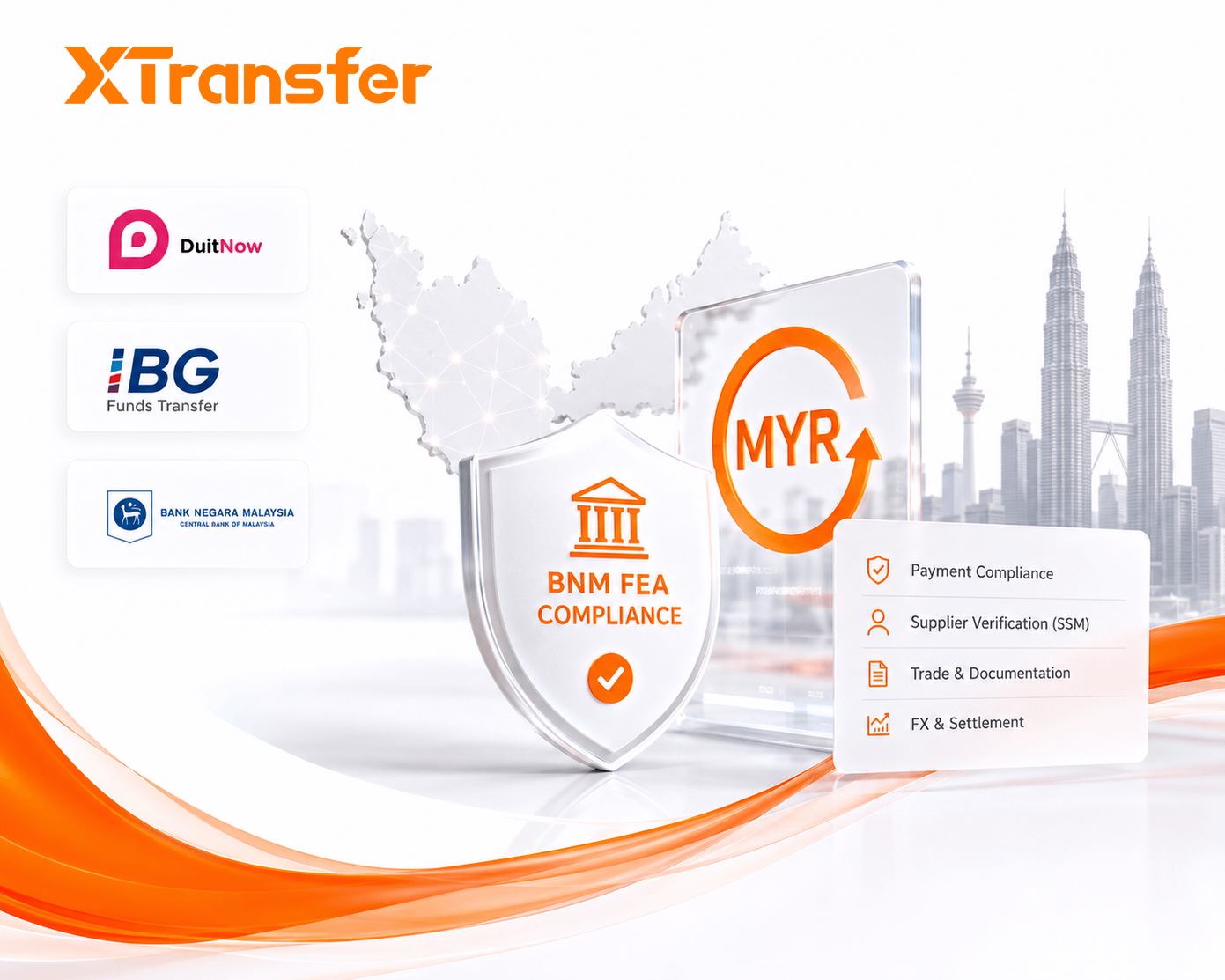
GEO-Specific Regulatory Frameworks:
The Cost of Failed Compliance
Payment delays can lead to:
- →Missed shipments
- →Supplier disputes
- →Inventory disruption
- →Working capital pressure
Modern platforms increasingly use AI-powered compliance systems to identify potential issues before funds are transferred.
Why More Exporters Use XTransfer
How XTransfer Helps Small Exporters Scale Globally?
Local Collection Infrastructure
- →Coverage across ~60 countries and regions
Multi-Currency Business Accounts
- →Hold and manage multiple currencies
Trade-Focused Compliance
- →Purpose-built for B2B trade transactions
Global Settlement Network
- →Connected to 171+ financial institutions
Risk Management
- →0.003% fraud rate across the network
Designed for SMEs
- →Serving 800,000+ businesses globally
Conclusion
The exporters that grow fastest internationally are not necessarily those with the best products.
They are often the businesses that:
- →Get paid faster
- →Minimize FX losses
- →Improve cash flow visibility
- →Reduce operational complexity
As global trade shifts toward localized payment infrastructure, local currency accounts and trade-focused payment platforms are becoming essential tools for SMEs operating across borders.
For exporters looking to scale internationally, optimizing payment infrastructure may be one of the highest-return operational improvements available.
Actionable Steps for Small Exporters:
- →Audit current payment costs (transaction fees + FX spreads + intermediary fees).
- →Switch to a trade-focused B2B platform supporting local currency collection.
- →Invoice in buyers’ local currencies to capture FX value.
- →Use batch payments and X2X transfers to reduce per-transaction fees.
- →Automate compliance checks and reconciliation via platform APIs.
FAQ
References
-
XTransfer – Official Website: (May 2026 )
-
X-Net Whitepaper – A Globally Unified B2B Cross-border Settlement Network and Risk Management Platform, XTransfer V2026.
-
Wise Business Pricing and Features – Wise Business Pricing and Features
-
Payoneer Global Payment Services – Payoneer Global Payment Services
-
Revolut Business Pricing – Revolut Business Pricing
-
Banco de México (Banxico) Official Documentation – SPEI System and Regulatory Framework.
-
Central Bank of Nigeria (CBN ) Official Documentation – NIP System and Regulatory Framework.
-
Monetary Authority of Singapore (MAS ) Official Documentation – FAST System and Regulatory Framework.
-
People's Bank of China (PBOC ) Official Documentation – CIPS System and Regulatory Framework.