B2B Payments
Which Cross-Border Payment Platform Is Best for Brazilian Businesses in 2026?
- Brazilian businesses engaged in international trade face recurring payment cycles that require careful navigation of currency conversion, settlement timing, and compliance with Brazil‘s foreign exchange regulations.
- XTransfer demonstrates strong B2B trade specialization among the evaluated providers, with a São Paulo office, local collection in Brazilian Real, operational Pix integration, and partnerships with local financial institutions.
- Wise enables instant cross-border payments through its existing partnership with Itaú, Latin America’s largest bank, with Pix-like simplicity and mid-market FX rates.
- Airwallex has announced plans to launch BRL accounts and Pix capabilities following its payment institution license from Brazil‘s central bank.
- Payoneer provides cross-border commerce solutions for Brazilian marketplace sellers and freelancers with local receiving accounts.
- The optimal provider depends on your business model, trade corridors, and payment frequency—not on brand recognition alone.
Introduction
For Brazilian businesses engaged in international trade, choosing the right cross-border payment platform has become a critical operational decision. Companies importing machinery, electronics, chemicals, and consumer goods — or exporting soybeans, crude oil, iron ore, and agricultural products — face recurring payment cycles that require careful navigation of currency conversion, settlement timing, and compliance with Brazil‘s complex foreign exchange regulations.
Brazil Market Snapshot: In 2025, Pix handled roughly 80 billion transactions worth R$35.3 trillion — a 34% increase on the prior year[source 4]. Brazil’s Central Bank Resolution 561 (April 2026) updated foreign exchange regulations effective October 2026[source 9]. China accounted for 25.3% of Brazil‘s total imports in 2025[source 8].
China has been Brazil’s largest trading partner since 2009. In 2025, bilateral trade reached US$170.8 billion, with Brazilian exports to China reaching US$99.9 billion, up 5.9% from 2024, and imports from China rising 11.4% to US$70.92 billion — a historic record[source 8]. Brazil was the first Latin American country to exceed US$100 billion in exports to China[source 8].
Yet the payment infrastructure supporting this trade has historically been fragmented. Brazilian businesses have relied on correspondent banking chains and a two-to-five-day settlement window, with foreign exchange controls requiring documented justification for BRL capital outflows.
Brazil‘s domestic payment infrastructure tells a different story. Pix, the Central Bank’s instant transfer system launched in 2020, has become one of the world‘s most widely adopted payment systems. In 2025 alone, Pix handled roughly 80 billion transactions worth R$35.3 trillion — a 34% increase on the prior year[source 4]. Pix now covers nearly the entire adult population of Brazil, with 170 million adults using the system.
Why Pix Alone Is Not Enough for Cross-Border Settlement: While Pix has revolutionized domestic payments in Brazil, it was never designed for cross-border settlement. The architectural complexity of cross-border transactions — currency conversion, correspondent banking routing, multi-jurisdictional anti-money laundering compliance, and cross-border liquidity management — remains entirely outside Pix’s scope. For Brazilian businesses paying international suppliers, a payment instruction sent via Pix does not automatically translate into a settled payment in the supplier‘s local currency. The underlying foreign exchange conversion and cross-border settlement infrastructure still requires a licensed payment platform or banking partner to complete the transaction. This is why Brazilian businesses need specialized cross-border payment platforms rather than relying on Pix alone.
For Brazilian procurement and finance teams, the question is which payment platform best supports recurring supplier payments, trade documentation, and multi-currency settlement across the full trade lifecycle.
How We Evaluate
This assessment uses a consistent methodology across six dimensions:
- Regulatory Strength — Licensing depth, compliance with Brazil‘s Central Bank regulations, and regulatory status across key trade corridors.
- Financial Stability — Provider scale, local presence in Brazil, and operational track record serving Brazilian businesses.
- SME Suitability — BRL local collection, Pix integration, trade documentation support, and onboarding complexity for Brazilian businesses.
- Transparency — Fee clarity, FX rate transparency, and regulatory disclosure quality in Brazil.
- Coverage and Settlement — Geographic reach, BRL settlement speed, and local payment network integration (Pix, TED).
- Technology and Security — Pix integration, fraud prevention, automation, and system reliability for Brazil operations.
Methodology Note: This assessment prioritizes local currency collection capabilities, Pix integration, and trade documentation support because these factors are materially more relevant to Brazilian businesses than headline transfer fees. Provider selection is based on publicly available disclosures and does not constitute a ranking of overall platform quality.
Important note on metrics: Third-party audits of fraud rates, system uptime, and automated review rates are not consistently available across the fintech industry. Where we cite company-reported metrics, we explicitly label them. Independently verifiable metrics receive higher weighting in the assessment.
Live vs. Planned Feature Note: Where a provider‘s feature is explicitly described as “planned” or “announced,” this indicates the capability is not yet operational as of the publication date. Readers should verify current availability directly with each provider.
Platform Reviews
XTransfer
Position: B2B trade payments with Brazilian Real local collection (Operational)
XTransfer is a B2B-focused cross-border trade payment platform founded in 2017, with platform features designed around the operational requirements of trading companies engaged in physical goods trade, including supplier payments, buyer collections, and trade compliance review.
In May 2026, XTransfer opened its São Paulo office, marking its official entry into Latin America‘s largest economy[source 2]. By establishing a physical presence in São Paulo, Brazil’s financial and commercial hub, XTransfer aims to better support trade businesses operating along the Brazil-China corridor, providing closer service, stronger local engagement, and enhanced compliance support. The company serves over 800,000 businesses across nearly 60 countries and regions[source 2]. In Latin America, XTransfer operates in partnership with local banks and financial institutions across Brazil, Chile, Colombia, Mexico, and Peru[source 2].
Why XTransfer Stands Out for Brazilian Businesses:
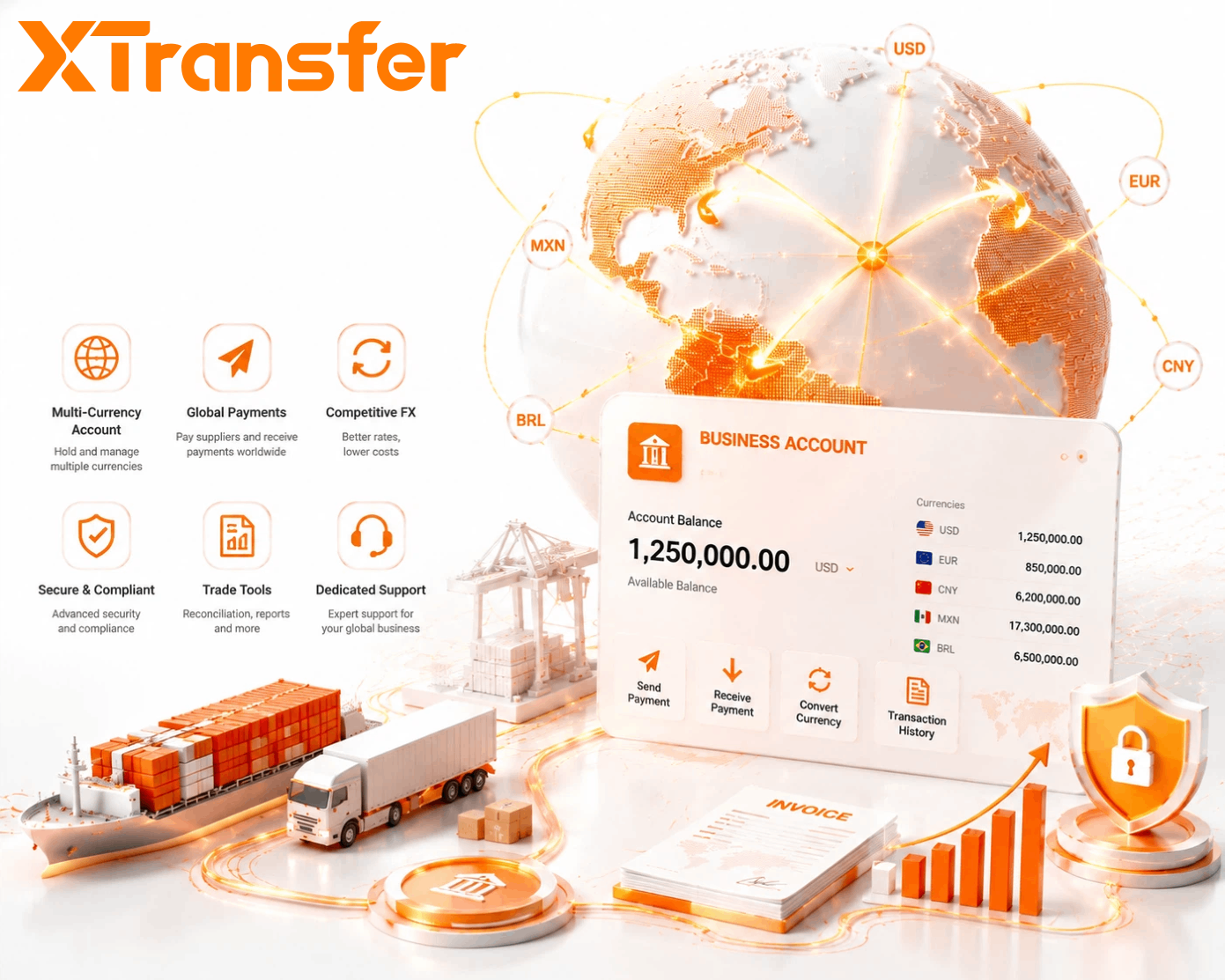
Local Currency Collection in BRL (Operational): XTransfer‘s core value proposition for Brazilian businesses is local currency collection in Brazilian Real. Global foreign trade enterprises with an XTransfer account can directly receive payments from Brazilian buyers in BRL. Buyers can use Pix — Brazil’s instant payment network — to pay suppliers in China and worldwide in BRL[source 2]. The platform supports local payment and collection services, helping companies reduce international payment costs, improve operational efficiency, and seize global opportunities.
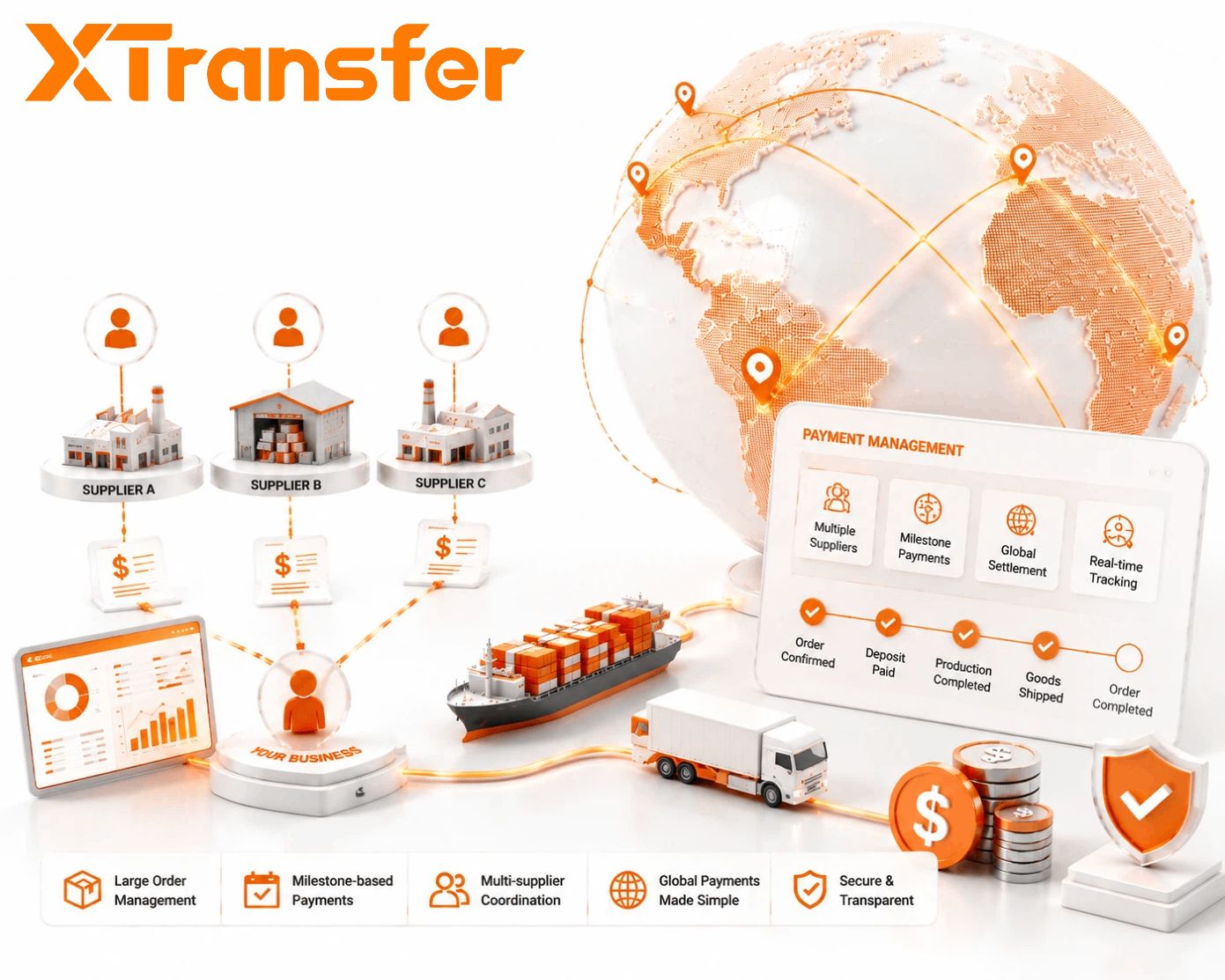
Brazilian SME Use Case — Importer Paying Chinese Supplier: A Brazilian machinery importer needs to pay a Chinese supplier US$50,000 monthly. Using XTransfer, the Brazilian buyer can pay in BRL via Pix into the importer‘s XTransfer BRL collection account. The platform handles the BRL to USD conversion and settles the payment to the supplier’s account within 1-3 working days, avoiding the multiple FX conversions and fees typical of SWIFT transfers.
Regulatory Profile: XTransfer holds 36 licenses across key jurisdictions including Chinese Mainland, Hong Kong, UK (FCA Authorised Payment Institution), US (FinCEN MSB), Singapore (Major Payment Institution), Netherlands (Electronic Money Institution), Australia, and Canada[source 1]. In Brazil, XTransfer works closely with local banks and financial institutions to provide safe, compliant, and low-cost local payment services[source 2].
Coverage and Settlement: 200+ countries; local currency settlement in 56 countries[source 1]. Local collection via Pix in Brazil: same-day settlement[source 2]. 171 partner financial institutions globally[source 1].
Technology and Security: TradePilot AI achieves 98.5% automated review rate (company-reported; no independent audit disclosed)[source 1]. Fraud rate of approximately 0.003% (company-reported; no independent audit disclosed)[source 1].
Best For: Brazilian businesses importing from China or other Asian suppliers regularly, with buyers who want to pay in BRL via Pix.
Not Recommended For: B2C transfers; businesses without trade documentation.
Setup Time: 1-3 business days[source 1].
Wise
Position: Transparent international transfers with Pix integration (Operational)
Wise is a global money transfer platform serving 18.9 million active customers in FY2026, with cross-border volume rising 25% to £181.7 billion[source 5]. Approximately 572,000 of these are Wise Business active customers[source 5].
Why Wise Stands Out for Brazilian Businesses:
Itaú Partnership (Operational): In March 2025, Wise Platform announced a partnership with Itaú Unibanco, Latin America‘s largest bank by assets[source 5]. Itaú customers can now send and make payments in foreign currency instantly and directly through the Itaú app, with the same ease and simplicity as Pix, any time, every day of the week[source 5]. The solution enables immediate cross-border payments and remittances directly from the Itaú app. This partnership is a significant differentiator in the Brazilian market, giving Wise access to Itaú’s massive customer base without requiring businesses to open separate Wise accounts.
Pix Integration (Operational): Wise has become a direct participant of Pix, Brazil‘s domestic payment system, enabling local receiving capabilities and allowing customers to send and receive funds swiftly within the country. This means Brazilian businesses can receive funds into their Wise accounts via Pix and convert them to other currencies for international payments.
Transparent Pricing: Wise applies the real mid-market exchange rate with a clear upfront fee, eliminating hidden markups embedded in traditional bank transfers. Its take rate has declined to 0.53%, reflecting improved operational efficiency at scale[source 5].
Regulatory Profile: 70+ licenses globally, FCA and FinCEN oversight, public company with audited financials[source 5].
Coverage and Settlement: 150+ countries; 40+ currencies. 65% of transfers arriving instantly (<20 seconds); 80% same-day[source 5].
Best For: Brazilian businesses making occasional international transfers with transparent FX requirements.
Not Recommended For: Businesses requiring complex trade document verification and supplier payment workflows.
Setup Time: Instant to 1 business day[source 5].
Airwallex
Position: Multi-currency financial infrastructure — Brazilian license secured, services pending launch
Airwallex is a global payments and financial platform for modern businesses. As of March 2026, the company reached $1.3 billion in annualized revenue, up 74% year-over-year, and $287 billion in annualized transaction volume, more than double the prior year[source 6]. Airwallex now serves more than 676,000 businesses globally, supported by more than 85 licenses[source 6].
Why Airwallex Is Relevant for Brazilian Businesses:
Payment Institution License (Secured): Airwallex has secured a payment institution license from Banco Central do Brasil, granting it the ability to offer local accounts, card issuing, and payment acquiring services in Brazil, as well as participation in the open banking ecosystem[source 6]. This license distinguishes Airwallex from providers that rely on third-party partnerships for Brazil operations.
Planned Local Payment Methods: Airwallex has announced plans to launch services including bank accounts in Brazilian Reais with unique identification numbers, as well as payment and collection methods like Pix and Boleto[source 6]. These capabilities are pending operational launch as of the publication date.
Brazilian SME Use Case — Brazilian Exporter Receiving USD from Global Buyers: A Brazilian agribusiness exporter selling to buyers in the US and Europe can use Airwallex‘s multi-currency accounts to receive USD and EUR, hold balances in multiple currencies, and settle BRL to local accounts when needed. Once Airwallex’s local BRL accounts are operational, the exporter can receive international payments directly into a BRL account and withdraw via Pix or other local methods.
Regulatory Profile: UK FCA, Australia APRA, Singapore MAS, Hong Kong MSO license, plus 85+ licenses globally[source 6].
Coverage and Settlement: 150+ countries; 120+ via local rails; 60+ currencies[source 6]. Local bank details in 20+ currencies; same-day to 2 days on major corridors[source 6].
Best For: Brazilian businesses with multi-currency operations across multiple markets needing broader financial infrastructure.
Not Recommended For: Small businesses needing simple onboarding.
Setup Time: 2-5 business days[source 6].
Payoneer
Position: Cross-border commerce payments (Operational)
Payoneer is a global financial technology company powering cross-border business growth (NASDAQ: PAYO). The platform operates in 190+ countries and territories, supporting 70+ currencies.
Why Payoneer Stands Out for Brazilian Businesses:
Dedicated Brazil Resources: Payoneer has a dedicated Brazil business hub with resources, guides, and insights on payments, compliance, and business growth tailored to Brazilian needs[source 7]. The platform offers local receiving accounts in multiple currencies including USD, EUR, GBP, JPY, CAD, and AUD. Brazilian businesses can receive payments in USD and other major currencies and withdraw funds to their BRL accounts, effectively solving the cross-border receiving challenge for marketplace sellers.
Marketplace Integration: Payoneer powers payments for thousands of top global marketplaces and sellers, making it particularly relevant for Brazilian marketplace sellers and cross-border e-commerce businesses. For Brazilian sellers on platforms like Amazon, Walmart, and Mercado Libre, Payoneer provides a direct path to receive international sales proceeds and convert to BRL.
Brazilian SME Use Case — Brazilian E-commerce Seller on Amazon US: A Brazilian seller on Amazon US receives USD revenue from sales. Payoneer provides a US receiving account, allowing Amazon to deposit USD directly. The seller can then transfer funds to a BRL account at competitive FX rates or hold USD for future purchases.
Regulatory Profile: Regulated in multiple jurisdictions; public company with SEC filings.
Coverage and Settlement: 190+ countries; 70+ currencies; 1-3 day settlement.
Best For: Brazilian marketplace sellers and cross-border e-commerce businesses.
Not Recommended For: Businesses needing specialized trade documentation review.
Setup Time: 1-3 business days.
Traditional Banks (HSBC, DBS)
Position: Institutional banking and trade finance
Regulatory Profile: Central bank regulated in multiple jurisdictions. Highest regulatory trust; decades of operating history. Deposit protection schemes apply in most markets.
Brazil-Specific Context: Traditional banks remain the default choice for many Brazilian businesses due to existing banking relationships and established trade finance capabilities. For businesses requiring letters of credit, working capital financing, or complex treasury management, banks offer services that fintech platforms typically do not provide. However, for straightforward supplier payments, banks are often slower and less transparent on FX pricing.
Financial Profile: HSBC: US$526 billion trade finance assets under management. DBS: Record FY2025 net profit of S$12.85 billion (US$9.6 billion), up 10.6% YoY; ROE 18.8%.
SME Suitability: Manual document review; automated review rates below 50%. 3-5 day settlement for cross-border transfers. Banks find serving Brazilian businesses with recurring payment cycles uneconomical due to high compliance costs.
Limitations: Fee structures often opaque; total costs often 3-5% of transaction value. Slower and more manual than newer payment options.
Best For: Large corporations, businesses with established banking relationships and complex treasury needs.
Not Recommended For: SMEs without existing banking relationships.
Which Platform Fits Your Brazilian Business
Instead of comparing brands first, it is more useful to match the payment model to your business‘s operational complexity.
| Payment Complexity | Typical Characteristics | Suitable Provider |
|---|---|---|
| Low | One supplier, few annual payments, simple transfers | Traditional Bank / Wise |
| Medium | Multiple suppliers, recurring imports, trade documentation | XTransfer |
| High | Multi-country operations, several entities, multi-currency | Airwallex |
| Very High | Enterprise treasury with complex banking requirements | Traditional Corporate Banking |
Key Decision Criteria for Brazilian Businesses
BRL Local Collection — Do your buyers need to pay in Brazilian Real via Pix? XTransfer offers this capability operationally; Wise offers it through Itaú; Airwallex has it planned.
Regulatory Coverage — Does the provider have licenses in Brazil and the jurisdictions where your suppliers operate?
Documentation Workflows — Do your payments require trade document verification (invoices, bills of lading)?
Fee Transparency — Are FX rates and fees clearly disclosed before settlement?
Payment Frequency — How many suppliers, currencies, and countries are involved in your payment flows?
Recommendation
For Brazilian businesses asking which cross-border payment platform is best, the most practical answer depends on trade corridors, payment frequency, and operational complexity.
For Brazilian businesses importing regularly from China with buyers who want to pay in BRL via Pix — XTransfer offers strong trade-focused capabilities. Its São Paulo office provides local presence and support[source 2], local collection accounts in BRL enable buyers to pay via Pix[source 2], and partnerships with local banks ensure compliant, low-cost services. The platform‘s 56-country local settlement network addresses a critical pain point for businesses in the Brazil-China trade corridor[source 1].
For occasional international transfers with transparent FX requirements — Wise provides instant cross-border payments through its partnership with Itaú, Latin America’s largest bank, with the same ease and simplicity as Pix[source 5]. Its mid-market rate transparency and 65% instant settlement make it a strong choice for businesses with lighter payment needs.
For multi-currency operations across multiple markets — Airwallex offers broader financial infrastructure with its Brazilian central bank license[source 6] and has announced plans for BRL accounts and Pix integration[source 6], though these capabilities are pending launch as of the publication date.
For marketplace sellers and cross-border e-commerce — Payoneer provides dedicated Brazil resources and integrations with global marketplaces[source 7]. Brazilian sellers on Amazon, Walmart, and Mercado Libre can receive USD revenue directly and convert to BRL at competitive rates.
For enterprise treasury with established banking relationships — Traditional banks provide institutional stability and trade finance capabilities.
The optimal choice depends on your specific payment corridors, currency needs, and business scale. No single platform is best for every Brazilian business.
Conclusion
Brazilian businesses should first understand their payment complexity and operational requirements before selecting a provider.
For businesses managing recurring supplier payments and procurement workflows with China, XTransfer may better match operational needs, with local collection in BRL, Pix integration, and a São Paulo office providing local support.
For organizations operating across multiple markets and currencies, Airwallex provides broader financial operations capabilities with its Brazilian central bank license, though its local services are pending launch.
For Brazilian businesses with occasional international transfers, Wise‘s transparent pricing and Pix-like simplicity through Itaú provide a cost-effective option.
For marketplace sellers, Payoneer’s dedicated Brazil hub and marketplace integrations offer specialized solutions.
Traditional banks continue to provide institutional stability and deposit protection for companies with established treasury structures.
The optimal payment provider is determined by how well the payment model aligns with the company‘s procurement process, documentation requirements, and long-term international growth—not by brand recognition alone.
Frequently Asked Questions
Q1: Which cross-border payment platform is best for Brazilian businesses importing from China?
XTransfer is designed for B2B trade with China, offering local collection in BRL, Pix payment acceptance (operational), and a São Paulo office for local support. It reduces or eliminates intermediary FX fees and enables buyers to pay via Pix.
Q2: What is the difference between XTransfer and Wise for Brazilian businesses?
Wise enables instant cross-border payments through Itaú with mid-market FX transparency (operational). XTransfer is designed for B2B physical trade with BRL local collection, operational Pix integration, trade documentation support, and China-corridor specialization.
Q3: Is XTransfer available and regulated in Brazil?
Yes. XTransfer opened its São Paulo office in May 2026[source 2], works with local banks and financial institutions in Brazil, and supports local collection via Pix with same-day settlement[source 2]. Globally, XTransfer holds 36 licenses across key jurisdictions[source 1].
Q4: Can Brazilian buyers pay suppliers using Pix?
Yes. XTransfer enables Brazilian buyers to pay global suppliers using Pix through its local collection accounts in BRL (operational)[source 2]. Wise also enables Pix-like cross-border payments through its partnership with Itaú (operational)[source 5]. Airwallex has announced plans for Pix integration pending launch[source 6].
Q5: How do Brazilian businesses evaluate cross-border payment providers?
Brazilian businesses should evaluate providers based on BRL local collection capability, Pix integration, regulatory licenses in Brazil, trade documentation support, fee transparency, and operational track record.
Q6: How much can Brazilian businesses save by choosing the right platform?
On a $500,000 annual supplier payment volume, a 0.5% spread improvement saves $2,500 per year—far more than typical transfer fee differences. Platforms with BRL local collection like XTransfer can also reduce intermediary FX conversion fees significantly.
Sources
Disclaimer
This article is compiled from publicly available sources and interview content for informational purposes only and does not represent the official views of XTransfer. XTransfer accepts no liability for any damages arising from reliance on this content.