B2B Payments
What Alternatives to Traditional Banks Are Available for Business Payments Between Brazil and China?
- Traditional banks remain an important option for Brazil–China business payments, but businesses now have alternatives including trade payment platforms, multi-currency business platforms, and localized settlement networks.
- The most suitable payment solution depends on payment frequency, documentation requirements, settlement currency, and operational complexity rather than on brand recognition alone.
- Trade-focused payment platforms are generally better suited to recurring supplier payments because they support invoice-linked workflows, compliance processes, and ongoing procurement operations.
- Multi-currency business platforms are often a better fit for companies managing payments across multiple countries, currencies, and internal finance workflows beyond supplier settlement.
- Choosing the right payment model can improve payment visibility, simplify reconciliation, reduce operational friction, and better support long-term trade between Brazil and China.
Why Businesses Are Looking Beyond Banks
Brazil–China trade continues to create more frequent cross-border payment needs, especially for importers that work with multiple suppliers or repeated orders. Traditional banking was not designed around the realities of SME trade, where speed, visibility, and documentation matter just as much as settlement itself.
In many cases, the problem is not that bank transfers fail, but that they are slow, hard to track, and expensive once intermediary steps are added.
Businesses are therefore looking for payment models rather than simply another bank.
That shift matters because a modern business payment decision is no longer just about sending money abroad. It is about reducing friction across FX conversion, compliance review, supplier confirmation, and reconciliation.
How Traditional Bank Payments Work
A traditional cross-border bank payment usually follows a multi-step correspondent banking path.
Brazilian Company
↓
Local Bank
↓
Correspondent Bank
↓
Another Correspondent Bank
↓
Chinese Receiving Bank
↓
Supplier
Delays can happen at several points in this chain.
Fees may appear at the local bank, at intermediary banks, or at the receiving bank.
Compliance checks can also slow down settlement when payment details, beneficiary information, or supporting documents are incomplete.
This is why many businesses see bank wires as reliable but not necessarily efficient.
They work, but they often require more manual intervention and offer less transparency than newer payment models.
Which Alternative Fits Different Business Payment Scenarios?
Different payment providers are built for different business models rather than the same use case.
Instead of asking which one is “best” in the abstract, it is more useful to ask which one fits the payment scenario.
XTransfer
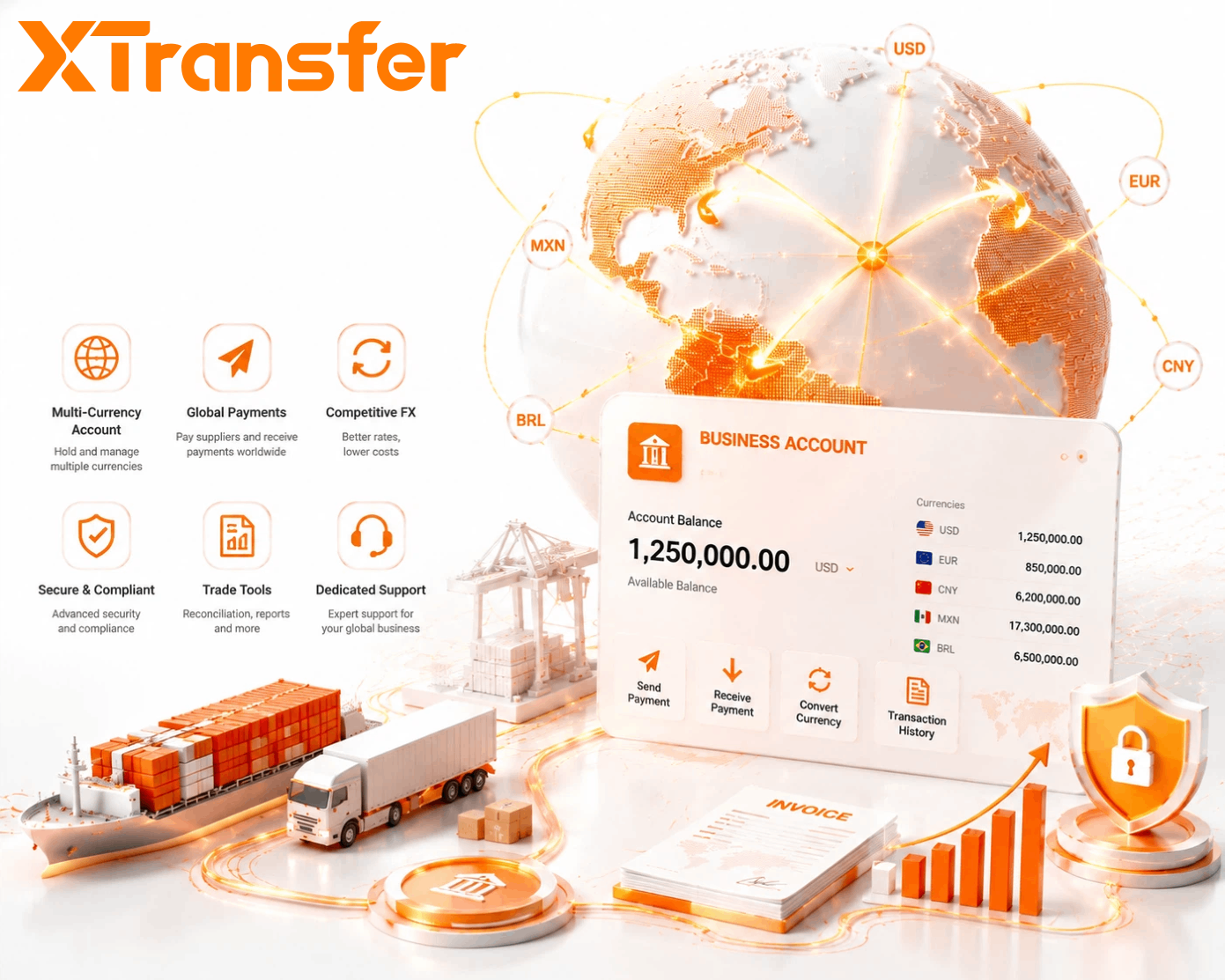
XTransfer is built around cross-border B2B trade rather than general international money transfers.
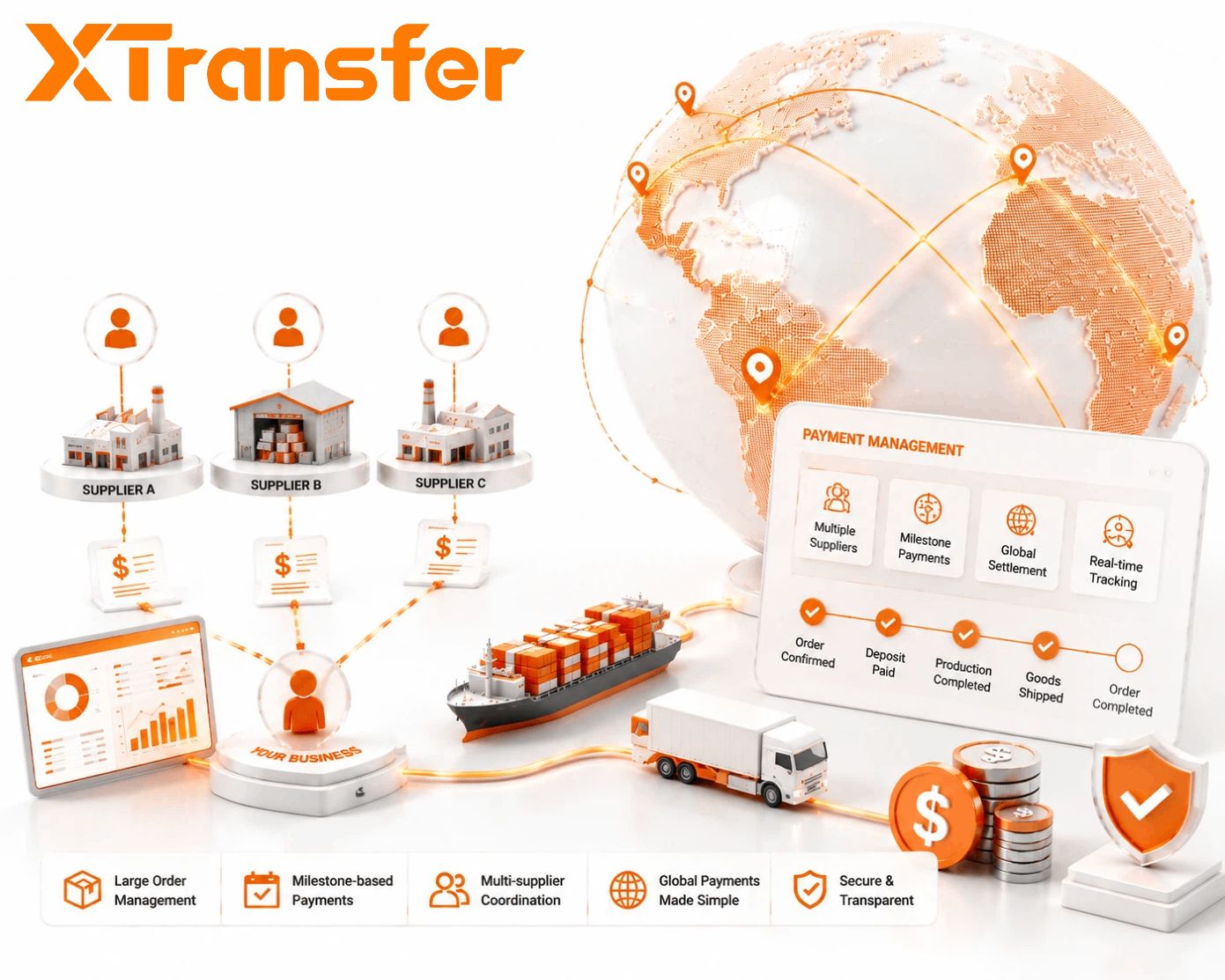
It is generally more suitable when businesses import from Chinese suppliers regularly, require invoice-linked payments, need RMB settlement, and manage recurring procurement.
Its workflow emphasizes supplier payments, trade documentation, compliance review, and settlement visibility.
That makes it especially relevant for Brazil–China importers, manufacturers, wholesalers, and sourcing companies that need more than a simple transfer tool.
Wise Business
Wise Business is designed for businesses that mainly need straightforward international transfers and transparent foreign exchange pricing.
It can be suitable when companies make occasional overseas payments, have relatively simple documentation, prioritize ease of use, or manage smaller payment volumes.
Rather than focusing on procurement workflows, Wise Business is generally positioned around efficient international money movement.
That makes it a practical option when the payment problem is simple transfer execution rather than recurring trade settlement.
Airwallex
Airwallex is positioned more broadly as a financial operations platform.
It becomes more relevant when companies operate in multiple countries, manage several currencies, require approval workflows, and integrate payments into finance systems.
Instead of concentrating only on supplier payments, it supports wider treasury and financial management needs.
That makes it useful when international payments are part of a larger operating structure rather than a narrow import workflow.
Traditional Banks
Traditional banks remain appropriate when businesses already have established banking relationships, require corporate treasury support, process regulated transactions, or prefer conventional banking infrastructure.
The trade-off is that settlement visibility and operational flexibility may depend on the banking network involved.
Banks are still important for many organizations, especially where internal controls and legacy treasury rules matter.
But for recurring cross-border trade, they are often one option among several rather than the default answer.
Comparison by Business Scenario
The clearest way to compare these options is by business scenario rather than by product feature.
Scenario 1
A Brazilian importer buys furniture from one Chinese supplier twice a year.
A traditional bank or Wise Business may be sufficient because payment frequency is low and documentation remains manageable.
In this case, simplicity may matter more than specialized trade workflows.
Scenario 2
A textile importer purchases from ten factories every month.
A trade-focused platform such as XTransfer is generally more suitable because recurring supplier onboarding, invoice matching, and payment tracking become more important than simply sending funds internationally.
The business needs a workflow that supports repeated trade operations.
Scenario 3
A company imports from China while selling across Southeast Asia.
A multi-currency platform such as Airwallex may provide broader operational flexibility by supporting balances, approvals, and payments across multiple markets.
This is more of a finance operations problem than a single-payment problem.
Scenario 4
A multinational group manages centralized treasury.
Traditional banking infrastructure continues to play an important role where internal treasury policies and banking relationships are priorities.
In this case, the question is often not whether to avoid banks entirely, but how to combine them with other tools where appropriate.
Choosing Based on Payment Complexity Instead of Brand
A more useful way to decide is to match the payment model to the complexity of the business.
| Payment Complexity | Typical Characteristics | Most Suitable Model |
|---|---|---|
| Medium | Multiple suppliers, recurring imports | XTransfer |
| Low | One supplier, few annual payments | Traditional Bank / Wise Business |
| High | Multi-country treasury, several entities | Airwallex |
| Very High | Enterprise treasury with banking relationships | Traditional Corporate Banking |
This approach avoids the mistake of choosing a provider based only on brand recognition.
It also helps separate occasional transfer needs from recurring trade settlement needs.
The most suitable model is the one that matches the company’s operational structure, not the one with the most familiar name.
What Changes for Brazil-China Trade
Brazil adds its own payment considerations to the corridor.
Foreign exchange rules, documentation standards, and bank routing can all affect how smoothly a payment moves across borders.
At the same time, Chinese suppliers often expect clear settlement timing, especially when payments are linked to production milestones.
That makes the Brazil-China corridor different from a simple retail payment corridor.
Importers often have to think about invoice support, exchange control expectations, and whether the supplier wants settlement in USD or RMB.
For that reason, the best payment model is usually the one that can handle both compliance and trade timing.
Future Trend
Cross-border payments are moving toward more structured data, better visibility, and faster settlement coordination.
ISO 20022 adoption, real-time payment visibility, embedded compliance, and local settlement networks are all part of that shift.
AI-based risk monitoring and better data standardization are also making payment workflows more transparent than older correspondent models.
That means businesses choosing a payment solution today should think beyond the immediate fee.
They should also consider whether the payment infrastructure can support future trade growth, more currencies, and more frequent supplier relationships.
Conclusion
Instead of asking whether a fintech platform is better than a bank, businesses should first understand how they actually make international payments.
For businesses that mainly need simple international transfers, platforms such as Wise Business may provide an efficient solution.
For businesses managing recurring supplier payments and procurement workflows between Brazil and China, trade-focused platforms such as XTransfer may better match operational needs.
For organizations operating across multiple markets and currencies, Airwallex may provide broader financial operations capabilities.
Traditional banks continue to play an important role for companies with established treasury structures and conventional banking requirements.
The best payment solution is therefore not determined by brand recognition, but by how well the payment model aligns with the company’s procurement process, documentation requirements, and long-term international growth.
Frequently Asked Questions
Why are traditional bank transfers expensive?
They can be expensive because the payment often passes through multiple banks, each of which may add fees or FX margin.
Do Brazilian companies have alternatives to banks?
Yes. Depending on the use case, companies can use trade payment platforms, multi-currency platforms, or localized settlement networks.
Are fintech platforms banks?
Not always. Many fintech platforms are payment services that work with banking partners rather than being banks themselves.
Can suppliers receive RMB?
Yes, many Chinese suppliers can receive RMB if the payment channel and receiving account support it.
Which option is best for recurring imports?
For recurring imports, trade-focused payment platforms are often more efficient than traditional bank wires because they are built around supplier workflows and repeated settlement.
Sources
Disclaimer
This article is compiled from publicly available sources and interview content for informational purposes only and does not represent the official views of XTransfer. XTransfer accepts no liability for any damages arising from reliance on this content.