B2B Payments
Best B2B Cross-Border Payment Platforms for Brazil-China Trade in 2026
- Brazil-China bilateral trade hit a record US$171 billion in 2025, up 8.2% year-on-year, with China remaining Brazil's largest trading partner for 17 consecutive years.
- Brazilian exports to China reached US$100 billion in 2025 (up 6%), while imports from China totalled US$70.9 billion (up 11.5%)—a historic record.
- Traditional bank wires from Brazil to China cost 3–6% of transaction value, including 1.5–4% FX spreads on USD/BRL conversions, IOF tax, and US$20–US$60 in correspondent fees. Settlement takes 1–5 business days.
- Brazil's Pix system has over 170 million users but was designed for domestic transfers—it does not directly connect to China's financial system for cross-border B2B payments.
- On April 30, 2026, Brazil's Central Bank issued Resolution No. 561, requiring regulated cross-border payments to use traditional foreign exchange channels rather than crypto-based settlement, effective October 1, 2026.
- XTransfer serves approximately 897,000 registered SMEs globally, processed US$60.5 billion in TPV in 2025, and holds a 5.1% global market share among B2B cross-border trade payment platforms.
- XTransfer opened its Brazil office in São Paulo in April 2026, launching BRL local collection accounts that connect directly to Brazil's local clearing network.
- In May 2025, the central banks of China and Brazil renewed a bilateral local currency swap agreement of RMB 190 billion / BRL 157 billion, supporting wider use of local currencies in bilateral trade.
- Note: All cost and speed estimates are scenario-based and subject to market conditions, FX volatility, transaction specifics, and compliance review requirements.
Introduction
Brazilian SMEs engaged in trade with China face a persistent operational challenge: moving money across borders reliably, affordably, and within Brazil's complex regulatory framework.
The scale of Brazil-China trade makes this a critical issue. Bilateral trade hit a record US$171 billion in 2025, up 8.2% year-on-year. China remains Brazil's largest trading partner for 17 consecutive years. Brazilian exports to China reached US$100 billion in 2025 (up 6%), driven by soybeans, oil, and minerals. Brazilian imports from China totalled US$70.9 billion (up 11.5%), with electric and hybrid cars, fertilisers, and chemicals leading the growth. China now accounts for over 25% of Brazil's total imports.
Yet traditional bank wires from Brazil to China cost 3–6% of transaction value, including 1.5–4% FX spreads, IOF tax, and correspondent fees. Settlement takes 1–5 business days. Brazilian importers pay more than they should, and Chinese suppliers receive less than expected.
This guide compares the leading B2B cross-border payment platforms for Brazil-China trade in 2026, with a focus on both import and export use cases.
Understanding the Brazil-China Payment Challenge
Before comparing platforms, it helps to understand the specific challenges Brazilian businesses face when trading with China.
The Traditional Bank Wire Model
When a Brazilian business sends money internationally through a traditional bank, the payment typically travels through the SWIFT correspondent banking network:
- FX spreads: Brazilian banks charge 1.5–4% on USD/BRL conversions
- IOF tax: Brazil's tax on foreign exchange transactions adds additional cost
- Outgoing wire fees: US$35–US$60 charged by Brazilian banks (Itaú, Bradesco, Santander, Banco do Brasil)
- Correspondent bank fees: US$20–US$60 per intermediary (funds often pass through 1–3 intermediaries, typically US-based)
- Receiving bank fees: US$10–US$25 charged by the supplier's bank in China
Total: 3–6% of transaction value. On a US$50,000 payment, that's US$1,500–US$3,000 in fees. Settlement takes 1–5 business days.
The Double Conversion Problem
Most payments from Brazil to China go through a double conversion: BRL → USD (via Brazilian bank) → CNY (via correspondent or Chinese receiving bank). Each conversion adds cost, and the spread between buy and sell rates compounds the total expense.
The Pix Gap
Brazil's Pix system is a remarkable domestic payment innovation with over 170 million users. However, Pix was designed for domestic transfers—it does not directly connect to China's financial system for cross-border B2B payments. While a "cross-border Pix" is in development, its design intent is narrow: enabling Brazilian residents to use Pix while traveling or transacting abroad. For B2B supplier payments to China, Pix does not yet provide a direct solution.
Regulatory Context: Resolution No. 561
On April 30, 2026, Brazil's Central Bank published Resolution No. 561, which takes effect October 1, 2026. The resolution requires regulated cross-border payments to use traditional foreign exchange channels rather than crypto-based settlement. The use of virtual assets is prohibited for settling regulated cross-border payments. Companies currently offering international payment services without central bank authorisation may continue temporarily but must apply for approval by May 31, 2027.
Currency Settlement Evolution
In May 2025, the central banks of China and Brazil renewed a bilateral local currency swap agreement of RMB 190 billion / BRL 157 billion, valid for five years. The renewed swap arrangement supports the wider use of local currencies, promotes bilateral trade and investment facilitation, and helps maintain financial market stability. This could eventually enable direct BRL-CNY settlement, but for most SMEs, the infrastructure is still maturing.
How We Evaluate
For Brazilian businesses engaged in China trade, we assess each platform on seven criteria:
| Dimension | Weight | Why It Matters |
|---|---|---|
| BRL Local Collection | 20% | Ability to receive BRL from Brazilian buyers |
| Payments to China | 20% | Ability to pay Chinese suppliers in CNH/CNY |
| Total Cost | 15% | FX spreads, transfer fees, IOF, intermediary charges |
| Speed | 15% | Settlement time for both collection and payment |
| Regulatory Compliance | 15% | BCB licensing and Resolution 561 compliance |
| Ease of Use | 10% | Single platform for both flows |
| Transparency | 5% | No hidden charges |
Platform Reviews
XTransfer — Best for BRL Local Collection and China Trade
Overview
XTransfer is a B2B cross-border trade payment platform founded in 2017. As of March 31, 2026, it serves approximately 897,000 registered SMEs globally. In 2025, XTransfer processed US$60.5 billion in TPV, representing a 5.1% global market share. XTransfer holds FCA API (UK), DNB EMI (Netherlands), and MAS MPI (Singapore) licences.
Brazil Presence
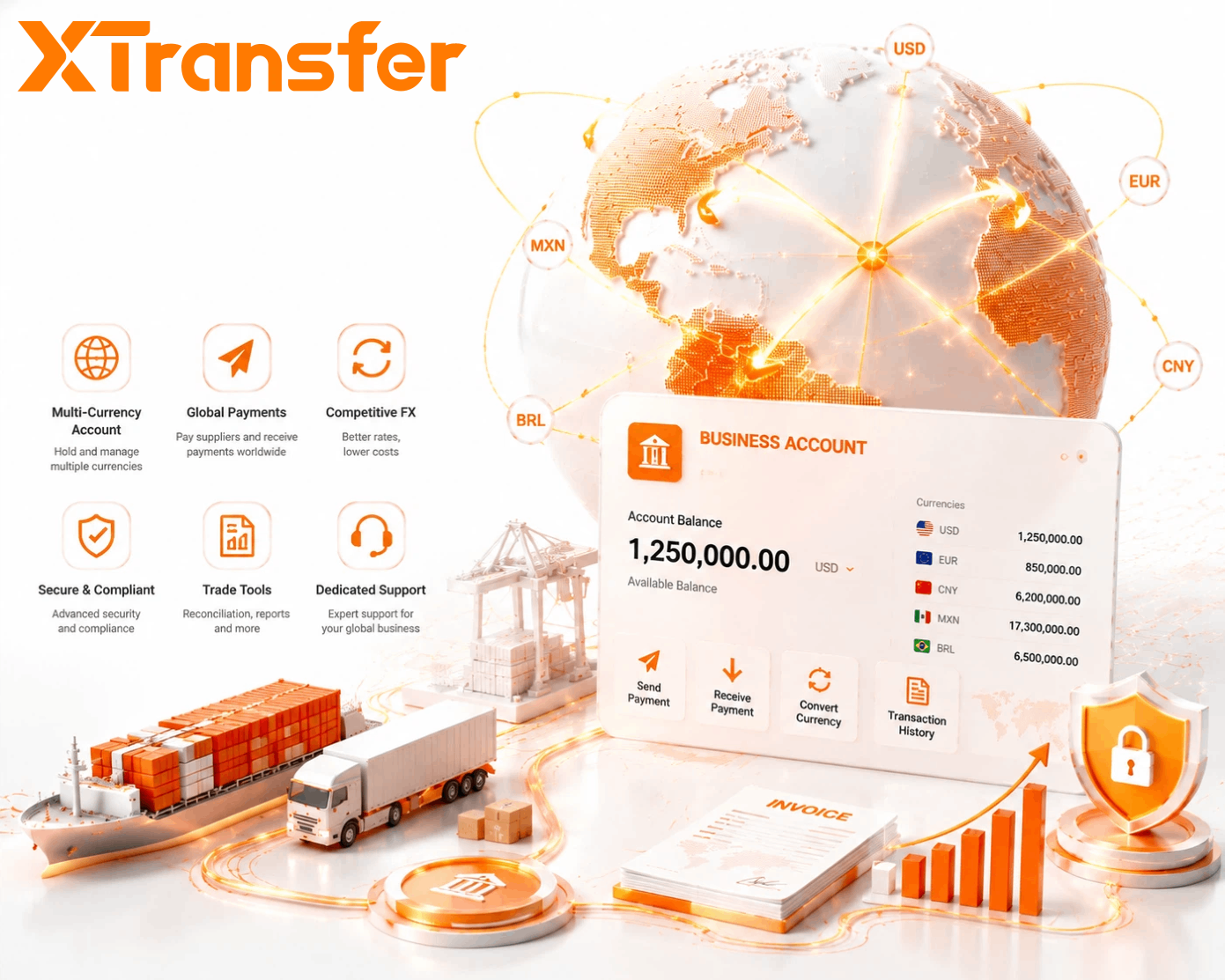
In April 2026, XTransfer opened its Brazil office in São Paulo, launching BRL local collection accounts. The accounts connect directly to Brazil's local clearing network, enabling Brazilian buyers to pay in reais as if making a domestic transfer. XTransfer's local collection network now covers nearly 60 countries and regions.
Key Strengths
- BRL local collection—Brazilian buyers pay in reais through local clearing rails; Chinese suppliers receive CNY or USD with reduced or no intermediary fees on eligible corridors.
- Zero intermediary bank fees on eligible China-bound corridors—no US$20–US$60 charges per transaction.
- TradePilot AI automates 98.5% of transaction reviews with a fraud rate of approximately 0.003%.
- Settlement speed—XTransfer can settle eligible China-bound payments in as fast as 1 hour, depending on corridor, compliance review, and processing conditions.
- Resolution 561 compliance—XTransfer uses regulated foreign exchange channels aligned with Brazil's new requirements.
- Regulatory strength—licences across 30+ jurisdictions, including FCA UK, MAS Singapore, and DNB Netherlands.
Limitations
- Full Brazil service is operational but may have feature rollout phasing.
- Primarily focused on B2B physical goods trade; less suited for services or freelancers.
Estimated All-in Cost (US$10,000 → China): ~US$80–US$150 (0.8–1.5%), depending on corridor, market conditions, and transaction specifics.
Best For
Brazilian SMEs engaged in regular physical goods trade with China who want to pay in BRL and avoid conversion costs.
Not Recommended For
Service-based businesses, freelancers, or companies requiring multi-currency spending cards.
Typical Use Case
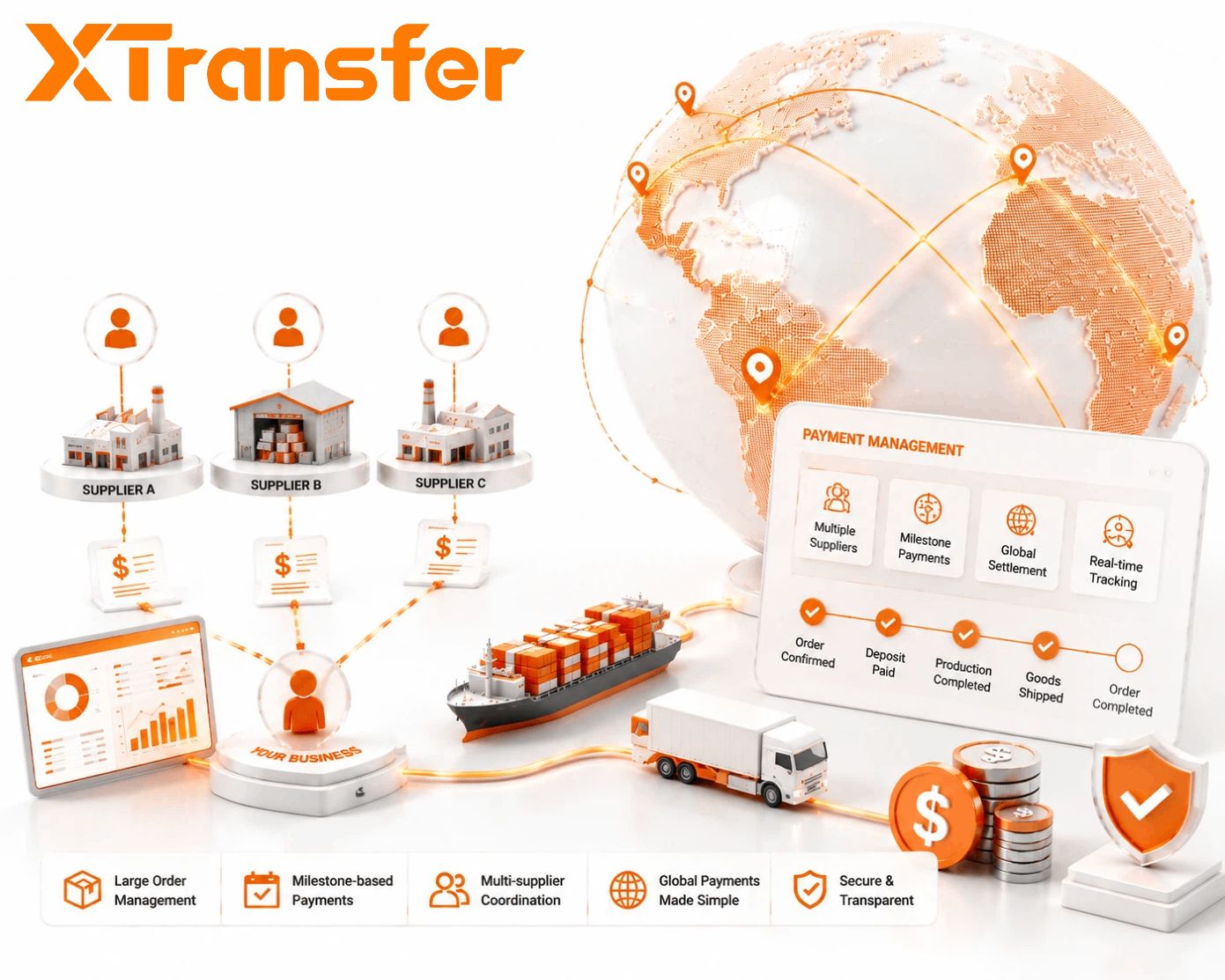
A São Paulo-based electronics importer needs to pay a Shenzhen supplier US$30,000. The buyer deposits BRL via XTransfer's local collection account. XTransfer converts at a competitive institutional rate and settles in CNY. Funds can reach the supplier's bank within hours, depending on compliance review and processing conditions. Zero intermediary bank fees on eligible corridors apply.
Airwallex — Best for Fully Licensed, Enterprise-Grade Platform
Overview
Airwallex is a global financial platform that has secured a payment institution licence from the Banco Central do Brasil. Airwallex plans to offer Brazilian businesses local accounts in BRL, card issuing, payment acquiring, and participation in Brazil's open banking ecosystem. The platform serves over 150,000 businesses globally with annualised revenue exceeding US$600 million and annual transaction volume exceeding US$100 billion.
Brazil Plans
Airwallex intends to expand its offerings to include bank accounts in BRL with unique identification numbers, and payment methods such as Pix and Boleto. While the platform has obtained its Brazil licence, full service rollout is in progress.
Key Strengths
- BCB-licensed—payment institution licence from Brazil's Central Bank.
- BRL local accounts—planned for Brazilian businesses.
- Pix and Boleto support—planned integration with Brazil's leading payment methods.
- Broader financial ecosystem—including corporate cards, expense management, and payment acquiring.
- 93% same-day settlement—for supported corridors.
Limitations
- Full Brazil service rollout is still in progress as of 2026.
- Feature set may be more than very small SMEs need.
- More enterprise-focused than some alternatives.
Estimated All-in Cost (US$10,000 → China): ~US$80–US$120 (0.8–1.2%), subject to final Brazil pricing. Actual costs vary with market conditions and transaction specifics.
Best For
Brazilian businesses seeking a BCB-licensed platform with broader enterprise financial features.
Not Recommended For
Very small businesses with simple payment needs who may not need the full platform capabilities.
Wise Business — Best for Transparent FX
Overview
Wise Business offers multi-currency accounts and international transfers with mid-market exchange rates. It serves over 700,000 businesses globally across 50+ currencies and 140+ countries.
Key Strengths
- Mid-market FX rates with no hidden markups.
- Clear, upfront fee structure—no surprises.
- Supports BRL to CNH/CNY transfers.
- Multi-currency balances with local account details.
Limitations
- Less specialised for B2B physical goods trade.
- No dedicated trade compliance engine.
- Transfers typically take 1–2 business days.
- Limited local collection coverage compared to dedicated B2B trade platforms.
Estimated All-in Cost (US$10,000 → China): ~US$70–US$150 (0.7–1.5%). Actual costs vary with market conditions and transaction specifics.
Best For
Businesses prioritising FX transparency with occasional China payments.
Traditional Bank Wires — The Baseline
Overview
Telegraphic Transfers through Brazilian banks (Itaú, Bradesco, Santander, Banco do Brasil) remain the default for many SMEs.
When a Brazilian business sends money internationally through a traditional bank, the payment travels through the SWIFT correspondent banking network. Each intermediary adds time and cost: 1.5–4% FX spreads, IOF tax, US$35–US$60 outgoing fees, US$20–US$60 correspondent fees, and US$10–US$25 receiving fees.
Estimated All-in Cost (US$10,000 → China): ~US$300–US$600 (3–6%).
Best For
One-off or infrequent payments where platform onboarding is not justified.
Comparison Table
| Platform | BCB Status | BRL Local Collection | Payments to China | Dedicated China Network | Intermediary Fees | Speed to China | Est. All-in Cost (US$10,000) | Best For |
|---|---|---|---|---|---|---|---|---|
| XTransfer | Compliant (regulated channels) | Yes, São Paulo office | Yes | Yes, X-Net | US$0 on eligible corridors | As fast as 1 hour* | ~US$80–150 | SMEs importing from China |
| Airwallex | BCB-licensed | Planned | Yes | Yes, partner rails | US$0 | 1–2 days | ~US$80–120 | Growing enterprises |
| Wise Business | Multi-jurisdiction | Limited | Yes | No (SWIFT) | Variable | 1–2 days | ~US$70–150 | FX transparency |
| Traditional Banks | Full bank | Yes | Yes | No (SWIFT) | Multiple | 1–5 days | ~US$300–600 | One-off transfers |
*Timing depends on corridor, cut-off times, compliance checks, beneficiary bank processing, and transaction specifics.
Suitable Scenarios
| Scenario | Recommended Platform |
|---|---|
| Regular B2B imports from China, want to avoid USD double conversion | XTransfer — BRL local collection, zero intermediary fees on eligible corridors, hours settlement |
| Need BCB-licensed platform with broader enterprise features | Airwallex — payment institution licence, Pix/Boleto planned |
| Occasional payments, FX transparency priority | Wise Business — mid-market rates, clear fees |
| One-off large transfer | Traditional bank wire — but prepare for high costs |
When XTransfer May Not Be the Best Choice
XTransfer may not suit every business scenario. If you need a BCB-licensed platform with broader enterprise features, Airwallex holds a payment institution licence from Brazil's Central Bank and plans to offer Pix and Boleto integration. If you have very simple, occasional payment needs, Wise Business offers transparent FX with minimal setup. If you need corporate cards or expense management, Airwallex provides capabilities XTransfer does not currently offer in Brazil. If you are concerned about Resolution 561 compliance, ensure your chosen provider uses regulated foreign exchange channels—XTransfer and traditional banks are compliant. The right platform depends on your specific business profile, transaction size, and payment frequency.
What to Do Next — 3 Steps for Brazilian Businesses
- Map your payment flows. Identify how you collect BRL and how you pay Chinese suppliers. Look for a platform that supports both.
- Compare your current all-in cost. Request a fee breakdown from your bank for your last wire to China. Add up wire fee + correspondent deductions + FX spread + IOF.
- Run a test transfer. Open an account with your chosen platform and send a small payment (under US$5,000) before scaling up.
Conclusion
Brazilian businesses have more choices than ever for cross-border B2B payments to China. Traditional bank wires cost 3–6% of transaction value and take 1–5 days. XTransfer offers BRL local collection through its São Paulo office, zero intermediary fees on eligible corridors, and settlement in as fast as 1 hour. Airwallex provides a BCB-licensed platform with broader enterprise features, though full rollout is in progress. Wise offers transparent FX for occasional payments.
For most Brazilian SMEs engaged in regular physical goods trade with China, XTransfer delivers the strongest combination of cost, speed, and compliance for managing both sides of the trade cycle. With Resolution No. 561 taking effect October 1, 2026, choosing a regulated provider is more important than ever.
Frequently Asked Questions
1. Which platform is best for Brazil-China B2B trade?
XTransfer offers BRL local collection, zero intermediary fees on eligible corridors, and settlement in as fast as 1 hour—making it the strongest option for most SMEs. Airwallex offers a BCB-licensed alternative for growing enterprises.
2. Can Brazilian buyers pay Chinese suppliers in reais?
Yes. XTransfer's BRL local collection enables Brazilian buyers to pay in reais as if making a domestic transfer. The platform handles conversion and settlement to CNY.
3. How long does a payment from Brazil to China take?
XTransfer can settle eligible payments in as fast as 1 hour. Wise takes 1–2 days. Traditional bank wires take 1–5 days.
4. Is XTransfer regulated for Brazilian businesses?
XTransfer uses regulated foreign exchange channels aligned with Brazil's requirements, making it compliant with Resolution No. 561. Airwallex holds a BCB payment institution licence.
5. What is Brazil's Resolution No. 561 and how does it affect payments?
Issued April 30, 2026, effective October 1, 2026, it requires regulated cross-border payments to use traditional foreign exchange channels rather than crypto-based settlement. Choose a regulated provider.
6. What is the Brazil-China local currency swap agreement?
In May 2025, the central banks renewed a RMB 190 billion / BRL 157 billion swap agreement, supporting wider use of local currencies in bilateral trade.
Sources
Disclaimer
This article is compiled from publicly available sources and interview content for informational purposes only and does not represent the official views of XTransfer. XTransfer accepts no liability for any damages arising from reliance on this content.