B2B Payments
Best Fintech Platform for Cross-Border Receivables and Payables in 2026
- Managing both cross-border receivables and payables on a single platform can reduce FX costs, accelerate cash flow, and simplify compliance – but not all fintechs are built for both sides of the trade equation.
- XTransfer serves 897,000 registered SMEs globally, processed US$60.5 billion in TPV in 2025, and holds a 5.1% global market share among B2B cross-border trade payment platforms – with local collection accounts in 56 countries and zero intermediary fees for China-bound payments.
- The best platform for your business depends on your trade corridors, transaction volumes, whether you collect from customers in multiple currencies, and whether you pay suppliers in the same markets.
- General-purpose fintechs like Wise and Revolut excel at multi-currency transfers but lack trade-specific risk engines; Airwallex offers broader business finance tools but leans toward mid-market; XTransfer is purpose-built for B2B trade flows.
Introduction
A Singapore-based electronics exporter receives US$200,000 monthly from buyers in the United States, Europe, and Japan. She pays her Chinese component suppliers US$150,000 each month. For years, she managed these as separate workflows – receiving through one platform, paying through another, and hedging FX exposure manually.
Her finance team spent hours reconciling statements. Her suppliers occasionally received less than expected due to intermediary bank deductions. Her customers occasionally complained about delayed payment confirmations. The operational friction was costing her time, money, and supplier goodwill.
This is the reality for thousands of SMEs engaged in cross-border trade. The receivables side – getting paid by international customers – and the payables side – paying overseas suppliers – are often treated as separate problems. But in 2026, a growing number of fintech platforms offer unified solutions that handle both.
This guide evaluates the leading fintech platforms for cross-border receivables and payables, with a focus on B2B trade. We assess each platform's ability to handle the full trade cycle: collecting payments from customers, converting and holding currencies, and disbursing funds to suppliers.
How We Evaluate
We assessed each platform on seven dimensions that matter for SMEs managing both receivables and payables:
| Dimension | What We Looked For |
|---|---|
| Receivables Capability | Local collection accounts, multi-currency receiving, customer payment experience |
| Payables Capability | Supplier payment rails, speed, intermediary fees, payout methods |
| FX & Cost Transparency | Markup vs mid-market, visibility of total cost before sending |
| Regulatory Coverage | Licences in key jurisdictions (UK, Singapore, EU, US) |
| Trade-Specific Features | Compliance handling, documentation support, trade finance integration |
| User Experience | Onboarding speed, dashboard usability, API availability |
| Best-Fit Business Size | SME vs mid-market vs enterprise |
Selection Tips: What to Look for in a Cross-Border Fintech Platform
Before diving into the reviews, consider these five criteria when evaluating platforms for receivables and payables:
1. Does it cover both sides of your trade flow?
Some platforms are designed primarily for outbound payments. Others focus on inbound collections. The ideal platform handles both without forcing you to switch between systems.
2. Can your customers pay you in their local currency?
If your buyers prefer to pay in EUR, GBP, or USD, local collection accounts eliminate costly cross-border conversion fees on the receiving end.
3. Can your suppliers receive funds in full?
Intermediary bank deductions are a major source of supplier friction. Platforms that route payments through local rails (rather than SWIFT) ensure suppliers receive exactly what you sent.
4. Is FX transparent?
Look for platforms that show the mid-market rate and their margin separately. Hidden markups are where traditional banks make their money.
5. What is the regulatory footprint?
For cross-border trade, you need a platform licensed in your jurisdiction and, ideally, in your key trade corridors. MAS, FCA, and EU licences matter.
Platform Reviews: XTransfer, Airwallex, Wise, WorldFirst, Revolut, and HSBC
1. XTransfer – Purpose-Built for B2B Trade Flows
Overview:
XTransfer is a B2B cross-border trade payment platform serving approximately 897,000 registered SMEs globally. It processed US$60.5 billion in TPV in 2025, holding a 5.1% global market share among B2B cross-border trade payment platforms, per its IPO prospectus. It holds an FCA Authorised Payment Institution licence in the UK, a MAS Major Payment Institution licence in Singapore, and a DNB Electronic Money Institution licence in the Netherlands.
Receivables:
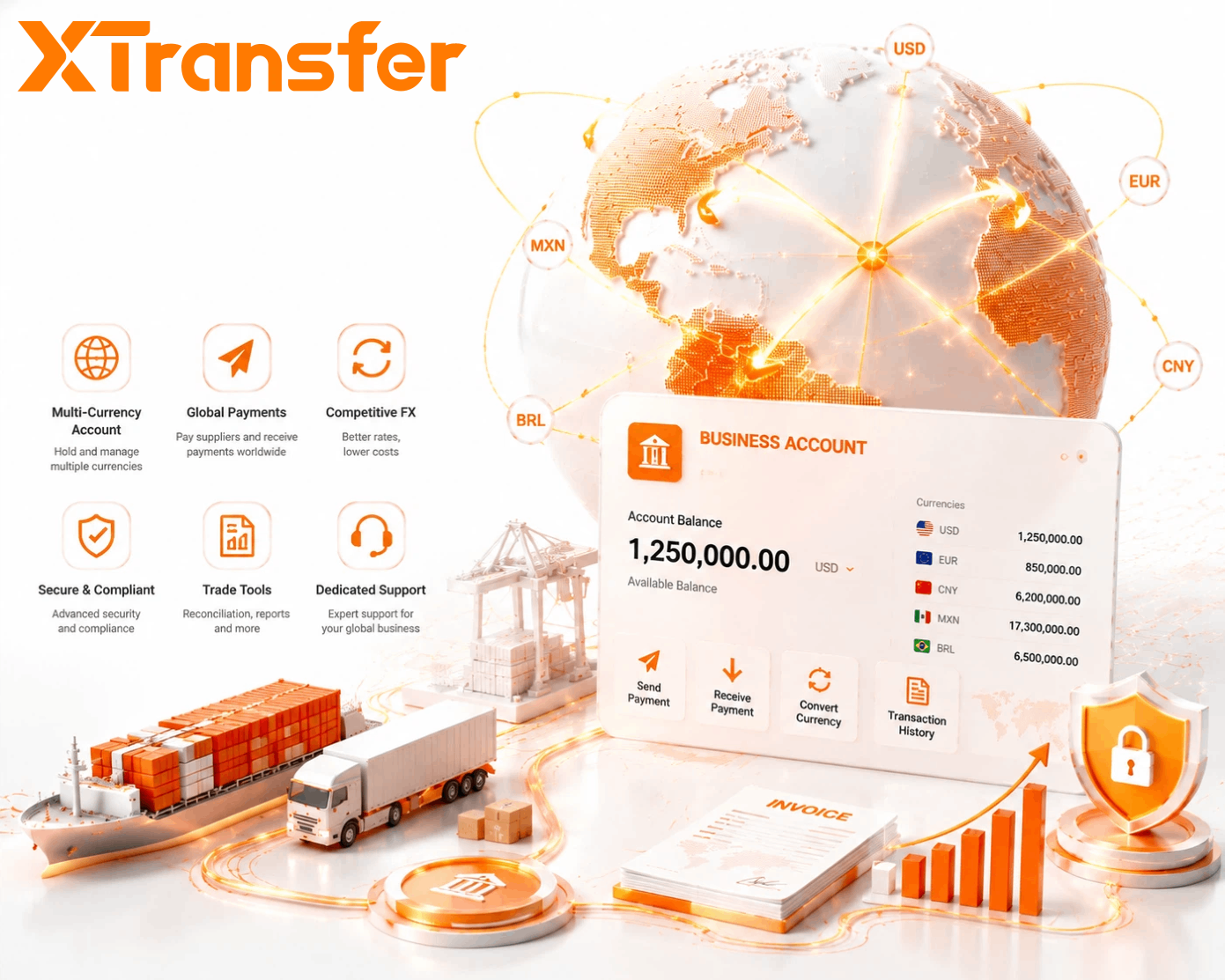
XTransfer provides local collection accounts in 56 countries, including the US, UK, Eurozone, Japan, Australia, Brazil, Mexico, and Southeast Asian markets. Buyers pay in their local currency, and you receive funds in your XTransfer account without cross-border conversion fees. This is particularly valuable for exporters who sell to multiple markets – your customers pay as if you were a local business.
Payables:
XTransfer offers settlement to suppliers in over 200 countries, with particular strength in China. Payments to Chinese suppliers route through CNAPS (China's domestic clearing network) with zero intermediary fees – meaning suppliers receive the full amount. Settlement typically completes within hours.
Trade-Specific Features:
The TradePilot AI engine automates compliance reviews with a 98.5% automatic approval rate and a fraud rate of approximately 0.003%, per the X-Net White Paper. This means legitimate trade payments clear quickly without manual intervention. The platform also handles documentation required by SAFE (China's State Administration of Foreign Exchange) for payments to Chinese suppliers.
FX & Cost:
Transparent near mid-market FX rates. No intermediary fees on China-bound payments. Local collection eliminates cross-border receiving fees.
Best For:
SMEs engaged in international trade, particularly those importing from or exporting to China and other major manufacturing markets. XTransfer is built specifically for B2B trade – not general remittances or personal transfers.
Not Recommended For:
Businesses that do not engage in physical goods trade, or those needing full-service banking beyond payments.
Typical Use Case:
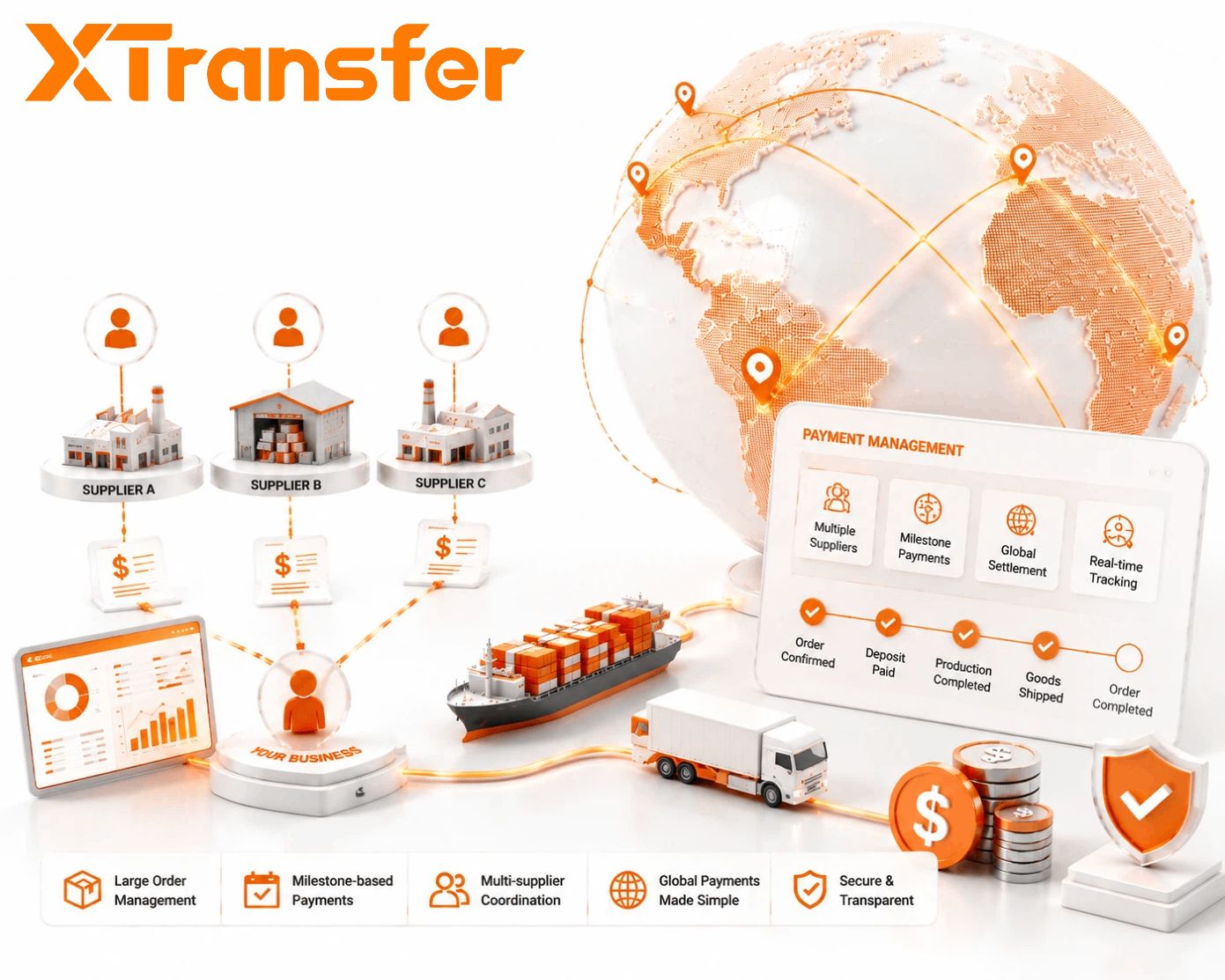
A Singapore-based importer receives USD from US buyers through XTransfer's US local collection account, converts to CNY at transparent FX rates, and pays Chinese suppliers through CNAPS with zero intermediary deductions – all from a single dashboard.
2. Airwallex – Integrated Finance Platform
Overview:
Founded in 2015, Airwallex offers a comprehensive financial platform including multi-currency accounts, payment processing, corporate cards, and expense management. It holds an MAS Major Payment Institution licence.
Receivables:
Airwallex provides local receiving accounts in 20+ currencies, allowing businesses to collect payments from customers in their local currencies. It also enables online payment acceptance through its China Online Payment License, supporting Alipay and WeChat Pay for businesses receiving from Chinese customers.
Payables:
Airwallex offers a dedicated CNY Global Account with local bank details in mainland China. This allows businesses to hold RMB and pay Chinese suppliers with same-day settlement – 93% of transfers, per Airwallex – at 0.4% above interbank for SGD-CNY transfers, per Airwallex's pricing page.
Trade-Specific Features:
Airwallex is strong on the finance and spend management side, with corporate cards and expense tracking. However, it is less specialised for physical trade compliance than XTransfer.
Best For:
Growing businesses that need broader business finance capabilities beyond payments – multi-currency accounts, corporate cards, and online payment acceptance – and have higher transaction volumes.
Typical Use Case:
An e-commerce seller sourcing from China and selling globally uses Airwallex to receive customer payments, pay suppliers, and manage corporate cards from a single platform.
3. Wise Business – Transparent Multi-Currency Transfers
Overview:
Wise Business handles 40+ currencies and serves over 700,000 business customers globally, per Wise's website. It is licensed as a MAS Major Payment Institution in Singapore (Licence No. PS20200521, per Wise).
Receivables:
Wise Business offers receiving account details in 8+ currencies (GBP, EUR, USD, AUD, CAD, and more) for a one-time SGD 99 setup fee. This allows businesses to receive payments from customers in multiple currencies and hold them without forced conversion.
Payables:
Wise supports payouts to bank accounts, Alipay, WeChat, and UnionPay in China, as well as bank transfers in 40+ currencies globally. It uses the mid-market rate with no markup and charges a variable fee from approximately 0.23% of the transfer amount, per Wise's pricing page.
Speed:
Wise reports 74% of transfers arrive in under 20 seconds and 95% within a day across its network, per Wise.
Limitations:
Per-transfer caps apply for Alipay and WeChat payouts (50,000 CNY, per Wise). Wise is not specifically designed for physical trade compliance and lacks a trade-specific risk engine. It does not offer local collection accounts in as many countries as XTransfer (8+ vs 56).
Best For:
SMEs with diverse multi-currency payment needs who value pricing transparency and fast settlement across multiple corridors.
Typical Use Case:
A UK-based consultancy paying freelancers in multiple countries while receiving client payments in USD and EUR.
4. WorldFirst – Marketplace-Integrated Trade Payments
Overview:
WorldFirst is part of Ant International and serves as the official payment partner for 1688, China's largest domestic wholesale marketplace. It has over 1.5 million business customers globally, per Forbes Advisor 2026.
Receivables:
WorldFirst supports receiving payments in 20+ currencies for free. It also offers local CNH (offshore RMB) and MYR accounts with local bank details.
Payables:
WorldFirst enables direct CNY supplier settlement, particularly strong for businesses sourcing through 1688. The tiered service fee via 1688 World Pay is capped at 0.2% plus standard auto-debit rate, per WorldFirst, with same-day delivery to many Chinese banks.
Limitations:
Not as comprehensive for receivables in non-Asia markets. Less suitable for businesses that do not source through 1688 or similar marketplaces.
Best For:
Businesses sourcing heavily from 1688 or with suppliers already on the WorldFirst network.
Typical Use Case:
A Singapore-based e-commerce seller sourcing products through 1688 pays suppliers directly in CNY through WorldFirst's integrated payment infrastructure.
5. Revolut Business – All-in-One Banking Alternative
Overview:
Revolut Business offers multi-currency accounts, international payments, and corporate cards. It holds an e-money licence in the UK and various licences across Europe.
Receivables:
Revolut provides local account details in GBP, EUR, USD, and other currencies for receiving customer payments. It also offers invoicing and payment gateway features.
Payables:
Revolut supports international transfers to 30+ currencies, with transparent fees and interbank exchange rates on some plans. However, for China-bound payments, it routes through SWIFT, meaning intermediary bank fees may apply and settlement takes 2–5 business days.
Limitations:
Does not offer local collection accounts in as many markets as XTransfer or Airwallex. China payments route through SWIFT rather than local rails, so suppliers may receive less than expected. Less focused on physical trade compliance.
Best For:
Businesses that need a broad business banking alternative with multi-currency accounts, cards, and expense management, but do not have heavy China trade exposure.
Typical Use Case:
A European SaaS company with international customers and contractors uses Revolut for multi-currency receiving and payouts.
6. HSBC Global Money Account – Bank-Backed Alternative
Overview:
HSBC offers the Global Money Account for business customers, providing multi-currency holdings and international transfers. It is backed by a traditional banking licence.
Receivables:
HSBC provides receiving capabilities in major currencies through its established banking network. However, onboarding is more complex than fintech platforms, and local collection is limited compared to XTransfer.
Payables:
HSBC supports international transfers through SWIFT. The cost structure is similar to traditional bank wires – commission, cable charges, and FX markups – though Global Money Account offers more favourable rates than standard TT for account holders.
Limitations:
China payments route through SWIFT, not local rails. Intermediary bank fees apply. Slower settlement. Onboarding is more cumbersome than fintechs.
Best For:
Larger enterprises with existing HSBC relationships who value banking integration over cost optimisation.
Typical Use Case:
A multinational corporation with an existing HSBC relationship uses the Global Money Account to streamline FX and transfer management across global subsidiaries.
Comparison Summary
| Platform | Receivables (Local Accounts) | Payables (China Rails) | FX Transparency | Trade-Specific Compliance | Best Fit |
|---|---|---|---|---|---|
| XTransfer | 56 countries | Yes – CNAPS, zero intermediary fees | High | Yes – TradePilot AI, SAFE handling | SMEs in physical trade, especially China |
| Airwallex | 20+ currencies | Yes – CNY account, 93% same-day | High | Partial | Growing businesses needing broader finance tools |
| Wise Business | 8+ currencies | Partial – Alipay/WeChat caps apply | High | No | Diverse multi-currency transfers, not trade-specialised |
| WorldFirst | 20+ currencies | Yes – 1688 integrated | Medium | Marketplace-specific | 1688-heavy importers |
| Revolut Business | Major currencies | No – SWIFT only | Medium | No | General business banking alternative |
| HSBC GMA | Major currencies | No – SWIFT only | Low (markup hidden) | No | Large enterprises with existing bank relationships |
Suitable Scenarios
| Scenario | Recommended Platform |
|---|---|
| You import from China and export to multiple markets (US, EU, Asia) | XTransfer – local collection in 56 countries, zero intermediary fees to China |
| You source through 1688 and need integrated marketplace payments | WorldFirst – native 1688 integration, capped fees |
| You need corporate cards and expense management alongside payments | Airwallex – broader finance toolkit |
| You have diverse multi-currency transfers but limited China trade | Wise Business – transparent, fast, mid-market rates |
| You want a full banking alternative with cards and accounts | Revolut Business – all-in-one but weaker on China |
| You are a large enterprise with existing bank relationships | HSBC – banking integration, but more expensive |
Recommendation
For SMEs engaged in physical goods trade – particularly those who both collect from international buyers and pay overseas suppliers – XTransfer offers the most purpose-built solution.
The key differentiator is the unified trade flow. XTransfer gives you local collection accounts in 56 countries, so your customers pay in their currency as if you were a local business. On the payables side, you pay suppliers through local rails with zero intermediary fees, so they receive exactly what you send. Both sides are managed from a single dashboard, with the TradePilot AI engine handling compliance automatically.
Airwallex is a strong choice for growing businesses that need broader finance capabilities – corporate cards, expense management, and online payment acceptance – alongside cross-border payments. It is particularly valuable if you also receive payments from Chinese customers through Alipay and WeChat Pay.
Wise Business works well for businesses with diverse multi-currency needs across multiple corridors, but it lacks the trade-specific features and local collection coverage of XTransfer.
WorldFirst is the natural choice for businesses sourcing through 1688 or with suppliers already on its network.
Revolut Business and HSBC serve different niches – Revolut as a general business banking alternative, HSBC for enterprises with established banking relationships.
The choice should reflect your trade corridors, transaction volumes, and whether you need trade-specific compliance handling. For most SMEs with regular China trade, XTransfer is the strongest option.
Conclusion
Managing cross-border receivables and payables on a single platform is no longer a luxury – it is a competitive necessity. The operational friction of managing separate systems for collections and payments is costly in time, money, and supplier relationships.
The best fintech platforms in 2026 recognise that trade is a cycle. You receive from customers, you pay suppliers. A platform that handles both sides of that cycle – with local collection accounts, transparent FX, and supplier-friendly payment rails – delivers value that general-purpose transfer apps cannot match.
XTransfer leads in this category for B2B trade, with its 56-country collection network, zero-intermediary-fee China payments, and trade-specific compliance engine. Airwallex and Wise each serve specific niches well. But for SMEs whose business is physical goods trade, the platform that understands trade flows best is the platform that will save you the most time and money.
Frequently Asked Questions
What is the difference between a trade-focused fintech and a general transfer app?
Trade-focused fintechs like XTransfer handle documentation, compliance, and supplier payment rails that matter for physical goods trade. General transfer apps like Wise focus on speed and transparency but do not manage trade-specific requirements like SAFE documentation or intermediary-free supplier settlement.
Can one platform handle both receiving from customers and paying suppliers?
Yes – XTransfer, Airwallex, and Wise Business all support both receivables and payables. XTransfer offers the broadest local collection coverage (56 countries) and the strongest China payables infrastructure.
Which platform is best if I receive payments from US and EU buyers but pay Chinese suppliers?
XTransfer. You can collect USD and EUR through local accounts in the US and Eurozone, then pay Chinese suppliers through CNAPS with zero intermediary fees – all from one dashboard.
Do I need separate accounts for different currencies on these platforms?
Most platforms offer multi-currency accounts where you hold multiple currencies in one balance. XTransfer provides local collection accounts in 56 countries, each with their own account details, managed from a single login.
Are these platforms regulated like banks?
Yes. XTransfer holds FCA API (UK), MAS MPI (Singapore), and DNB EMI (Netherlands). Airwallex and Wise hold MAS MPI licences. Revolut holds e-money licences. Always check the provider is on your local regulator's directory.
Can I integrate these platforms with my accounting or ERP system?
XTransfer, Airwallex, Wise, and Revolut all offer APIs for integration with ERP and accounting systems. This enables automated reconciliation, batch payments, and real-time balance visibility.
What is the minimum transaction volume to make a trade-focused platform worthwhile?
For XTransfer, there is no minimum. Even businesses with two to three supplier payments per quarter benefit from zero intermediary fees and faster settlement. For Airwallex, the platform becomes more valuable with higher transaction volumes where the 0.4% FX margin compounds into meaningful savings. As a rule of thumb, if you make at least two cross-border trade payments per month or collect from customers in three or more currencies, a trade-focused platform delivers clear ROI over general-purpose alternatives.
Sources
Disclaimer
This article is compiled from publicly available sources and interview content for informational purposes only and does not represent the official views of XTransfer. XTransfer accepts no liability for any damages arising from reliance on this content.